Indian Blanket
Gaillardia pulchella
Light
full sun
Water
low
Size
12"–24" H × 12"–18" W
Bloom
May, Jun, Jul, Aug, Sep, Oct
Native to
North Texas
Pollinators
butterflies, bees
Picture natives in your own yard
Upload a photo of your yard and Patch Vision shows a rendering of it planted with natives for your region, like Indian Blanket.


Browse plants for this ecoregion
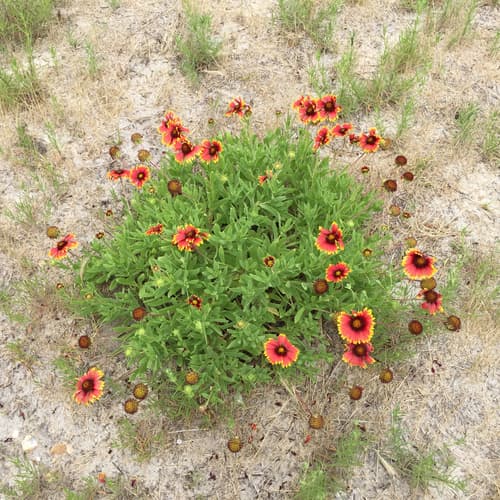
Indian Blanket is a annual forb native to North Texas. It grows best in full sun with low water needs.
Indian Blanket (Gaillardia) brings red, yellow, and orange to the garden from May through October. It is an annual that often reseeds, and some perennial forms exist. The flowers are flat-topped, making them easy landing pads for butterflies.
Place Indian Blanket in full sun. It handles poor soil and drought. Use it toward the front of beds for a long season of color. In HOA neighborhoods, its tidy habit and vibrant flowers read as intentional. Deadhead to encourage more blooms.
This plant attracts butterflies and bees. It pairs well with Black-eyed Susan, Mealy Blue Sage, and Purple Coneflower. Scatter seed in fall or plant transplants in spring. It may spread; contain in defined beds if you want to limit it.
Bee species data compiled from GBIF, iNaturalist, Discover Life, and the USGS Native Bee Inventory and Monitoring Lab. Plant-pollinator associations informed by published ecological literature.
How to care for Indian Blanket, by region
How to care for Indian Blanket where it is actually grown: year-round basics plus what to do each season, region by region, with the sources for each.
Care guidance last updated: October 2026
Arizona/New Mexico Mountains (includes Prescott, AZ)
Year-round
Firewheel is native across Arizona's mountain and upland zones, and Prescott's mid-elevation, well drained sites suit it well.
- Full sun and fast-draining soil are the two things it needs most. Sandy or rocky ground works better than rich garden soil, per the USDA NRCS Plant Guide.
- It is genuinely drought tolerant once established. Root rot from overwatering is more likely to kill it than dry weather.
- It self-seeds in open ground, which is normal and part of how it spreads in the wild.
- Keep fertilizer light. Too much pushes leafy growth at the expense of flowers.
Fall
Fall is another good planting window in the Prescott area, and a time to decide how much you want the patch to spread.
- Fall-sown seed germinates and builds a taproot before winter frost.
- Leave some seed heads standing if you want the patch to fill in naturally.
- In tidier front beds, deadhead through fall instead of letting seed heads accumulate.
Uncut seed heads can look messy in a formal front bed by late fall, so deadhead there and reserve self-seeding for looser planting areas.
Winter
Winter is a quiet, hands-off season for firewheel in the Prescott area.
- Leave the root system undisturbed. Established plants tolerate cold better than wet feet.
- Cut back watering to almost nothing unless winter is unusually dry.
- Use the downtime to plan where you want next spring's self-seeded plants to grow.
Spring
Spring is the main planting window for firewheel in the Prescott area once frost risk has passed.
- Direct-sow into loose, well drained soil and rake seed in lightly for good soil contact.
- Expect germination in one to two weeks with steady spring moisture.
- Skip fertilizer at planting. It performs best in lean soil, not rich amended beds.
Summer
Summer brings firewheel's heaviest bloom, and regular deadheading keeps the display going through the heat.
- Deadhead spent flowers just above the next leaf node to keep new blooms coming.
- Cut leggy plants back by about a third in midsummer if they need rejuvenating, but avoid a hard cutback during the hottest stretch.
- It handles heat and dry spells well. Water deeply but infrequently rather than a little every day.
Regular deadheading keeps the plant looking neat and full instead of straggly along a front-facing bed.
Sources: USDA NRCS Plant Guide, Indian blanket (Gaillardia pulchella), NRCS Arizona: Plants for Enhancing Pollinator Habitat in Arizona, Almanac.com, Blanket Flowers: Planting, Growing, and Caring for Gaillardia, Gardenia.net, Firewheel (Gaillardia pulchella): Grow, Care, Design Guide (community tip)
Arizona/New Mexico Plateau (includes Flagstaff, AZ)
Year-round
Firewheel is a genuine Arizona native across the state's upland plateau country, and it handles Flagstaff's dry, sunny sites with almost no fuss once it gets going.
- Give it full sun and soil that drains fast. It does better in lean, sandy or rocky ground than in rich garden beds, per the USDA NRCS Plant Guide for Indian blanket.
- Water it while it's getting established, then back off. It is genuinely drought tolerant and more likely to struggle from soggy roots than from dryness.
- It reseeds on its own in open ground. That is normal, not a problem, and it is how these patches spread naturally.
- Skip heavy fertilizer. Rich soil pushes leafy growth and cuts down on flowers.
Fall
Fall is a good second window to get firewheel established before winter, and a chance to decide how much self-seeding you want.
- Fall sowing works well here too. Seed germinates and plants build a taproot before frost sets in.
- Let some seed heads stand if you want the patch to fill in naturally next year.
- Deadhead more aggressively in tidier front beds if you want to hold the current footprint instead of letting it spread.
Leaving too many seed heads can make a formal front bed look messy by late fall, so deadhead there and let it self-seed only in looser meadow-style areas.
Winter
Firewheel mostly rests through winter here, and there is little to do besides leaving the root system alone.
- Leave the taproot undisturbed over winter. Established plants handle cold better than wet, poorly drained soil.
- Hold off on watering unless the season is unusually dry, since dormant plants need very little.
- This is a good time to plan where you want next year's seedlings, since it self-seeds readily in open ground.
Spring
Spring is planting season for firewheel around Flagstaff, once the ground has warmed and hard frosts have passed.
- Sow seed directly into loose, well drained soil after your last frost date. Rake it in lightly so it keeps good contact with the soil.
- Seedlings usually come up within one to two weeks with consistent spring moisture.
- Hold off on fertilizer at planting. Established plants prefer lean soil over rich amendments.
Summer
Summer is firewheel's main bloom season, and a little deadheading through the heat keeps flowers coming.
- Snip spent blooms just above the next leaf to push out more flowers through summer.
- If plants get leggy by midsummer, cut them back by about a third to rejuvenate growth. Avoid a hard cutback in peak heat, since that can kill the plant.
- It tolerates heat and dry stretches well. Deep, infrequent watering beats frequent light sprinkling.
Deadheading keeps the plant tidy and blooming instead of going to seed and looking scraggly along the front bed edge.
Sources: USDA NRCS Plant Guide, Indian blanket (Gaillardia pulchella), NRCS Arizona: Plants for Enhancing Pollinator Habitat in Arizona, Almanac.com, Blanket Flowers: Planting, Growing, and Caring for Gaillardia, Gardenia.net, Firewheel (Gaillardia pulchella): Grow, Care, Design Guide (community tip)
Arkansas Valley (includes McAlester, OK)
Year-round
Firewheel fits the open prairie and savanna pockets of the Arkansas Valley around McAlester and Poteau. It needs sun and fast-draining soil, so it does best in the valley's more open ground rather than shaded forest edges.
- Historically part of the prairie, savanna, and woodland mosaic that made up the Arkansas Valley uplands and floodplains, not the deep forest of the neighboring Ouachita Mountains (Arkansas Valley ecoregion description, EPA Level III/IV ecoregion characterization).
- Wants full sun and soil that drains well. Valley floodplain soils with a prairie history suit it better than heavy shaded clay.
- Rich or constantly moist soil produces weak, floppy plants with fewer blooms (Lady Bird Johnson Wildflower Center).
- Deep taproot gives it strong drought tolerance once established.
Compact mounded form and long color window make it read as tended bedding color rather than an untended wild patch.
Fall
Fall bloom slows down. Let some seed heads mature if you want the patch to come back thicker next year.
- Leave a portion of late seed heads standing instead of deadheading everything, so the patch can reseed.
- Cut back by about half after the first real frost rather than while it is still actively blooming.
- Good window to divide a crowded clump and spread it to another sunny, well-drained spot in the yard.
- No fall feeding needed, lean soil is what keeps this plant compact.
Winter
Firewheel dies back to the ground over winter in the Arkansas Valley. That is normal dormancy for this short-lived perennial.
- Foliage browns and dies back after hard freezes. Leave the dead growth in place until early spring rather than pulling the plant.
- No winter watering or mulching needed for established plants in well-drained soil.
- Seed dropped in fall overwinters in the soil and germinates on its own the following spring.
- Stay off wet winter soil near the crown to avoid compaction that slows spring regrowth.
Spring
Get firewheel started in spring once the soil has warmed, choosing the sunniest, best-drained spot in the yard.
- Sow seed or set out transplants in mid to late spring after the last hard freeze.
- Pick an open, sunny spot away from tree shade. The species is a prairie and savanna plant, not a forest-floor plant.
- Skip added fertilizer. Lean soil keeps it compact and floriferous (Lady Bird Johnson Wildflower Center).
- Expect first blooms roughly 8 to 10 weeks after germination.
Summer
Summer heat and humidity in the Arkansas Valley are when firewheel blooms hardest, as long as it has drainage and sun.
- Continuous red and yellow bloom through summer heat once the plant is established.
- Deadhead regularly to keep new flowers coming rather than letting the plant put energy into seed.
- Watch drainage during the Arkansas Valley's wetter summer storms. Standing water around the crown is the main risk in this ecoregion, more than heat.
- Draws native bees and butterflies through the peak of summer.
Sources: Gaillardia pulchella - Lady Bird Johnson Wildflower Center Native Plant Database, Arkansas Valley (ecoregion) - vegetation and soils overview
Central Great Plains (includes Oklahoma City, OK)
Year-round
Firewheel is Oklahoma's state wildflower and it grows easily across the Central Great Plains around Oklahoma City. It wants full sun and soil that drains fast. Give it a lean, sandy or rocky spot rather than rich garden soil and it will reward you with red and yellow blooms most of the summer.
- Native to prairie and open ground across the western two thirds of Oklahoma, including the Central Great Plains around Oklahoma City, Lawton, Enid, and Ponca City (Lady Bird Johnson Wildflower Center native plant database).
- Prefers sandy or calcareous soil with good drainage. Rich, heavily amended soil produces floppy plants with fewer flowers (Lady Bird Johnson Wildflower Center).
- Deep taproot makes it drought tolerant once established, a good fit for the Central Great Plains climate.
- Short-lived perennial that often self-seeds, so a patch can persist for years even though individual plants do not live long.
Tidy mounded habit and long bloom season read as intentional bedding color, not a wild patch, which helps it read as HOA-friendly along a front walk or border.
Fall
Fall bloom tapers off and this is a good window to let seed heads mature if you want the patch to fill in next year.
- Leave some late-season seed heads in place instead of deadheading everything. They are how the patch reseeds for next year.
- Cut plants back by about half after the first light frost knocks bloom back, but wait until frost rather than doing it in warm weather.
- Good time to divide or thin a crowded patch and move extra plants to a new sunny, well-drained spot.
- No fall fertilizing needed. Lean soil keeps growth compact heading into winter.
Winter
Firewheel goes dormant over winter in the Central Great Plains. Established plants and self-sown seed handle the cold fine without help.
- Foliage dies back after hard freezes. This is normal dormancy, not plant failure, so resist the urge to replace it.
- No winter watering or mulching needed once the plant is established in well-drained soil.
- Fallen seed from the previous fall overwinters in the soil and will germinate on its own in spring.
- Avoid working or walking on wet winter soil around the crown, since compaction can slow spring regrowth.
Spring
Spring is when firewheel gets going. Direct-sow or set out transplants once the soil has warmed and the last hard freeze has passed.
- Sow seed or set transplants in mid to late spring once nights stay reliably above freezing.
- Choose the sunniest, driest spot in the bed. Wet spring soil that stays soggy can rot young roots.
- Skip the fertilizer. Lean native prairie soil is what this plant expects (Lady Bird Johnson Wildflower Center).
- First blooms usually show up 8 to 10 weeks after seeds sprout.
Summer
Summer is firewheel's peak bloom season and also when Oklahoma heat and dry spells test how little water it actually needs.
- Blooms continuously from early summer into fall once established, red and yellow petals that hold color even in full sun heat.
- Deadhead spent flower heads to keep new buds coming, otherwise bloom slows once seed heads form.
- Water only during extended dry stretches. Established plants pull moisture from deep in the soil profile and overwatering encourages root rot.
- Attracts a wide range of native bees and butterflies during peak bloom.
Season-long color from a compact native reduces the pressure to swap in annual bedding plants for curb appeal.
Sources: Gaillardia pulchella - Lady Bird Johnson Wildflower Center Native Plant Database
Chihuahuan Deserts (includes El Paso)
Year-round
Firewheel is a tough, fast-blooming native wildflower well suited to the hot, dry Trans-Pecos.
- Firewheel grows in full sun on well-drained, calcareous or sandy soil and needs very little supplemental water once established, which fits the Chihuahuan Desert's low rainfall.
- It occurs naturally through the southwestern United States at elevations from about 3,500 to 5,500 feet, a range that covers the Trans-Pecos and Big Bend area (Southwest Desert Flora regional plant guide).
- Firewheel provides nectar and pollen for bees and butterflies across a long bloom season, and it is a larval host plant for the bordered patch butterfly and the painted schinia moth, which feeds only on Gaillardia (Xerces Society, Lady Bird Johnson Wildflower Center).
- Firewheel is not on the ASPCA toxic plant list for dogs, cats, or horses.
Fall
Let some of the season's last flower heads go to seed for next year's stand.
- Stop deadheading a portion of the plants in early fall so seed heads can mature and drop before first frost.
- Leave dried seed heads standing rather than cutting the plant back hard, goldfinches and other small birds feed on them.
- Firewheel is typically short-lived in this region, so this self-seeding is how the patch renews itself year to year.
Winter
Leave firewheel alone through winter and clean up dead growth only once new growth starts.
- Skip winter pruning, the standing dried stems and seed heads still feed birds and protect the crown from occasional hard freezes.
- In mild Trans-Pecos winters a low rosette of leaves often stays green at the base of the plant.
- Cut back any fully dead stems in late winter, just before new spring growth begins, rather than earlier in the season.
A winter bed of dried firewheel seed heads can look unkempt to a passerby, a short trim of the tallest dead stems keeps the look intentional.
Spring
Direct-sow or let last year's firewheel self-seed once the desert nights warm up.
- Scatter seed on bare, well-drained ground in early spring since firewheel needs light to germinate and should not be buried deep.
- If you had firewheel last year, resist raking up the seedlings that come up on their own, they are next season's flowers.
- Water new seedlings lightly every few days until they establish roots, then back off, overwatering in fast-draining desert soil causes root rot.
Young firewheel seedlings look sparse for a few weeks, so edge the bed with a clean line to signal it's intentional.
Summer
Deadhead through the peak heat to keep firewheel blooming instead of going to seed early.
- Snip spent flower heads every week or two, this keeps the plant putting energy into new blooms rather than seed production.
- Firewheel handles Trans-Pecos summer heat and drought well once established and rarely needs extra watering beyond an occasional deep soak.
- Wear gloves when deadheading, the foliage contains compounds that can cause a mild skin rash in sensitive people.
Regular deadheading keeps the bed looking tidy and full through the hottest months.
Sources: Southwest Desert Flora: Gaillardia pulchella, Firewheel, Indian Blanket (community tip), Xerces Society: Plants for Pollinators, Blanketflower, Lady Bird Johnson Wildflower Center: Gaillardia pulchella, ASPCA Animal Poison Control Center: Toxic and Non-Toxic Plant Search, North Carolina Extension Gardener Plant Toolbox: Gaillardia pulchella
Cross Timbers (includes Fort Worth)
Year-round
Firewheel is an easy, long-blooming native wildflower for the Cross Timbers' mix of prairie and oak woodland edges.
- Firewheel grows best in full sun on well-drained soil and tolerates the clay-loam and sandy soils found across the Cross Timbers, though it dislikes waterlogged clay.
- It is native across Texas prairies and open ground, including the Cross Timbers region (Native Plant Society of Texas).
- Its red-and-yellow blooms draw a wide range of native bees and butterflies over a long season and serve as a larval host for the bordered patch butterfly and painted schinia moth (Xerces Society).
- Firewheel is not on the ASPCA toxic plant list for dogs, cats, or horses.
Fall
Let the final round of blooms go to seed so firewheel can reseed itself for next year.
- Stop deadheading part of the planting in early fall so seed heads mature and drop before the first hard freeze.
- Leave the dried seed heads standing instead of cutting the plant down, they're a fall and winter food source for goldfinches and sparrows.
- Firewheel often behaves as a short-lived plant here, so this self-seeding is the main way a Cross Timbers patch carries over.
Winter
Hold off on cutting firewheel back until late winter to protect the crown and feed birds.
- Leave dried stems and seed heads standing through most of winter, they insulate the crown and feed overwintering birds.
- Cut back fully dead growth in late winter, right before new spring shoots appear, rather than earlier in the season.
- A low rosette of leaves often survives mild Cross Timbers winters at the base of the plant.
A neat trim along the bed's edge signals the standing dried seed heads are intentional, not an unmaintained bed.
Spring
Sow firewheel seed on cleared, well-drained ground once spring soil warms.
- Scatter seed lightly on bare soil, firewheel needs light to germinate so avoid burying it under mulch or soil.
- Where firewheel self-seeded from a prior year, thin the thickest clumps so remaining seedlings can branch out and flower fully.
- Cross Timbers clay soils benefit from working in sand or fine gravel where firewheel will grow, straight heavy clay holds too much water for its roots.
Defining a clean bed edge while seedlings are young keeps a self-seeding patch from reading as neglected.
Summer
Keep deadheading through the Cross Timbers summer to extend firewheel's bloom well into fall.
- Pinch or snip off spent flower heads weekly, this keeps the plant producing new buds instead of stopping to make seed.
- Firewheel handles North Texas summer heat with minimal watering once roots are established, only water deeply during extended dry spells.
- Wear gloves while trimming, the foliage's natural compounds can cause a mild skin rash on sensitive hands.
Steady deadheading keeps a front bed looking full and colorful through the hottest stretch of summer.
Sources: Native Plant Society of Texas: Gaillardia pulchella, Xerces Society: Plants for Pollinators, Blanketflower, ASPCA Animal Poison Control Center: Toxic and Non-Toxic Plant Search, North Carolina Extension Gardener Plant Toolbox: Gaillardia pulchella, Lady Bird Johnson Wildflower Center: Gaillardia pulchella
East Central Texas Plains (includes College Station)
Year-round
Firewheel is a reliable native wildflower for the Post Oak Savanna's sandy, well-drained soils.
- Firewheel grows best in full sun on well-drained sandy or loamy soil, conditions common across the Post Oak Savanna's woodland-prairie mix.
- It is native across Texas's dry plains, prairies, and woodland edges, and the Post Oak Savanna sits within its broad statewide range (Lady Bird Johnson Wildflower Center; Native Plant Society of Texas).
- The blooms support native bees and butterflies through a long season and serve as a larval host for the bordered patch butterfly and painted schinia moth (Xerces Society).
- Firewheel is not on the ASPCA toxic plant list for dogs, cats, or horses.
Fall
Allow firewheel to go to seed in fall so the patch reseeds for next year.
- Stop deadheading part of the planting in early fall, letting seed heads mature and drop before any cool front moves through.
- Leave dried seed heads standing rather than cutting plants down, they feed goldfinches and other birds into winter.
- Firewheel often behaves as short-lived here, so this fall self-seeding is how a Post Oak Savanna patch renews itself.
Winter
Leave firewheel standing through winter and tidy up only in late winter.
- Skip cutting plants back in early winter, the dried stems and seed heads protect the crown and continue feeding birds.
- Wait until late winter, just before new growth resumes, to remove fully dead stems.
- A basal rosette of leaves often persists through mild Post Oak Savanna winters.
A clean edge along the bed keeps standing winter seed heads reading as intentional rather than untended.
Spring
Sow firewheel on bare, sandy ground in early spring for a full summer of blooms.
- Scatter seed shallowly in a sunny, well-drained spot, firewheel needs light to germinate so avoid covering it.
- The Post Oak Savanna's naturally sandy soil suits firewheel well without much amending, unlike the heavier clay found elsewhere in the state.
- Thin any self-seeded clumps from last year so remaining seedlings have room to fill out and bloom heavily.
Thinning volunteer seedlings into a clear drift early keeps a reseeded patch looking planned.
Summer
Deadhead through the humid Post Oak Savanna summer to keep firewheel blooming and airy.
- Snip spent flowers weekly, this keeps new buds coming instead of the plant shutting down after one seed set.
- Firewheel handles summer heat well here but benefits from good airflow between plants, since the region's humidity can encourage fungal issues on crowded, floppy growth.
- Wear gloves when deadheading, the foliage's natural compounds can cause a mild skin rash on sensitive skin.
Regular deadheading keeps a front bed full and colorful through the humid summer months.
Sources: Lady Bird Johnson Wildflower Center: Gaillardia pulchella, Native Plant Society of Texas: Gaillardia pulchella, Xerces Society: Plants for Pollinators, Blanketflower, ASPCA Animal Poison Control Center: Toxic and Non-Toxic Plant Search, North Carolina Extension Gardener Plant Toolbox: Gaillardia pulchella
Edwards Plateau (includes San Antonio)
Year-round
Firewheel is a Hill Country classic, thriving in the Edwards Plateau's shallow, alkaline limestone soils.
- Firewheel grows best in full sun on well-drained, calcareous soil and tolerates the region's dry, rocky ground without extra irrigation once established.
- It is a documented native of the Edwards Plateau, with wild specimens collected from Bexar, Comal, and Travis counties (Lady Bird Johnson Wildflower Center; Native Plant Society of Texas).
- The flowers provide season-long nectar and pollen for native bees and butterflies and serve as a larval host for the bordered patch butterfly and painted schinia moth (Xerces Society).
- Firewheel is not on the ASPCA toxic plant list for dogs, cats, or horses.
Fall
Let some fall blooms mature into seed so firewheel can reseed for next spring.
- Ease off deadheading part of the planting in early fall, letting seed heads ripen and drop before the first cool snap.
- Leave the dried seed heads standing rather than cutting plants back hard, they feed goldfinches and other small birds into winter.
- Firewheel is often short-lived here, so allowing this natural reseeding is how a Hill Country patch keeps coming back.
Winter
Leave firewheel standing through the Hill Country's mild winter and trim back only in late winter.
- Skip cutting the plant down in early winter, dried seed heads keep feeding birds and the old growth protects the crown during occasional freezes.
- Wait until late winter, right before new growth starts, to remove fully dead stems.
- In a mild Edwards Plateau winter, a basal rosette of leaves often stays green at the plant's base.
A clean-edged bed with the dried seed heads left standing reads as a planned winter look rather than an unmaintained one.
Spring
Sow firewheel on bare, rocky Hill Country soil once spring nights stay above freezing.
- Scatter seed shallowly on well-drained limestone or caliche soil, firewheel needs light to germinate and shouldn't be buried.
- If last year's plants reseeded, thin dense clusters so new seedlings have room to spread and bloom heavily.
- Hill Country spring rains are usually enough on their own, extra watering isn't needed once seedlings are up.
Thinning volunteer seedlings into a clear drift shape early keeps a reseeding patch looking tended.
Summer
Deadhead through the Hill Country's hot, dry summer to keep firewheel blooming into fall.
- Snip off spent flowers every week or two, this keeps the plant flowering instead of putting all its energy into one seed crop.
- Firewheel handles Edwards Plateau summer heat and drought well, needing only an occasional deep soak during the driest stretches.
- Wear gloves when deadheading, the foliage contains compounds that can cause a mild skin rash on sensitive skin.
Weekly deadheading keeps a Hill Country front bed looking full and colorful through peak summer.
Sources: Lady Bird Johnson Wildflower Center: Gaillardia pulchella, Native Plant Society of Texas: Gaillardia pulchella, Xerces Society: Plants for Pollinators, Blanketflower, ASPCA Animal Poison Control Center: Toxic and Non-Toxic Plant Search, North Carolina Extension Gardener Plant Toolbox: Gaillardia pulchella
Erie Drift Plain (includes Buffalo, NY)
Year-round
This is a sun-loving annual flower that likes lean, well-drained soil and little fuss.
- Give it full sun to part shade and sandy or gravelly soil with good drainage.
- Skip rich soil and extra fertilizer because it makes plants floppy with fewer flowers.
- Expect to replant or let it reseed each year in Buffalo since it is an annual.
Pull spent plants after frost and deadhead in summer for a tidy, HOA-friendly look.
Fall
Let some seed ripen so the plant can come back next year.
- Leave a few finished flower heads to drop seed before cleanup.
- Hold off on mowing the patch until seed has matured.
- Pull plants after the first frost around mid October if you want a tidier bed.
Winter
The plant is gone for winter and the seed waits in the soil.
- Do not water or cover the bed.
- Seed left in the soil can sprout the following spring.
- Mark the spot so you do not dig it up by accident.
Spring
Wait for frost to pass before planting out in Buffalo.
- Sow seed or set out plants after the last frost, usually mid to late May.
- Pick the sunniest, best-drained spot you have.
- Water new seedlings until they settle in.
Summer
Summer is bloom time and the plant needs very little water.
- Water only during long dry spells since it tolerates dry soil.
- Snip spent flowers to keep blooms coming longer.
- Do not feed it, because rich soil gives weak, leaning stems.
Sources: Lady Bird Johnson Wildflower Center: Gaillardia pulchella
High Plains (includes Lubbock)
Year-round
Firewheel is a native shortgrass prairie wildflower that thrives in the Llano Estacado's heat, wind, and thin soil.
- Firewheel prefers full sun and well-drained, sandy or calcareous soil, and it tolerates the High Plains' heat and dryness without extra irrigation once established.
- It occurs naturally across the Llano Estacado and Panhandle High Plains as part of its statewide Texas range (Native Plant Society of Texas).
- The flowers feed a wide range of native bees and butterflies over a long bloom season, and the plant hosts the bordered patch butterfly and the painted schinia moth (Xerces Society).
- Firewheel is not on the ASPCA toxic plant list for dogs, cats, or horses.
Fall
Ease off deadheading in fall so firewheel can set seed for next year before frost.
- Let the last flush of blooms mature into seed heads once nights start cooling, this is how a High Plains stand renews itself since plants are often short-lived.
- Leave dried seed heads in place rather than cutting the plant to the ground, they feed goldfinches and other seed-eating birds through fall.
- No fall fertilizing is needed, rich soil actually produces fewer blooms on firewheel.
Winter
Leave firewheel standing through the High Plains winter and clean up only in late winter.
- Do not cut plants back in early winter, standing seed heads keep feeding birds and the dried stems buffer the crown from Panhandle cold snaps.
- Wait until late winter, just before new growth starts, to trim away fully dead stems.
- A basal rosette of leaves often persists through mild winter stretches even after the flower stalks have died back.
A tidy edge around the dormant bed reads as intentional even while the dried seed heads stay up for birds.
Spring
Sow firewheel seed on bare ground once nights warm, or thin a self-seeded patch to give plants room.
- Scatter seed shallowly on well-drained soil in early to mid spring, firewheel needs light to germinate so don't cover it with soil.
- If firewheel reseeded from last year, thin crowded clumps so remaining plants have room to bush out and bloom heavily.
- High Plains spring wind and occasional late frost rarely bother firewheel once seedlings have a few true leaves.
Thinning volunteer seedlings into neat rows or drifts early keeps a reseeding patch looking planned rather than weedy.
Summer
Deadhead regularly through the Panhandle's dry summer to stretch the bloom season.
- Remove spent blooms every week or so, this pushes the plant to keep flowering instead of shutting down after one seed set.
- Firewheel needs only occasional deep watering during High Plains summer heat, its taproot and drought tolerance handle dry stretches well.
- Wear gloves while deadheading, the foliage's sesquiterpene lactones can irritate sensitive skin.
Regular deadheading keeps a front-yard planting looking full and colorful rather than leggy in high summer.
Sources: Native Plant Society of Texas: Gaillardia pulchella, Xerces Society: Plants for Pollinators, Blanketflower, ASPCA Animal Poison Control Center: Toxic and Non-Toxic Plant Search, North Carolina Extension Gardener Plant Toolbox: Gaillardia pulchella, Lady Bird Johnson Wildflower Center: Gaillardia pulchella
Madrean Archipelago (includes Tucson, AZ)
Year-round
Firewheel is a true Arizona native in the Sky Islands region around Tucson, and it thrives in the area's warm, dry conditions.
- Give it full sun and fast-draining soil. It actually performs better in Tucson than in some other parts of Arizona, according to NRCS's Arizona pollinator planting guidance.
- Water it during establishment, then let it rely on natural rainfall. It is highly drought tolerant once rooted in.
- It reseeds freely in open ground, which is expected and not a sign of a problem.
- Avoid rich, heavily amended soil. Lean, sandy ground produces more flowers.
Fall
Fall offers a second planting window for firewheel around Tucson, and a chance to manage how much it spreads.
- Fall-sown seed germinates and roots in before cooler weather arrives.
- Let some seed heads stand if you want the patch to fill in on its own next year.
- In more formal beds, deadhead through fall instead of letting seed heads pile up.
Standing seed heads can look untidy in a formal front bed by late fall, so deadhead there and let self-seeding happen only in looser areas.
Winter
Winter is mild and mostly hands-off for firewheel around Tucson.
- Leave the taproot undisturbed. Plants handle cold snaps better than soggy soil.
- Cut watering back to almost nothing during winter dormancy.
- Use the quiet season to plan where you want next spring's self-seeded growth.
Spring
Spring is a solid planting window for firewheel around Tucson before the hottest part of the year sets in.
- Direct-sow into loose, well drained soil once frost risk has passed, raking seed in lightly.
- Germination usually takes one to two weeks with consistent moisture.
- Skip fertilizer at planting time. Lean soil suits it better than rich beds.
Summer
Summer heat is when firewheel blooms hardest around Tucson, and deadheading keeps flowers coming through it.
- Deadhead spent blooms just above the next leaf node to encourage continued flowering.
- Cut back leggy growth by about a third in midsummer if needed, but avoid a hard cutback during the peak heat, which can kill the plant.
- It handles Tucson's heat and dry stretches well. Water deeply and infrequently rather than daily light sprinkles.
Regular deadheading keeps the plant compact and blooming instead of leggy and going to seed in a visible front bed.
Sources: NRCS Arizona: Plants for Enhancing Pollinator Habitat in Arizona, USDA NRCS Plant Guide, Indian blanket (Gaillardia pulchella), Almanac.com, Blanket Flowers: Planting, Growing, and Caring for Gaillardia, Gardenia.net, Firewheel (Gaillardia pulchella): Grow, Care, Design Guide (community tip)
South Central Plains (includes Beaumont)
Year-round
Firewheel is a sun-loving native wildflower that fits into the Piney Woods' open, sandy clearings and woodland edges.
- Firewheel needs full sun and well-drained sandy or loamy soil, so in the Piney Woods it does best in open clearings rather than under the pine and hardwood canopy.
- It occurs as native groundcover in East Texas longleaf pine openings and is part of firewheel's broader Texas-wide native range (Texas Longleaf Team; Native Plant Society of Texas).
- The blooms support native bees and butterflies across a long season and serve as a larval host for the bordered patch butterfly and painted schinia moth (Xerces Society).
- Firewheel is not on the ASPCA toxic plant list for dogs, cats, or horses.
Fall
Let firewheel set seed in fall so the patch can come back next year.
- Stop deadheading part of the planting in early fall, letting seed heads mature and drop before cooler weather sets in.
- Leave dried seed heads standing rather than cutting plants back, they feed goldfinches and other birds into winter.
- Firewheel is often short-lived in this humid, wooded region, so fall reseeding is the main way a Piney Woods patch renews itself.
Winter
Leave firewheel standing through winter, and check drainage after the Piney Woods' wet winter rains.
- Skip cutting plants back in early winter, standing seed heads keep feeding birds and old growth protects the crown.
- Confirm the bed still drains well after winter rains, waterlogged soil is a bigger risk to firewheel here than the region's mild frosts.
- Wait until late winter, just before new growth starts, to trim away any fully dead stems.
A clean edge around the bed keeps standing dried seed heads reading as a deliberate winter look.
Spring
Sow firewheel in the sunniest, most open spot in the yard, this is a full-sun plant in a shaded region.
- Pick a spot that gets direct sun most of the day, firewheel struggles under the Piney Woods' pine and hardwood canopy and needs an open clearing or bed.
- Scatter seed shallowly on well-drained soil, it needs light to germinate so don't cover it with mulch or soil.
- Thin any self-seeded clumps from last year so remaining seedlings have room and airflow in the region's humid spring air.
Placing firewheel in the sunniest open bed rather than dappled shade keeps blooms full and the planting looking intentional.
Summer
Deadhead regularly and watch drainage through the Piney Woods' humid, rainy summer.
- Remove spent flowers weekly to keep firewheel blooming instead of setting seed early.
- Make sure the bed drains well after Piney Woods summer downpours, firewheel is more likely to struggle from wet feet here than from heat.
- Wear gloves when deadheading, the foliage's natural compounds can cause a mild skin rash on sensitive skin.
Regular deadheading keeps a sunny front bed full and colorful through the humid summer.
Sources: Texas Longleaf Team: Groundcover Plants of Longleaf Forests in East Texas (community tip), Native Plant Society of Texas: Gaillardia pulchella, Xerces Society: Plants for Pollinators, Blanketflower, ASPCA Animal Poison Control Center: Toxic and Non-Toxic Plant Search, Lady Bird Johnson Wildflower Center: Gaillardia pulchella, North Carolina Extension Gardener Plant Toolbox: Gaillardia pulchella
Southern Texas Plains (includes McAllen)
Year-round
Firewheel is a heat-loving native that thrives in the South Texas Plains' brushland heat and sandy soils.
- Firewheel grows best in full sun on well-drained sandy or calcareous soil and tolerates the extreme heat and low rainfall typical of South Texas brushland.
- It was specifically noted for its vigor and long bloom period across the Rio Grande Plain and Coastal Sand Plain, which covers the South Texas Plains ecoregion (USDA NRCS Plant Guide).
- The blooms provide season-long nectar and pollen for native bees and butterflies and host the bordered patch butterfly and painted schinia moth (Xerces Society).
- Firewheel is not on the ASPCA toxic plant list for dogs, cats, or horses.
Fall
Let firewheel keep blooming into fall, then allow a final round to go to seed.
- South Texas's mild fall often lets firewheel keep flowering later than in the rest of the state, keep deadheading as long as blooms appear.
- As growth slows, stop deadheading part of the planting so seed heads can mature and drop before any cool snap.
- Leave dried seed heads standing rather than cutting the plant back, they provide food for goldfinches and other seed-eating birds.
Winter
South Texas winters are mild enough that firewheel may stay green and even bloom lightly.
- In this region's mild winters, firewheel may keep a basal rosette of leaves and occasionally produce a few blooms if a cold snap doesn't hit.
- Leave any standing dried seed heads in place, they continue to feed birds through the winter months.
- Trim back fully dead stems only after a hard freeze damages them, rather than cutting live growth preemptively.
A light winter trim of dead stems keeps the bed looking cared for even while live rosettes stay in place.
Spring
Sow firewheel seed early in South Texas since warm weather arrives fast here.
- Scatter seed on bare, well-drained ground in late winter to early spring, this region warms up sooner than the rest of the state.
- Firewheel needs light to germinate, so press seed lightly into the soil rather than burying it.
- If plants reseeded from last year, thin the thickest clusters so seedlings have room to grow into full, bushy plants.
Thinning volunteer seedlings into a clean shape early keeps a self-seeding patch from looking scattered.
Summer
Deadhead often through South Texas's long, intense summer to keep firewheel flowering.
- Remove spent flowers every week, the extended South Texas growing season means firewheel can keep blooming for months if kept deadheaded.
- Firewheel tolerates extreme heat and drought well once established, needing only occasional deep watering during the driest stretches.
- Wear gloves when deadheading, the foliage's natural compounds can cause a mild skin rash on sensitive skin.
Regular deadheading keeps the bed looking full and colorful through South Texas's long, hot summer.
Sources: USDA NRCS Plant Guide: Indian Blanket (Gaillardia pulchella), Xerces Society: Plants for Pollinators, Blanketflower, ASPCA Animal Poison Control Center: Toxic and Non-Toxic Plant Search, Lady Bird Johnson Wildflower Center: Gaillardia pulchella, North Carolina Extension Gardener Plant Toolbox: Gaillardia pulchella
Southwestern Tablelands (includes Colorado Springs, CO)
Year-round
Firewheel is a cheerful red-and-yellow prairie native that belongs on the dry, sunny shortgrass tablelands around Colorado Springs, Pueblo, and La Junta.
- Gaillardia pulchella is native to the eastern Colorado plains, with the Lady Bird Johnson Wildflower Center placing its range west to Colorado in dry calcareous and sandy prairies, which is exactly the shortgrass and mesa country of the Southwestern Tablelands.
- It is not on the ASPCA toxic plant list for dogs, cats, or horses, so it is a low-worry choice for a front yard where pets roam.
- Give it full sun and lean, fast-draining sandy or gravelly soil, which matches the native ground around Pueblo and La Junta better than rich amended beds.
- It handles the region's dry air, hot summers, and cold winters well, and once its roots are down it wants very little extra water.
- Plants are short-lived but reseed on their own, so a patch tends to carry itself forward year to year in this climate.
Fall
Fall is when firewheel finishes and drops the seed that becomes next year's plants across the tablelands.
- Let the last flowers dry on the plant into fall so they can self-sow, which is how this short-lived native keeps a patch going year after year.
- If you want more plants elsewhere, shake the dry seed heads over bare sandy ground in fall and let winter cold do the stratifying for you.
- Cut the plants back to a few inches after a hard frost blackens the foliage to keep the bed looking cared for through the off season.
- Hold off on heavy fall watering, since the plains soil should go into winter on the dry side for this drought-adapted native.
A fall cutback of the frost-killed stems reads as intentional tidiness heading into winter and helps a front-yard planting avoid a violation letter over dead-looking growth.
Winter
Winter is a rest period, and firewheel rides out the cold plains winters as seed and hardy crowns with no fuss from you.
- The cold, dry winters around Colorado Springs and Pueblo are within its comfort zone, so no winter protection is needed on the open tablelands.
- Leave the fallen seed in place over winter, because the natural freeze and thaw of the plains helps it sprout when spring warms up.
- Do not water dormant plants in winter, since wet, cold soil is far more likely to rot the crowns than the cold itself.
- If you left a few stems standing for seed, a quick cleanup in late winter before new growth starts keeps the bed looking intentional.
A late-winter cleanup of any leftover stems, done before spring growth, keeps the front bed reading as intentional and tidy so it stays clear of a violation letter.
Spring
Spring is the time to sow seed or set out plants so firewheel can root before the summer heat around Colorado Springs and Pueblo.
- Sow seed on the soil surface in early to mid spring, pressing it in but not burying it, because this prairie native needs light to germinate.
- Wait until nights are reliably above freezing before setting out transplants, since spring cold snaps are common along the Front Range tablelands into May.
- Water new seedlings just enough to keep the top inch of the sandy soil from drying out until they show a few true leaves, then start backing off.
- Skip fertilizer and rich compost, because lean plains soil gives you sturdier plants and more flowers than pampered ground does.
Summer
Summer is firewheel's long show, blooming through the heat and drawing bees and butterflies to the southeastern Colorado plains.
- Expect steady bloom from about May through August, and longer in a wet year, so it carries color through the hottest stretch around La Junta and Pueblo.
- Once established it is very drought tolerant, so water deeply but only occasionally rather than giving it frequent shallow sips.
- It serves as a larval host plant for the bordered patch butterfly (Chlosyne lacinia), so leaving some foliage a little chewed is a sign the yard is doing its job (Xerces Society pollinator plant guidance).
- Pinching or deadheading spent flowers keeps a tidy front-yard patch blooming, though leaving a few late heads lets it set the seed it needs to come back.
Light deadheading through summer keeps the patch reading as an intentional, cared-for planting rather than a weedy sprawl, which is what keeps a front-yard bed clear of a violation letter.
Sources: Lady Bird Johnson Wildflower Center, Gaillardia pulchella native range and habitat, ASPCA Animal Poison Control Center toxic and non-toxic plant list, Gaillardia not listed as toxic, Southeastern Colorado Water Conservancy District plant recommendations, firewheel listed for the region, Xerces Society Southern Plains pollinator plant guidance, Gaillardia as pollinator and host plant
Texas Blackland Prairies (includes Dallas)
Year-round
Firewheel is a durable native wildflower for the Blackland Prairie, though it needs help draining the region's heavy clay.
- Firewheel prefers full sun and well-drained soil, so in the Blackland Prairie's dense clay it does best in raised beds or soil amended with sand or fine gravel.
- It is native across Texas prairies and open ground, including the Blackland Prairie region (Native Plant Society of Texas).
- The flowers feed native bees and butterflies over a long season and serve as a larval host for the bordered patch butterfly and painted schinia moth (Xerces Society).
- Firewheel is not on the ASPCA toxic plant list for dogs, cats, or horses.
Fall
Let firewheel set seed in fall so the patch can reseed itself for next year.
- Stop deadheading part of the planting in early fall, letting seed heads mature and drop before the first freeze.
- Leave dried seed heads standing instead of cutting plants back, they're a food source for goldfinches and other birds into winter.
- Firewheel is often short-lived here, so this fall reseeding is the main way a Blackland Prairie stand carries over year to year.
Winter
Leave firewheel standing through winter and clean up dead growth only in late winter.
- Skip cutting plants back in early winter, standing seed heads and stems keep feeding birds and buffer the crown during cold snaps.
- Wait until late winter, just before new growth starts, to trim away fully dead stems.
- Check that the bed still drains well after winter rains, saturated clay is harder on firewheel than the cold itself.
A tidy edge along the dormant bed keeps standing winter seed heads reading as intentional, not neglected.
Spring
Sow firewheel in a well-drained spot since Blackland Prairie clay holds water firewheel doesn't like.
- Pick a spot that drains well or amend heavy clay with sand or expanded shale before sowing, standing water is firewheel's main enemy here.
- Scatter seed shallowly in early to mid spring, it needs light to germinate so don't cover it with soil or mulch.
- Thin any self-seeded clumps from last year so remaining plants have room to bush out and bloom fully.
A defined, well-drained planting bed keeps firewheel from looking waterlogged or patchy against Blackland Prairie clay lawns.
Summer
Deadhead weekly through the Dallas area's hot, humid summer to keep firewheel blooming.
- Remove spent blooms regularly, this keeps the plant producing new flowers instead of stopping after one seed set.
- Firewheel tolerates North Texas summer heat well, but make sure its bed still drains fully after summer thunderstorms.
- Wear gloves while deadheading, the foliage's natural compounds can cause a mild skin rash on sensitive skin.
Consistent deadheading keeps a Blackland Prairie front bed looking full through peak summer heat.
Sources: Native Plant Society of Texas: Gaillardia pulchella, Xerces Society: Plants for Pollinators, Blanketflower, ASPCA Animal Poison Control Center: Toxic and Non-Toxic Plant Search, Lady Bird Johnson Wildflower Center: Gaillardia pulchella, North Carolina Extension Gardener Plant Toolbox: Gaillardia pulchella
Western Corn Belt Plains (includes Des Moines, IA)
Year-round
Firewheel (also called Indian blanket) is not native to Iowa. Its home range runs through the south-central and southern Great Plains, so in Des Moines it is a heat-loving garden plant grown outside its natural range, not a regional native. The one thing that matters most here is drainage, since Iowa's clay soils and wetter winters are a bigger threat to this plant than Iowa's cold.
- Native range centers on the south-central and southern Great Plains and Gulf states, not the Upper Midwest.
- Give it full sun and the leanest, best-drained spot available. It tolerates poor, dry soil but not standing water.
- In Des Moines' heavier, wetter clay soils it often behaves as an annual rather than a dependable perennial.
- Treat it as hospitality for a plant already in the yard, not a native selection for this region.
Fall
Fall is a decision point. Leaving seed heads standing lets the plant reseed itself and feeds songbirds, but if the bed is out front, cut the browned foliage back to a low, neat clump before it collapses into a sprawling mess. A clean fall cutback reads as intentional care rather than a bed that was forgotten.
- Leave some seed heads through fall if you want volunteer plants next year and don't mind self-seeding.
- Seed heads left standing over winter are eaten by songbirds.
- Cut back dead foliage to a tidy, low clump once it browns, especially in a front-yard bed.
- Avoid piling mulch wet against the crown. That combined with fall rain is a common cause of winter dieback here.
A clean fall cutback in a front-yard bed reads as intentional care, not neglect.
Winter
Winter, not summer heat, is what actually determines whether this plant comes back in Des Moines. In heavy, poorly drained clay it commonly does not survive the winter, so a well-drained site matters far more here than a thick layer of winter mulch. If it does not return, that is normal for this species in a colder, wetter Midwest climate, and many gardeners simply grow it as a reseeding annual.
- In heavy clay soil, extension guidance is direct that the plant likely will not survive the winter.
- A well-drained planting site does more for winter survival than mulch depth.
- If it dies out over winter, that is a normal outcome for this species this far outside its native range, not a sign of bad care.
- Many Midwest gardeners treat it as an annual that reseeds rather than counting on it as a reliable perennial.
Spring
Wait until after Des Moines' last frost, typically mid to late spring, before direct sowing seed or setting out nursery starts. Spend more effort improving drainage than warming the soil, since a raised bed or sand and grit worked into clay will matter more to this plant's survival than anything else you do this season.
- Direct sow or transplant only after the last frost date has passed.
- Work sand or fine gravel into clay soil, or use a raised bed, before planting.
- Space plants roughly 12 inches apart to give each one room and airflow.
- Skip heavy mulch piled against the crown. Trapped moisture at the base is what causes problems later, not spring chill.
Summer
Summer is when firewheel does its best work in Iowa, blooming steadily in full sun and shrugging off heat that wilts many bedding plants. It needs little or no supplemental water once established, and overwatering during a wet Iowa summer is far more likely to hurt it than a dry spell.
- Full sun and dry-to-average soil moisture keep it blooming from late spring into fall.
- Water only during extended dry stretches. It tolerates heat and dry soil far better than wet feet.
- Deadheading is not required but tidies the plant and can encourage more blooms.
- After a run of heavy summer storms, check that water is not pooling around the base.
Sources: Lady Bird Johnson Wildflower Center, Native Plant Database: Gaillardia pulchella, USDA PLANTS Database, Plant Profile for Gaillardia pulchella (GAPU), University of Missouri Extension, Blanket your flower beds with colorful gaillardias, Missouri Botanical Garden Plant Finder: Gaillardia pulchella, NC State Extension Gardener Plant Toolbox: Gaillardia pulchella
Western Gulf Coastal Plain (includes Houston)
Year-round
Firewheel is a coastal-tough native wildflower well adapted to the Gulf Coast Prairie's humidity, sandy soils, and salt exposure.
- Firewheel prefers full sun and well-drained soil, and it has notably high salt tolerance, which helps it perform near the Gulf Coast where other wildflowers struggle.
- It was specifically selected for its vigor and long bloom period in the Gulf Coast Prairies and Marshes ecoregion (USDA NRCS Plant Guide).
- The flowers support native bees and butterflies over a long bloom season and serve as a larval host for the bordered patch butterfly and painted schinia moth (Xerces Society).
- Firewheel is not on the ASPCA toxic plant list for dogs, cats, or horses.
Fall
Let firewheel set seed in fall, since Gulf Coast plants can sometimes act as short-lived perennials.
- Stop deadheading part of the planting in early fall so seed heads mature and drop, this keeps the patch going year to year.
- In the mild, humid Gulf Coast climate firewheel occasionally persists as a short-lived perennial rather than dying back completely like it does further inland.
- Leave dried seed heads standing rather than cutting plants down, they're a food source for goldfinches and other birds into winter.
Winter
Leave firewheel mostly alone through the Gulf Coast's mild winter, watching for waterlogging more than cold.
- Skip cutting plants back in early winter, dried seed heads keep feeding birds and the old growth protects the crown.
- Make sure the bed drains well after winter rains, standing water is a bigger threat to firewheel here than the region's mild frosts.
- In many years a basal rosette of leaves stays green through winter and the plant resumes blooming early the following spring.
A clean bed edge keeps the standing winter seed heads reading as intentional rather than unmaintained.
Spring
Sow firewheel in a raised, well-drained spot to beat Gulf Coast humidity and heavy spring rain.
- Choose a raised bed or naturally sandy, well-drained spot, Gulf Coast clay and heavy spring rains are the biggest risk to young firewheel roots.
- Scatter seed shallowly, it needs light to germinate and shouldn't be buried or heavily mulched over.
- Thin any self-seeded clumps from last year so seedlings have room and airflow, crowding invites fungal problems in humid spring weather.
A raised, well-drained bed with a clean edge keeps firewheel looking tended against Gulf Coast humidity.
Summer
Deadhead often and watch for legginess in the Gulf Coast's hot, humid summer.
- Remove spent blooms weekly to keep new flowers coming through the humid summer stretch.
- If rich or overly moist soil makes plants sprawl and flop, trim them back to a more compact form, firewheel tends to get leggy in richer coastal soils.
- Wear gloves when deadheading, the foliage's natural compounds can cause a mild skin rash on sensitive skin.
A midsummer trim to control legginess keeps a Gulf Coast bed looking neat instead of sprawling.
Sources: USDA NRCS Plant Guide: Indian Blanket (Gaillardia pulchella), North Carolina Extension Gardener Plant Toolbox: Gaillardia pulchella, Xerces Society: Plants for Pollinators, Blanketflower, ASPCA Animal Poison Control Center: Toxic and Non-Toxic Plant Search, Lady Bird Johnson Wildflower Center: Gaillardia pulchella, Southwest Desert Flora: Gaillardia pulchella, Firewheel, Indian Blanket (community tip)
Before you buy
Your city may pay you to plant this
Cities and water utilities offer rebates for replacing lawn with native and water-wise plants. We track 459 programs across 44 states, each with a link to the provider and the date we last checked it.
Find rebates in your areaIf something looks wrong
Common plant problems, and what to check first
These come up on almost any plant. Each guide lists the likely causes in the order they are worth ruling out, with one thing to check before you act on any of them, and links to the source it came from.
- It is dying right after planting
- Leaves turning yellow
- Wilting even though I watered it
- Brown crispy leaf tips
- Bugs on the plant
Ready to grow Indian Blanket? Add it to your garden in Pollinator Patch to track it and get season-by-season care guidance.