Lemmon's marigold
Tagetes lemmonii
Last reviewed: September 2026
Toxicity unknown
Lemmon's marigold (Tagetes lemmonii) is not listed by the ASPCA Animal Poison Control Center (opens in new tab) or the other sources we check, so we have no verdict for it either way. Absence from those lists is not a clearance. If your pet shows symptoms after eating any plant, call the ASPCA at (888) 426-4435.
Light
full sun
Water
low
Size
36"–72" H × 36"–72" W
Bloom
Sep, Oct, Nov, Dec
Native to
AZ
Pollinators
butterflies, bees
Before you buy
Your city may pay you to plant this
Cities and water utilities offer rebates for replacing lawn with native and water-wise plants. We track 452 programs across 44 states, each with a link to the provider and the date we last checked it.
Find rebates in your areaBrowse plants for this ecoregion
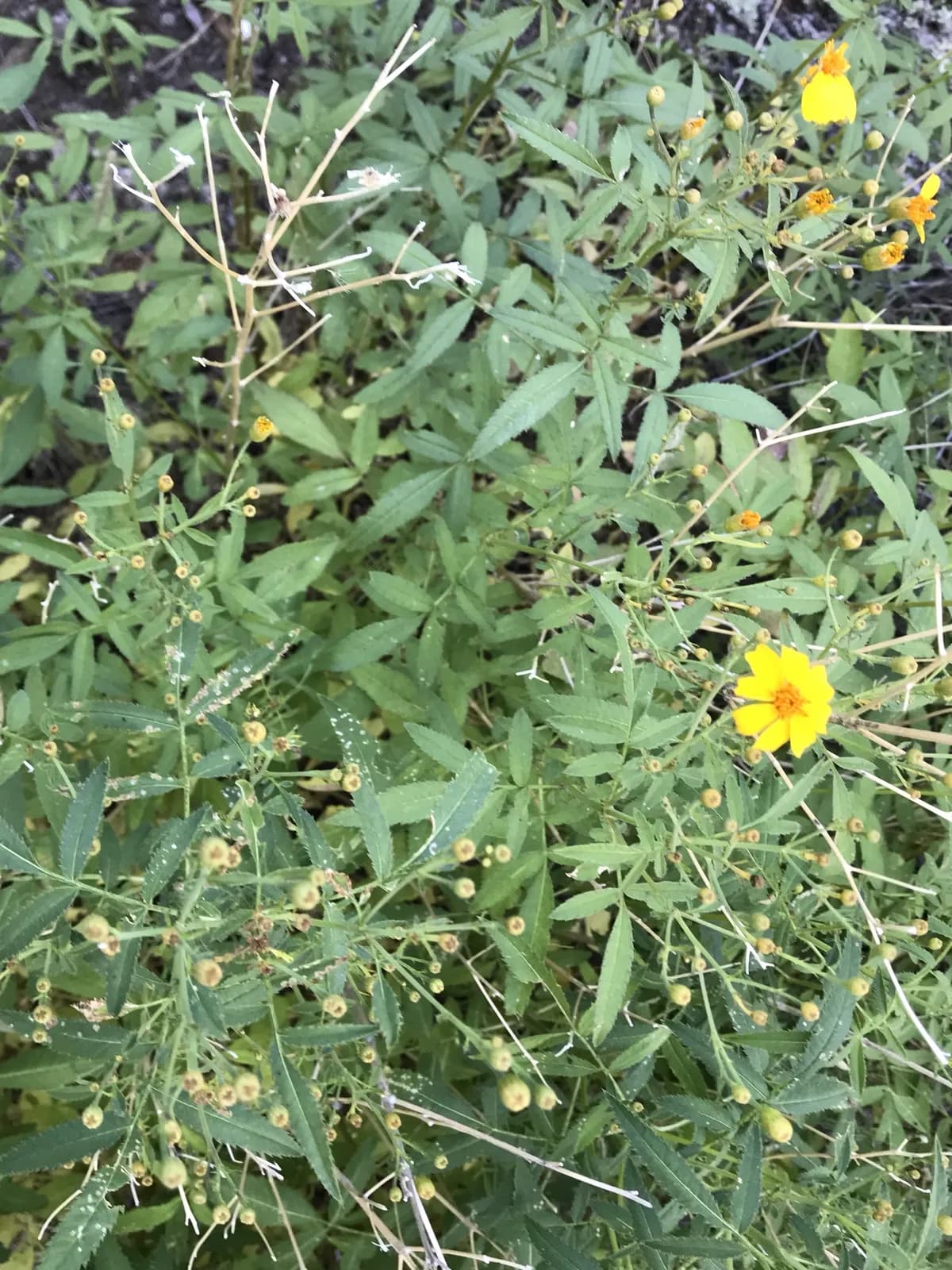
An aromatic, fast-growing shrub with finely cut, pungent-scented foliage and a mass of small orange-gold, marigold-like flowers in fall and early winter. Benefits from an annual hard prune to keep it from getting leggy.
How to care for Lemmon's marigold, by region
How to care for Lemmon's marigold where it is actually grown: year-round basics plus what to do each season, region by region, with the sources for each.
Care guidance last updated: August 2026
Cross Timbers (includes Fort Worth, TX)
Year-round
Copper Canyon daisy (Tagetes lemmonii) is a tough, low-maintenance perennial once its roots are established in the ground, and it is a common mild pet-safety consideration rather than a garden risk.
- Plant in full sun to light afternoon shade in well-drained soil. Wet, heavy soil that stays soggy is the main way this plant struggles, so amend clay soil or plant on a slight mound if drainage is poor.
- Water about twice a week while the plant is newly in the ground, then taper off to occasional deep watering once it is established and putting out new growth. It is genuinely drought-tolerant once rooted in.
- Skip regular fertilizer. It does fine, and often blooms better, in lean soil, and feeding it too often mainly produces floppy, leggy growth.
- The aromatic, finely cut foliage is usually left alone by deer, and the gold fall flowers draw bees and butterflies.
- Expect a rounded shrub roughly 3 to 6 feet tall and wide at maturity, so give it room rather than tucking it right against a walkway or foundation.
- All Tagetes marigolds, including this one, can cause mild stomach upset if a pet eats the leaves or flowers, and the sap can irritate skin on contact. This is a mild, not severe, risk according to veterinary poison control resources.
The neat, rounded mound shape and long fall bloom read as an intentional, HOA-friendly front-yard planting rather than something overgrown, especially once it gets its late-winter cutback.
Fall
Fall is the main event for copper canyon daisy in Fort Worth, right up until the season's first freeze.
- Shortening day length, not just cooler weather, is what triggers this plant's big flush of gold flowers from late summer into fall.
- Fort Worth's average first freeze lands around November 22, and top growth typically blackens and dies back once a hard freeze arrives.
- There is no need to rush cleanup right after the first freeze. Leaving the frost-killed top growth in place over winter helps protect the crown and roots, and pruning waits until late winter or early spring.
- This is also the showiest window for pollinators, with bees and butterflies actively working the flowers right up to the first freeze.
The dense fall flower show is one of this plant's more eye-catching, HOA-friendly displays, since it reads as a maintained seasonal planting rather than something left to go wild.
Winter
Winter is a wait-it-out period for copper canyon daisy in the Fort Worth area, with the top growth expected to die back after the first hard freeze.
- Expect above-ground growth to die back once temperatures drop into the mid-20s Fahrenheit or below, which happens in most Fort Worth winters.
- Leave the dead top growth standing through winter instead of cutting it back now. It helps insulate the crown and roots through the coldest nights.
- Fort Worth falls in roughly USDA hardiness zone 8a, and this plant is generally rated hardy through zone 8, so an established, well-rooted plant is expected to come back from its roots even after a hard freeze knocks the top growth back.
- Hold off on fertilizing over winter. Feeding a dormant plant can push soft new growth right before the next freeze damages it.
Spring
Spring in the Fort Worth area is cutback-and-recovery season for copper canyon daisy after winter frost damage.
- The Dallas-Fort Worth area's average last freeze lands around March 12, so hold off on hard pruning until after that point to avoid pushing out tender new growth right before a late cold snap.
- Once freeze risk has passed, cut the whole plant back by about a third to remove any frost-blackened stems left from winter. This resets it to a dense, bushy shape for the growing season.
- New growth from the base after a hard winter dieback is normal, not a sign of a dead plant. It regrows readily from its roots in Fort Worth's climate.
- If it puts out a light flush of flowers in late spring, a gentle shaping trim in early summer helps keep it compact and sets up a fuller fall bloom.
Summer
Summer heat is when copper canyon daisy mostly wants to be left alone, watered sparingly, and left unpruned after midsummer.
- Once established, this plant handles a Fort Worth summer on low water and prefers to dry out between waterings rather than sit in damp soil.
- Overwatering during summer heat is a more common way to lose this plant than underwatering it, so when in doubt, water less rather than more.
- Stop shearing or shaping the plant by midsummer. Trimming too late in the season removes the flower buds that would otherwise open in fall.
- The strongly scented foliage tends to hold up against deer and rabbit browsing through the hottest months, when other plants in the bed often get hit harder.
Its low water needs once established make it a good, HOA-conscious pick for cutting back irrigation in a visible front bed through peak summer heat.
Sources: Denton County Master Gardener Association, Copper Canyon Daisy, Pet Poison Helpline, Marigold, City of Austin Watershed Protection, Daisy, Copper Canyon plant guide, National Weather Service Fort Worth/Dallas, Freeze Data and Cold Season Temperatures, Bexar County Master Gardeners, Plant Spotlight: Copper Canyon Daisy, Your Flowers Guide, Tagetes lemmonii (Copper Canyon daisy): fall to winter color (community tip)
Texas Blackland Prairies (includes Dallas, TX)
Year-round
Copper Canyon daisy (Tagetes lemmonii) is a tough, low-maintenance perennial once its roots are established in the ground, and it is a common mild pet-safety consideration rather than a garden risk.
- Plant in full sun to light afternoon shade in well-drained soil. Wet, heavy clay soil that stays soggy is the main way this plant struggles in Dallas gardens, so amend the soil or plant on a slight mound if drainage is poor.
- Water about twice a week while the plant is newly in the ground, then taper off to occasional deep watering once it is established and putting out new growth. It is genuinely drought-tolerant once rooted in.
- Skip regular fertilizer. It does fine, and often blooms better, in lean soil, and feeding it too often mainly produces floppy, leggy growth.
- The aromatic, finely cut foliage is usually left alone by deer, and the gold fall flowers draw bees and butterflies.
- Expect a rounded shrub roughly 3 to 6 feet tall and wide at maturity, so give it room rather than tucking it right against a walkway or foundation.
- All Tagetes marigolds, including this one, can cause mild stomach upset if a pet eats the leaves or flowers, and the sap can irritate skin on contact. This is a mild, not severe, risk according to veterinary poison control resources.
The neat, rounded mound shape and long fall bloom read as an intentional, HOA-friendly front-yard planting rather than something overgrown, especially once it gets its late-winter cutback.
Fall
Fall is the main event for copper canyon daisy in Dallas, right up until the season's first freeze.
- Shortening day length, not just cooler weather, is what triggers this plant's big flush of gold flowers from late summer into fall.
- Dallas's average first freeze lands around November 22, and top growth typically blackens and dies back once a hard freeze arrives.
- There is no need to rush cleanup right after the first freeze. Leaving the frost-killed top growth in place over winter helps protect the crown and roots, and pruning waits until late winter or early spring.
- This is also the showiest window for pollinators, with bees and butterflies actively working the flowers right up to the first freeze.
The dense fall flower show is one of this plant's more eye-catching, HOA-friendly displays, since it reads as a maintained seasonal planting rather than something left to go wild.
Winter
Winter is a wait-it-out period for copper canyon daisy in the Dallas area, with the top growth expected to die back after the first hard freeze.
- Expect above-ground growth to die back once temperatures drop into the mid-20s Fahrenheit or below, which happens in most Dallas winters.
- Leave the dead top growth standing through winter instead of cutting it back now. It helps insulate the crown and roots through the coldest nights.
- Dallas falls in roughly USDA hardiness zone 8b, and this plant is generally rated hardy through zone 8, so an established, well-rooted plant is expected to come back from its roots even after a hard freeze knocks the top growth back.
- Hold off on fertilizing over winter. Feeding a dormant plant can push soft new growth right before the next freeze damages it.
Spring
Spring in the Dallas area is cutback-and-recovery season for copper canyon daisy after winter frost damage.
- The Dallas-Fort Worth area's average last freeze lands around March 12, so hold off on hard pruning until after that point to avoid pushing out tender new growth right before a late cold snap.
- Once freeze risk has passed, cut the whole plant back by about a third to remove any frost-blackened stems left from winter. This resets it to a dense, bushy shape for the growing season.
- New growth from the base after a hard winter dieback is normal, not a sign of a dead plant. It regrows readily from its roots in Dallas's climate.
- If it puts out a light flush of flowers in late spring, a gentle shaping trim in early summer helps keep it compact and sets up a fuller fall bloom.
Summer
Summer heat is when copper canyon daisy mostly wants to be left alone, watered sparingly, and left unpruned after midsummer.
- Once established, this plant handles a Dallas summer on low water and prefers to dry out between waterings rather than sit in damp soil.
- Overwatering during summer heat is a more common way to lose this plant than underwatering it, so when in doubt, water less rather than more.
- Stop shearing or shaping the plant by midsummer. Trimming too late in the season removes the flower buds that would otherwise open in fall.
- The strongly scented foliage tends to hold up against deer and rabbit browsing through the hottest months, when other plants in the bed often get hit harder.
Its low water needs once established make it a good, HOA-conscious pick for cutting back irrigation in a visible front bed through peak summer heat.
Sources: Denton County Master Gardener Association, Copper Canyon Daisy, Pet Poison Helpline, Marigold, City of Austin Watershed Protection, Daisy, Copper Canyon plant guide, National Weather Service Fort Worth/Dallas, Freeze Data and Cold Season Temperatures, Your Flowers Guide, Tagetes lemmonii (Copper Canyon daisy): fall to winter color (community tip), PlantMaps, Dallas, Texas Hardiness Zones (community tip)
Want these tasks as reminders timed to your yard? Pollinator Patch turns this guidance into a season-by-season care plan for the plants you actually grow.
Wildlife value
Its late-season flush of bloom is an important nectar source for butterflies and bees heading into winter.
Common questions
- How much sun does Lemmon's marigold need?
- Lemmon's marigold grows best in full sun conditions.
- When does Lemmon's marigold bloom?
- Lemmon's marigold blooms in September, October, November, and December.
- Where is Lemmon's marigold native?
- Lemmon's marigold (Tagetes lemmonii) is native to AZ, per vouchered herbarium specimen records and regional native plant society lists.
- What pollinators does Lemmon's marigold attract?
- Lemmon's marigold draws butterflies and bees.
Native range data from vouchered herbarium specimen records and regional native plant society lists. Pollinator and host plant associations compiled from GBIF, iNaturalist, and published ecological literature.
If something looks wrong
Common plant problems, and what to check first
These come up on almost any plant. Each guide lists the likely causes in the order they are worth ruling out, with one thing to check before you act on any of them, and links to the source it came from.
- It is dying right after planting
- Leaves turning yellow
- Wilting even though I watered it
- Brown crispy leaf tips
- Bugs on the plant
Ready to grow Lemmon's marigold? Add it to your garden in Pollinator Patch to track it and get season-by-season care guidance.
Planning a bed around it? Start a free plan with this plant
Not sure where to start? Take the 2-minute yard quiz