Lindheimer's Crownbeard
Verbesina lindheimeri
Last reviewed: August 2026
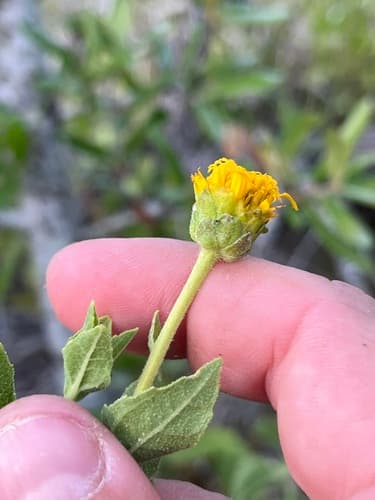
Verbesina lindheimeri is a sun loving Texas Hill Country forb that produces clusters of small yellow flowers from spring through late fall and attracts bees and butterflies.
Toxicity unknown
Lindheimer's Crownbeard (Verbesina lindheimeri) is not listed by the ASPCA Animal Poison Control Center (opens in new tab) or the other sources we check, so we have no verdict for it either way. Absence from those lists is not a clearance. If your pet shows symptoms after eating any plant, call the ASPCA at (888) 426-4435.
Light
full sun
Water
medium
Size
18"–24" H × 3"–6" W
Bloom
Mar, Apr, May, Jun, Jul, Aug, Sep, Oct, Nov
Native to
TX
Pollinators
butterflies, bees
Before you buy
Your city may pay you to plant this
Cities and water utilities offer rebates for replacing lawn with native and water-wise plants. We track 452 programs across 44 states, each with a link to the provider and the date we last checked it.
Find rebates in your areaBrowse plants for this ecoregion
Lindheimer's Crownbeard is a compact native perennial that produces bright yellow daisy-like flowers from spring through fall. This drought-tolerant plant forms neat clumps and provides nearly continuous blooms with minimal care.
Growing Lindheimer's Crownbeard
Grow Lindheimer's Crownbeard in full sun and medium water. Mature plants reach 18 to 24 inches tall and spread 3 to 6 inches wide. Expect low maintenance to keep it looking intentional in a front yard.
How to care for Lindheimer's Crownbeard, by region
How to care for Lindheimer's Crownbeard where it is actually grown: year-round basics plus what to do each season, region by region, with the sources for each.
Care guidance last updated: July 2026
Texas Blackland Prairies (includes Dallas, TX)
Year-round
Lindheimer's crownbeard is a tough little perennial that throws yellow daisy flowers over a really long season, and it draws in native bees and butterflies while it does. It stays a tidy narrow clump about 18 to 24 inches tall, so it fits nicely at the front of a bed. It is native to Texas, though its natural home is the Hill Country to the west, not the Dallas Blackland Prairie, so around here you are growing a Texas native that adapts well to your black clay. Give it full sun to a little afternoon shade and medium water, and the main thing to watch in Dallas is drainage, since it does not love sitting in soggy gumbo. A light deadhead now and then keeps the long bloom looking neat and on purpose.
- Plant in full sun to part shade for the best flowering
- Give it medium water and make sure the clay drains between soakings
- Keep it front of bed where its narrow 18 to 24 inch clump stays tidy
- Deadhead spent flowers lightly to keep the long bloom looking intentional
- Leave room around it since it clumps rather than spreading
- Its yellow flowers feed native bees and butterflies across a long season
A neat, long-blooming front-of-bed plant with a tidy narrow clump, which reads as intentional and stays HOA-friendly with a light deadhead.
Fall
Fall is the sweet spot for this plant on two fronts. It is the very best time to put a new one in the ground around Dallas, since the roots get all the mild winter to settle before next summer's heat, and fall rains keep the clay moist for you. It is also the peak of the bloom, with flowers running strong from September into November and drawing native bees plus migrating butterflies passing through. Enjoy the show and hold off on cutting anything back yet, since the late flowers are still feeding pollinators.
- Plant new crownbeard now for the strongest fall-through-winter root start
- Water new plantings in well and keep the clay evenly moist while they settle
- Leave the late blooms up to feed bees and passing butterflies
- Hold off on any hard cutback until the flowering finishes
- Let fall rains handle most of the watering once plants are established
Winter
Winters in Dallas are short and mild with only light freezes, and your crownbeard goes quiet and dormant through them as a deciduous perennial. The top growth dies back and that is completely normal, so do not panic when it looks like nothing. This is the easy season, with almost no work beyond leaving the roots be in the cold clay. A little standing dead stem can wait until late winter, when you can cut it back to the ground before spring pushes new growth.
- Expect the top to die back fully since this is a deciduous perennial
- Do almost nothing, the dormant roots ride out the light freezes fine
- Cut old stems to the ground in late winter before new growth starts
- Avoid watering, the plant is resting and wet cold clay is a risk
- Hold off on mulch piled against the crown to keep it from staying soggy
Spring
Spring is when your crownbeard wakes up and starts pushing new growth, and Dallas usually gets its best rain now, so the clay is soft and workable. This is a fine second-best window to plant if you missed fall, since the roots get a head start before the summer heat lands. Watch the black clay after those spring downpours, because it holds water and you do not want the crown sitting wet. The plant can start blooming as early as May, so a little tidy-up now sets it up for the long show ahead.
- Plant now if you missed the fall window, while spring rain keeps the clay soft
- Cut back last year's dead stems to the ground as new growth appears
- Hold off on extra water when spring rains are doing the job
- Make sure water drains away from the crown after heavy downpours
- Pull early spring weeds around the clump before they crowd it
Summer
Dallas summers are the real test, with stretches of 95 to 100 degrees and long dry spells that crack the black clay wide open. Your crownbeard is drought tolerant once it is settled in, so an established plant coasts through most of it with deep, occasional watering rather than daily sips. A new plant in its first summer needs more help, so water it deeply when the top few inches of clay dry out. It will keep blooming yellow through the heat, and those flowers are a steady food source for native bees when a lot of other things have quit.
- Water deeply but infrequently rather than a little every day
- Baby a first-year plant with deeper soaks through the worst heat
- Let an established plant lean on its drought tolerance during dry spells
- Water in the early morning so the clay is not left soggy overnight
- Deadhead spent blooms to keep flowers coming and the clump neat
- Skip fertilizer, since this native does not need rich feeding
Sources: USDA PLANTS Database, Verbesina lindheimeri (VELI2), Lady Bird Johnson Wildflower Center, Verbesina lindheimeri, Native Plant Society of Texas, Verbesina lindheimeri
Want these tasks as reminders timed to your yard? Pollinator Patch turns this guidance into a season-by-season care plan for the plants you actually grow.
In an HOA neighborhood
Lindheimer's Crownbeard is an HOA-friendly choice. Maintenance level: low. Tidiness: 4 out of 5.
Works well in: front yard, foundation, street edge, mid zone.
Wildlife value
Excellent pollinator plant that attracts butterflies and native bees throughout its extended blooming season. The long flowering period makes it particularly valuable for sustaining pollinator populations.
Common questions
- When does Lindheimer's crownbeard bloom?
- It blooms over a long stretch, typically from March through November, with flowers appearing in flushes rather than continuously.
- What pollinators visit Verbesina lindheimeri?
- Bees and butterflies regularly visit the small yellow flower clusters for nectar and pollen.
- How much water does this plant need?
- It grows best with medium moisture but tolerates drier soils once established, making it a good fit for rocky or limestone terrain.
- How much sun does Lindheimer's crownbeard require?
- Full sun produces the best flowering, though it can also handle part sun or light part shade conditions.
- Is Lindheimer's Crownbeard HOA-friendly?
- Lindheimer's Crownbeard is generally an HOA-friendly choice in the right placement, with low maintenance.
These answers were drafted with an AI model from this plant's data. Verify care details with a local expert.
Native range data from vouchered herbarium specimen records and regional native plant society lists. Pollinator and host plant associations compiled from GBIF, iNaturalist, and published ecological literature.
If something looks wrong
Common plant problems, and what to check first
These come up on almost any plant. Each guide lists the likely causes in the order they are worth ruling out, with one thing to check before you act on any of them, and links to the source it came from.
- It is dying right after planting
- Leaves turning yellow
- Wilting even though I watered it
- Brown crispy leaf tips
- Bugs on the plant
Ready to grow Lindheimer's Crownbeard? Add it to your garden in Pollinator Patch to track it and get season-by-season care guidance.
Planning a bed around it? Start a free plan with this plant
Not sure where to start? Take the 2-minute yard quiz