Lindheimer's Muhly
Muhlenbergia lindheimeri
Light
full sun
Water
low
Size
24"–48" H × 24"–36" W
Bloom
Sep, Oct, Nov
Native to
Edwards Plateau
Pollinators
birds
Picture natives in your own yard
Upload a photo of your yard and Patch Vision shows a rendering of it planted with natives for your region, like Lindheimer's Muhly.


Browse plants for this ecoregion
Lindheimer's Muhly is a perennial grass native to Edwards Plateau. It grows best in full sun with low water needs.
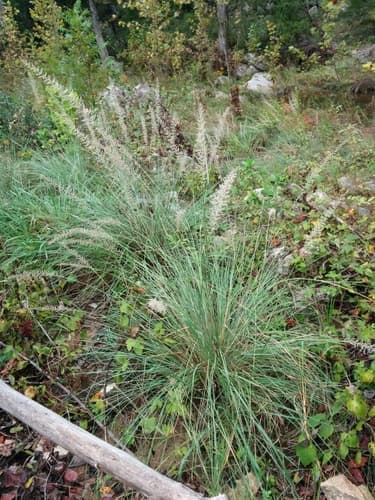
Lindheimer's Muhly (Muhlenbergia lindheimeri) is the blue-gray native grass of the Edwards Plateau. The narrow arching leaves form a fountain shape 2-4 feet tall and 2-3 feet wide, staying attractive year-round. Pale silver-purple flower plumes appear from September through November. Lady Bird Johnson Wildflower Center lists it as a keystone species for Central Texas native gardens.
Lindheimer's Muhly is not on the ASPCA Animal Poison Control Center toxic plant list for dogs or cats. The blue-gray foliage color is unusual among Texas natives and provides contrast against green-leaved perennials all season. In HOA neighborhoods, the fountain form and year-round structure read as a designed garden element rather than a weedy grass.
Ecoregion notes for Texas. In the Edwards Plateau and Hill Country (alkaline limestone, rocky, 25-35 inches of rain): native and ideal. Plant in full sun, avoid overwatering, and do not fertilize. One deep watering per month in summer establishes it within one season. In the Blackland Prairie (DFW, Austin, San Antonio metro): not native but performs well in landscape use; avoid heavy clay planting pockets by amending with grit. In the South Texas Plains (Brush Country, drier and hotter): adapts but water through the first summer. In the Trans-Pecos: native to parts of the region; handles full heat and alkalinity without issue.
Lindheimer's Muhly pairs naturally with Texas Sage, Blackfoot Daisy, and Gregg's Mistflower for a year-round bed that requires almost no maintenance. Cut to 6 inches in late February. Division is rarely needed; a well-established clump looks better each year as it matures. The silver-blue foliage works well as a transition between warm-toned plants like Autumn Sage and cool-toned ones like Mealy Blue Sage.
Bee species data compiled from GBIF, iNaturalist, Discover Life, and the USGS Native Bee Inventory and Monitoring Lab. Plant-pollinator associations informed by published ecological literature.
How to care for Lindheimer's Muhly, by region
How to care for Lindheimer's Muhly where it is actually grown: year-round basics plus what to do each season, region by region, with the sources for each.
Care guidance last updated: October 2026
Cross Timbers (includes Fort Worth, TX)
Year-round
Big Muhly is a native Texas bunchgrass that grows as a tidy, fountain-shaped clump, staying green most of the year and putting on a show of silvery plumes later in the season. Once it is established it needs very little from you, which makes it a low-effort choice for a front bed.
- Plant in full sun, at least 6 hours of direct light a day
- Give it well drained, sandier loam soil typical of the Cross Timbers area west of the metro, it does not like standing water
- Space clumps about 3 feet apart since a mature plant can spread 3 to 6 feet across
- Water deeply once or twice a week for the first growing season to help roots establish, then cut back to occasional deep watering during dry stretches
- Do not fertilize heavily, this grass is adapted to lean native soils and can flop if it is overfed
A single, well spaced clump reads as an intentional ornamental planting rather than an overgrown patch, keep it as one defined mound instead of letting several plants merge into a sprawling mass.
Fall
Fall is Big Muhly's showcase season, the clump sends up light purplish grey plumes above the foliage that catch the light and last for weeks.
- Expect peak plume display from September through November
- Leave the plumes standing, this is the main ornamental payoff of the plant and cutting now removes the display
- Water is rarely needed this time of year unless North Texas is in an extended dry fall, then one deep watering every couple of weeks is enough
- If you are adding a new plant this year, fall is also a fine planting window since cooler air is easier on new roots than summer heat
- Rake up any fallen tree leaves that collect in the base of the clump so the plumes stay visible
The upright, silvery plumes are the plant's strongest curb appeal moment and commonly read as deliberate ornamental grass planting, a good season to point to if a neighbor questions why the bed is not turf.
Winter
North Texas winters are mild with only short hard freezes, so Big Muhly stays semi evergreen and mostly holds its shape and color through the season.
- Do not hard prune the clump during the cold months, cutting it back while it is dormant can leave it slow to recover in spring
- Instead, groom it lightly, pull or rake out dead blades and snap off any brittle stalks by hand
- Leave the fading plumes in place through winter, they add texture to the bed and provide some cover for birds
- No supplemental water is typically needed unless North Texas goes through an unusually dry stretch with no rain for several weeks
- Wait until you see new green growth at the base before doing any harder cutback, generally later in February or into March
A neat, lightly groomed clump with its plumes intact looks tended rather than neglected through winter, avoid the temptation to shear it flat, that bare stubble reads as an empty bed until spring.
Spring
Spring is the best time to get a new Big Muhly into the ground in North Texas, and established clumps will start pushing new blue green blades as the weather warms.
- Plant new nursery stock any time from mid March through May, after the last frost has passed
- Water new plantings 2 to 3 times a week for the first 6 to 8 weeks so roots can spread into the surrounding soil
- If you did not tidy the clump in late winter, comb out any leftover dead leaves by hand or with a leaf rake once new green blades appear
- Divide an overgrown clump in early spring if the center has died out, replant the healthy outer sections
- Hold off on fertilizer, established plants do not need it and new plantings only need the water
Fresh spring growth on a clean, undivided clump looks deliberate and cared for, this is a good season to add one if the bed currently reads as bare or unfinished.
Summer
This grass is built for a North Texas summer. An established clump handles the 100 degree stretches on very little water, but anything planted this year still needs help getting through its first hot season.
- Water an established clump only during extended dry spells, roughly once every 1 to 2 weeks, deep soaking rather than a quick sprinkle
- Water a first year planting twice a week through July and August, this is when new plants are most likely to die if neglected
- Watch for the earliest wispy seed plumes beginning to show late in the summer, this is the start of its main bloom season
- Do not cut the clump back in summer even if it looks a little ragged, wait for its natural fall and winter display
- Skip fertilizer, feeding during the hottest months encourages weak, floppy growth
Sources: Lady Bird Johnson Wildflower Center, Muhlenbergia lindheimeri, NC State Extension Plant Toolbox, Muhlenbergia lindheimeri
Edwards Plateau (includes San Antonio, TX)
Year-round
Big Muhly (Lindheimer's Muhly) is a Texas Hill Country bunchgrass native to the Edwards Plateau, which is the same ecoregion San Antonio sits in, so it is well matched to the area's alkaline, rocky soils and dry heat.
- Native to the Edwards Plateau of central Texas, including the San Antonio area, and south into northern Mexico, according to the Lady Bird Johnson Wildflower Center.
- Plant in full sun with fast drainage, in rocky, limestone, sandy, or clay loam soil.
- Water deeply to get it established, then let the soil dry out between waterings once it is settled in.
- Skip heavy fertilizer. Lean soil keeps the clumps sturdy instead of floppy.
- In late winter, rake or comb out old dead blades rather than shearing the whole clump hard, since some plants rebound slowly from a hard cut.
Its tidy, fountain shaped clumps and silvery fall plumes read as an intentional ornamental grass, which makes it an easy fit for HOA-friendly front yard beds.
Fall
Fall is Big Muhly's showcase season in San Antonio, when the clumps send up the silvery plumes that give the plant its ornamental reputation.
- Flower plumes typically appear from late summer into fall, ripening to a silvery white color that can persist for months.
- Leave the seedheads in place. They are the main ornamental feature and also add winter structure and some cold protection for the crown.
- Cut back watering frequency as temperatures cool and rainfall picks up in fall.
- San Antonio's first fall frost typically lands in mid to late November, well after the plant has already been through its main bloom cycle.
Winter
Winter is dormancy for Big Muhly. The main job is leaving the clump alone until just before spring growth starts.
- The plant is cold hardy well below San Antonio's typical winter lows, so freeze damage to the crown is uncommon in this area in a normal winter.
- Foliage may stay semi-evergreen or brown off depending on how cold the winter gets. Either way, leave the dead blades and seedheads standing through winter.
- Avoid piling heavy mulch directly over the crown and keep winter soil from staying soggy.
- Wait until very late winter, just before new growth starts, to rake out old foliage rather than cutting the clump back mid-winter.
Spring
Spring is when Big Muhly pushes fresh green blades after winter dormancy, so this is the last window for cleanup before new growth takes over.
- Finish raking out dead winter foliage before new blades emerge, since waiting until after growth starts makes cleanup harder and can damage new shoots.
- New pale green growth should appear from the base of the clump as San Antonio warms through March and April.
- Resume regular deep watering as temperatures rise, tapering off once the plant is clearly growing again.
- Spring is the best time to divide or transplant an established clump if it has outgrown its spot.
- Hold off on fertilizer. This grass performs best in lean soil.
Summer
San Antonio summers are hot and often dry, but an established Big Muhly wants less water during this stretch, not more.
- Once established, water deeply only once or twice a month through summer rather than on a frequent shallow schedule.
- Let the soil dry out between waterings. Consistently soggy soil is more likely to cause decline than summer heat is.
- The plant tolerates San Antonio's intense summer sun and heat well and needs no shade protection.
- Newly planted clumps still need more frequent watering through their first summer while roots establish.
- Yellowing or browning blade tips in peak summer usually signal it is time for a deep watering, not a sign of disease.
Sources: Lady Bird Johnson Wildflower Center, Native Plant Database: Muhlenbergia lindheimeri, Native Plant Society of Texas, Big Muhly plant profile, Gardenia.net, Lindheimer's Muhly Grow and Care Guide, NC State Extension Plant Toolbox, Muhlenbergia lindheimeri
South Central Plains (includes Beaumont, TX)
Year-round
Lindheimer's muhly is a 2 to 5 foot clumping grass that needs full sun and well-drained soil, and overwatering is its main problem in wet Beaumont.
- Plant in full sun, at least 6 hours a day.
- It tolerates clay but wants it well drained, so raise the planting spot in Beaumont.
- Too much moisture can cause root rot, crown rot, and flopping foliage.
- Plumes bloom from May through November in purplish, silvery, or whitish-gray tones.
Rake out dead leaves in late winter to keep the clump looking neat from the street.
Fall
Fall is peak plume season, with flowers lasting into November.
- Enjoy the plumes through November.
- Fall is a good time to plant so roots settle before winter.
- Keep watering light and let rain do most of the work.
- Leave seed plumes in place for now, since cutting back is a late-winter job.
Winter
Winter is a rest period, and cutting back during cold weather slows recovery.
- Do not cut back during cold weather, because recovery will be sluggish.
- Break off old brittle flower stalks by hand to tidy up.
- Rake out dead leaves to keep the clump neat.
- Avoid winter watering on top of regular rain to prevent crown rot.
Spring
Spring is a good time to plant, and wet spring weather is the main thing to manage.
- Plant in a raised, well-drained spot in full sun.
- Water new plants occasionally and let the soil dry between waterings.
- Avoid rich soil and extra shade, which can make foliage flop.
- Remove old dead leaves with a rake once weather has warmed.
Summer
Summer is when plumes start, and established clumps are drought tolerant.
- Water only when the soil has dried out for a while.
- Overwatering reduces flowers and can cause rot.
- Full sun keeps the clump upright and the plumes full.
- Watch for aphids and rust in humid weather.
Sources: NC State Extension Gardener Plant Toolbox - Muhlenbergia lindheimeri
Texas Blackland Prairies (includes Dallas, TX)
Year-round
Lindheimer's muhly is a warm-season clumping grass that grows into a tidy fountain-shaped mound. In the Dallas area's Blackland Prairie clay, it does best in full sun with good drainage. Once its roots are settled it needs very little from you, mostly one cutback a year and the occasional deep soak in a bad drought.
- Establishment: water a new plant deeply once or twice a week for the first summer so the roots reach down into the heavy clay, then taper off.
- Watering once established: a deep soak every two to three weeks during a hot dry stretch is plenty; this grass rots if it sits in soggy soil.
- Mulch: keep a two to three inch ring of mulch around the base but pull it back a few inches from the crown so the center stays dry.
- Common mistake: shearing it into a ball or cutting it back in fall removes the winter interest and can let water pool in the crown; cut it back once in late winter instead.
Fall
Fall is when this grass earns its keep around Dallas, sending up airy tan to silvery seed plumes above the mound. The main rule is to leave it standing rather than cutting it down.
- Enjoy the fall bloom and leave the plumes in place; they carry the plant through winter.
- Do not cut the clump back in fall, since an open crown can collect cold rain and rot over winter.
- If you want fewer volunteer seedlings next year, snip a few of the mature plumes before they fully shatter.
Leaving the tan plumes up reads as an intentional seasonal display rather than neglect, so a tidy standing clump is far less likely to draw a violation letter than a half-cut stub.
Winter
Winters around Dallas will brown the blades and the clump goes dormant, but the dried mound and plumes still look good and shelter the crown. Leave it standing and plan your cutback for the tail end of the season.
- Leave the dormant tan clump standing through most of winter for its shape and to protect the crown from cold and wet.
- Time the annual cutback to about four to six inches for late winter, just before new spring growth begins.
- No watering is needed while the plant is dormant unless the winter is unusually warm and bone dry.
A clean, upright dried clump reads as an intentional winter silhouette, so keeping it neat until the late-winter cutback helps it stay HOA-friendly and avoids a letter over a flattened mess.
Spring
Spring is planting and clean-up time in the Dallas area. If you skipped the winter cutback, do it now before new green blades push up, and hold off on feeding since this grass thrives in lean soil.
- Cut the whole clump back to about four to six inches before new growth starts, usually late February into March around Dallas.
- Skip fertilizer; rich feeding makes the clump flop open and lose its neat shape.
- If a clump has gotten woody and hollow in the middle, early spring is the time to dig and divide it.
Doing the hard cutback in early spring keeps the plant reading as intentional and cared for through the growing season, which helps avoid a violation letter over a ragged front-yard clump.
Summer
Dallas summers are long and hot, which this grass handles well once it is established. Your main job is to water deeply but rarely and resist the urge to fuss with it.
- Give an established clump a deep soak every two to three weeks only if you hit a real drought; otherwise leave it alone.
- Water a first-year plant more often, about once or twice a week, until it is settled.
- Do not trim or shape it in summer; the green mound is the whole point this time of year.
Sources: Lady Bird Johnson Wildflower Center Muhlenbergia lindheimeri, Texas AandM AgriLife Extension ornamental grasses, Texas AandM AgriLife Extension Earth-Kind landscaping water use
Before you buy
Your city may pay you to plant this
Cities and water utilities offer rebates for replacing lawn with native and water-wise plants. We track 459 programs across 44 states, each with a link to the provider and the date we last checked it.
Find rebates in your areaIf something looks wrong
Common plant problems, and what to check first
These come up on almost any plant. Each guide lists the likely causes in the order they are worth ruling out, with one thing to check before you act on any of them, and links to the source it came from.
- It is dying right after planting
- Leaves turning yellow
- Wilting even though I watered it
- Brown crispy leaf tips
- Bugs on the plant
Ready to grow Lindheimer's Muhly? Add it to your garden in Pollinator Patch to track it and get season-by-season care guidance.