Marsh-rosemary
Limonium californicum
Last reviewed: September 2026
Marsh-rosemary (Limonium californicum) is a perennial forb native to CA, NV, OR. It blooms in June, July, August, and September. The flowers draw bees and butterflies.
Toxicity unknown
Marsh-rosemary (Limonium californicum) is not listed by the ASPCA Animal Poison Control Center (opens in new tab) or the other sources we check, so we have no verdict for it either way. Absence from those lists is not a clearance. If your pet shows symptoms after eating any plant, call the ASPCA at (888) 426-4435.
Light
full sun
Water
low
Size
12"–24" H × 12"–24" W
Bloom
Jun, Jul, Aug, Sep
Native to
CA, NV, OR
Pollinators
bees, butterflies
Before you buy
Your city may pay you to plant this
Cities and water utilities offer rebates for replacing lawn with native and water-wise plants. We track 458 programs across 44 states, each with a link to the provider and the date we last checked it.
Find rebates in your areaBrowse plants for this ecoregion
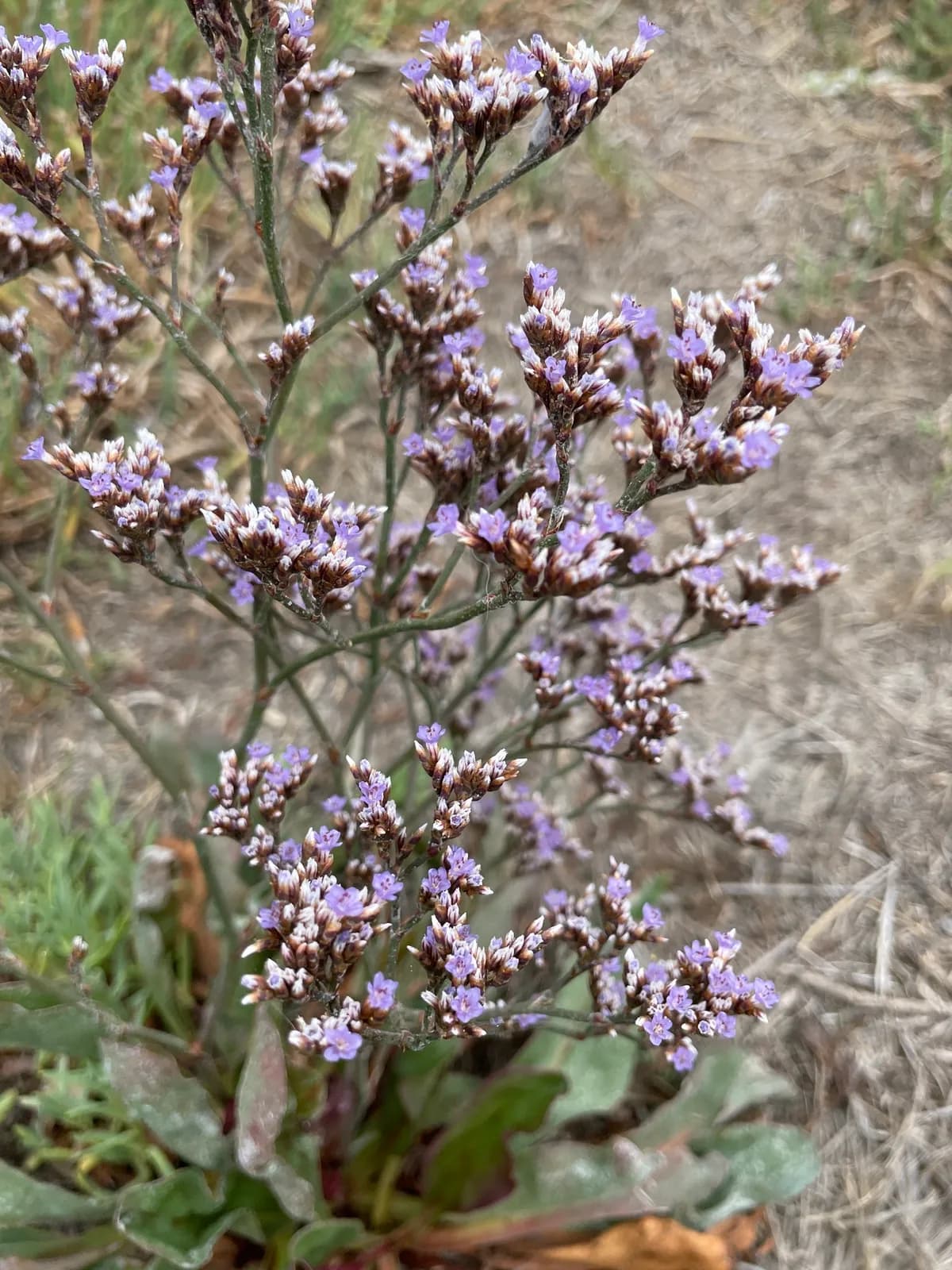
A perennial forb with a basal rosette of leathery, spoon-shaped leaves and wiry, branching flower stalks bearing small clusters of papery lavender-blue flowers. Grows in salt marshes and coastal bluffs, tolerant of saline, poorly drained soils.
Growing Marsh-rosemary
Grow Marsh-rosemary in full sun and low water. Mature plants reach 12 to 24 inches tall and spread 12 to 24 inches wide.
How to care for Marsh-rosemary, by region
How to care for Marsh-rosemary where it is actually grown: year-round basics plus what to do each season, region by region, with the sources for each.
Care guidance last updated: September 2026
Southern California/Northern Baja Coast (includes Los Angeles, CA)
Year-round
Western marsh rosemary, also called California sea lavender, is native to the California coast from Oregon south into Baja California, growing naturally in salt marshes, beaches, and other saline or seasonally flooded coastal habitat, a range that includes the Los Angeles coastline's remaining wetlands and beach edges. It forms a low rosette of thick, leathery leaves topped in summer and fall by branching sprays of small lavender to white flowers.
- Give it full sun and let it grow in whatever soil you have. It is genuinely adaptable and tolerates salty, alkaline, poorly drained, and even seasonally flooded soil better than almost anything else you might plant.
- Water low to moderately. It looks its best with some regular moisture through summer but also tolerates dry spells once established.
- It stays low, usually 1 to 2 feet tall and wide, forming a basal rosette rather than spreading aggressively.
- Its flowers draw native bees, butterflies, and hoverflies, and the dried flower clusters hold their color well if you want to cut some for arrangements.
Fall
Fall is a good planting window for western marsh rosemary in Los Angeles, and the tail end of its bloom season as flower clusters fade and dry on the plant.
- Plant new western marsh rosemary in fall so it can settle in before winter rain and next summer's dry season.
- Let spent flower stalks dry in place if you want them for dried arrangements, or cut them back once the color fades for a tidier look.
- If your yard has a spot with slow drainage or salty runoff, such as near a driveway edge or a low corner, this is a strong candidate plant for it.
- Established plants need little extra water once fall rain starts, though newly planted ones still need regular watering to establish roots.
Winter
Winter rain suits western marsh rosemary well since it is one of the few plants in this list that tolerates standing water and poor drainage without complaint.
- Let winter rain handle watering, including any spot in the yard that puddles after a storm. This plant is unusually tolerant of that.
- The basal rosette of leathery leaves generally stays evergreen through a mild Los Angeles winter.
- No pruning is needed this time of year beyond removing any fully dried leaves that have gone brown at the base.
- This is a fine season to plant if you missed the fall window, since Los Angeles winters are mild enough for roots to keep establishing.
Spring
Spring is a steady growth period for western marsh rosemary in Los Angeles as it builds toward its summer flower show.
- Watch for new leaves filling out the basal rosette as the plant comes out of its slower winter growth.
- Keep watering moderate. It does not need much more than what a typical Los Angeles spring provides between rains.
- If you are adding it near a salty or compacted spot in the yard, spring planting works, though fall is generally the better window for root establishment.
- Flower stalks typically begin forming toward the end of spring, ahead of the main summer to fall bloom.
Summer
Summer through fall is peak bloom for western marsh rosemary in Los Angeles, when its branching sprays of small lavender flowers are at their best.
- Water low to moderately through summer. A little regular moisture keeps the foliage looking fresh, though the plant will tolerate a dry stretch if you miss a watering.
- Full sun and summer heat are what push this plant into its best bloom, so do not worry about it looking stressed in the brightest part of the yard.
- Cut a few flower stalks for indoor arrangements if you like. The papery flowers hold their color well after drying.
- Check for good drainage if the plant is in a container or raised bed rather than the ground, since its wet tolerance mainly applies to garden soil, not stagnant water in a pot.
Its tidy, low rosette and long summer to fall bloom make it an easy plant to keep looking presentable in a front bed with little upkeep.
Sources: Calscape, Limonium californicum (Western Marsh Rosemary) plant profile (native range, habitat, care), Las Pilitas Nursery, Limonium californicum (Western Marsh Rosemary) care notes
Wildlife value
The long summer bloom period provides a steady nectar source for bees and butterflies in the harsh coastal marsh environment where few other plants flower.
Common questions
- How much sun does Marsh-rosemary need?
- Marsh-rosemary grows best in full sun conditions.
- When does Marsh-rosemary bloom?
- Marsh-rosemary blooms in June, July, August, and September.
- Where is Marsh-rosemary native?
- Marsh-rosemary (Limonium californicum) is native to CA, NV, OR, per vouchered herbarium specimen records and regional native plant society lists.
- What pollinators does Marsh-rosemary attract?
- Marsh-rosemary draws bees and butterflies.
Native range data from vouchered herbarium specimen records and regional native plant society lists. Pollinator and host plant associations compiled from GBIF, iNaturalist, and published ecological literature.
If something looks wrong
Common plant problems, and what to check first
These come up on almost any plant. Each guide lists the likely causes in the order they are worth ruling out, with one thing to check before you act on any of them, and links to the source it came from.
- It is dying right after planting
- Leaves turning yellow
- Wilting even though I watered it
- Brown crispy leaf tips
- Bugs on the plant
Ready to grow Marsh-rosemary? Add it to your garden in Pollinator Patch to track it and get season-by-season care guidance.