Mayhaw
Crataegus opaca
Last reviewed: August 2026
Mayhaw is a small deciduous tree that produces white spring flowers and tart red fruit prized for jelly making. It thrives in wet bottomlands and swampy woods across the Gulf Coast region.
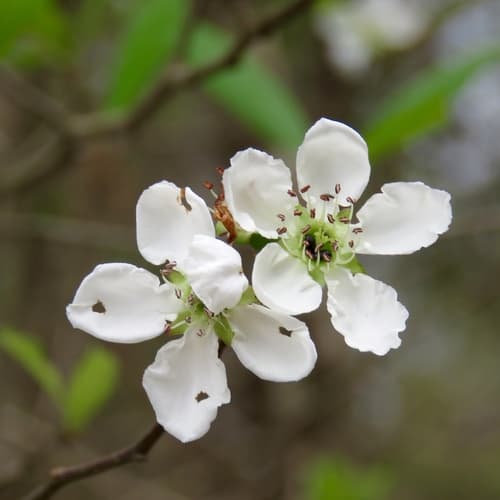
Mayhaw (Crataegus opaca) is not on the ASPCA Animal Poison Control Center toxic plant list for dogs or cats (aspca.org (opens in new tab), last reviewed 2026-05-21). If your pet shows symptoms after eating any plant, call the ASPCA at (888) 426-4435.
Light
part sun
Water
medium
Size
240"–360" H × 240"–360" W
Bloom
Mar, Apr, May
Native to
AL, LA, MS, TX
Pollinators
bees
Before you buy
Your city may pay you to plant this
Cities and water utilities offer rebates for replacing lawn with native and water-wise plants. We track 452 programs across 44 states, each with a link to the provider and the date we last checked it.
Find rebates in your areaBrowse plants for this ecoregion
Mayhaw is a small to medium-sized native Texas tree that produces clusters of white flowers in spring followed by edible red berries. This deciduous tree has a rounded canopy and works well as a shade tree or specimen plant in larger landscapes.
Growing Mayhaw
Grow Mayhaw in part sun and medium water. Mature plants reach 240 to 360 inches tall and spread 240 to 360 inches wide. Expect low maintenance to keep it looking intentional in a front yard.
How to care for Mayhaw, by region
How to care for Mayhaw where it is actually grown: year-round basics plus what to do each season, region by region, with the sources for each.
Care guidance last updated: September 2026
Mississippi Valley Loess Plains (includes Memphis, TN)
Year-round
Western mayhaw (Crataegus opaca) is a thorny, small flowering tree from Gulf Coast wetlands. In Memphis it is grown outside its documented native range, so treat it as an introduced planting that wants steady moisture and part shade, in return for white spring flowers and tart red fruit good for jelly.
- Give it consistently wet, rich soil. In the wild it grows in swamps and creek and river bottoms, so it will struggle in a dry, fast-draining bed.
- Aim for a soil pH around 6.0 to 6.5 and a part shade to full sun spot.
- This species is documented as native to Gulf Coast states such as Texas, Louisiana, Mississippi, and Alabama, not Tennessee. Grow it in Memphis as a Gulf Coast species outside its documented range rather than calling it a native planting.
- At the genus level, hawthorn (Crataegus) is listed as non-toxic to dogs, cats, and horses. A nibbled leaf or dropped fruit is not a poisoning worry, though a lot of fruit at once can still cause an upset stomach.
- If you plant more than one, space them 20 to 30 feet apart since mature trees spread wide.
Fall
Fall is cleanup and prep time in Memphis: clearing dropped fruit, pruning to an open shape, and finishing up before the average early-November frost.
- Prune to an open, vase-like shape, similar to how you'd prune a peach tree, during late fall or winter dormancy. This makes the thorny branches easier to manage and next year's fruit easier to reach.
- Rake up and remove dropped, rotting mayhaw fruit from the yard, especially near a front walk or driveway, as part of a normal fall cleanup.
- Memphis's average first fall frost lands around November 3. Finish any major pruning or new planting before then so the tree isn't stressed heading into winter.
Raking up dropped fruit and pruning to a tidy, open shape in fall reads as intentional, deliberate yard care and helps avoid an HOA violation letter about mess near the front walk.
Winter
Winter is dormant season for mayhaw in Memphis. This is the best window for structural pruning, and it's worth keeping an eye on cold protection since the tree is being grown outside its warmer, wetter native Gulf Coast range.
- This species is documented as native to Gulf Coast wetlands in states like Texas, Louisiana, Mississippi, and Alabama, not Tennessee. A Memphis planting sits at the cooler edge of what it's used to, so watch young trees for winter dieback after a hard freeze.
- Winter dormancy, after leaf drop and before the average March 30 last frost, is the best window for structural pruning to an open center shape.
- Keep a mulch ring around the base to help hold moisture. Wild mayhaw grows in wetland soil that stays damp even in the cooler months.
- A bare, thorny mayhaw can look untidy at the curb in winter. A fresh mulch ring and one clean pruning pass keeps it reading as a maintained tree rather than a neglected one.
A fresh mulch ring and one clean winter pruning pass keeps a bare, thorny mayhaw reading as intentional rather than neglected, which helps avoid an HOA letter.
Spring
In Memphis, mayhaw blooms very early, often while frost is still a real risk, so spring care is mostly about protecting the flowers and watching for a fruit disease right at bud break.
- Expect white flowers as early as February into March, well before Memphis's average last spring frost of March 30. A late cold snap can damage the blooms and cut the fruit set.
- Watch for quince rust, which infects mayhaw from when flower buds first show color through the end of bloom. A sulfur or myclobutanil fungicide applied in that window is the standard home treatment, since nearby cedar and juniper trees help the fungus complete its life cycle.
- Keep the soil consistently moist through bloom and leaf-out. This species does not handle a dry spring well.
- If you have more than one tree, spring bloom is also when cross-pollination happens, so avoid removing a nearby mayhaw right before flowering.
Summer
Summer in Memphis is hot and can turn dry, so the main job is keeping the root zone steadily moist while the fruit ripens, plus a yearly feeding and a watch for fire blight.
- Fruit ripens from May into June, which is where the tree gets the name mayhaw. Early summer is harvest time if you want the tart fruit for jelly.
- Keep watering through hot, dry stretches. Wild mayhaw grows in wetland soil that rarely fully dries out, so a Memphis summer dry spell will stress a tree used to that much moisture.
- Established trees benefit from about one pound of a balanced fertilizer like 5-10-10 per inch of trunk diameter, applied once a year. A soil test can tell you if it needs more or less.
- Watch for fire blight, a bacterial disease that hits hawthorn and other Rosaceae-family trees in Tennessee. Prune out and dispose of any blackened, burnt-looking branch tips as soon as you see them, and sanitize your pruning tool between cuts.
Sources: Lady Bird Johnson Wildflower Center, Crataegus opaca native range, habitat, and growing conditions, USDA NRCS Plant Materials Center, Western Mayhaw (Crataegus opaca) species fact sheet, ASPCA Toxic and Non-Toxic Plants, Hawthorn (Crataegus species), LSU AgCenter, Mayhaw: A Native Jewel (spacing and site notes), National Weather Service Memphis, average frost and freeze dates, Mississippi State University Extension, Mayhaw Diseases (quince rust)
Want these tasks as reminders timed to your yard? Pollinator Patch turns this guidance into a season-by-season care plan for the plants you actually grow.
In an HOA neighborhood
Mayhaw takes more care to keep looking intentional in a front yard. Maintenance level: low. Consider it for backyard or mid-zone beds rather than the street edge.
Works well in: backyard only.
- Tree size exceeds typical HOA-friendly range
Wildlife value
The spring flowers attract bees and other pollinators, while the red berries provide food for birds and small mammals.
Common questions
- When does Mayhaw bloom?
- Mayhaw typically flowers from March through May, with small white blossoms appearing before the leaves fully emerge.
- What pollinates Mayhaw trees?
- Bees are the primary pollinators of Mayhaw flowers, visiting the blooms for nectar and pollen in early spring.
- How much water does Mayhaw need?
- Mayhaw grows best in consistently moist to wet soil and is often found along riverbanks, ponds, and low-lying wooded areas that flood seasonally.
- What kind of light does Mayhaw prefer?
- Mayhaw does well in part sun to part shade conditions, often growing as an understory or edge tree in swampy woodlands.
- Does Mayhaw lose its leaves in winter?
- Yes, Mayhaw is deciduous and drops its leaves each fall, leafing out again in spring around bloom time.
- Is Mayhaw toxic to dogs?
- Mayhaw is not on the ASPCA Animal Poison Control Center toxic plant list for dogs (aspca.org).
- Is Mayhaw toxic to cats?
- Mayhaw is not on the ASPCA Animal Poison Control Center toxic plant list for cats (aspca.org).
- Is Mayhaw HOA-friendly?
- Mayhaw takes more care to look intentional in a front yard. Consider it for backyard or mid-zone beds rather than the street edge.
These answers were drafted with an AI model from this plant's data. Verify care details with a local expert.
Native range data from the World Checklist of Vascular Plants (Kew). Pollinator and host plant associations compiled from GBIF, iNaturalist, and published ecological literature.
If something looks wrong
Common plant problems, and what to check first
These come up on almost any plant. Each guide lists the likely causes in the order they are worth ruling out, with one thing to check before you act on any of them, and links to the source it came from.
- It is dying right after planting
- Leaves turning yellow
- Wilting even though I watered it
- Brown crispy leaf tips
- Bugs on the plant
Ready to grow Mayhaw? Add it to your garden in Pollinator Patch to track it and get season-by-season care guidance.
Planning a bed around it? Start a free plan with this plant
Not sure where to start? Take the 2-minute yard quiz