Mealy Blue Sage
Salvia farinacea
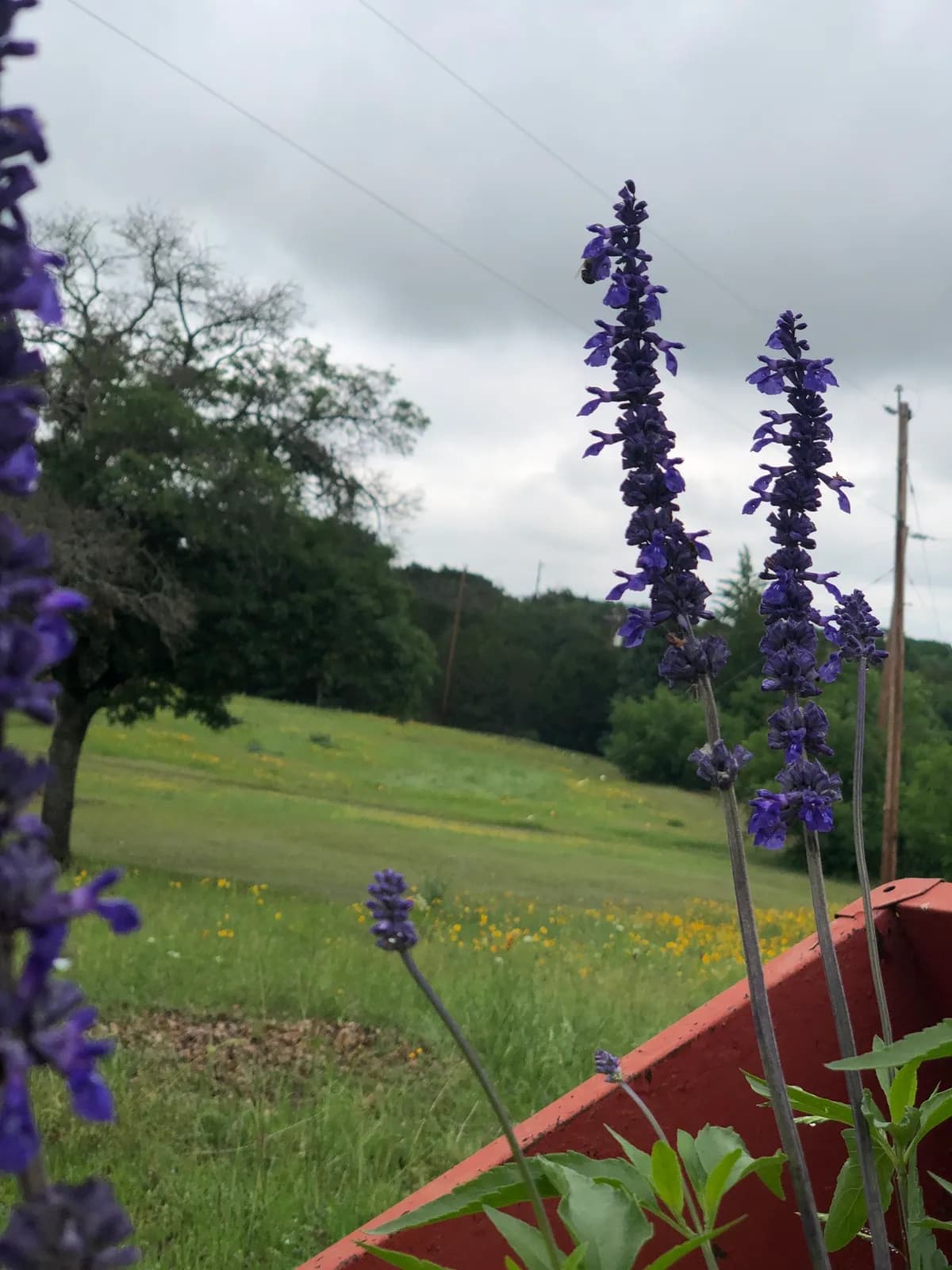
Light
full sun
Water
low
Size
24"–36" H × 18"–24" W
Bloom
Apr, May, Jun, Jul, Aug, Sep, Oct, Nov
Native to
North Texas
Pollinators
butterflies, hummingbirds
Picture natives in your own yard
Upload a photo of your yard and Patch Vision shows a rendering of it planted with natives for your region, like Mealy Blue Sage.


Browse plants for this ecoregion
Mealy Blue Sage is a perennial forb native to North Texas. It grows best in full sun with low water needs.
Mealy Blue Sage is one of the most versatile Texas natives. Blue flower spikes bloom from April through November, and the plant stays compact without staking. It attracts butterflies, bees, and hummingbirds. No Texas pollinator garden is complete without it.
Use Mealy Blue Sage in the middle of beds. It pairs well with Black-eyed Susan, Autumn Sage, and Gulf Muhly. It handles full sun, light shade, and low water. In HOA neighborhoods, its upright form and long bloom season make it a standout.
It thrives in clay and alkaline soil. Cut back in late winter when new growth appears. Group in clusters of three to five for maximum impact. One of the best natives for front yards.
Bee species data compiled from GBIF, iNaturalist, Discover Life, and the USGS Native Bee Inventory and Monitoring Lab. Plant-pollinator associations informed by published ecological literature.
How to care for Mealy Blue Sage, by region
How to care for Mealy Blue Sage where it is actually grown: year-round basics plus what to do each season, region by region, with the sources for each.
Care guidance last updated: October 2026
Central Great Plains (includes Oklahoma City, OK)
Year-round
Year-round care for mealy blue sage around Oklahoma City, OK: full sun, well-drained soil, little water once established.
- Give it full sun, at least 6 hours of direct light a day.
- Water use is low and it prefers dry soil. Wet soil makes the plant leggy and weak.
- It grows up to about 3 feet tall and blooms from April through October.
- After a long flowering period, prune it halfway back for thicker, more compact foliage.
- It tolerates clay, loam, and sand as long as the soil drains.
- NC State Extension lists it for USDA zones 8a to 10b. Oklahoma City is colder than that, so treat it as a trial plant there. It may not come back after a hard winter.
A mid-height plant with an upright habit and a cut back in midsummer reads as a tidy, intentional planting.
Sources: Lady Bird Johnson Wildflower Center: Salvia farinacea, Native Plant Society of Texas: Salvia farinacea, NC State Extension Gardener Plant Toolbox: Salvia farinacea
Chihuahuan Deserts (includes El Paso, TX)
Year-round
Mealy blue sage is native to central and west Texas and adjacent New Mexico, and it suits El Paso's alkaline soil and hot, dry summers well. It is reliably perennial in USDA zones eight through ten, which covers El Paso.
- Plant in full sun in well drained soil. It tolerates limestone, caliche, and other alkaline soils common around El Paso.
- Water deeply and let the soil dry between waterings. Consistently wet soil makes the plant leggy and weak, per Lady Bird Johnson Wildflower Center.
- Expect violet blue flower spikes from spring through fall that draw bees and hummingbirds.
- A hard freeze can knock the top growth back to the ground some winters, but established plants generally resprout from the roots in spring.
Its upright flower spikes add vertical color to a front bed, and a trim after each bloom flush keeps the planting looking neat and HOA-friendly.
Fall
Fall brings a strong bloom flush for mealy blue sage in El Paso as temperatures moderate.
- Expect renewed heavy flowering into October as nights cool.
- Reduce watering frequency gradually as growth slows heading into late fall.
- Leave the last flush of flowers for migrating pollinators rather than deadheading late in the season.
- Hold off on major pruning until after the first freeze.
Winter
A hard freeze typically kills mealy blue sage back to the ground in El Paso, but the roots generally survive and resprout in spring since the species is reliably perennial through USDA zone eight.
- Leave frozen top growth in place through winter for some insulation, then cut it back to the ground in late winter.
- Stop watering once the plant has gone dormant after a freeze.
- A layer of mulch around the base can help protect the crown during an unusually hard freeze.
- Do not assume the plant is dead just because it looks blackened after a freeze. Wait for spring regrowth before replacing it.
Blackened freeze damaged stems look messy through winter but are normal for this species. A late winter cutback restores a tidy, HOA-conscious look before spring growth returns.
Spring
Spring is when mealy blue sage resumes growth in El Paso and begins its long flowering season.
- Cut back any freeze damaged stems to the ground once new growth appears at the base, usually by March.
- Begin regular but infrequent deep watering as the plant leafs out.
- Expect the first flower spikes by April or May.
- Work a little compost into the planting area, but skip heavy fertilizer, which can reduce flowering.
Summer
Mealy blue sage keeps blooming through El Paso's hot summer as long as it gets occasional deep water.
- Water every one to two weeks during peak summer heat, more often for plants in full afternoon sun.
- Deadhead spent spikes to keep the plant blooming through the hottest months.
- Watch for leggy, sprawling growth in extreme heat. A midsummer trim keeps the plant compact.
- Monsoon humidity in July and August can bring occasional powdery mildew, so avoid overhead watering.
Sources: Lady Bird Johnson Wildflower Center - Salvia farinacea, NC State Extension Gardener Plant Toolbox - Salvia farinacea
Cross Timbers (includes Fort Worth, TX)
Year-round
Mealy blue sage is a tough upright native perennial for the Fort Worth area, and the one thing it really needs is full sun over soil that drains.
- It is native to the Cross Timbers, so it is already suited to the sandy and sandy loam soils here and to long hot summers.
- Give it at least six hours of direct sun a day. In shade it gets floppy and blooms poorly.
- Drainage matters more than soil type. The better drained ground in this part of North Texas is a real advantage for this plant compared with the heavy clay farther east.
- Expect a mound about 2 to 3 feet tall and wide, with blue purple flower spikes from roughly April into October.
- Water deeply and infrequently once it is established. Roots sitting in constantly wet soil are the usual reason people lose this plant.
- The flowers are a strong nectar source for native bees, butterflies, and hummingbirds.
Fall
Fall is the easy season here, one more round of bloom and a light tidy up, and it is the best planting window of the year.
- October brings a second rain peak, so back off the hose and let the weather carry the watering.
- Deadhead spent spikes through September and October to keep flowers coming until the first frost in mid to late November.
- September and October are the best time to add more plants. Roots settle in during cool soil before next summer's heat.
- Leave a few of the last seed spikes standing. The dried seed heads feed birds and other wildlife over winter.
- Do not cut the plant to the ground in fall. The old top growth shelters the crown through the first freezes.
- Skip fall fertilizer and top up the mulch instead.
Deadheading through fall and keeping a crisp edge on the bed keeps the planting looking cared for, which is usually what heads off a letter about overgrown landscaping.
Winter
It goes dormant and looks dead, which is normal, so protect the crown and save the real cutback for late February.
- Fort Worth sits at the cold edge of this plant's comfortable range (zone 8a), so 2 to 3 inches of mulch over the root zone is worth the effort.
- Winter lows in the upper teens and low 20s will knock the top growth back. The roots normally come through fine and resprout in spring.
- Leave the dry stems standing rather than cutting to bare soil. They shelter the crown during a hard freeze.
- Water only during a long dry warm spell. Cold, soggy soil is what actually kills this plant over winter.
- Pull mulch back an inch or two from the base so the crown is not sitting in damp material.
- Hold the full cutback until late February, right before new growth starts.
If the standing winter stems look ragged from the street, trim them to an even 8 to 10 inch height and keep the bed edged so the planting reads as deliberately dormant rather than neglected.
Spring
Cut the old stems back in late February before new growth starts, then let the spring rain do most of the watering.
- Cut last year's stems down to about 4 to 6 inches in late February, before new growth pushes. It regrows from the base.
- Hold off setting out new transplants until after the average last frost in mid March.
- Go easy on fertilizer. Rich, damp ground makes this plant leggy and floppy instead of full.
- May is the wettest month here, so let rain cover the watering and make sure nothing is pooling around the crown.
- When the first flush of spikes fades in late spring, shear the plant back by about a third to bring on the next round of bloom.
- Lay down about 2 inches of mulch, pulled back off the stems, to hold spring moisture and slow weeds.
A clean late February cutback with a fresh mulch edge makes the bed read as intentional right when neighbors start looking at front yards again.
Summer
Summer is about one hard shear plus deep, infrequent water so the plant keeps blooming through the July and August heat.
- Shear the whole plant back by about half in early to mid July. It looks bare for a couple of weeks, then fills back in thicker and reblooms into fall.
- Through the stretch of 100 degree days, water deeply once every week or two rather than a little bit every day.
- Check it in the morning. Afternoon wilting in the heat is normal, but wilting at sunrise means it is genuinely dry.
- Keep water off the leaves and leave room for air to move through the planting, which cuts down on powdery and downy mildew.
- It keeps feeding bees, butterflies, and hummingbirds through the hottest weeks, when a lot of other flowers have shut down.
- Do not fertilize in the heat. This plant flowers better when it is kept a little lean and a little dry.
Sources: Lady Bird Johnson Wildflower Center, Salvia farinacea plant record, Native Plant Society of Texas, Salvia farinacea (Mealy Blue Sage), NC State Extension Gardener Plant Toolbox, Salvia farinacea, Denton County Master Gardener Association, Monthly Gardening Tips, Dallas County Master Gardeners (Texas A&M AgriLife), February Garden Tasks for North Texas
East Central Texas Plains (includes College Station, TX)
Year-round
Year-round care for mealy blue sage around College Station, TX: full sun, well-drained soil, little water once established.
- Give it full sun, at least 6 hours of direct light a day.
- Water use is low and it prefers dry soil. Wet soil makes the plant leggy and weak.
- It grows up to about 3 feet tall and blooms from April through October.
- After a long flowering period, prune it halfway back for thicker, more compact foliage.
- It tolerates clay, loam, and sand as long as the soil drains.
A mid-height plant with an upright habit and a cut back in midsummer reads as a tidy, intentional planting.
Sources: Lady Bird Johnson Wildflower Center: Salvia farinacea, Native Plant Society of Texas: Salvia farinacea, NC State Extension Gardener Plant Toolbox: Salvia farinacea
Edwards Plateau (includes San Antonio, TX)
Year-round
Mealy blue sage is built for San Antonio's heat and alkaline soil. It just needs sharp drainage and a light hand with water once it's established.
- Plant in spring or fall in full sun and fast-draining soil. San Antonio's naturally alkaline, limestone-based soils suit it well, so skip soil acidifiers.
- Water regularly the first season to establish roots, then taper off. Established plants handle South Texas heat and drought on minimal supplemental water.
- Mulch lightly. Heavy mulch in humid stretches can hold too much moisture against the crown in alkaline clay.
- The most common mistake is planting it in a low spot that stays wet after San Antonio's heavy summer downpours. Wet feet in poorly drained soil causes weak, leggy growth or rot.
- Salvia farinacea is native to central and western Texas, including the San Antonio area, per the Lady Bird Johnson Wildflower Center.
Its tidy mounded shape and long bloom window make it an easy, HOA-friendly front-bed choice that doesn't need constant shaping.
Fall
Fall brings a second strong bloom in San Antonio's milder weather, plus your last good chance to plant or divide.
- Enjoy the fall rebloom as temperatures cool into October and November.
- Fall is a good second planting window in San Antonio, since roots establish easily before winter.
- Reduce watering frequency as evapotranspiration drops with cooler weather.
- Leave the last round of flower spikes in place going into late fall. Seed heads feed birds through winter.
Winter
In San Antonio's zone 8b to 9a warmth, mealy blue sage often survives winter as a perennial if the soil stays on the dry side.
- Hold off on hard pruning until you see new growth at the base in late winter. Old growth can protect the crown during a cold snap.
- Keep the soil on the dry side through winter. San Antonio's occasional hard freezes are far more damaging to plants sitting in wet ground.
- If a hard freeze is forecast, a light frost cloth over the crown helps it come back reliably the following spring.
- Cut the whole plant back to a few inches once new basal growth appears, typically February, to clean up frost-damaged stems.
Spring
Spring is the best planting window in San Antonio, before the real heat arrives.
- Plant out in March or April once nights stay reliably above freezing.
- Water every few days until new roots take hold, then let the topsoil dry between waterings.
- Pinch back leggy nursery starts once to encourage a bushier mound.
- Give it a single light spring feeding at most. Too much richness produces floppy stems in Texas heat.
Summer
San Antonio's long, hot summer is peak bloom, and the main job is deadheading and staying hands-off with water.
- Shear the plant back by about half after the first big flush fades, usually by midsummer, to force a tidier rebloom.
- Water deeply but infrequently, roughly once a week without rain. San Antonio summers are hot and dry, and overwatering causes more problems than underwatering.
- Deadhead spent spikes through the season to keep new blue-purple flowers coming for hummingbirds and bees.
- Skip heavy fertilizer in peak summer heat. It pushes weak growth right when the plant is under the most heat stress.
Sources: Lady Bird Johnson Wildflower Center: Salvia farinacea (Mealy Blue Sage), Native Plant Society of Texas: Mealy Blue Sage, A Surefire Winner
High Plains (includes Lubbock, TX)
Year-round
Mealy blue sage is a tough, drought-tolerant bloomer once it gets established, and its exact toxicity status has not been confirmed by ASPCA.
- Give it full sun to light shade and well-drained soil. It does not like soggy roots.
- Once established it handles Lubbock's dry stretches well. Deep, infrequent watering beats daily light sprinkling.
- Expect flushes of blue-purple flower spikes from early spring into fall, one of this plant's biggest selling points.
- Pinch young plants back to about 6 inches tall to get a fuller, bushier shape instead of one floppy stem.
- Lubbock winters run colder than the zone 8 to 10 range this plant is usually rated for, so some years it dies back hard or acts more like an annual.
- This exact species does not appear in the ASPCA's toxic or non-toxic plant database, so pet safety here is undetermined. Keep curious pets from chewing on it and contact ASPCA Animal Poison Control if they do.
Fall
Fall keeps the blooms coming, so hold off on hard pruning until after the first freeze and start easing back on water.
- Flowering usually continues into fall. A long bloom season instead of one spring flush is one of this plant's strengths.
- Hold off on heavy pruning until after the first hard freeze. Cutting live tissue too early can trigger tender new growth that then freezes.
- Once top growth blackens from cold, cut it back to a few inches to tidy the bed for winter.
- Ease off watering as growth slows and temperatures drop. Established plants need much less water in fall.
- Fall is a good time to take stem cuttings if you want to propagate more plants for next season.
A tidy cutback after the first hard freeze keeps the front bed looking maintained through the dormant months instead of collapsed and brown.
Winter
Lubbock winters run colder than this plant's usual comfort zone, so freeze protection and honest expectations matter most.
- Lubbock's winters are colder than the zone 8 to 10 range this plant is usually rated for, so a hard freeze can kill it back to the ground or outright in a bad year.
- A layer of mulch over the root zone before a hard freeze gives it a better shot at resprouting from the roots in spring.
- If top growth is already frozen and blackened, leave the dead stems in place over winter. They add a little extra insulation for the crown.
- Skip watering during freezing weather. Soil that is wet when it freezes can damage roots more than dry soil does.
- If a plant has not resprouted by mid-spring, treat it as lost. In colder pockets like the Texas High Plains, this species is often grown as a reseeding annual rather than a reliable perennial.
Leaving frozen stems standing over winter is fine for the plant, but if a tidy winter look matters for the front yard, trim to a few inches once the hardest freezes have passed instead of leaving bare stalks all season.
Spring
Spring is wake-up and shaping season: clean up winter damage, pinch for bushiness, and expect blooms by mid to late spring.
- As nights warm and new growth resumes, cut back any stems that were killed by winter cold down to live, green tissue.
- Once it is actively growing, pinch stems back to about 6 inches to force side branching instead of one tall, leggy stalk.
- Flower spikes usually start opening by mid to late spring, the beginning of this plant's long bloom run.
- Water regularly while new roots and top growth are establishing. This is not the drought-tough phase yet.
- Full sun spots green up and bloom fastest, though afternoon shade is fine too.
Clearing out winter-damaged stems in spring keeps the bed looking tended instead of ragged, which reads well from the street.
Summer
Peak bloom season: deadhead to keep flowers coming, watch for mildew, and expect pollinator visitors.
- This is peak bloom time, with spikes of blue-purple flowers continuing through the hottest months.
- Deadhead spent flower spikes regularly to push out new blooms and keep the show going into fall.
- Once established, it shrugs off Lubbock's summer dry spells. Deep, occasional watering beats a daily sprinkle.
- Hummingbirds and butterflies regularly visit the flowers for nectar, and bumblebees are common visitors too, according to the Lady Bird Johnson Wildflower Center.
- Good airflow around the plant helps prevent powdery mildew, a common issue on mealy blue sage in humid or crowded conditions.
Regular deadheading keeps the bed looking full and intentional instead of leggy and spent, an easy summer curb-appeal win.
Sources: Lady Bird Johnson Wildflower Center - Salvia farinacea profile, Texas Tech University Plant Resources - Salvia farinacea care sheet, ASPCA Toxic and Non-Toxic Plant List - Dogs, Lady Bird Johnson Wildflower Center - 2023 Wildflower of the Year: Mealy Blue Sage
Northeastern Coastal Zone (includes New York, NY)
Year-round
Around New York this sage is a tender plant that many gardeners grow as an annual or a die back perennial that may or may not survive a hard winter. Give it full sun and good drainage, keep it blooming with regular deadheading, and treat winter survival as a bonus rather than a guarantee.
- Establishment: plant after the last spring frost, usually mid May in the New York area, and water about once a week through the first few weeks until it roots in.
- Watering once established: water when the top inch of soil is dry. It likes even moisture in the Northeast more than it does in Texas, but still hates soggy, poorly drained spots.
- Mulch and winter odds: a 2 to 3 inch mulch layer over the crown after the ground cools gives the roots their best shot at overwintering, though in a cold winter it may still die and need replanting.
- Deadheading and common mistakes: shear off spent flower spikes through the season to keep bloom going. The biggest mistakes here are planting out too early into cold soil and overwatering in heavy clay.
Reads as intentional and helps you avoid a violation letter: steady deadheading keeps this plant a tidy, flowering mound out front instead of a stalky clump topped with brown, finished spikes.
Fall
Fall in the New York area is decision time. You either treat the plant as a spent annual and pull it, or you try to help it overwinter, knowing survival is not guaranteed this far north.
- Keep deadheading for late flowers until the first frost knocks the plant back.
- If you want to try overwintering it, stop cutting hard in fall and instead mulch heavily over the crown once the ground cools.
- If you are treating it as an annual, pull the finished plant after frost and clear the bed, or leave a few seed heads if you want to try collecting seed.
Reads as intentional and helps you avoid a violation letter: pulling a frost killed plant, or mulching it down to a neat covered crown, keeps the front bed looking tended going into winter rather than full of dead stalks.
Winter
Winter in the New York area is the hard test for this Texas native. It is not reliably hardy here, so your winter job is mostly protection and patience, with replacement as a realistic backup.
- Leave a thick mulch layer over the crown all winter for the best chance at survival, and do not cut the plant to the ground now.
- Do not water. A dormant plant sitting in cold, wet soil is far more likely to rot than to survive.
- Plan for the possibility that it does not return. Many New York area gardeners simply replant it each spring, so have that as your backup.
Spring
Spring in the New York area is about waiting out the cold, then planting or restarting. Cold soil is the enemy, so do not rush it into the ground.
- Wait until after the last frost, usually mid May, and until soil has warmed before planting out or setting out transplants.
- If a plant survived the winter, cut back the dead top growth and watch the crown for new shoots before assuming it is gone.
- Harden off any nursery or windowsill starts for several days before they go into the front bed so they do not stall in the cool nights.
Summer
Summer is the long bloom season in the New York area. With a little more even watering than it needs down south and regular deadheading, it flowers for weeks.
- Water when the top inch of soil dries out. Northeast summers are cooler and often wetter than Texas, so do not overwater in a rainy stretch.
- Deadhead spent flower spikes every week or two to keep new blooms coming through the whole season.
- If the plant gets leggy in mid summer, shear it back by about a third to bring back a fuller, bushier shape.
Reads as intentional and helps you avoid a violation letter: weekly deadheading keeps the front planting looking neat and chosen rather than topped with faded, brown spikes.
Sources: Missouri Botanical Garden Salvia farinacea plant finder, ASPCA sage toxic and non-toxic plant page
South Central Plains (includes Beaumont, TX)
Year-round
Mealy blue sage is a sun-loving perennial that handles heat well. In Beaumont's wet clay, drainage matters most.
- Plant in full sun to light shade.
- It wants well-drained soil, so raise the bed or mix in coarse material in heavy clay.
- Once established it needs little water.
- Powdery mildew can show up, so give plants room for airflow.
Its upright blue spikes look tidy along a front walk when spent stalks are trimmed.
Fall
Fall brings continued blooming, and it is a good time to tidy and plant.
- Plants bloom spring through fall, so keep removing spent stalks.
- Fall planting works in Gulf Coast mild weather if the soil drains.
- Hold off on heavy fertilizer. None is called for in the sources.
Winter
Winter is a rest period, and it is also when to cut plants back.
- Hardy in zones 8 to 10, which includes the Gulf Coast.
- Cut back to about 6 inches in late winter before new spring growth.
- Water little in cool wet weather.
Spring
Spring is when growth restarts and the first blooms begin.
- Cut mature plants back to about 6 inches in late winter before new growth starts.
- Plant new sage in spring in a spot that drains well.
- Water new plants regularly until they settle in.
Summer
Summer heat is no problem, but wet feet are. Water deeply and rarely.
- It has very high heat tolerance and low water needs once established.
- Skip extra watering in rainy spells, since soggy clay is the main risk.
- Remove spent bloom stalks to encourage more flowers.
Sources: Texas Tech Plant Resources - Salvia farinacea, Austin Watershed Protection Plant Guide - Mealy Blue Sage
Southwestern Tablelands (includes Colorado Springs, CO)
Year-round
Mealy blue sage is a Texas and New Mexico native being grown well outside its home range in the Colorado Springs area, so treat it as a chosen non-native rather than a native planting, and expect to replant it each year since it cannot survive winter here.
- USDA PLANTS lists this species as native only to central and western Texas and New Mexico, and county level BONAP records show no Colorado presence anywhere, including El Paso County, so despite one broad ecoregion tag reaching into this area, it is not a Colorado native.
- Grow it as a warm season annual. Colorado Springs sits in USDA zone 5b to 6a, well below the zone 8 to 10 range where this plant survives winter outdoors.
- Give it full sun and fast draining soil. It grows naturally in limestone based Hill Country ground, and wet clay leaves it leggy and weak.
- Water deeply and infrequently once it is established rather than with daily light sprinkles, matching the dry conditions it evolved for.
- Trim spent flower spikes back by about half after a bloom flush to keep the plant full and blooming instead of stretched out.
Fall
Let it bloom right up to the first freeze, then cut it back once frost blackens the foliage, since it will not return as a perennial here.
- Let the plant keep flowering into fall. Colorado Springs' average first fall freeze lands in early October, and this species blooms right up until a freeze hits it.
- Once a freeze blackens the foliage, cut the plant back to the ground and remove the dead material rather than leaving it standing, since it will not resprout here.
- Skip fall fertilizer. It will not help a plant that is about to die back for winter.
- If you want to try it again next year, collect a few dry seed heads before the freeze and store them for cold moist stratification over winter rather than buying new starts.
- Clear the dead stalks soon after they blacken so the bed reads as an intentional fall cleanup rather than a plant left to die in place.
A prompt fall cutback keeps a front bed looking tended through the shift into winter instead of leaving blackened, frost killed stems standing.
Winter
The bed sits empty over winter since this is grown as an annual here, so the main task is planning ahead rather than protecting a plant in place.
- There is nothing to protect over winter since the plant is gone after the fall cutback. It is not a perennial in this climate.
- Skip winter watering for this spot. There is no live plant left to water once it has been cut back and cleared.
- If you saved seed in fall, keep the envelope somewhere cold and dry, like an unheated garage, to carry it through the cold stratification period this species needs before it will germinate.
- Use the bare bed as a planning window. Line up spring transplants now so you are ready to set them out after the last freeze in May.
- Consider mulching the empty spot or filling it with a cold season planting so a front facing bed does not sit bare and untended all winter.
Filling or mulching the bare bed keeps winter curb appeal HOA-friendly instead of leaving an empty patch of dirt as the visible state of that bed for five months.
Spring
Wait for settled spring weather before planting, since Front Range spring swings from warm days to hard freezes, and set the plant up in well drained soil from the start.
- Hold new transplants until after the average last spring freeze, which lands in early to mid May in Colorado Springs, before moving them outside.
- Harden transplants off gradually over about a week, since a plant moved straight from a warm nursery greenhouse into a Front Range cold snap can be set back hard.
- Work coarse sand or expanded shale into heavy clay at planting time so roots do not sit wet, matching the well drained ground this species grows in naturally.
- Skip fertilizer until new growth is clearly underway. Feeding into cool spring soil tends to produce weak, floppy stems instead of sturdy ones.
- Space plants 12 to 18 inches apart so foliage dries out fast between spring storms, which is when Colorado Springs sees its heaviest hail.
Even spacing at planting time keeps the bed looking tended once the plants fill in, rather than a random scatter.
Summer
This is peak bloom season. Water deeply on Colorado Springs' allowed watering days and deadhead regularly to keep flowers coming instead of the plant going to seed.
- Water on a deep, infrequent schedule that fits the city's summer watering rule of three days a week, before 10am or after 6pm, in effect from May 1 through October 15.
- Deadhead spent flower spikes regularly through summer, and after a big bloom flush cut the plant back by about half to push thicker new growth instead of letting it go to seed.
- Expect occasional hail damage during Colorado Springs' peak storm months of May through July. Trim off shredded stems afterward and the plant typically pushes new growth.
- Mulch around the base to buffer root temperature swings at this elevation, where intense sun and cool nights are both part of the same summer day.
- Watch plants after a wet monsoon pattern stretch in July or August. This is a dry climate plant and can turn leggy if the soil stays soaked too long.
Regular deadheading through summer keeps a front facing bed looking tended instead of leggy and gone to seed.
Sources: USDA PLANTS Database - Salvia farinacea profile, Lady Bird Johnson Wildflower Center - Salvia farinacea, BONAP county distribution map - Salvia farinacea, CSU Extension PlantTalk Colorado - Salvia, CSU Extension - Vegetable Planting Guide (frost-relative timing), City of Colorado Springs - Water Wise watering rules
Texas Blackland Prairies (includes Dallas, TX)
Year-round
Mealy blue sage is native to the Blackland Prairie around Dallas, so once it settles in it needs very little from you. Plant it in full sun and fast draining soil, water it in the first season, then mostly leave it alone. It reseeds and comes back for years.
- Establishment: for the first few months after planting, water deeply about once a week so the roots reach down. After that it handles Dallas heat with little help.
- Watering once established: give it a deep soak only during long dry spells. Wet feet and heavy watering are the most common way to kill it, since it hates soggy soil.
- Mulch: a thin 1 to 2 inch layer of gravel or coarse mulch keeps roots cool and weeds down, but keep mulch off the crown so the base does not stay damp and rot.
- Self seeding and shape: shear the whole plant back by about a third after each big flush of bloom to keep it tidy and push more flowers. It drops seed freely, so pull unwanted seedlings in spring.
Reads as intentional and helps you avoid a violation letter: a light shear after each bloom flush keeps this plant a neat mound instead of a floppy, leggy clump out front.
Fall
Fall often brings a strong second bloom in Dallas as the heat breaks. Enjoy it, then decide how much to leave standing for winter and for the birds.
- Let it bloom through the cooler fall weeks. A light deadheading of spent spikes keeps it flowering into late fall.
- Leave some seed heads standing if you want it to reseed and to feed seed eating birds through winter.
- Ease off watering as temperatures drop so the plant hardens off before the first frost.
Reads as intentional and helps you avoid a violation letter: a quick deadhead of the brown, spent spikes in fall keeps the front bed looking chosen and maintained rather than left to go over.
Winter
In the Dallas area this plant is fully hardy and just goes dormant. It needs almost nothing from you in winter, which is why it is such an easy prairie native here.
- You can leave the dry stems standing for winter texture and bird habitat, or trim to a low tidy mound if you prefer a neater front yard.
- Do not do the hard cutback yet. Save that for late winter or early spring so the old growth protects the crown through any cold snaps.
- No watering needed in a normal Dallas winter. The plant is resting.
Reads as intentional and helps you avoid a violation letter: if you leave stems up for the birds, cutting them to an even low mound signals a deliberate winter look rather than a dead patch out front.
Spring
Spring is your cleanup and start up window in Dallas. Cut back last year's dead stems, thin extra seedlings, and let the new growth take off with the warming weather.
- Cut old woody stems back to a few inches above the ground in late February or early March, before new shoots push out.
- Thin the volunteer seedlings that popped up from last year's seed. Keep a few, pull the rest, and water them in if you move any.
- Skip the heavy fertilizer. A prairie native like this blooms better in lean soil, so at most add a thin layer of compost.
Reads as intentional and helps you avoid a violation letter: clearing the dead winter stems early gives the front bed a fresh, cared for look right as the neighborhood greens up.
Summer
Summer is peak bloom in Dallas, and this is when the plant earns its keep with almost no watering. Your only real job is to shear it back between flushes to keep the flowers coming.
- Water deeply only when the plant looks wilted in the cool of morning. Established plants ride out Dallas summer heat on very little.
- After the first big bloom fades, shear the whole plant back by about a third to trigger a fresh round of flowers.
- Watch for floppy, open centers in the worst heat. That is normal, and the mid summer shear fixes it.
Reads as intentional and helps you avoid a violation letter: the mid summer shear keeps a mounded, deliberate shape instead of a sprawling plant that reads as neglected from the curb.
Sources: Lady Bird Johnson Wildflower Center Salvia farinacea native plant page, ASPCA sage toxic and non-toxic plant page, Native Plant Society of Texas mealy blue sage grower notes
Before you buy
Your city may pay you to plant this
Cities and water utilities offer rebates for replacing lawn with native and water-wise plants. We track 459 programs across 44 states, each with a link to the provider and the date we last checked it.
Find rebates in your areaIf something looks wrong
Common plant problems, and what to check first
These come up on almost any plant. Each guide lists the likely causes in the order they are worth ruling out, with one thing to check before you act on any of them, and links to the source it came from.
- It is dying right after planting
- Leaves turning yellow
- Wilting even though I watered it
- Brown crispy leaf tips
- Bugs on the plant
Ready to grow Mealy Blue Sage? Add it to your garden in Pollinator Patch to track it and get season-by-season care guidance.