Mock pennyroyal
Hedeoma hyssopifolia
Last reviewed: September 2026
Mock pennyroyal (Hedeoma hyssopifolia) is a perennial forb native to AZ, NM. It blooms in May, June, July, August, September, and October. The flowers draw bees and butterflies. It reads as an intentional, HOA-friendly planting in the right spot.
Toxicity unknown
Mock pennyroyal (Hedeoma hyssopifolia) is not listed by the ASPCA Animal Poison Control Center (opens in new tab) or the other sources we check, so we have no verdict for it either way. Absence from those lists is not a clearance. If your pet shows symptoms after eating any plant, call the ASPCA at (888) 426-4435.
Light
full sun
Water
low
Size
4"–12" H × 6"–12" W
Bloom
May, Jun, Jul, Aug, Sep, Oct
Native to
AZ, NM
Pollinators
bees, butterflies
Before you buy
Your city may pay you to plant this
Cities and water utilities offer rebates for replacing lawn with native and water-wise plants. We track 458 programs across 44 states, each with a link to the provider and the date we last checked it.
Find rebates in your areaBrowse plants for this ecoregion
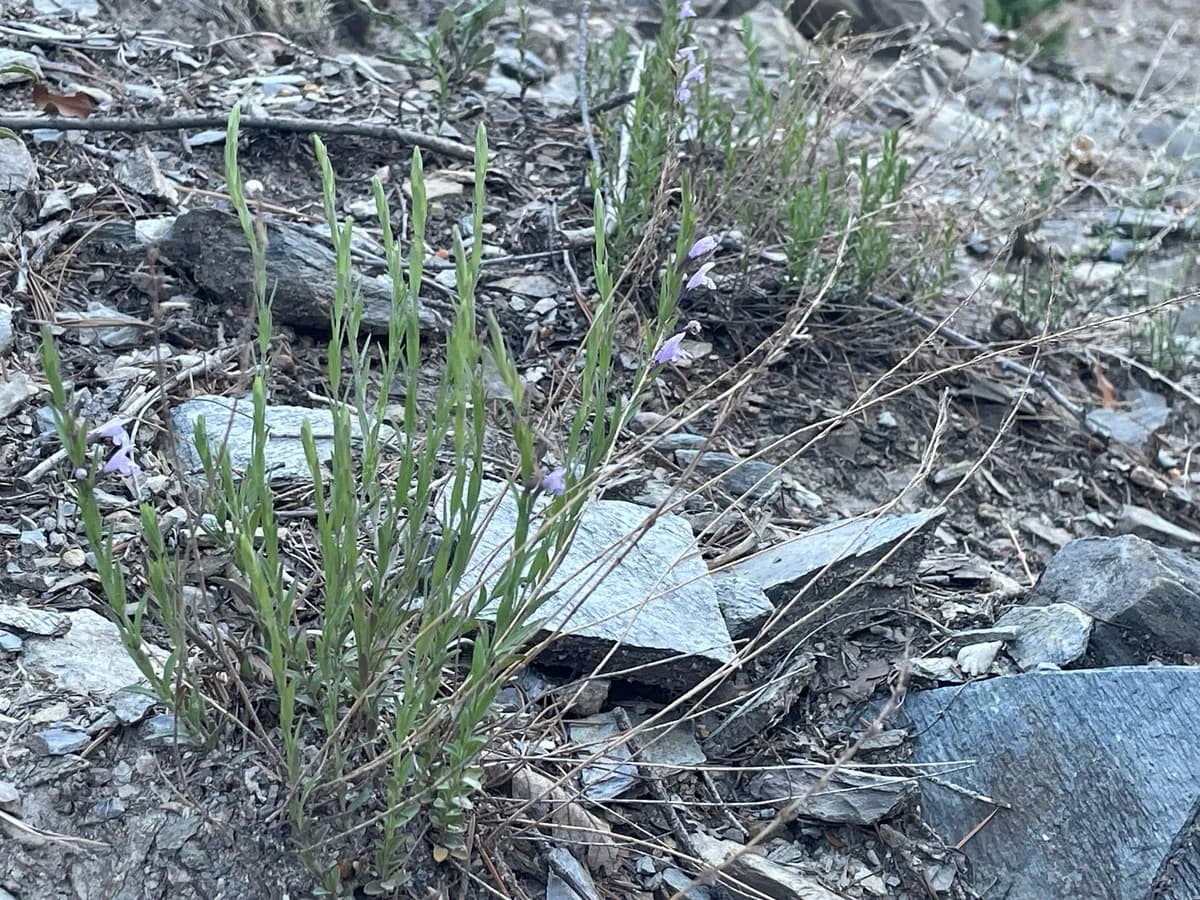
A low, aromatic perennial herb in the mint family, with narrow gray-green leaves and small tubular lavender flowers favored by native bees. It forms a compact mound suited to dry, rocky slopes and desert scrub, releasing a spicy fragrance similar to pennyroyal when the foliage is brushed.
Growing Mock pennyroyal
Grow Mock pennyroyal in full sun and low water. Mature plants reach 4 to 12 inches tall and spread 6 to 12 inches wide. Expect low maintenance to keep it looking intentional in a front yard.
How to care for Mock pennyroyal, by region
How to care for Mock pennyroyal where it is actually grown: year-round basics plus what to do each season, region by region, with the sources for each.
Care guidance last updated: September 2026
Arizona/New Mexico Mountains (includes Prescott, AZ)
Year-round
Mock pennyroyal is a compact, aromatic perennial herb native to rocky slopes and pine forest edges in Arizona and New Mexico. It prefers full sun to light shade, well-drained rocky or gravelly soil, and needs little supplemental water once established.
- Plant in full sun to light shade with sharp drainage; rocky or gravelly soil mimics its native canyon habitat.
- Water regularly the first growing season to establish roots, then taper off; mature plants tolerate extended dry spells.
- Leave the low, mounding form unclipped; its natural shape and light minty fragrance are part of its appeal.
- Divide or replace every few years if the center of the clump thins, which is normal for this short-lived perennial.
Its low, tidy mound stays under a foot tall and reads as an intentional rock-garden planting.
Fall
As bloom winds down in October, reduce watering and let mock pennyroyal begin its natural dormancy before winter.
- Taper watering as flowering ends, typically by mid to late October.
- Leave spent foliage in place through fall; it protects the crown and can be tidied in late winter.
- No fertilizing is needed heading into fall.
The fading foliage stays low and inconspicuous, so no fall cleanup is required.
Winter
At Prescott's ponderosa pine elevation, mock pennyroyal goes fully dormant in winter and tolerates the area's cold nights and occasional snow without protection.
- No supplemental water is needed while the plant is dormant, unless the season is unusually dry.
- Leave old growth in place over winter for insulation; cut back dead stems in late winter before new growth starts.
- No fertilizer or pruning is needed until spring.
Dormant winter foliage is low and unobtrusive, requiring no visible maintenance.
Spring
Spring is the best time to plant mock pennyroyal in the Prescott area, letting cool temperatures establish new roots before summer heat, and its bloom period begins in May.
- Set out new plants in early to mid spring once the last hard freeze has passed.
- Water newly planted specimens every few days until you see fresh growth, then shift to a deeper, less frequent schedule.
- Watch for the first flush of small lavender flowers, which continues into summer.
New spring plantings fill in fast and blend into a rock garden or border within one season.
Summer
Through Prescott's hot, dry summer, established mock pennyroyal needs only occasional deep watering and continues blooming into early fall.
- Water established plants deeply every 2 to 3 weeks during the hottest months; more often during the first year.
- Let the soil surface dry out between waterings; soggy roots are the main risk in summer.
- Trim spent flower stalks lightly to keep the mound tidy, though this is optional.
Its low water needs make it a reliable performer during summer watering restrictions.
Sources: Lady Bird Johnson Wildflower Center
In an HOA neighborhood
Mock pennyroyal is an HOA-friendly choice. Maintenance level: low. Tidiness: 4 out of 5.
Works well in: border planting, rock garden, xeriscape bed.
Wildlife value
The tubular flowers provide nectar for native bees and other small pollinating insects through the warmer months, and the low, spreading habit offers ground-level cover for small insects in arid habitat.
Common questions
- How much sun does Mock pennyroyal need?
- Mock pennyroyal grows best in full sun conditions.
- When does Mock pennyroyal bloom?
- Mock pennyroyal blooms in May, June, July, August, September, and October.
- Where is Mock pennyroyal native?
- Mock pennyroyal (Hedeoma hyssopifolia) is native to AZ, NM, per vouchered herbarium specimen records and regional native plant society lists.
- What pollinators does Mock pennyroyal attract?
- Mock pennyroyal draws bees and butterflies.
- Is Mock pennyroyal HOA-friendly?
- Mock pennyroyal is generally an HOA-friendly choice in the right placement, with low maintenance.
Native range data from vouchered herbarium specimen records and regional native plant society lists. Pollinator and host plant associations compiled from GBIF, iNaturalist, and published ecological literature.
If something looks wrong
Common plant problems, and what to check first
These come up on almost any plant. Each guide lists the likely causes in the order they are worth ruling out, with one thing to check before you act on any of them, and links to the source it came from.
- It is dying right after planting
- Leaves turning yellow
- Wilting even though I watered it
- Brown crispy leaf tips
- Bugs on the plant
Ready to grow Mock pennyroyal? Add it to your garden in Pollinator Patch to track it and get season-by-season care guidance.