Monterrey Oak
Quercus polymorpha
Last reviewed: August 2026
Monterrey oak is a broad shade tree that does well in full sun in warm Texas climates, handling moderate watering once established and producing small, inconspicuous flowers from March through May.
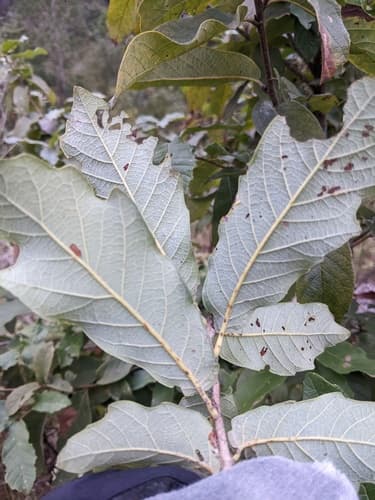
Toxicity unknown
Monterrey Oak (Quercus polymorpha) is not listed by the ASPCA Animal Poison Control Center (opens in new tab) or the other sources we check, so we have no verdict for it either way. Absence from those lists is not a clearance. If your pet shows symptoms after eating any plant, call the ASPCA at (888) 426-4435.
Light
full sun
Water
medium
Size
840"–960" H × 600"–720" W
Bloom
Mar, Apr, May
Native to
TX
Before you buy
Your city may pay you to plant this
Cities and water utilities offer rebates for replacing lawn with native and water-wise plants. We track 452 programs across 44 states, each with a link to the provider and the date we last checked it.
Find rebates in your areaBrowse plants for this ecoregion
Monterrey Oak is a large, fast-growing shade tree that reaches 70-80 feet tall with a broad, rounded canopy. This semi-evergreen oak keeps most of its leaves through winter, providing year-round structure and shade. It produces small spring flowers followed by acorns that mature in fall.
Growing Monterrey Oak
Grow Monterrey Oak in full sun and medium water. Mature plants reach 840 to 960 inches tall and spread 600 to 720 inches wide. Expect low maintenance to keep it looking intentional in a front yard.
How to care for Monterrey Oak, by region
How to care for Monterrey Oak where it is actually grown: year-round basics plus what to do each season, region by region, with the sources for each.
Care guidance last updated: September 2026
Edwards Plateau (includes San Antonio, TX)
Year-round
Monterrey oak is a tough, low-water shade tree once it settles into a San Antonio yard.
- Give it full sun and well-drained or rocky soil, it struggles in heavy clay that stays wet
- Once it has a couple years in the ground it needs very little extra water, even through a Texas summer
- It grows into a rounded, upright shade tree, usually 35 to 45 feet tall in Texas landscapes
- New leaves come in with a reddish tint before turning deep green, and it holds onto many leaves through winter
- Oak, the genus this tree belongs to, is on the ASPCA's list of plants toxic to horses because of a compound called gallotannin in leaves and acorns. That ASPCA page does not flag the genus as toxic to dogs or cats
- Any fresh cut on an oak can let in the fungus that causes oak wilt, so stick to dormant season pruning and paint the wound the same day
Fall
Fall is the best time to plant or prune a Monterrey oak in San Antonio.
- Cooling temperatures and fall rain make autumn the best time to plant, roots get to establish before next summer's heat arrives
- Fall through early winter is a safer pruning window than spring since it falls outside oak wilt's high risk February through June stretch
- Always paint any pruning cut right away, no matter the season, to keep sap beetles from finding the wound
- The tree stays mostly green into fall since it holds onto much of its foliage rather than dropping it all at once like a typical deciduous oak
A light fall pruning to raise the canopy or clean up the shape keeps a young tree looking tidy from the curb.
Winter
Winter is the quiet season, this oak mostly just holds its leaves and waits out the cold.
- It is semi-evergreen, so it keeps a good share of its leaves through winter instead of standing bare like most oaks
- It is rated hardy to USDA zone 7, well within range for typical San Antonio winters
- Young trees can show some leaf damage after a hard freeze, mature trees handle typical Hill Country cold fine
- Skip fertilizing in winter, feeding too early pushes tender new growth that a late freeze can burn
- Winter is a safer pruning window than spring, just paint the cut right away and still keep clear of the February through June oak wilt risk period
Holding its leaves through winter gives the yard some green when most other trees are bare.
Spring
Spring is when the tree drops last year's leaves and pushes out new reddish growth, so it needs a little patience.
- Because it holds many leaves through winter, spring is when it drops that old foliage all at once, so expect a short stretch of heavier leaf drop
- New leaves emerge with a reddish maroon color before turning deep blue green as they mature
- That new growth is tender and can get burned by a late freeze, so hold off on heavy fertilizing until the frost risk has passed
- Spring falls inside oak wilt's high risk window in Texas, so this is not the season to prune, every fresh cut between February and June is an open door for the fungus
- Cool days with humid nights in spring can bring on powdery mildew, a white dusty coating mostly on the underside of leaves, and mild cases usually do not need treatment
Raking up the spring leaf drop keeps the front yard looking tidy while the new leaves fill in.
Summer
Summer is the easy season for an established Monterrey oak, this tree is built for Texas heat and dry spells.
- This is a low water use tree once it has a couple of established years in the ground, an occasional deep watering during the hottest, driest stretches is usually enough
- Newly planted trees still need regular deep watering through their first one to two summers while roots spread out
- Avoid keeping the root zone constantly wet, this tree is sensitive to soggy soil and does better a little on the dry side
- Powdery mildew is less of an issue in peak summer heat since the fungus prefers cooler, humid nights
- It handles Texas summer heat and drought about as well as live oak once it is established
Sources: Texas Superstar: Mexican White Oak (Texas A&M AgriLife), TTU Woody Plant Info Sheet: Quercus polymorpha, ASPCA Toxic and Non-Toxic Plants: Oak, Texas A&M Forest Service: Prevent the Spread of Oak Wilt in Texas, Central Texas Gardener: Monterrey Oak (community tip), Lady Bird Johnson Wildflower Center (NPIN): Powdery Mildew on Monterrey Oak
Texas Blackland Prairies (includes Dallas, TX)
Year-round
Monterrey oak (Quercus polymorpha) is a fast growing, semi-evergreen shade tree that does well in the Dallas area with routine care around watering, pruning timing, and acorn cleanup.
- Give it full sun to part shade and well drained soil. It tolerates rocky or alkaline soil but does not like sitting in constantly wet clay.
- Water new trees deeply and often for the first year, then cut back sharply once established. This tree dislikes being overwatered more than it dislikes a short dry spell.
- Never prune or wound this tree from February through June. That is the highest risk window for oak wilt to spread in Texas. Paint any pruning cut right away, in any season, to lower the risk further.
- It matures around 40 to 60 feet tall with a rounded canopy, and it holds much of its foliage through a typical Dallas winter, dropping and refreshing leaves in early spring.
- This oak is native only to a small area of west Texas (Val Verde County canyons) south into Mexico and Central America. It is not native to the Dallas Blackland Prairie area, though it is widely and successfully planted here as a shade tree.
- Fallen acorns and buds contain tannins the ASPCA lists as toxic to horses, and veterinary references note dogs and other grazing animals can also be affected if they eat a large amount, so rake up heavy acorn drop where pets or livestock graze.
A tidy, rounded canopy and relatively light litter make this a good HOA-friendly shade tree choice, though it is worth confirming any neighborhood rules on mature tree height or setback before planting one near a property line.
Fall
Fall is prime planting season for Monterrey oak in Dallas, with cooling temperatures, a secondary rain peak in October, and the oak wilt risk window fully closed.
- Dallas' first fall frost typically arrives around November 14 to 21, giving weeks of mild, moist weather in September and October that favors root establishment before winter.
- October is one of Dallas' wetter months, so newly planted trees often need less hand watering than in summer, though it is still worth checking soil moisture at the root ball rather than assuming rain was enough.
- Fall sits outside the February through June oak wilt danger window, so it is a reasonable time to do any structural pruning the tree needs, such as raising the canopy over a walkway. Paint every cut regardless.
- This is also a good time to refresh mulch and check that the root flare has not become buried, since soil can settle and mulch can pile up against the trunk over a growing season.
Winter
Dallas winters, USDA zone 8b with typical lows around 15 to 20 degrees F, are mild enough that Monterrey oak holds much of its foliage, and the dormant season is a reasonable pruning window.
- Dallas sits in USDA hardiness zone 8b, with average winter lows around 15 to 20 degrees F. This oak is rated hardy to roughly zone 7 to 9, so a typical Dallas winter is within its range, though an unusual hard freeze can still damage young or newly planted trees.
- This tree is semi-evergreen in the Dallas area and often keeps a good share of its leaves through winter, dropping and replacing them as new growth starts in spring.
- Winter through January sits outside the February through June oak wilt risk window, so it is one of the better times of year to do routine structural pruning. Paint every cut immediately regardless of season.
- Hold off on fertilizing in late winter. A warm spell can push out new growth that is frost tender, and an unexpected freeze afterward can burn that fresh flush.
Spring
Spring in Dallas, roughly up to the last frost near mid to late March, is a good planting window for Monterrey oak, but it is also the start of the riskiest months for oak wilt, so lean toward planting rather than pruning.
- Dallas' average last spring frost lands around March 15 to 21. New leaf growth on this oak is frost tender, so hold off on fertilizing or anything that pushes fresh growth until that date has passed.
- Spring is Dallas' wettest season, with rain peaking in May, so new plantings usually need less hand watering than in a dry month. Check soil moisture at the root ball instead of watering on a fixed schedule.
- This is also the start of the February through June window when pruning or wounding any oak raises the risk of spreading oak wilt in Texas. Hold pruning until after June unless a branch is broken or hazardous, and paint any unavoidable cut right away.
- Spring or fall are both good times to plant a new Monterrey oak. Set the root flare at or slightly above grade and water in deeply at planting.
Summer
Dallas summers are long, hot, and relatively dry by July, which is the main watering test for a young Monterrey oak. Established trees should need very little help.
- July is typically Dallas' driest month, at around 1.6 inches of rain, so a tree still in its first one to two years needs deep, infrequent watering rather than daily sprinkling, roughly 6 to 8 gallons per inch of trunk diameter each week during dry stretches.
- Once established, this oak prefers to run on the dry side and can actually suffer from too much water. For a mature tree, save supplemental watering for the hottest, longest dry spells rather than a regular summer schedule.
- Keep 2 to 3 inches of mulch out to the drip line to buffer summer soil temperature and hold moisture, keeping mulch off the trunk itself.
- Early summer still falls inside the higher risk window for oak wilt through June. Hold any non-essential pruning until later in the season, and paint any cut you cannot avoid.
Sources: Quercus polymorpha (Mexican white oak), Lady Bird Johnson Wildflower Center, Quercus polymorpha, Texas Tech University Plant Resources Center, Prevent the spread of oak wilt in Texas, Texas A&M Forest Service, Oak, ASPCA Toxic and Non-Toxic Plant List, Quercus Poisoning in Animals, Merck Veterinary Manual, How to Water, Texas A&M AgriLife Extension (Dallas County)
Want these tasks as reminders timed to your yard? Pollinator Patch turns this guidance into a season-by-season care plan for the plants you actually grow.
In an HOA neighborhood
Monterrey Oak takes more care to keep looking intentional in a front yard. Maintenance level: low. Consider it for backyard or mid-zone beds rather than the street edge.
Works well in: backyard only.
- Tree size exceeds typical HOA-friendly range
Wildlife value
This oak supports numerous wildlife species, hosting caterpillars that feed birds and producing acorns for squirrels, deer, and other mammals. The spring flowers provide pollen for bees and other insects.
Common questions
- How much sun and water does Monterrey oak need?
- Monterrey oak grows best in full sun and does well with moderate, regular watering, though established trees can handle drier stretches once their root systems are settled.
- When does Monterrey oak bloom?
- Monterrey oak flowers are small and easy to miss, appearing from March through May like many other oak species.
- Does Monterrey oak lose its leaves in winter?
- Monterrey oak is often described as semi-evergreen, holding much of its foliage through mild winters and dropping more leaves in colder years before new growth appears in spring.
- What kind of tree is Monterrey oak?
- Monterrey oak is a large shade tree valued in Texas landscapes for its dense canopy and adaptability to full sun sites with average garden watering.
- Is Monterrey Oak HOA-friendly?
- Monterrey Oak takes more care to look intentional in a front yard. Consider it for backyard or mid-zone beds rather than the street edge.
These answers were drafted with an AI model from this plant's data. Verify care details with a local expert.
Native range data from vouchered herbarium specimen records and regional native plant society lists. Pollinator and host plant associations compiled from GBIF, iNaturalist, and published ecological literature.
If something looks wrong
Common plant problems, and what to check first
These come up on almost any plant. Each guide lists the likely causes in the order they are worth ruling out, with one thing to check before you act on any of them, and links to the source it came from.
- It is dying right after planting
- Leaves turning yellow
- Wilting even though I watered it
- Brown crispy leaf tips
- Bugs on the plant
Ready to grow Monterrey Oak? Add it to your garden in Pollinator Patch to track it and get season-by-season care guidance.
Planning a bed around it? Start a free plan with this plant
Not sure where to start? Take the 2-minute yard quiz