Nodding Fescue
Festuca subverticillata
Last reviewed: September 2026
Nodding fescue is a shade tolerant woodland grass that blooms from May through July and grows well in part shade to shade with medium to drier soil moisture.
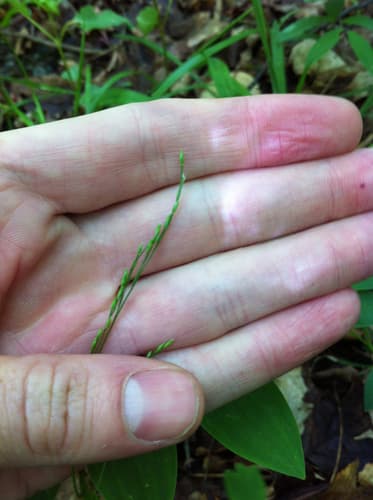
Toxicity unknown
Nodding Fescue (Festuca subverticillata) is not listed by the ASPCA Animal Poison Control Center (opens in new tab) or the other sources we check, so we have no verdict for it either way. Absence from those lists is not a clearance. If your pet shows symptoms after eating any plant, call the ASPCA at (888) 426-4435.
The USDA PLANTS Database (opens in new tab) does not flag Nodding Fescue as toxic to livestock.
Light
part shade
Water
medium
Size
12"–36" H × 6"–18" W
Bloom
May, Jun, Jul
Native to
AL, AR, CT, DE and 32 more states
Before you buy
Your city may pay you to plant this
Cities and water utilities offer rebates for replacing lawn with native and water-wise plants. We track 459 programs across 44 states, each with a link to the provider and the date we last checked it.
Find rebates in your areaPicture natives in your own yard
Upload a photo of your yard and Patch Vision shows a rendering of it planted with natives for your region, like Nodding Fescue.


Browse plants for this ecoregion
Nodding fescue is a grass that forms loose clumps with fine-textured foliage. It produces delicate, nodding seed heads in late spring through summer and thrives in partial shade conditions where many other grasses struggle.
Growing Nodding Fescue
Grow Nodding Fescue in part shade and medium water. Mature plants reach 12 to 36 inches tall and spread 6 to 18 inches wide. Expect low maintenance to keep it looking intentional in a front yard.
How to care for Nodding Fescue, by region
How to care for Nodding Fescue where it is actually grown: year-round basics plus what to do each season, region by region, with the sources for each.
Care guidance last updated: September 2026
Ouachita Mountains (includes Hot Springs, AR)
Year-round
Nodding Fescue is a shade loving, cool season bunchgrass native to rich, rocky woodlands across the eastern half of the country, and Arkansas is listed among its native states. Its habitat, moist to dry hardwood forests on rocky slopes, is a close match for the wooded terrain of the Ouachita Mountains around Hot Springs. It forms low, arching clumps under three feet tall and spreads slowly by dropping seed rather than by aggressive roots, so it stays close to where you planted it.
- Plant it in part shade to full shade, not full sun
- Give it evenly moist, humus rich soil like a woodland floor, not a dry open bed
- Expect a low clump 20 to 40 inches tall with narrow, glossy green leaves and nodding, one sided seed heads
- It fills in an area over years by self seeding, not by spreading roots, so it will not take over a bed
Fall
By fall, Nodding Fescue's flower stalks have dried to a tan or greenish brown, and the clump often looks looser and more sprawling than it did in spring. That is a normal part of its cycle, not a problem, since the plant is finishing up seed drop for the year rather than declining.
- Seed heads dry from green to a straw or greenish brown color through late summer into fall
- Stems can flop or sprawl instead of standing upright as the seed matures, which is a normal habit for this grass
- It spreads mainly by dropping seed nearby, not by running roots, so cutting off the dried seed heads now limits how far it seeds itself in
- No fall fertilizing or hard cutback needed. Save a bigger trim for late winter
Winter
Nodding Fescue mostly rests through winter in the Ouachita Mountains, and the old foliage from the growing season will look worn and floppy by then. Late winter, right before new growth starts, is the time to cut the clump back so it is not sitting there looking ragged once spring green up begins.
- The plant needs no watering or feeding while it sits dormant through the coldest months
- Cut old foliage back close to the ground in late winter, before new growth starts around April, following the same timing extension offices recommend for cool season ornamental grasses in general
- New leaves fill back in within a few weeks of warming temperatures, so a hard cutback will not leave the spot bare for long
Cutting the old foliage back in late winter, before new growth starts, keeps a front yard planting looking intentional and cared for instead of left to go to seed. That reads as tended, not neglected, which matters most in an HOA conscious yard.
Spring
In the Ouachita Mountains, Nodding Fescue greens up as the ground warms in late winter and sends up its nodding flower stalks around April. This is an easy season for it, since spring rain usually keeps its preferred woodland soil damp without any extra watering from you.
- New leaf growth resumes in late winter to early spring, ahead of the April bloom
- Flower stalks with the plant's signature drooping, one sided seed head appear around April
- Water only if spring turns unusually dry, since it is already suited to moist woodland soil
- Good time to divide or transplant a clump, since it spreads by seed rather than by running roots and may need help filling gaps
Summer
Arkansas summers get hot and humid, and Nodding Fescue is a cool season grass that can thin out or partly go dormant during a dry stretch, especially in a spot that gets more sun than it wants. That summer slump is a normal stress response for this plant, not a sign it is dying.
- Expect it to yellow, thin, or look tired during hot, dry weeks
- Water deeply during an extended dry spell rather than a light daily sprinkle, especially if the spot gets afternoon sun
- Keep it in part shade to full shade where you can, since more shade means less summer stress
- Seed heads mature and dry out by mid to late summer, which is when self seeding into nearby soil happens
Sources: Lady Bird Johnson Wildflower Center, Festuca subverticillata plant profile, USDA PLANTS Database, Festuca subverticillata plant profile, Prairie Moon Nursery, Festuca subverticillata (Nodding Fescue), Iowa State University, Native Iowa Woodland Understory Restoration, Festuca subverticillata, Minnesota Wildflowers, Festuca subverticillata (Nodding Fescue) (community tip), University of Missouri Integrated Pest Management, Amazingly Graceful Grasses
In an HOA neighborhood
Nodding Fescue is an HOA-friendly choice. Maintenance level: low. Tidiness: 3 out of 5.
Works well in: foundation, mid zone.
- May appear too informal for conservative HOAs
- Seed heads can look messy to some
Wildlife value
The seed heads provide food for songbirds and small mammals. As a native grass, it supports various insects and contributes to local ecosystem health.
Common questions
- When does Festuca subverticillata bloom?
- Nodding fescue produces its drooping seed heads from May through July, with flowering grass stems rising above the fine green foliage during late spring and early summer.
- What growing conditions does nodding fescue prefer?
- This grass does best in part shade to shade, in soils that stay medium moist to somewhat dry, which mirrors the woodland floor conditions it is often found growing in.
- Is Festuca subverticillata evergreen?
- The foliage often stays green through much of the cooler season and can be semi-evergreen in milder climates, though it may die back in harsher winters.
- Does nodding fescue attract pollinators?
- As a grass, it is wind pollinated and does not rely on or specifically attract pollinating insects for reproduction.
- Is Nodding Fescue toxic to livestock?
- The USDA PLANTS Database does not flag Nodding Fescue as toxic to livestock.
- Is Nodding Fescue HOA-friendly?
- Nodding Fescue is generally an HOA-friendly choice in the right placement, with low maintenance.
These answers were drafted with an AI model from this plant's data. Verify care details with a local expert.
Native range data from vouchered herbarium specimen records and regional native plant society lists. Pollinator and host plant associations compiled from GBIF, iNaturalist, and published ecological literature.
If something looks wrong
Common plant problems, and what to check first
These come up on almost any plant. Each guide lists the likely causes in the order they are worth ruling out, with one thing to check before you act on any of them, and links to the source it came from.
- It is dying right after planting
- Leaves turning yellow
- Wilting even though I watered it
- Brown crispy leaf tips
- Bugs on the plant
Ready to grow Nodding Fescue? Add it to your garden in Pollinator Patch to track it and get season-by-season care guidance.