Is Oleander Toxic to Dogs?
Nerium oleander
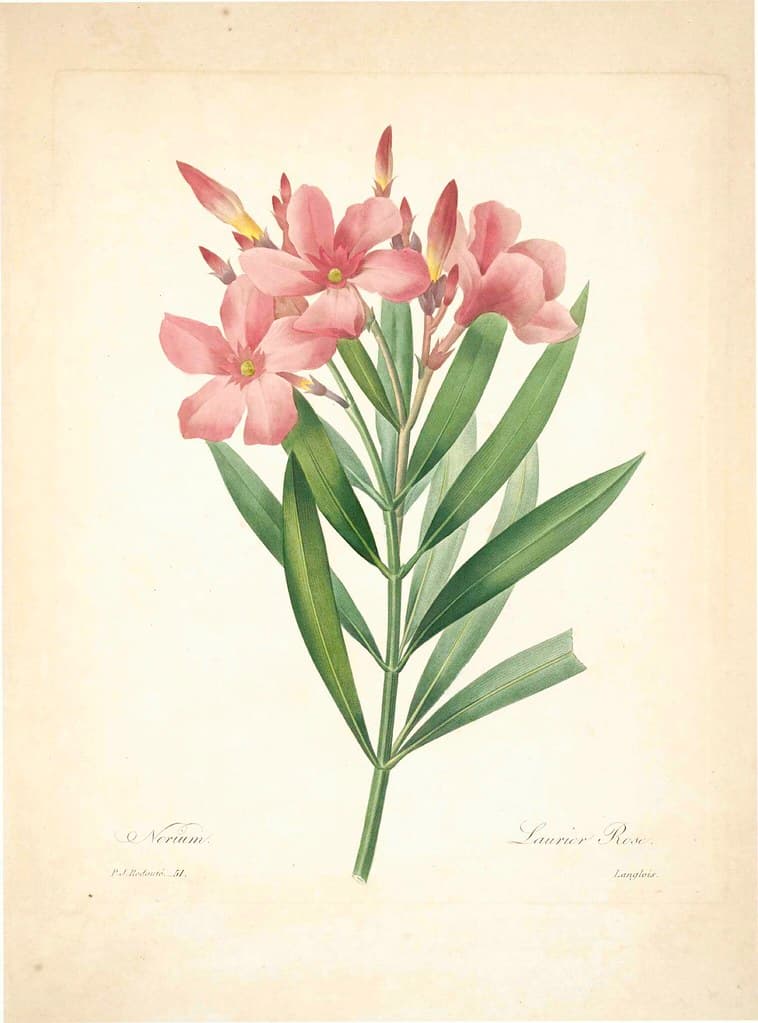
/images/plants/oleander/attribution.json.Yes. Oleander is toxic to dogs and cats.
Severity: severe. If your pet has been exposed, call the ASPCA Animal Poison Control Center at (888) 426-4435. Your veterinarian's emergency line is the other call to make.
Safe native alternative: Desert Willow. See the full list of swaps in our toxic plants for dogs in Texas guide.
Light
full sun
Water
low
Size
60"–240" H × 60"–144" W
Bloom
May, Jun, Jul, Aug, Sep, Oct
Oleander (Nerium oleander) is one of the most commonly planted shrubs in Central and South Texas highway medians and home landscapes, and it is severely toxic to dogs, cats, and horses. The ASPCA Animal Poison Control Center plant database flags every part of the plant: leaves, flowers, bark, roots, and even the water in a vase that has held cut Oleander stems. The Merck Veterinary Manual classifies the toxic compounds (cardiac glycosides, primarily oleandrin) in the same category as digitalis.
Symptoms of Oleander ingestion in dogs: drooling, vomiting (often bloody), abnormal heart rhythm, weakness, and cardiac arrest in severe cases. Symptoms can appear within hours. As few as a handful of leaves can be lethal to a medium dog. If your dog has eaten any part of an Oleander, call the ASPCA Animal Poison Control Center at (888) 426-4435 immediately. This is a true emergency.
Oleander is not native to Texas. It is widely planted because it is drought-tough, blooms all summer, and tolerates poor soil and salt spray. You will see it lining I-10 between Houston and San Antonio, in median strips throughout the Rio Grande Valley, and in HOA front yards across South Texas.
Safe native alternative: Desert Willow (Chilopsis linearis). Showy pink and purple trumpet flowers from June through September, drought-tolerant, attracts hummingbirds, and is not on the ASPCA toxic plant list. Grows in Zones 7 through 11. If you currently have Oleander and pets, removal is the only safe path; even composted Oleander remains toxic, so bag and bin the debris.
Before you buy
Your city may pay you to plant this
Cities and water utilities offer rebates for replacing lawn with native and water-wise plants. We track 452 programs across 44 states, each with a link to the provider and the date we last checked it.
Find rebates in your areaIf something looks wrong
Common plant problems, and what to check first
These come up on almost any plant. Each guide lists the likely causes in the order they are worth ruling out, with one thing to check before you act on any of them, and links to the source it came from.
- It is dying right after planting
- Leaves turning yellow
- Wilting even though I watered it
- Brown crispy leaf tips
- Bugs on the plant
Pollinator Patch flags toxic plants like Oleander so you can find a dog and cat-safe native alternative for your yard.
Planning a bed around it? Start a free plan with this plant
Not sure where to start? Take the 2-minute yard quiz