Passionflower
Passiflora incarnata
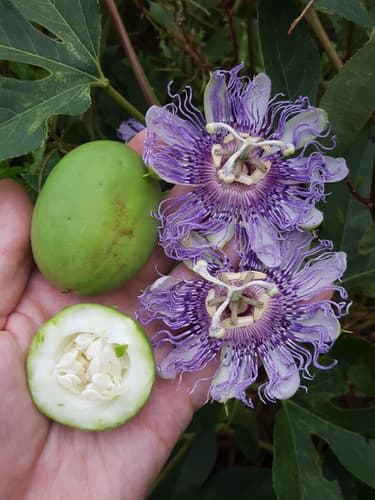
Light
full sun
Water
medium
Size
72"–180" H × 36"–72" W
Bloom
May, Jun, Jul, Aug, Sep
Native to
North Texas
Pollinators
Gulf Fritillary, Variegated Fritillary
Picture natives in your own yard
Upload a photo of your yard and Patch Vision shows a rendering of it planted with natives for your region, like Passionflower.


Browse plants for this ecoregion
Passionflower is a perennial vine native to North Texas. It grows best in full sun with medium water needs.
Passionflower is a vine that supports Gulf Fritillary and Variegated Fritillary butterflies. Its intricate purple-and-white flowers bloom from May through September. It needs a trellis, fence, or arbor to climb. In HOA neighborhoods, place it where it has structure to grow on.
Plant Passionflower in full sun to part shade. It needs moderate water. It can spread aggressively by root and seed; contain it in a defined area. The foliage is the host for fritillary caterpillars, so expect some leaves to be eaten. That is a sign of success.
This vine is best for backyards or fences. Pair it with other nectar plants for adult butterflies. Avoid pesticides. It may die back in winter and regrow in spring. Give it a sturdy support; it can get heavy when mature.
Bee species data compiled from GBIF, iNaturalist, Discover Life, and the USGS Native Bee Inventory and Monitoring Lab. Plant-pollinator associations informed by published ecological literature.
How to care for Passionflower, by region
How to care for Passionflower where it is actually grown: year-round basics plus what to do each season, region by region, with the sources for each.
Care guidance last updated: October 2026
Atlantic Coastal Pine Barrens (includes Riverhead, NY)
Year-round
A vigorous vine native to the South, growing near the cold edge of its range on Long Island. It needs full sun, well-drained soil, sturdy support, and room to spread.
- Purple passionflower is native to states from the mid-Atlantic south, not to New York. On eastern Long Island it is growing near the cold edge of what it can survive.
- Give it full sun to part shade, well-drained soil, and something sturdy to climb such as a trellis, fence, or arbor. It climbs by tendrils.
- It spreads by underground rhizomes and can send up new shoots away from where it was planted, so give it room or plan to manage the spread.
- Farther south, this vine is the larval host plant for gulf fritillary and zebra longwing butterflies. Neither species keeps an established population this far north. Gulf fritillary shows up in New York only as an occasional stray, not a breeding resident, and zebra longwing is not documented here at all, so the host-plant value of this vine mainly matters well south of Long Island.
Fall
As nights cool, growth slows and the vine begins dying back to the ground with the first hard frosts. This is normal, not a sign of a dying plant.
- Stop fertilizing by late summer so soft new growth is not still forming when frost hits.
- Let the vine die back naturally after a hard frost blackens the leaves. Leaving some structure up is fine if you are not ready to cut it back yet.
- This is the point to start thinking about winter mulch, since it is the root system that needs to make it through the cold, not the top growth.
Winter
On eastern Long Island this vine sits near the cold edge of where it can reliably survive, so winter root protection matters more here than in its native range.
- Above-ground growth dies back completely most winters here. That is expected for this vine this far north, not plant failure.
- Mulch heavily over the root zone before hard freezes set in. The colder the winter, the more mulch protection the roots need.
- A spot near a foundation, wall, or other heat-holding surface can help buffer the roots through a hard winter.
- In an unusually harsh or low-snow winter, the roots can still be lost even with mulch, since Long Island sits near the cold edge of this vine's hardiness range.
Once frost blackens the vine, cutting it back and mulching the base keeps the bed looking tended through winter instead of leaving dead brown growth visible from the street.
Spring
New growth is slow to appear from the roots after winter dieback, and once it starts it can grow fast, so get support in place early.
- Do not assume it is dead if you do not see growth right away in spring. It regrows from underground roots and can be one of the last things in the garden to leaf out.
- Set up or check the trellis or support structure before growth takes off. It vines quickly once it starts.
- Thin or redirect any extra shoots coming up from spreading roots away from the main plant. This is the easiest time in the season to keep the spread in check.
Summer
Peak growing season, with vigorous growth, the vine's showy purple and white flowers, and later, egg-shaped fruit.
- Water during dry spells, especially in the plant's first year while roots are still establishing.
- Expect fast, sprawling growth. Redirect or trim shoots that wander outside the bed so the vine does not crowd nearby plants or walkways.
- Flowers are followed by egg-shaped fruit called maypops. No spraying or special pollination help is needed.
Sources: USDA PLANTS Database, Passiflora incarnata profile, Ohio State University BYGL, Purple Passionflower, NY Natural Heritage Program, Western Gulf Fritillary Status, Butterflies and Moths of North America, Zebra Heliconian, Gardening Know How, Preparing a Passion Flower Vine for Winter (community tip)
Central Great Plains (includes Oklahoma City, OK)
Year-round
Purple passionflower (maypop) is native to Oklahoma and grows as a fast climbing perennial vine that dies back to the ground most winters and returns from its roots in spring. It is a larval host plant for the Gulf Fritillary and several other butterflies, and its intricate summer flowers draw hummingbirds and bees.
- Give it a trellis, fence, or arbor near the planting spot, since it climbs by tendrils and can reach 15 to 20 feet in a season.
- Plant in full sun to part shade in well drained soil. It tolerates Oklahoma clay and summer heat once established.
- Expect root suckers to come up around the base as the plant matures. This is normal spreading behavior for this species, not a sign of trouble.
- Watch for Gulf Fritillary caterpillars on the leaves during the growing season. Chewed foliage means the vine is doing its job as a host plant, not a pest problem to treat.
- The vine typically freezes back to bare ground over an Oklahoma City winter and regrows from the roots the following spring.
Fall
In fall, Oklahoma City's maypop vines slow down, set their egg shaped fruit, and begin to die back as nights turn cold.
- Fruit ripens to a dull yellow and can drop and split open on its own. Rake up fallen fruit if you want a tidy bed.
- Leave some fruit in place if you want the vine to reseed, since seeds inside ripe fruit can start new plants nearby.
- Cut back any vine that has already blackened from an early frost to keep the bed neat heading into winter.
- Hold off on heavy pruning until the plant has clearly died back, since some growth can still be active on warm fall days.
Raking up dropped fruit and cutting back frost killed vine keeps a front yard planting looking cared for through fall.
Winter
Winter usually kills the above ground vine completely in Oklahoma City's climate. The roots survive underground and send up new growth the following spring.
- Cut the dead vine back to the ground once a hard freeze has blackened it, for the tidiest winter look.
- Add a couple inches of mulch over the root zone. This helps protect the crown during Oklahoma's colder snaps.
- Do not worry if nothing is visible above ground all winter. This is normal dormancy, not plant loss.
- Avoid digging in the bed this time of year, since dormant roots and root suckers are easy to disturb without seeing them.
Cutting the frozen vine back to the ground is the main way to keep this planting looking tidy over winter.
Spring
Spring is when Oklahoma's maypop breaks dormancy, often not sending up new shoots until the soil warms in April or May. Growth is slow at first, then speeds up quickly once warm weather sets in.
- Do not assume the plant died over winter. Wait until late spring before giving up on a dormant crown.
- Set up or check the trellis, fence, or arbor now, before the vine puts on its fast summer growth.
- Clear away any dead stems left over from winter so new shoots have room to climb.
- Keep new growth watered during dry spells while the roots reestablish for the season.
Clearing old dead stems in spring keeps the bed looking tended before the vine fills back in.
Summer
Summer is maypop's main growing and blooming season in Oklahoma City. The vine climbs quickly, produces its complex purple and white flowers, and can host Gulf Fritillary caterpillars on its leaves.
- Water during extended dry stretches. The vine tolerates heat and some drought once established but blooms best with consistent moisture.
- Guide new runners onto the trellis or fence as they grow so the vine climbs instead of sprawling into turf or walkways.
- Expect some leaf chewing from Gulf Fritillary and other butterfly caterpillars. That is the plant working as a host plant, not a pest problem.
- Trim runners that stray past the bed edge to keep the planting area contained.
Edging back runners that creep into the lawn or over walkways keeps a fast growing vine looking intentional rather than overgrown.
Sources: Lady Bird Johnson Wildflower Center, Passiflora incarnata (Maypop) plant profile, USDA PLANTS Database, Passiflora incarnata profile, North Carolina Extension Gardener Plant Toolbox, Passiflora incarnata
Cross Timbers (includes Fort Worth, TX)
Year-round
Purple passionflower (maypop) is a fast, tendril climbing perennial vine that dies back to its roots each winter in the Fort Worth area and regrows the following year, so care is mostly about giving it a sturdy support and keeping its spreading roots in bounds.
- Give it full sun to part shade and at least 6 hours of direct light for the best bloom and fruit set.
- Plant in average, well drained soil. It tolerates clay and sandy soil and, once established, handles North Texas dry spells without regular watering.
- Install a sturdy trellis, fence, or arbor at planting time. This vine climbs by tendrils and can put on 15 to 20 feet of growth in a single season once it gets going.
- It spreads by underground root suckers, so new shoots can pop up several feet from the main plant. Pull or mow unwanted suckers to keep it contained.
- It is the caterpillar host plant for the Gulf Fritillary and Variegated Fritillary butterflies, and its large, intricate flowers draw native bees and other pollinators.
- The ASPCA lists purple passion vine as non-toxic to dogs, cats, and horses.
- It is native to much of the eastern and southern United States, including Texas.
Passionflower's root suckers can travel several feet from the main plant, so a buried edging strip or a mowed border along shared fence lines keeps new shoots from wandering into a neighbor's yard, which helps it stay HOA-friendly.
Fall
In Fort Worth, fall brings ripening maypop fruit followed by the average first frost date around November 1, which blackens the foliage and signals it is time to cut the vine back for winter.
- Maypop fruit ripen to a yellow green, slightly wrinkled skin in early to mid fall. The pulp inside is edible, or you can leave ripe fruit for wildlife.
- After the first hard freeze blackens the leaves and stems, top growth is finished for the year. This is normal and not a sign of a sick plant.
- Cut the frost killed vine back to a few inches above the ground rather than leaving brown, dead growth on a trellis through winter.
- This is a good window to add a layer of mulch over the root zone before the coldest weather arrives.
Cutting the frost killed vine back promptly instead of leaving brown, dead growth on a fence or trellis keeps the bed looking intentional through the winter months.
Winter
Fort Worth winters in USDA zone 8b reliably kill maypop's top growth back to the ground, but the roots survive and resprout the following year, so winter care is about protecting the root zone, not the vine itself.
- It is normal to see no top growth at all through winter. The vine is not dead, it is dormant below ground.
- A few inches of mulch over the root zone gives extra insulation during hard freezes, especially for a vine planted in its first year or two.
- Do not fertilize during winter dormancy. Wait until you see new growth in spring.
- Avoid disturbing the soil over the root crown while it is dormant, since that is where next year's shoots will emerge from.
Spring
In Fort Worth's zone 8b climate, maypop is a late riser. It typically stays dormant underground past the average last frost date around March 1 and does not send up new shoots until the soil warms, sometimes not until late spring.
- Do not assume the plant died over winter if you see bare soil through March and into April. Maypop is one of the last perennials to emerge.
- Once shoots appear, check that the trellis, fence, or arbor is in place and undamaged, since growth speeds up quickly once it starts.
- Thin out extra root sucker shoots coming up away from the main plant while they are small and easy to pull.
- Hold off on heavy watering until you see active top growth. Watering dormant roots in cool, wet spring soil can encourage rot.
A bare patch where the vine is still dormant can look neglected to a passing neighbor, so a light layer of mulch over the root zone keeps the bed looking tended while you wait for it to leaf out.
Summer
Summer is maypop's peak growing and blooming season in Fort Worth. Expect fast vine growth, the intricate purple flowers from roughly June through August, and the start of the egg shaped maypop fruit.
- Prune and train new growth onto the trellis or fence every few weeks during peak growth. It can add several feet of new vine quickly in Texas summer heat.
- It is drought tolerant once established, but a deep watering during a stretch of very hot days helps keep blooms coming.
- Each flower opens for about a day, but a healthy vine produces a steady succession of blooms through summer, so deadheading is not necessary.
- Watch for new root suckers coming up in the lawn or nearby beds and remove the ones you do not want, since summer heat pushes fast spread.
Training the vine onto its support rather than letting it sprawl across the ground keeps a front facing planting looking tidy and HOA-friendly through the height of the growing season.
Sources: Passiflora incarnata (Lady Bird Johnson Wildflower Center), Passiflora incarnata (NC State Extension Gardener Plant Toolbox), Purple Passion Vine (ASPCA Toxic and Non-Toxic Plants), Fort Worth, Texas Frost Dates (frostdates.com) (community tip), Lady Bird Johnson Wildflower Center, Passiflora incarnata
Piedmont (includes Atlanta, GA)
Year-round
Purple passionflower is a fast climbing vine that likes sun, drains well, and spreads by root suckers.
- Full sun or partial shade both work.
- Average, well-drained soil is fine. It is drought tolerant, and loose mulch keeps roots cool.
- It climbs by tendrils on a trellis, pergola, or fence.
- It spreads aggressively by root suckers in good conditions, so plan room or pull extra shoots.
- Hardy in zones 5a to 9b, so Atlanta is a good fit.
Keep it on a trellis and pull suckers so it stays in bounds.
Fall
Fall is fruit time.
- Egg-shaped fruits called maypops ripen July to October.
- Watch for occasional phlox plant bugs or barnacle scale. No serious pests are reported.
Winter
Winter is dieback and wet-feet watch.
- The vine can die back in cold winters, and that is normal.
- Avoid poorly drained, wet soil in winter, since root rot can develop.
Spring
Spring is slow to wake. Expect growth to restart from the ground.
- It dies back in cold winters and grows fast once it warms.
- Put up a trellis early so new vines have something to climb.
- Pull root suckers that pop up where you do not want them.
Summer
Summer brings flowers. Watering is light.
- Fragrant white and purple flowers open May through July.
- It is drought tolerant, with loose mulch helping keep roots cool.
- After the first season, pinch vines back for bushier growth.
Sources: NC State Extension Plant Toolbox: Passiflora incarnata
Ridge and Valley (includes Harrisburg, PA)
Year-round
Passionflower is a fast vine that likes sun and well-drained soil. In Harrisburg, PA it dies back to the ground each winter and regrows in spring.
- Give it full sun, 6 or more hours a day. Part shade, 2 to 6 hours, also works.
- Plant it where water drains well. Clay that stays soggy can rot the roots in winter.
- Once settled it handles dry spells well. A loose layer of mulch keeps the roots cool.
- It spreads by root suckers, so give it room or pull extra shoots.
Pulling suckers and training the vine up a trellis helps it read as intentional.
Fall
Fall is a quiet time. Growth slows and the vine heads toward its winter dieback.
- Stop extra watering. Cooler weather needs less.
- Keep mulch loose and away from stems.
- Let the vine die back on its own, then trim it once it is brown.
- Check that water does not pool around the roots.
Winter
In cold winters the vine dies to the ground. The roots rest underground and the plant regrows in spring.
- Do not water. Wet winter soil is the main risk, since poorly drained spots can cause root rot.
- Bare stems are normal, so leave the roots alone.
- Mark the spot so you do not dig it up by mistake.
Spring
Spring is a good window to plant and to tidy up. The vine dies to the ground in cold winters, so give it time before you worry.
- Wait for new shoots to appear before you decide anything is dead.
- Add a loose layer of mulch to keep roots cool.
- Set up the trellis early so new growth has something to climb.
- Plant in well-drained soil, not a spot that stays wet.
Summer
Summer is when the vine grows fastest. It handles Harrisburg heat well and rarely needs much water once established.
- Water a new plant during dry weeks. Established plants tolerate drought.
- Keep full sun for the best growth.
- Pull root suckers that pop up where you do not want them.
- After the first season, pinch vines back for a bushier shape.
Sources: NC State Extension Gardener Plant Toolbox: Passiflora incarnata
Texas Blackland Prairies (includes Dallas, TX)
Year-round
Purple passionflower (maypop) is a fast, tendril climbing perennial vine that dies back to its roots each winter in the Dallas area and regrows the following year, so care is mostly about giving it a sturdy support and keeping its spreading roots in bounds.
- Give it full sun to part shade and at least 6 hours of direct light for the best bloom and fruit set.
- Plant in average, well drained soil. It tolerates clay and sandy soil and, once established, handles North Texas dry spells without regular watering.
- Install a sturdy trellis, fence, or arbor at planting time. This vine climbs by tendrils and can put on 15 to 20 feet of growth in a single season once it gets going.
- It spreads by underground root suckers, so new shoots can pop up several feet from the main plant. Pull or mow unwanted suckers to keep it contained.
- It is the caterpillar host plant for the Gulf Fritillary and Variegated Fritillary butterflies, and its large, intricate flowers draw native bees and other pollinators.
- The ASPCA lists purple passion vine as non-toxic to dogs, cats, and horses.
- It is native to much of the eastern and southern United States, including Texas.
Passionflower's root suckers can travel several feet from the main plant, so a buried edging strip or a mowed border along shared fence lines keeps new shoots from wandering into a neighbor's yard, which helps it stay HOA-friendly.
Fall
In Dallas, fall brings ripening maypop fruit followed by the average first frost date around November 4, which blackens the foliage and signals it is time to cut the vine back for winter.
- Maypop fruit ripen to a yellow green, slightly wrinkled skin in early to mid fall. The pulp inside is edible, or you can leave ripe fruit for wildlife.
- After the first hard freeze blackens the leaves and stems, top growth is finished for the year. This is normal and not a sign of a sick plant.
- Cut the frost killed vine back to a few inches above the ground rather than leaving brown, dead growth on a trellis through winter.
- This is a good window to add a layer of mulch over the root zone before the coldest weather arrives.
Cutting the frost killed vine back promptly instead of leaving brown, dead growth on a fence or trellis keeps the bed looking intentional through the winter months.
Winter
Dallas winters in USDA zone 8b reliably kill maypop's top growth back to the ground, but the roots survive and resprout the following year, so winter care is about protecting the root zone, not the vine itself.
- It is normal to see no top growth at all through winter. The vine is not dead, it is dormant below ground.
- A few inches of mulch over the root zone gives extra insulation during hard freezes, especially for a vine planted in its first year or two.
- Do not fertilize during winter dormancy. Wait until you see new growth in spring.
- Avoid disturbing the soil over the root crown while it is dormant, since that is where next year's shoots will emerge from.
Spring
In Dallas's zone 8b climate, maypop is a late riser. It typically stays dormant underground past the average last frost date around February 28 and does not send up new shoots until the soil warms, sometimes not until late spring.
- Do not assume the plant died over winter if you see bare soil through March and into April. Maypop is one of the last perennials to emerge.
- Once shoots appear, check that the trellis, fence, or arbor is in place and undamaged, since growth speeds up quickly once it starts.
- Thin out extra root sucker shoots coming up away from the main plant while they are small and easy to pull.
- Hold off on heavy watering until you see active top growth. Watering dormant roots in cool, wet spring soil can encourage rot.
A bare patch where the vine is still dormant can look neglected to a passing neighbor, so a light layer of mulch over the root zone keeps the bed looking tended while you wait for it to leaf out.
Summer
Summer is maypop's peak growing and blooming season in Dallas. Expect fast vine growth, the intricate purple flowers from roughly June through August, and the start of the egg shaped maypop fruit.
- Prune and train new growth onto the trellis or fence every few weeks during peak growth. It can add several feet of new vine quickly in Texas summer heat.
- It is drought tolerant once established, but a deep watering during a stretch of very hot days helps keep blooms coming.
- Each flower opens for about a day, but a healthy vine produces a steady succession of blooms through summer, so deadheading is not necessary.
- Watch for new root suckers coming up in the lawn or nearby beds and remove the ones you do not want, since summer heat pushes fast spread.
Training the vine onto its support rather than letting it sprawl across the ground keeps a front facing planting looking tidy and HOA-friendly through the height of the growing season.
Sources: Passiflora incarnata (Lady Bird Johnson Wildflower Center), Passiflora incarnata (NC State Extension Gardener Plant Toolbox), Purple Passion Vine (ASPCA Toxic and Non-Toxic Plants), Frost Dates for Dallas, Texas (frostdates.com) (community tip), Lady Bird Johnson Wildflower Center, Passiflora incarnata
Western Gulf Coastal Plain (includes Houston, TX)
Year-round
Purple passionflower (maypop) is native to Texas and thrives in the Houston area as a vigorous, fast climbing perennial vine. It is a larval host plant for the Gulf Fritillary, Zebra Longwing, and other butterflies, and its flowers support pollinators through a long bloom season.
- Give it a trellis, fence, arbor, or other sturdy support, since it climbs by tendrils and can grow 15 to 25 feet in a single season in Houston's long growing season.
- Plant in full sun to part shade. It handles Houston heat and humidity well and tolerates clay or sandy soil as long as drainage is decent.
- Root suckers will appear as the plant establishes and can spread beyond the original planting spot. Plan for this spreading habit from the start.
- Watch for Gulf Fritillary and Zebra Longwing caterpillars on the leaves. Chewed foliage means the vine is functioning as a host plant.
- In Houston's milder winters the vine may stay partly woody instead of fully dying back, except after a hard freeze.
Fall
Fall in Houston brings maypop's egg shaped fruit to ripeness and a gradual slowdown in growth, though the vine can stay green later into the year than it would farther north.
- Fruit ripens to yellow and can drop and split open on the ground. Rake up dropped fruit for a tidier bed.
- Leave some fruit in place if you want the vine to reseed nearby.
- Keep training or trimming runners as needed, since Houston's warm fall weather can keep the vine growing later in the season.
- Hold off on cutting the vine back hard until growth has clearly slowed, since it can still be active into November.
Raking dropped fruit and trimming stray runners keeps the bed looking maintained through Houston's long fall growing season.
Winter
Houston winters are usually mild enough that maypop only partly dies back, though a hard freeze can knock the vine to the ground the way it does farther north.
- After a freeze blackens the vine, cut it back to the ground for a clean winter look.
- In a mild winter without a hard freeze, the vine may keep some green growth. Light shaping is fine if it looks ragged.
- Mulch the root zone a couple inches deep. This protects the crown if a harder freeze moves through.
- Do not be alarmed by bare ground after a freeze. The roots are still alive and will send up new growth in spring.
Cutting back any freeze damaged vine keeps the planting tidy rather than leaving blackened growth hanging over winter.
Spring
Houston's mild spring means maypop often breaks dormancy earlier than in colder climates, sometimes as early as March, and growth speeds up fast once the vine gets going.
- Check and reset any trellis, fence, or arbor support before the vine's rapid spring growth spurt begins.
- Cut away any lingering dead growth from winter that was not already removed, so new shoots have a clear path to climb.
- Water new spring growth during dry spells while the root system pushes out fresh shoots.
- Expect root suckers to show up nearby as the plant wakes up. Pull unwanted ones early while they are small and easy to remove.
Clearing winter dieback in early spring keeps the planting looking tended before new growth fills in.
Summer
Summer is peak growing and blooming season for maypop in the Houston area, with the vine climbing fast and producing its showy purple and white flowers through the heat.
- Give supplemental water during dry spells. Houston humidity helps, but consistent moisture keeps blooms coming.
- Train new runners onto the support structure regularly, since Houston's long warm season means fast, near constant growth.
- Expect Gulf Fritillary and Zebra Longwing caterpillars to strip some leaves. This is normal host plant activity, not a pest to treat.
- Trim or pull runners that spread into the lawn, a neighboring bed, or a walkway to keep the vine contained to its spot.
Regularly edging back runners keeps a vigorous vine like this one from reading as overgrown along a front walkway or lawn edge.
Sources: Lady Bird Johnson Wildflower Center, Passiflora incarnata (Maypop) plant profile, USDA PLANTS Database, Passiflora incarnata profile, North Carolina Extension Gardener Plant Toolbox, Passiflora incarnata, Texas A&M AgriLife Extension, Forage Fax, Weed of the Week: Maypop Passionflower
Before you buy
Your city may pay you to plant this
Cities and water utilities offer rebates for replacing lawn with native and water-wise plants. We track 459 programs across 44 states, each with a link to the provider and the date we last checked it.
Find rebates in your areaIf something looks wrong
Common plant problems, and what to check first
These come up on almost any plant. Each guide lists the likely causes in the order they are worth ruling out, with one thing to check before you act on any of them, and links to the source it came from.
- It is dying right after planting
- Leaves turning yellow
- Wilting even though I watered it
- Brown crispy leaf tips
- Bugs on the plant
Ready to grow Passionflower? Add it to your garden in Pollinator Patch to track it and get season-by-season care guidance.