Piedmont Barbara's buttons
Marshallia obovata
Last reviewed: September 2026
Piedmont Barbara's buttons (Marshallia obovata) is a perennial forb native to AL, FL, GA, NC and 2 more states. It blooms in April, May, and June. The flowers draw butterflies and bees.
Toxicity unknown
Piedmont Barbara's buttons (Marshallia obovata) is not listed by the ASPCA Animal Poison Control Center (opens in new tab) or the other sources we check, so we have no verdict for it either way. Absence from those lists is not a clearance. If your pet shows symptoms after eating any plant, call the ASPCA at (888) 426-4435.
Light
full sun
Water
medium
Size
8"–18" H × 8"–12" W
Bloom
Apr, May, Jun
Native to
AL, FL, GA, NC and 2 more states
Pollinators
butterflies, bees
Before you buy
Your city may pay you to plant this
Cities and water utilities offer rebates for replacing lawn with native and water-wise plants. We track 458 programs across 44 states, each with a link to the provider and the date we last checked it.
Find rebates in your areaPicture natives in your own yard
Upload a photo of your yard and Patch Vision shows a rendering of it planted with natives for your region, like Piedmont Barbara's buttons.


Browse plants for this ecoregion
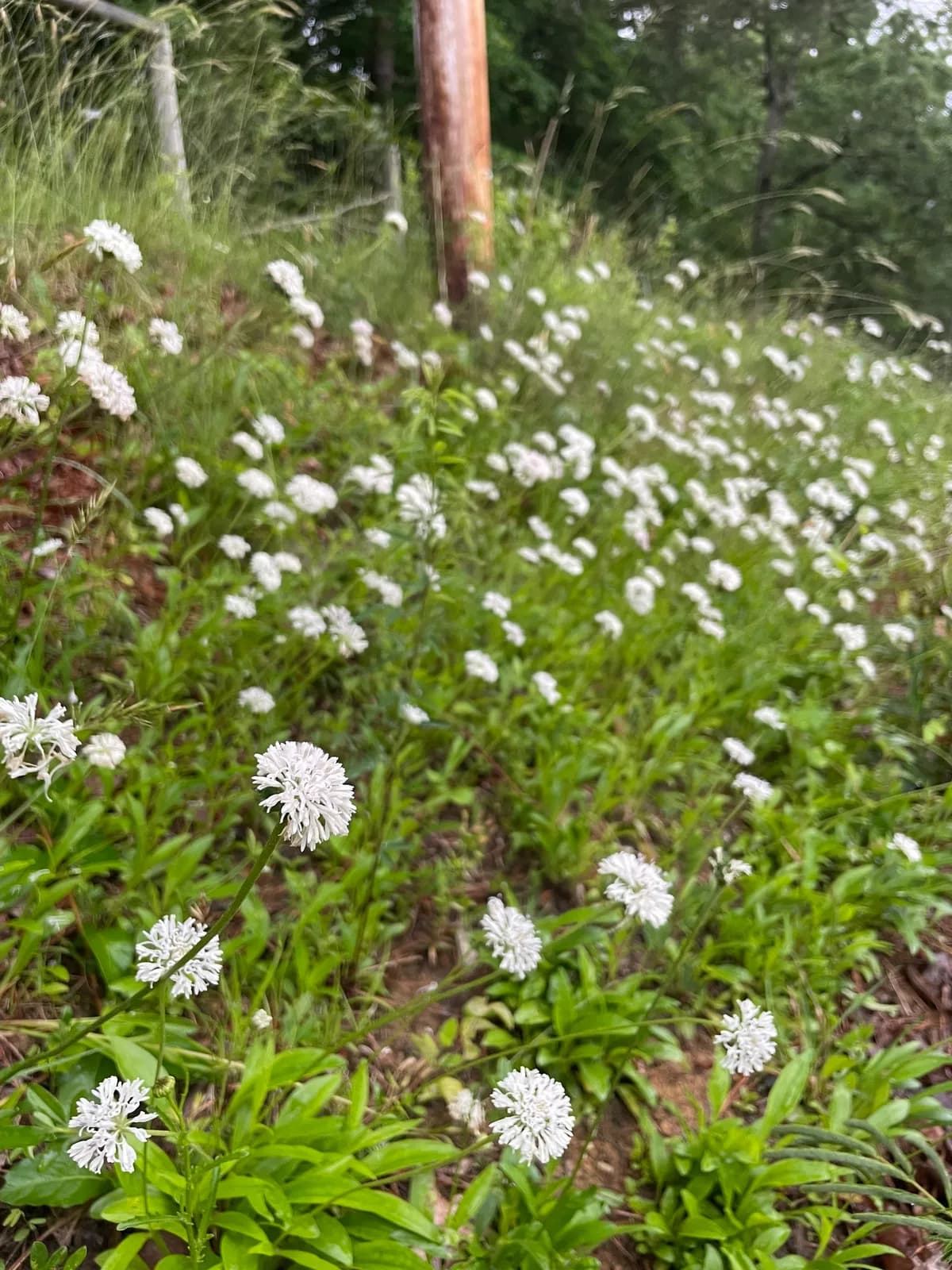
Low rosette-forming perennial with narrow leaves and rounded, button-like flower heads of pale pink to white held on slender stems. Found on rocky woodland edges and open glades.
Growing Piedmont Barbara's buttons
Grow Piedmont Barbara's buttons in full sun and medium water. Mature plants reach 8 to 18 inches tall and spread 8 to 12 inches wide.
How to care for Piedmont Barbara's buttons, by region
How to care for Piedmont Barbara's buttons where it is actually grown: year-round basics plus what to do each season, region by region, with the sources for each.
Care guidance last updated: September 2026
Ridge and Valley (includes Harrisburg, PA)
Year-round
Piedmont Barbara's buttons is a Southeast plant, so Harrisburg is outside its range and this is cultivation only. It is rated hardy to zone 5 through 8, which covers Harrisburg. Sharp drainage is the key.
- Full sun to part shade
- Tolerates clay, sand or shallow rocky soil if it drains
- Stays about 2 feet tall
- Drought tolerant once established
Its airy white flowers suit cottage-style beds. Cut back spent stalks for a tidy curb view.
Fall
Fall planting works in Harrisburg if done early enough for roots to settle. Seedlings can pop up near the parent plant.
- Plant by early fall
- Move or share extra seedlings
- Cut back only after stems brown
- Keep leaves off the crown
Winter
Winters are within its hardiness range. Wet soil is a bigger threat than cold.
- Avoid planting in low, wet spots
- No heavy winter mulch needed
- Leave stems standing or trim in late winter
- Expect regrowth in spring
Spring
Plant in spring once the soil warms and choose the best drained spot you have. New plants need steady moisture at first.
- Set plants in a raised or sloped spot in heavy clay
- Water weekly for the first month
- Do not overfeed
- Mark the spot since growth starts late
Summer
Established plants want evenly moist to dry conditions, not soggy soil. Water only in extended dry weather.
- Water deeply only during long dry spells
- Skip mulch piled against stems
- Let flowers set seed if you want new seedlings
- Expect few pest problems
Sources: NC State Extension Plant Toolbox: Marshallia obovata
Wildlife value
Flowers attract butterflies and native bees.
Common questions
- How much sun does Piedmont Barbara's buttons need?
- Piedmont Barbara's buttons grows best in full sun conditions.
- When does Piedmont Barbara's buttons bloom?
- Piedmont Barbara's buttons blooms in April, May, and June.
- Where is Piedmont Barbara's buttons native?
- Piedmont Barbara's buttons (Marshallia obovata) is native to AL, FL, GA, NC and 2 more states, per the World Checklist of Vascular Plants (Kew).
- What pollinators does Piedmont Barbara's buttons attract?
- Piedmont Barbara's buttons draws butterflies and bees.
Native range data from the World Checklist of Vascular Plants (Kew). Pollinator and host plant associations compiled from GBIF, iNaturalist, and published ecological literature.
If something looks wrong
Common plant problems, and what to check first
These come up on almost any plant. Each guide lists the likely causes in the order they are worth ruling out, with one thing to check before you act on any of them, and links to the source it came from.
- It is dying right after planting
- Leaves turning yellow
- Wilting even though I watered it
- Brown crispy leaf tips
- Bugs on the plant
Ready to grow Piedmont Barbara's buttons? Add it to your garden in Pollinator Patch to track it and get season-by-season care guidance.