Prairie Nymph
Herbertia lahue
Last reviewed: August 2026
Toxicity unknown
Prairie Nymph (Herbertia lahue) is not listed by the ASPCA Animal Poison Control Center (opens in new tab) or the other sources we check, so we have no verdict for it either way. Absence from those lists is not a clearance. If your pet shows symptoms after eating any plant, call the ASPCA at (888) 426-4435.
Light
part sun
Water
medium
Size
1"–3" H × 1"–3" W
Bloom
Mar, Apr, May
Native to
TX
Pollinators
bees
Native alternatives to Prairie Nymph
Prairie Nymph is not native to the United States. These natives fill a similar role in a planting, matched on bloom season, bloom color and mature size.

Before you buy
Your city may pay you to plant this
Cities and water utilities offer rebates for replacing lawn with native and water-wise plants. We track 452 programs across 44 states, each with a link to the provider and the date we last checked it.
Find rebates in your areaBrowse plants for this ecoregion
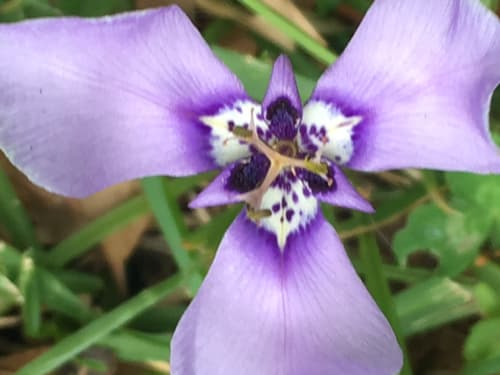
Prairie Nymph is a tiny native iris that produces delicate blue-purple flowers in spring. This diminutive perennial forms small clumps and goes dormant in summer, making it best suited for rock gardens or specialized native plant areas.
How to care for Prairie Nymph, by region
How to care for Prairie Nymph where it is actually grown: year-round basics plus what to do each season, region by region, with the sources for each.
Care guidance last updated: September 2026
Mississippi Valley Loess Plains (includes Memphis, TN)
Year-round
Prairie Nymph is a small iris family corm from Gulf Coast prairies in Texas, Louisiana, Mississippi and the Florida panhandle. It is not native to the Memphis area, but it can be grown here as a low, tidy spring blooming bulb if you give it dry, fast draining soil and some winter protection.
- Plant corms in full sun to light afternoon shade, in soil that drains fast, sandy or loamy soil works better than heavy wet clay
- Let the soil dry out between waterings, soggy soil is the main way these corms are lost
- Each flower opens for one morning only, then the whole plant goes dormant and dies back after it sets seed in early summer
- Memphis sits right at the cold edge of where this corm is normally grown outdoors, so plan on winter protection
- It grows well from seed if you want to spread it into a bigger patch over a couple of seasons
Fall
Fall is a quiet stretch for Prairie Nymph. In its home range this corm can put out a little slow new growth once the weather cools, rather than staying fully dormant all winter.
- As Memphis temperatures drop and fall rain returns, watch for a little new leaf growth, growers note it can rarely go fully dormant if the soil stays lightly moist
- Keep watering light to moderate, soggy soil is still the main risk
- Fall is a reasonable time to tuck in new corms so they're established before next spring's bloom
- Skip heavy fertilizer, a thin layer of compost is plenty this time of year
Winter
Winter is the highest risk season for this corm in Memphis. It's generally described as hardy to about USDA zone 8 with some protection, and Memphis itself only recently moved into zone 8a, so a hard freeze or ice storm can still kill unprotected corms.
- Add a couple inches of mulch over the bed before your first hard freeze, this is the main protection most growers use
- If you're growing it in a container, move the pot to a garage or covered porch during a hard freeze or ice storm
- Skip winter fertilizer, the corms are resting and don't need feeding
- If a bad cold snap kills the top growth, don't dig up the corms right away, wait to see if new growth returns in spring first
A couple inches of clean mulch over the bed for winter reads as deliberate garden care, not a neglected patch, if anyone from the HOA is looking.
Spring
Spring is bloom season. Expect small blue purple flowers with white blotches from March into May, each one opening for a single morning and closing again by late afternoon.
- Blooms run March through May in the Memphis area, with each flower lasting about a day before it closes for good
- Keep the soil lightly moist during active spring growth, but never let water stand around the corms
- New flowers open in succession over about two weeks, so the patch stays interesting even though no single bloom lasts long
- This is the best window to enjoy it as a low front bed groundcover, it stays under a foot tall
A low, tidy blooming groundcover like this reads as an intentional planting, not an overgrown bed, if a neighbor or the HOA takes a look.
Summer
By early summer the bloom is done and the plant goes dormant. Foliage yellows and dies back, and the corms rest underground through Memphis's hot, humid summer.
- Stop regular watering once the leaves start yellowing, dormant corms rot fast in soggy summer soil
- Good drainage matters more than ever here, heavy Memphis summer rain can leave clay soil waterlogged for days
- Once the foliage is fully brown and dry, you can cut it back for a tidy look, wait until it pulls away easily first
- Mark the spot before the leaves disappear so you don't accidentally dig into the resting corms later in the season
Cutting the dead foliage back once it's fully brown keeps the bed looking cared for instead of neglected during the plant's dormant stretch.
Sources: Lady Bird Johnson Wildflower Center: Herbertia lahue plant profile, USDA PLANTS Profile for Herbertia lahue (prairienymph), Pacific Bulb Society: Herbertia fall and winter growth pattern (community tip), USDA Plant Hardiness Zone Map (2023): Memphis, TN zone 8a
Want these tasks as reminders timed to your yard? Pollinator Patch turns this guidance into a season-by-season care plan for the plants you actually grow.
In an HOA neighborhood
Prairie Nymph is an HOA-friendly choice. Maintenance level: low. Tidiness: 2 out of 5.
Works well in: front yard, foundation, street edge, mid zone.
Wildlife value
The small flowers attract native bees during its brief spring blooming period.
Common questions
- How much sun does Prairie Nymph need?
- Prairie Nymph grows best in part sun conditions.
- When does Prairie Nymph bloom?
- Prairie Nymph blooms in March, April, and May.
- Where is Prairie Nymph native?
- Prairie Nymph (Herbertia lahue) is native to TX, per vouchered herbarium specimen records and regional native plant society lists.
- What pollinators does Prairie Nymph attract?
- Prairie Nymph draws bees.
- Is Prairie Nymph HOA-friendly?
- Prairie Nymph is generally an HOA-friendly choice in the right placement, with low maintenance.
Pollinator and host plant associations compiled from GBIF, iNaturalist, and published ecological literature.
If something looks wrong
Common plant problems, and what to check first
These come up on almost any plant. Each guide lists the likely causes in the order they are worth ruling out, with one thing to check before you act on any of them, and links to the source it came from.
- It is dying right after planting
- Leaves turning yellow
- Wilting even though I watered it
- Brown crispy leaf tips
- Bugs on the plant
Ready to grow Prairie Nymph? Add it to your garden in Pollinator Patch to track it and get season-by-season care guidance.
Planning a bed around it? Start a free plan with this plant
Not sure where to start? Take the 2-minute yard quiz