Rio Grande Butterfly Bush
Buddleja sessiliflora
Last reviewed: August 2026
Buddleja sessiliflora is a drought tolerant shrub that grows well in full sun and blooms from March through August, drawing butterflies and other nectar insects to washes and rocky slopes in Arizona and Texas.
Toxicity unknown
Rio Grande Butterfly Bush (Buddleja sessiliflora) is not listed by the ASPCA Animal Poison Control Center (opens in new tab) or the other sources we check, so we have no verdict for it either way. Absence from those lists is not a clearance. If your pet shows symptoms after eating any plant, call the ASPCA at (888) 426-4435.
Light
full sun
Water
low
Size
36"–72" H × 36"–72" W
Bloom
Mar, Apr, May, Jun, Jul, Aug
Native to
AZ, TX
Pollinators
butterflies, nectar insects
Before you buy
Your city may pay you to plant this
Cities and water utilities offer rebates for replacing lawn with native and water-wise plants. We track 452 programs across 44 states, each with a link to the provider and the date we last checked it.
Find rebates in your areaBrowse plants for this ecoregion
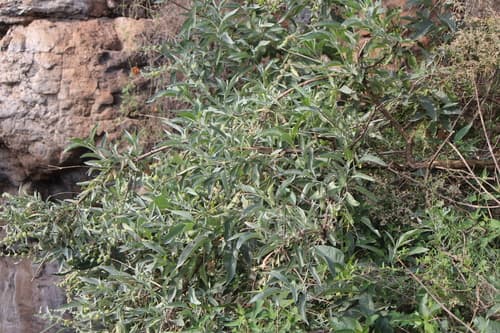
Rio Grande Butterfly Bush is a native Texas shrub that produces clusters of small, fragrant flowers from spring through summer. This drought-tolerant plant forms a rounded shape and goes dormant in winter, losing its leaves completely.
Growing Rio Grande Butterfly Bush
Grow Rio Grande Butterfly Bush in full sun and low water. Mature plants reach 36 to 72 inches tall and spread 36 to 72 inches wide. Expect low maintenance to keep it looking intentional in a front yard.
How to care for Rio Grande Butterfly Bush, by region
How to care for Rio Grande Butterfly Bush where it is actually grown: year-round basics plus what to do each season, region by region, with the sources for each.
Care guidance last updated: September 2026
Atlantic Coastal Pine Barrens (includes Riverhead, NY)
Year-round
Rio Grande butterfly bush is a warm-climate shrub from Arizona, Texas, and Mexico, not from New York, and it needs real winter protection to make it through a Long Island cold season.
- This species is native to hot desert and river-bottom habitat in Arizona, Texas, and central Mexico, not to New York or anywhere in the Northeast.
- It grows into a loose, airy shrub about 3 to 6 feet tall and wide, with clusters of small yellow-green flowers appearing mostly from spring into summer.
- It does best in full sun to part shade and tolerates sandy, loamy, or clay soil, growing better with light to moderate watering than constant moisture.
- Nursery growers rate it hardy to only around 15 degrees Fahrenheit, with leaf drop already starting in the low 20s, well above the coldest nights a typical Riverhead winter delivers.
- Riverhead sits in USDA hardiness zone 7a to 7b, so plan on a container plant brought indoors for winter, treating it as an annual, or giving it the warmest, most sheltered spot on the property and accepting real risk of losing it in a hard freeze.
Fall
Fall's main job is getting a protection plan in place well before frost, since this plant is not built for a Long Island winter outdoors.
- Riverhead's first fall frost typically arrives in late October to early November, well before this plant's damage threshold in the low 20s.
- If it is in a container, bring it indoors to a bright spot once nighttime temperatures start dropping into the 40s, rather than waiting for a frost warning.
- If it is in the ground, take a few cuttings as a backup this month, since even a well-mulched in-ground plant is not a sure bet through a full winter here.
- Ease off fertilizing in fall so new growth is not still soft and vulnerable when the cold arrives.
- Rake up fallen leaves and spent flower clusters to keep the bed tidy heading into winter.
Winter
Winter is the season this plant cannot handle unprotected outdoors here, so the real choice is bring it inside, shelter it heavily, or treat it as an annual.
- Riverhead's zone 7a to 7b winter lows regularly drop well below this plant's roughly 15 degree Fahrenheit damage threshold.
- A container plant should spend winter indoors in a bright, cool spot such as an unheated sunroom or a bright window away from heating vents, watered sparingly while growth slows.
- An in-ground plant tucked against a south-facing wall with heavy mulch and a frost blanket or burlap wrap has a chance in a mild winter, but a hard freeze can still kill it back hard or outright.
- Treating it as an annual and starting a new plant or rooted cutting each year is a realistic, lower-effort option if indoor space is tight.
- Do not rely on outdoor mulch alone the way you might for a shrub actually rated to this hardiness zone.
If a hard freeze kills the top growth, cutting it back to the ground before spring keeps a front-yard bed tidy and HOA-friendly instead of left looking dead all winter.
Spring
Spring is when new growth and the main bloom start, and when a container plant can move back outside once nights warm up.
- Wait until nighttime temperatures are reliably above 50 degrees Fahrenheit, usually late April into May on Long Island, before moving a container plant back outdoors.
- Introduce it to full sun gradually over a week or two, since new spring growth sunburns easily after a winter spent indoors.
- This is usually the start of the main bloom period, with clusters of small yellow-green flowers forming on new growth.
- Refresh potting mix or top-dress in-ground soil with compost as new growth begins, and resume regular watering as the days warm.
- Light pruning now shapes the plant and encourages the fuller, bushier growth this species responds well to.
Summer
Summer is peak growth and bloom, with the main jobs being steady watering and keeping spent flowers deadheaded.
- Water deeply whenever the top couple inches of soil or potting mix dry out, checking more often for a plant in a pot during hot stretches.
- This is peak bloom, and the flower clusters draw butterflies and other nectar-seeking insects.
- Long Island summer humidity is milder than the heat of this plant's native Rio Grande Valley range, so no special humidity precautions are needed here.
- Deadhead spent flower clusters through the season to keep new blooms coming.
- Check a potted plant for root-bound stress by mid to late summer, and size up the container if roots are circling the drainage holes.
Regular deadheading also keeps a front-yard plant looking neat, which reads as HOA-friendly to neighbors and any board.
Sources: USDA PLANTS Database, Buddleja sessiliflora profile, Lady Bird Johnson Wildflower Center, Buddleja sessiliflora, Spadefoot Nursery, Rio Grande Butterfly Bush, USDA Plant Hardiness Zone Map, Native Plant Society of Texas, Buddleja sessiliflora, Old Farmer's Almanac, Frost Dates for Riverhead, NY (community tip)
Want these tasks as reminders timed to your yard? Pollinator Patch turns this guidance into a season-by-season care plan for the plants you actually grow.
In an HOA neighborhood
Rio Grande Butterfly Bush takes more care to keep looking intentional in a front yard. Maintenance level: low. Consider it for backyard or mid-zone beds rather than the street edge.
Works well in: backyard only.
- Height exceeds typical HOA-friendly range
Wildlife value
Attracts numerous butterfly species and other nectar-feeding insects throughout its extended bloom period. The long flowering season makes it particularly valuable for supporting pollinators from spring through late summer.
Common questions
- How much water does Buddleja sessiliflora need?
- Once established, this shrub tolerates low water and does best with infrequent, deep watering rather than regular irrigation, reflecting its arid and semi-arid habitat.
- When does Buddleja sessiliflora bloom?
- It typically flowers from March through August, with clusters of small orange blooms appearing over an extended spring and summer season.
- What pollinators does Buddleja sessiliflora attract?
- The flowers draw butterflies and other nectar-feeding insects, making it a useful nectar source in dry shrub and canyon plantings.
- What light conditions suit Buddleja sessiliflora best?
- Full sun brings on the heaviest bloom, though the shrub can also handle part sun locations, especially in hotter, low elevation sites.
- Is Buddleja sessiliflora evergreen or deciduous?
- It is deciduous, dropping its leaves during cold or extended dry periods and leafing back out with warmer, wetter conditions.
- Is Rio Grande Butterfly Bush HOA-friendly?
- Rio Grande Butterfly Bush takes more care to look intentional in a front yard. Consider it for backyard or mid-zone beds rather than the street edge.
These answers were drafted with an AI model from this plant's data. Verify care details with a local expert.
Native range data from the World Checklist of Vascular Plants (Kew). Pollinator and host plant associations compiled from GBIF, iNaturalist, and published ecological literature.
If something looks wrong
Common plant problems, and what to check first
These come up on almost any plant. Each guide lists the likely causes in the order they are worth ruling out, with one thing to check before you act on any of them, and links to the source it came from.
- It is dying right after planting
- Leaves turning yellow
- Wilting even though I watered it
- Brown crispy leaf tips
- Bugs on the plant
Ready to grow Rio Grande Butterfly Bush? Add it to your garden in Pollinator Patch to track it and get season-by-season care guidance.
Planning a bed around it? Start a free plan with this plant
Not sure where to start? Take the 2-minute yard quiz