Rock Purslane
Cistanthe grandiflora
Last reviewed: October 2026
Toxicity unknown
Rock Purslane (Cistanthe grandiflora) is not listed by the ASPCA Animal Poison Control Center (opens in new tab) or the other sources we check, so we have no verdict for it either way. Absence from those lists is not a clearance. If your pet shows symptoms after eating any plant, call the ASPCA at (888) 426-4435.
Light
full sun
Water
low
Size
8"–24" H × 12"–24" W
Bloom
Apr, May, Jun, Jul, Aug
Pollinators
bees, hoverflies
Native alternatives to Rock Purslane
Rock Purslane is not native to the United States. These natives fill a similar role in a planting, matched on bloom season, bloom color and mature size.


Before you buy
Your city may pay you to plant this
Cities and water utilities offer rebates for replacing lawn with native and water-wise plants. We track 460 programs across 44 states, each with a link to the provider and the date we last checked it.
Find rebates in your areaPicture natives in your own yard
Wondering what could grow where Rock Purslane is now? Upload a photo of the spot and Patch Vision shows a rendering of it replanted with natives for your region.


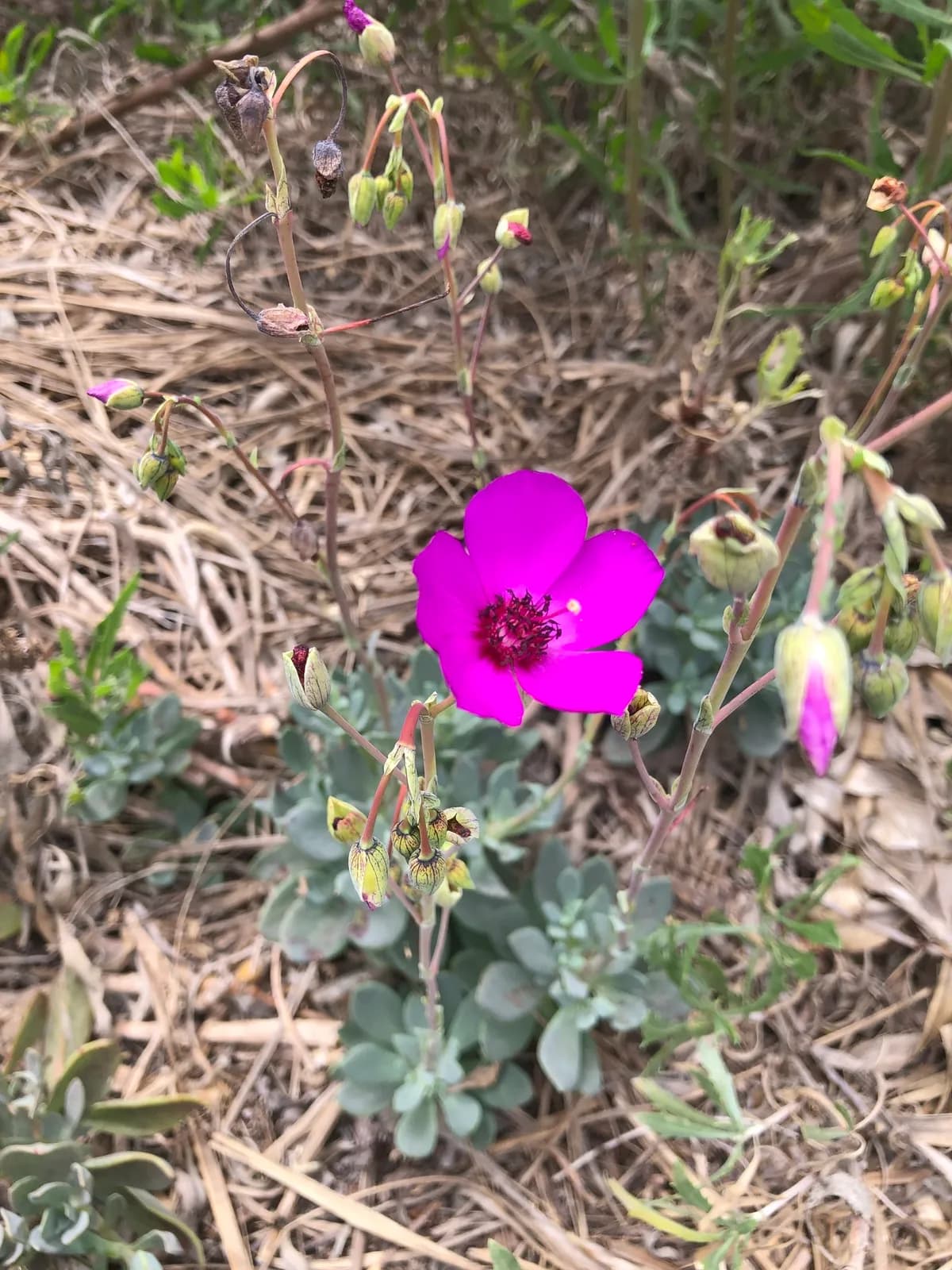
Mounding succulent with rosettes of fleshy blue-gray leaves and tall stems of bright magenta, poppy-like flowers. Native to the coastal deserts of Chile and grown as a drought-tolerant ornamental.
How to care for Rock Purslane, by region
How to care for Rock Purslane where it is actually grown: year-round basics plus what to do each season, region by region, with the sources for each.
Care guidance last updated: October 2026
Central California Foothills and Coastal Mountains (includes San Francisco, CA)
Year-round
Rock purslane is a mounding succulent originally from Chile, so it is an introduced ornamental here. It stays about a foot tall and spreads two to three feet, with blue-green leaves and bright magenta flowers from mid spring into summer. It needs full sun and fast-draining soil.
- Plant in full sun in gritty, well-drained soil.
- Water only when the top two inches of soil are dry.
- Avoid overwatering, which can cause root rot.
- Cut it back once a year to keep growth dense.
Its low, mounded habit stays tidy in a front-yard rock garden or container.
Fall
Fall is a good time to cut back and plant.
- Cut the plant back to refresh growth.
- Plant new starts as temperatures cool.
- Water less as the weather cools.
Winter
Winter is the rest period, and wet soil is the main risk.
- Let rain do the watering.
- Make sure the soil drains and does not stay soggy.
- Protect from hard frost with a cloth cover if needed.
Spring
Spring brings new growth and the start of bloom.
- Water when the soil is dry two inches down.
- Plant new starts after frost danger has passed.
- Enjoy the first flowers and remove spent stems.
Summer
Bloom continues on and off with little water.
- Water every one to two weeks in dry weather.
- Give afternoon shade in the hottest spots.
- Trim spent flower stems.
Sources: Water Wise Garden Planner, Rock purslane (Cistanthe grandiflora) (size, light, water, bloom season) (community tip)
In an HOA neighborhood
Rock Purslane takes more care to keep looking intentional in a front yard. Maintenance level: low. Consider it for backyard or mid-zone beds rather than the street edge.
Works well in: rock gardens, containers, dry borders.
Wildlife value
Open flowers draw bees and hoverflies in bloom. Not a host plant for native butterflies or moths in North America.
Common questions
- How much sun does Rock Purslane need?
- Rock Purslane grows best in full sun conditions.
- When does Rock Purslane bloom?
- Rock Purslane blooms in April, May, June, July, and August.
- What pollinators does Rock Purslane attract?
- Rock Purslane draws bees and hoverflies.
- Is Rock Purslane HOA-friendly?
- Rock Purslane takes more care to look intentional in a front yard. Consider it for backyard or mid-zone beds rather than the street edge.
Pollinator and host plant associations compiled from GBIF, iNaturalist, and published ecological literature.
If something looks wrong
Common plant problems, and what to check first
These come up on almost any plant. Each guide lists the likely causes in the order they are worth ruling out, with one thing to check before you act on any of them, and links to the source it came from.
- It is dying right after planting
- Leaves turning yellow
- Wilting even though I watered it
- Brown crispy leaf tips
- Bugs on the plant
Ready to grow Rock Purslane? Add it to your garden in Pollinator Patch to track it and get season-by-season care guidance.