Roughleaf dogwood
Cornus asperifolia
Last reviewed: October 2026
Roughleaf dogwood (Cornus asperifolia) is a perennial shrub native to AL, FL, GA, MS and 2 more states. It blooms in April, May, and June. The flowers draw bees, flies, and butterflies.
Toxicity unknown
Roughleaf dogwood (Cornus asperifolia) is not listed by the ASPCA Animal Poison Control Center (opens in new tab) or the other sources we check, so we have no verdict for it either way. Absence from those lists is not a clearance. If your pet shows symptoms after eating any plant, call the ASPCA at (888) 426-4435.
Light
full sun
Water
medium
Size
96"–240" H × 120"–240" W
Bloom
Apr, May, Jun
Native to
AL, FL, GA, MS and 2 more states
Pollinators
bees, flies, butterflies
Before you buy
Your city may pay you to plant this
Cities and water utilities offer rebates for replacing lawn with native and water-wise plants. We track 459 programs across 44 states, each with a link to the provider and the date we last checked it.
Find rebates in your areaPicture natives in your own yard
Upload a photo of your yard and Patch Vision shows a rendering of it planted with natives for your region, like Roughleaf dogwood.


Browse plants for this ecoregion
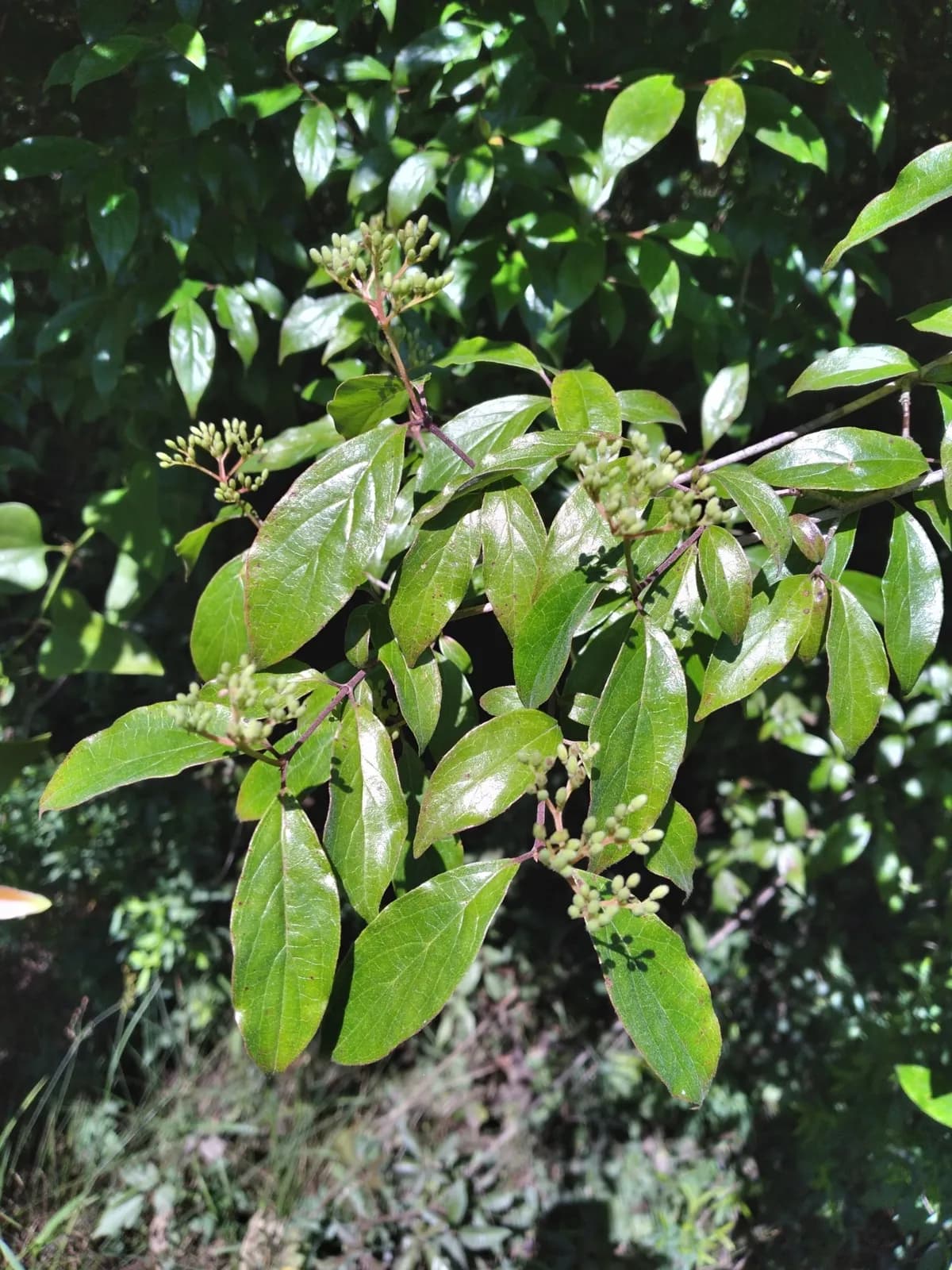
A multi-stemmed, thicket-forming shrub with rough-textured leaves and flat clusters of small white flowers, followed by white berries. Spreads readily by root suckers, so it needs room to form a colony rather than a single tidy specimen.
Growing Roughleaf dogwood
Grow Roughleaf dogwood in full sun and medium water. Mature plants reach 96 to 240 inches tall and spread 120 to 240 inches wide.
How to care for Roughleaf dogwood, by region
How to care for Roughleaf dogwood where it is actually grown: year-round basics plus what to do each season, region by region, with the sources for each.
Care guidance last updated: August 2026
Texas Blackland Prairies (includes Dallas, TX)
Year-round
Roughleaf dogwood is a tough, multi-stemmed shrub that wants full sun to light shade, steady moisture, and room to sucker into a thicket if you let it.
- Plant in full sun to light shade. It grows fastest and flowers best with at least a half day of direct sun.
- It tolerates sandy, loamy, or heavy clay soil and a wide pH range, but it does best with even moisture and does not like to dry out completely between waterings.
- This species spreads by root suckers and will form a thicket over time if suckers are left alone. Cut unwanted suckers at the base each year if you want a single-clump shape instead of a spreading patch.
- It is not listed as native to North Texas by the USDA or the Lady Bird Johnson Wildflower Center, whose range map for this species runs through the Southeast (Alabama, Florida, Georgia, Mississippi, North Carolina, South Carolina). Treat it in a Dallas yard as a landscape shrub rather than a native planting, and check with the seller which dogwood you actually have if that matters for your goals.
- Space plants to allow airflow. Dogwoods in general are prone to leaf spot and powdery mildew in humid, still air, and airflow is the main preventive step.
Fall
Fall is a good window to plant or divide in Dallas, since the soil stays warm well after the heat breaks and the average first freeze does not arrive until late November.
- DFW's average first freeze is around November 22, per National Weather Service climate data, which leaves a long stretch of mild fall weather that is a good window to plant, transplant, or root cuttings before winter dormancy.
- Rainfall picks back up in fall locally, with October averaging some of the heaviest monthly totals of the year in NOAA climate data, so new plantings usually need less supplemental watering than they did in summer. Still check the top few inches of soil before assuming it is wet enough.
- Fruit clusters ripen in fall and are used by songbirds. Leaving them in place rather than deadheading supports that use and needs no extra work.
- Clean up fallen leaves if they show spotting, since leaf litter can carry over leaf spot fungus to next year. A tidy fall cleanup also keeps the bed reading as intentional going into winter.
Raking and clearing fallen leaves and spent fruit before winter keeps the bed looking tended and is the simplest HOA-conscious step for this season.
Winter
Winters in Dallas are mild by national standards but still bring hard freezes, so winter care is mostly about dormant-season structure work and frost protection for anything newly planted.
- Dallas falls in USDA Hardiness Zone 8b (15 to 20 degrees Fahrenheit average annual minimum), so this shrub is well within its cold tolerance range here and established plants need no winter protection.
- A shrub planted in its first fall or winter benefits from an extra layer of mulch over the root zone through the coldest weeks, since it has not built a full root system yet.
- Late winter, while the plant is still dormant and before new growth starts, is the best window for structural pruning: removing crossing branches, deadwood, and thinning out older canes. Avoid heavy pruning right before bloom, since flower buds are already set on last year's wood by late winter.
- Watch the forecast around any hard freeze event. A newly planted or container-grown shrub can be covered with a frost cloth overnight if temperatures are expected to drop into the low 20s or below.
A dormant-season structural prune keeps the shrub's shape crisp and low, which reads as a maintained landscape feature rather than an overgrown patch through the bare winter months.
Spring
Spring in Dallas is your dogwood's bloom window and also its main planting and shaping window, timed around the mid March average last freeze.
- The Dallas-Fort Worth area's average last freeze is around March 12, per National Weather Service climate data. Wait until after that date to plant new roughleaf dogwoods so tender new growth is not hit by a late cold snap.
- White flower clusters typically open April through June. This is a good window to identify suckers you want to remove, since new sprouts are easy to spot against the older wood.
- Spring is also DFW's wettest stretch of the year on average (May is the single wettest month locally, per NOAA climate normals), so newly planted shrubs usually need little to no supplemental water this season beyond what falls naturally. Check soil moisture with a finger test before adding more.
- Do any shaping cuts right after bloom finishes rather than in late winter, since this species sets flowers on the prior year's growth and an early spring cut can remove the year's blooms.
A single clean-edged clump with suckers removed reads as an intentional shrub bed rather than a spreading thicket, which is the easiest way to keep this plant HOA-friendly on a front-facing bed.
Summer
Dallas summers are hot and comparatively dry, so a young or newly planted dogwood needs a deliberate watering routine rather than relying on rainfall.
- July is DFW's driest month on average, per NOAA climate normals, and daytime highs regularly climb into the upper 90s. Water deeply once or twice a week during dry stretches rather than a light daily sprinkle, aiming to wet the full root zone.
- A 2 to 3 inch layer of mulch, kept a few inches back from the trunk, holds soil moisture and keeps root zones cooler through the hottest weeks.
- Watch for leaf scorch (brown, crispy leaf edges) during heat waves. That is usually a moisture and heat stress signal rather than a disease, and the fix is deeper, more consistent watering.
- This is not the season to prune hard. Limit summer work to removing any dead or damaged wood and cutting root suckers back to the base.
Sources: USDA PLANTS Database, Cornus asperifolia, Lady Bird Johnson Wildflower Center, Cornus asperifolia (Eastern roughleaf dogwood), Plants For A Future, Cornus asperifolia cultivation notes, NWS Fort Worth, DFW Annual Normals, Means, and Extremes, NWS Fort Worth, DFW Normals, Means, and Extremes, NWS Fort Worth, DFW Monthly and Annual Precipitation
Wildlife value
Host plant for spring azure.
Flowers draw bees, flies, and butterflies, the white berries feed birds through fall, and the foliage hosts spring azure caterpillars.
Common questions
- How much sun does Roughleaf dogwood need?
- Roughleaf dogwood grows best in full sun conditions.
- When does Roughleaf dogwood bloom?
- Roughleaf dogwood blooms in April, May, and June.
- Where is Roughleaf dogwood native?
- Roughleaf dogwood (Cornus asperifolia) is native to AL, FL, GA, MS and 2 more states, per the World Checklist of Vascular Plants (Kew).
- What butterflies or moths does Roughleaf dogwood host?
- Roughleaf dogwood is a larval host plant for spring azure.
Native range data from the World Checklist of Vascular Plants (Kew). Pollinator and host plant associations compiled from GBIF, iNaturalist, and published ecological literature.
If something looks wrong
Common plant problems, and what to check first
These come up on almost any plant. Each guide lists the likely causes in the order they are worth ruling out, with one thing to check before you act on any of them, and links to the source it came from.
- It is dying right after planting
- Leaves turning yellow
- Wilting even though I watered it
- Brown crispy leaf tips
- Bugs on the plant
Ready to grow Roughleaf dogwood? Add it to your garden in Pollinator Patch to track it and get season-by-season care guidance.