Round-head Bush-clover
Lespedeza capitata
Last reviewed: September 2026
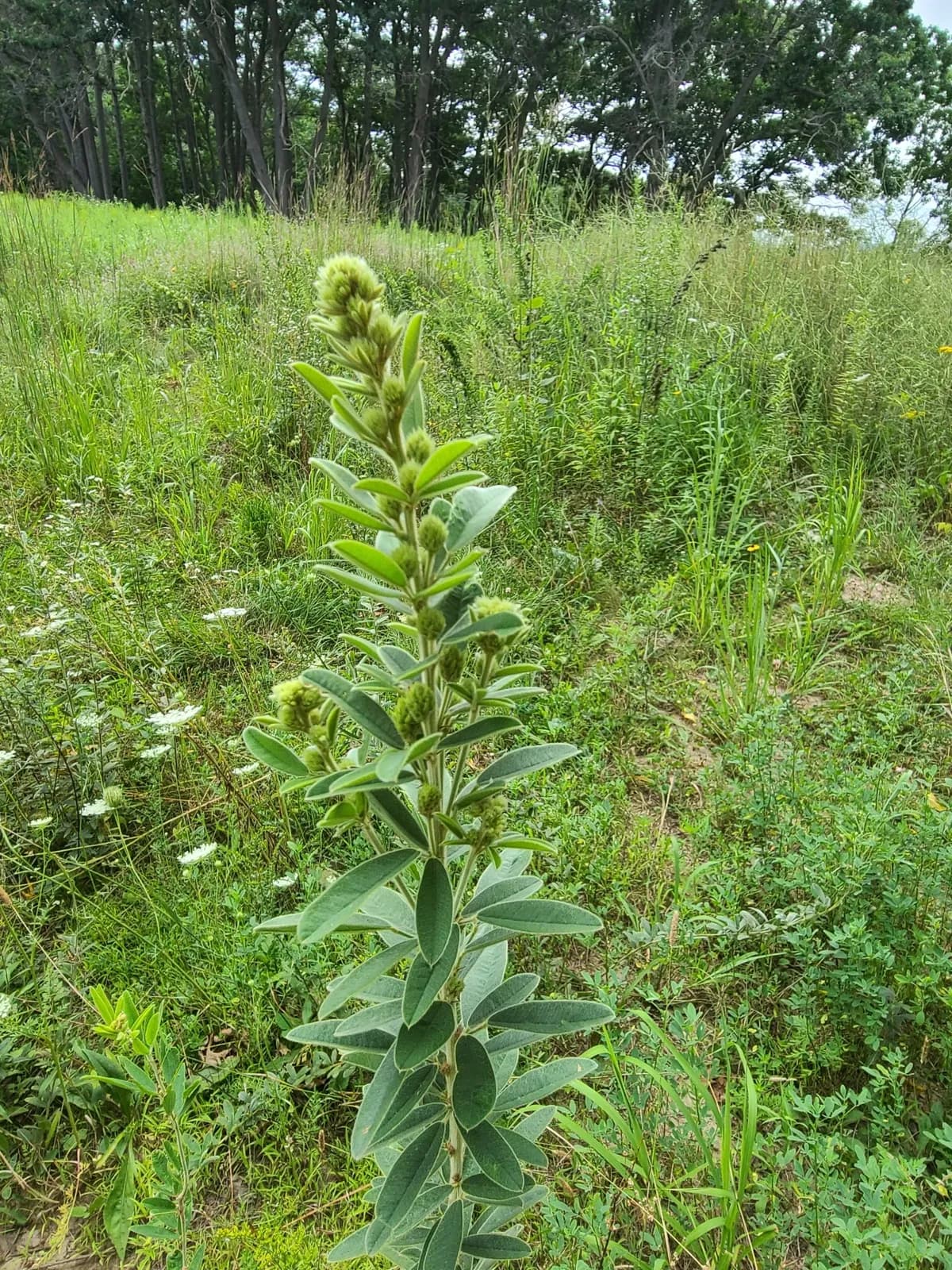
Lespedeza capitata is a upright prairie forb that blooms from July through September with small cream flowers, thriving in full sun and dry to average soil across grasslands and open fields.
Toxicity unknown
Round-head Bush-clover (Lespedeza capitata) is not listed by the ASPCA Animal Poison Control Center (opens in new tab) or the other sources we check, so we have no verdict for it either way. Absence from those lists is not a clearance. If your pet shows symptoms after eating any plant, call the ASPCA at (888) 426-4435.
The USDA PLANTS Database (opens in new tab) does not flag Round-head Bush-clover as toxic to livestock.
Light
full sun
Water
low
Size
24"–48" H × 12"–24" W
Bloom
Jul, Aug, Sep
Native to
AL, AR, FL, GA and 22 more states
Pollinators
bees, butterflies, beetles
Before you buy
Your city may pay you to plant this
Cities and water utilities offer rebates for replacing lawn with native and water-wise plants. We track 459 programs across 44 states, each with a link to the provider and the date we last checked it.
Find rebates in your areaPicture natives in your own yard
Upload a photo of your yard and Patch Vision shows a rendering of it planted with natives for your region, like Round-head Bush-clover.


Browse plants for this ecoregion
Round-head bush-clover is a native perennial that forms upright clumps of fine-textured foliage topped with distinctive white, globe-shaped flower clusters from summer through early fall. This drought-tolerant prairie plant maintains a relatively neat, shrub-like appearance and requires minimal care once established.
Growing Round-head Bush-clover
Grow Round-head Bush-clover in full sun and low water. Mature plants reach 24 to 48 inches tall and spread 12 to 24 inches wide. Expect low maintenance to keep it looking intentional in a front yard.
How to care for Round-head Bush-clover, by region
How to care for Round-head Bush-clover where it is actually grown: year-round basics plus what to do each season, region by region, with the sources for each.
Care guidance last updated: July 2026
Cross Timbers (includes Fort Worth, TX)
Year-round
Round-head bush-clover is a tough, upright prairie legume that thrives on neglect once established, and its late-summer flowers feed pollinators and its foliage feeds butterfly caterpillars.
- Give it full sun and well-drained soil; it tolerates loam, sand, clay, or gravel as long as water does not stand.
- Space plants 1 to 2 feet apart since mature clumps reach 2 to 4 feet tall and can spread a bit wider.
- Skip fertilizer. As a legume it fixes its own nitrogen and rich soil just makes it flop.
- Plan on 2 to 3 growing seasons before it reaches full size; most of its early energy goes into the roots, not the top growth.
- It self-sows readily. Deadhead spent seed heads in fall if you want to keep it from popping up in new spots.
A single, upright stem habit reads as a deliberate planting rather than a weed, especially staged behind lower front-of-bed plants.
Fall
Seed heads darken and mature through fall, and stems stay upright and woody rather than flopping over, so there is little cleanup to do before winter.
- Let seed heads ripen and turn dark brown in place; this is also when birds like bobwhite quail feed on the seed.
- If you do not want volunteer seedlings next spring, cut and remove the seed heads before they fully shatter, typically by late October.
- No need to cut the plant back now. The rigid stems hold their shape through winter and provide structure in the bed.
- Fall is also a fine time to divide crowded clumps or add new plants for woody companions nearby, though this species itself establishes better from a spring planting.
- Stop watering supplemental once temperatures cool in October; established plants rely on natural rainfall from here on.
Leaving the dark, upright seed heads in place through fall can look unkempt to a passerby; a trimmed edge along the front of the bed keeps the overall look tidy while the seed heads stay for the birds.
Winter
The plant goes fully dormant and stands as bare, rigid stems through winter; leave it alone until late winter cleanup.
- Do not cut the plant back in winter. The standing stems offer shelter for overwintering insects and seed for birds.
- Cut the old stems back to about 4 to 6 inches in late February, just before new spring growth starts.
- North Texas winters are mostly mild with short hard freezes, but an occasional severe Arctic outbreak can hit; an established plant's roots handle this fine without covering.
- No watering is needed for an established plant during winter dormancy.
- If you planted in fall or plan a new planting, wait for spring; this species establishes best when it has a full growing season ahead of it.
Bare winter stems can look dead to a neighbor; a small sign or edging that marks the bed as a planned pollinator planting helps it read as intentional rather than neglected.
Spring
Spring is the best window to get a new plant in the ground so its taproot has the whole growing season to establish before the first hard summer.
- Plant after the last frost, generally by mid March in North Texas, once soil has warmed.
- Water twice a week for the first 4 to 6 weeks after planting, then taper off as roots take hold.
- In heavy black clay, plant slightly high on a shallow mound or amend the hole for drainage; in the sandier soils west of the metro it drains faster on its own but will need more frequent watering through the first summer.
- New growth stays low and modest this first spring. That is normal, the plant is building roots, not height, in year one.
- No pruning needed yet on a first-year plant; just keep the area free of taller weeds that would shade it out.
Summer
This is a genuinely low-water plant once established, and July through September is when it earns its keep with clusters of cream colored flowers that pollinators visit.
- Established plants (year 2 or later) usually need no supplemental water outside of extended drought; a deep soak every 2 to 3 weeks in a rainless stretch is plenty.
- First-year plants still need weekly water through the 100F-plus stretches of July and August, since their roots are not deep enough yet to ride out weeks without rain.
- Flower clusters open along the upper stems from roughly late July through September; leave them in place, they are the pollinator draw and later the seed source for birds.
- Watch the foliage for small caterpillars in mid to late summer; those are eastern tailed-blue butterfly larvae feeding, not a pest problem to treat.
- No deadheading needed for bloom; the plant flowers once per season along the stem tips.
Full, upright flowering clusters through late summer read as an intentional pollinator planting, not an overgrown patch, especially if the bed edge stays trimmed.
Sources: Lady Bird Johnson Wildflower Center, Lespedeza capitata, Prairie Moon Nursery, Round-headed Bush Clover growing guide, Illinois Wildflowers, Round-Headed Bush Clover insect associations (community tip)
Texas Blackland Prairies (includes Dallas, TX)
Year-round
Round-head bush-clover is a tough, upright prairie legume that thrives on neglect once established, and its late-summer flowers feed pollinators and its foliage feeds butterfly caterpillars.
- Give it full sun and well-drained soil; it tolerates loam, sand, clay, or gravel as long as water does not stand.
- Space plants 1 to 2 feet apart since mature clumps reach 2 to 4 feet tall and can spread a bit wider.
- Skip fertilizer. As a legume it fixes its own nitrogen and rich soil just makes it flop.
- Plan on 2 to 3 growing seasons before it reaches full size; most of its early energy goes into the roots, not the top growth.
- It self-sows readily. Deadhead spent seed heads in fall if you want to keep it from popping up in new spots.
A single, upright stem habit reads as a deliberate planting rather than a weed, especially staged behind lower front-of-bed plants.
Fall
Seed heads darken and mature through fall, and stems stay upright and woody rather than flopping over, so there is little cleanup to do before winter.
- Let seed heads ripen and turn dark brown in place; this is also when birds like bobwhite quail feed on the seed.
- If you do not want volunteer seedlings next spring, cut and remove the seed heads before they fully shatter, typically by late October.
- No need to cut the plant back now. The rigid stems hold their shape through winter and provide structure in the bed.
- Fall is also a fine time to divide crowded clumps or add new plants for woody companions nearby, though this species itself establishes better from a spring planting.
- Stop watering supplemental once temperatures cool in October; established plants rely on natural rainfall from here on.
Leaving the dark, upright seed heads in place through fall can look unkempt to a passerby; a trimmed edge along the front of the bed keeps the overall look tidy while the seed heads stay for the birds.
Winter
The plant goes fully dormant and stands as bare, rigid stems through winter; leave it alone until late winter cleanup.
- Do not cut the plant back in winter. The standing stems offer shelter for overwintering insects and seed for birds.
- Cut the old stems back to about 4 to 6 inches in late February, just before new spring growth starts.
- North Texas winters are mostly mild with short hard freezes, but an occasional severe Arctic outbreak can hit; an established plant's roots handle this fine without covering.
- No watering is needed for an established plant during winter dormancy.
- If you planted in fall or plan a new planting, wait for spring; this species establishes best when it has a full growing season ahead of it.
Bare winter stems can look dead to a neighbor; a small sign or edging that marks the bed as a planned pollinator planting helps it read as intentional rather than neglected.
Spring
Spring is the best window to get a new plant in the ground so its taproot has the whole growing season to establish before the first hard summer.
- Plant after the last frost, generally by mid March in North Texas, once soil has warmed.
- Water twice a week for the first 4 to 6 weeks after planting, then taper off as roots take hold.
- In heavy black clay, plant slightly high on a shallow mound or amend the hole for drainage; in the sandier soils west of the metro it drains faster on its own but will need more frequent watering through the first summer.
- New growth stays low and modest this first spring. That is normal, the plant is building roots, not height, in year one.
- No pruning needed yet on a first-year plant; just keep the area free of taller weeds that would shade it out.
Summer
This is a genuinely low-water plant once established, and July through September is when it earns its keep with clusters of cream colored flowers that pollinators visit.
- Established plants (year 2 or later) usually need no supplemental water outside of extended drought; a deep soak every 2 to 3 weeks in a rainless stretch is plenty.
- First-year plants still need weekly water through the 100F-plus stretches of July and August, since their roots are not deep enough yet to ride out weeks without rain.
- Flower clusters open along the upper stems from roughly late July through September; leave them in place, they are the pollinator draw and later the seed source for birds.
- Watch the foliage for small caterpillars in mid to late summer; those are eastern tailed-blue butterfly larvae feeding, not a pest problem to treat.
- No deadheading needed for bloom; the plant flowers once per season along the stem tips.
Full, upright flowering clusters through late summer read as an intentional pollinator planting, not an overgrown patch, especially if the bed edge stays trimmed.
Sources: Lady Bird Johnson Wildflower Center, Lespedeza capitata, Prairie Moon Nursery, Round-headed Bush Clover growing guide, Illinois Wildflowers, Round-Headed Bush Clover insect associations (community tip)
In an HOA neighborhood
Round-head Bush-clover is an HOA-friendly choice. Maintenance level: low. Tidiness: 3 out of 5.
Works well in: mid zone, foundation, front yard.
- May appear bare or woody in late winter
- Unfamiliar to some neighbors who prefer traditional landscaping
Wildlife value
Host plant for eastern tailed-blue butterfly.
The dense flower clusters attract numerous pollinators including native bees, butterflies, and beetles during its long blooming period. Seeds provide food for birds and small mammals in fall and winter.
Common questions
- When does Round-head Bush-clover bloom?
- Lespedeza capitata typically flowers from July through September, producing dense clusters of small cream colored blooms at the stem tips.
- What pollinators visit Round-head Bush-clover?
- Bees, butterflies, and beetles regularly visit the flowers of Lespedeza capitata for pollen and nectar during its summer bloom period.
- How much sun and water does this plant need?
- This species grows best in full sun with low to medium moisture and handles dry, well drained soils once established, making it a good fit for prairie and meadow plantings.
- What kind of habitat suits Round-head Bush-clover?
- It grows well in open prairies, dry fields, and sandy or rocky soils where competition from taller vegetation is limited and sunlight is abundant.
- Is Round-head Bush-clover toxic to livestock?
- The USDA PLANTS Database does not flag Round-head Bush-clover as toxic to livestock.
- Is Round-head Bush-clover HOA-friendly?
- Round-head Bush-clover is generally an HOA-friendly choice in the right placement, with low maintenance.
These answers were drafted with an AI model from this plant's data. Verify care details with a local expert.
Native range data from vouchered herbarium specimen records and regional native plant society lists. Pollinator and host plant associations compiled from GBIF, iNaturalist, and published ecological literature.
If something looks wrong
Common plant problems, and what to check first
These come up on almost any plant. Each guide lists the likely causes in the order they are worth ruling out, with one thing to check before you act on any of them, and links to the source it came from.
- It is dying right after planting
- Leaves turning yellow
- Wilting even though I watered it
- Brown crispy leaf tips
- Bugs on the plant
Ready to grow Round-head Bush-clover? Add it to your garden in Pollinator Patch to track it and get season-by-season care guidance.