Rush milkweed
Asclepias subulata
Last reviewed: September 2026
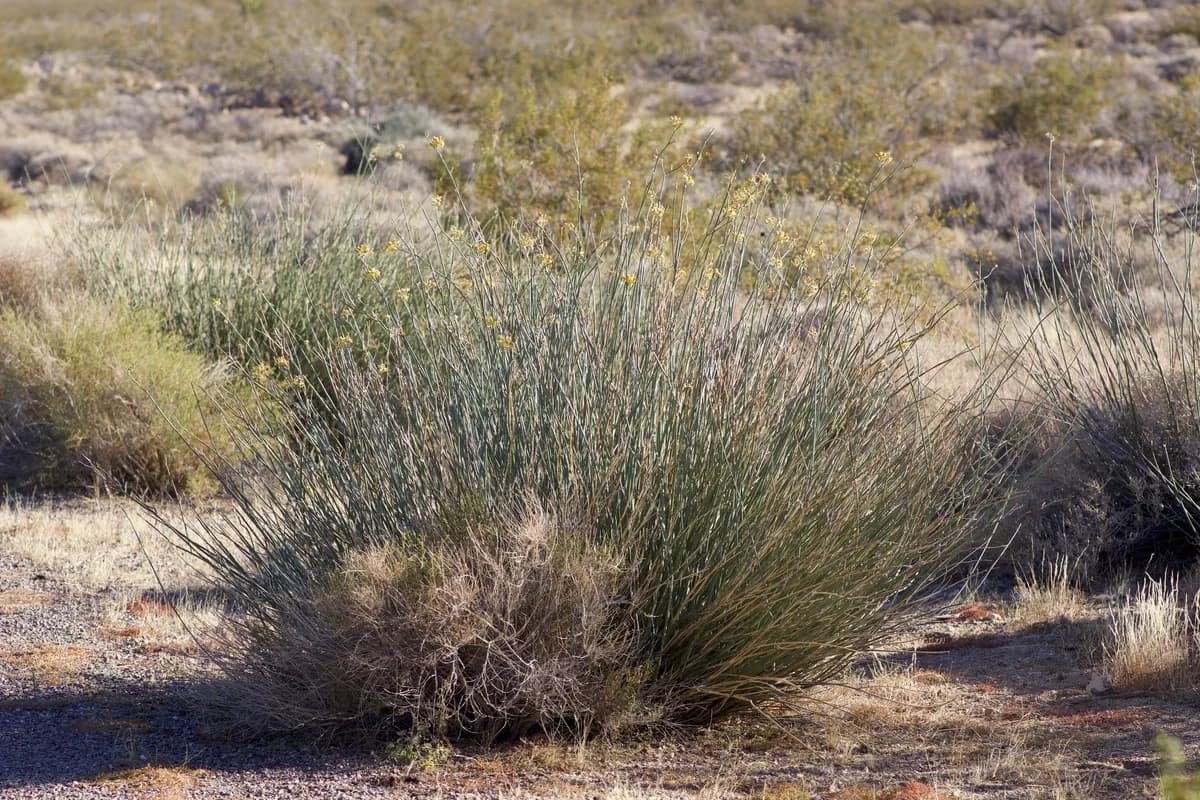
Rush milkweed is a leafless, gray-green stemmed forb that thrives in full sun with low water, blooming from March through October in desert washes and flats.
Rush milkweed is toxic to dogs and cats.
Listed as toxic by the ASPCA Animal Poison Control Center (opens in new tab) (last reviewed 2026-08-15). If your pet has been exposed, call the ASPCA Animal Poison Control Center at (888) 426-4435 and your veterinarian's emergency line.
Pollinator Patch flags toxic plants so you can choose a pet-safe native alternative for your yard.
Native swaps for a yard with pets
Rush milkweed is listed as toxic to dogs by the ASPCA Animal Poison Control Center. These natives fill a similar role in a planting and are not on the ASPCA toxic plant list for dogs or cats. Each plant's page carries its dated record.
Light
full sun
Water
low
Size
24"–48" H × 18"–30" W
Bloom
Mar, Apr, May, Jun, Jul, Aug, Sep, Oct
Native to
AZ, CA, NV
Pollinators
bees, butterflies
Before you buy
Your city may pay you to plant this
Cities and water utilities offer rebates for replacing lawn with native and water-wise plants. We track 459 programs across 44 states, each with a link to the provider and the date we last checked it.
Find rebates in your areaPicture natives in your own yard
Upload a photo of your yard and Patch Vision shows a rendering of it planted with natives for your region, like Rush milkweed.


Browse plants for this ecoregion
A striking leafless perennial forming a dense cluster of slender, upright pale green stems that photosynthesize in place of foliage. Small clusters of creamy-yellow flowers appear at the stem tips through much of the warm season, followed by narrow seed pods. The sculptural, rush-like form stays tidy and works well as a low-water accent in gravel or rock plantings.
Growing Rush milkweed
Grow Rush milkweed in full sun and low water. Mature plants reach 24 to 48 inches tall and spread 18 to 30 inches wide. Expect low maintenance to keep it looking intentional in a front yard.
How to care for Rush milkweed, by region
How to care for Rush milkweed where it is actually grown: year-round basics plus what to do each season, region by region, with the sources for each.
Care guidance last updated: September 2026
Central California Foothills and Coastal Mountains (includes San Francisco, CA)
Year-round
Rush milkweed is a desert plant native to the low deserts of southeastern California, Arizona, Nevada and northwest Mexico, not to San Francisco's coastal chaparral and oak woodland ecoregion. It can be grown here as a garden plant with full sun and fast drainage, but San Francisco's cool, foggy, Mediterranean climate genuinely differs from the hot, dry desert this species evolved for, so expect slower growth, fewer blooms and less of its classic leafless summer dormancy than in Arizona or the low desert.
- Give it your sunniest spot. San Francisco's persistent summer fog cuts real sunlight even on clear-looking days, and this plant needs full sun to perform anywhere near what it does in the desert.
- Drainage matters more here than heat does. San Francisco gets roughly 21 to 22 inches of rain a year, almost all of it between November and March, a wet season this desert species never evolved to sit through, so raise the bed or work in coarse grit if the soil holds water.
- This is a monarch and queen butterfly host plant, and every part of the genus Asclepias is considered toxic if eaten by people or pets, so plant it where kids and animals are not likely to chew on it.
- Do not expect Arizona-style performance. In its native low desert this plant drops its leaves and stands as bare green stems through summer heat. In San Francisco's mild summers it will likely hold more foliage, grow smaller, and bloom less heavily.
Its narrow, upright, rush-like form and long bloom window read as tidy and low-maintenance, which most HOA-conscious neighbors respond well to, though it is not a locally native look, so it is worth checking any plant list your HOA maintains before planting.
Fall
September and October are typically San Francisco's warmest, sunniest weeks of the year, according to NOAA/NWS climate records, which note that the three hottest days on record in San Francisco all fell in September and October. This stretch is when rush milkweed will look closest to its native desert self here.
- This is the best planting window of the year for this species in San Francisco. Warmer, drier, sunnier weather gives new roots the closest thing to desert conditions before winter rain returns.
- Ease off water as the season progresses. Rain typically returns by November, and this plant does not want to head into winter with wet roots.
- Prune only spent or damaged growth. This is a low-input plant that generally does not need seasonal cutting back.
- Enjoy the best bloom and nectar activity of the year during San Francisco's warm fall stretch, before the cooler, wetter months slow things down.
Fall's warm, sunny stretch is when this plant looks its fullest and most deliberate, a good season to let it be the visible, tended feature of a bed for HOA-conscious curb appeal.
Winter
Winter is the highest-risk season for rush milkweed in San Francisco, not from cold but from wet roots. Over 80 percent of the city's roughly 21 to 22 inches of annual rain falls between November and March, per NOAA/NWS records, while frost stays rare in most neighborhoods. This plant is built for a place that gets almost no winter rain, so soggy soil is the real threat here.
- Do not water. Winter rain alone is more moisture than this plant sees in a typical year across its native desert range.
- Confirm the bed drains between storms. If water stands for more than a few hours after rain, raise the planting area or add coarse material rather than relying on this plant to tolerate it.
- If a rare hard frost does hit, expect at most minor stem dieback rather than the plant's normal desert leaf-drop response. Wait until spring growth appears before deciding what to cut.
- This is the season to leave the plant alone. It is naturally low-input, and winter is not the time to add water or fertilizer.
Spring
San Francisco's rain year runs heavy through winter and tapers by spring, per NOAA/NWS climate data. Plant or divide rush milkweed once the heaviest rains ease, typically by April, so new roots are not sitting in soggy soil while they establish.
- Plant from containers in April or May, after the winter rain pattern has eased but before San Francisco's dry season fully sets in.
- Check for winter dieback first. Hard frost is uncommon in most of San Francisco, which sits in USDA zone 10a to 10b, but if any stems blackened over winter, wait for new growth to confirm which wood is alive before cutting anything back.
- Skip fertilizer. This species is adapted to low-nutrient desert soil and does not need feeding to get going.
- As flowers open, watch for monarch and queen butterfly caterpillars on the stems. This is a known host plant for both, so leave any caterpillars you find.
Spring planting keeps the bed looking intentional and tended during the season neighbors notice new plantings most, which supports an HOA-friendly first impression.
Summer
San Francisco summers are cool and often fogbound instead of hot and dry, per NOAA/NWS data showing average summer highs of only 60 to 70 degrees under persistent morning stratus. That is a genuinely different environment than the low desert this plant is built for, so growth and bloom will likely be more modest here than in Arizona or Nevada.
- Full sun still matters most in summer. Gardens in San Francisco's sunnier pockets away from the immediate coast will get noticeably more bloom than gardens under the thickest fog belt.
- Water sparingly, if at all, once established. This plant thrives on very little water even in real heat, and San Francisco's cool summer air means it needs even less.
- If caterpillars strip the leaves, that is normal for a monarch and queen host plant and is not a sign of a problem.
- Do not expect the bare, leafless summer look this plant shows in the desert. In San Francisco's milder, foggier summers it is more likely to hold its foliage instead.
Sources: Lady Bird Johnson Wildflower Center - Native Plant Database: Asclepias subulata, ASPCA - Toxic and Non-Toxic Plants: Milkweed, Calscape (California Native Plant Society) - Skeleton Milkweed, NOAA / National Weather Service - Climate of San Francisco (NWS WR-126)
Southern California/Northern Baja Coast (includes Los Angeles, CA)
Year-round
Rush milkweed is a mostly leafless, blue-green desert milkweed that wants full sun and very little water once it settles into a Los Angeles area garden.
- Give it full sun. Too much shade makes the stems flop over and cuts down on flowering.
- The blue-green stems do the plant's photosynthesis, so having very few leaves is normal, not a sign of trouble.
- Once it is established it usually does not need extra watering or feeding, though it appreciates a deep soak during a long dry stretch.
- It is not picky about soil type, but soil that drains well is still worth aiming for in Los Angeles's often clay-heavy yards.
- The plant's sap contains cardiac glycosides that are toxic to dogs and cats if chewed or eaten, so keep grazing pets away from it, per ASPCA guidance.
- It is a caterpillar host plant for monarch and queen butterflies, so stems that look chewed up are usually a good sign, not a problem.
Fall
Fall is a good, low-stress window to tidy a leggy rush milkweed before winter rain and Santa Ana wind season hit Los Angeles.
- Growth slows as days shorten, so watering can be cut back further once fall rains begin.
- This plant usually does not need regular pruning, but if yours has flopped over or gotten leggy from too much shade, fall's slower growth is a low-stress time to trim it back.
- Santa Ana wind events, which run roughly September through spring and peak in fall, dry out stems fast. Check for shriveling after a windy stretch.
- Skip fertilizer going into the cooler months. Established plants generally do not need feeding at all.
Trimming back a leggy stem or two in fall keeps the plant tidy and HOA-friendly along a front walkway or bed edge.
Winter
Winter is Los Angeles's rainy season, so rush milkweed mostly needs to be left alone, with an eye on drainage and, in colder inland spots, an eye on frost.
- Winter, roughly November through April, is when most of Los Angeles's yearly rain falls, so this drought-adapted plant typically needs no extra watering at all during this stretch.
- Good drainage matters more than cold protection here. Soggy soil through a rainy winter is a bigger risk to this plant than a cool night.
- The plant is rated hardy to at least 20 degrees Fahrenheit, so most of coastal and central Los Angeles rarely gets cold enough to bother it.
- Inland valleys that dip into the high 20s on a clear, cold night can see some stem dieback. A frost cloth over the plant overnight is a simple precaution if a hard freeze is forecast.
Spring
Spring is when rush milkweed comes out of its winter rest in Los Angeles gardens, pushing new stem growth and starting its long, sporadic bloom.
- New blue-green stem growth and small greenish-white flower clusters typically begin appearing as spring goes on.
- Hold off on extra watering right after Los Angeles's rainy season tapers off. The plant is coming off natural winter moisture and usually does not need help yet.
- Check new growth for small yellow aphids, which favor tender milkweed shoots. A firm spray of water usually knocks small numbers off.
- If you spot monarch or queen caterpillars, let them keep eating. Losing some stem growth to caterpillars means the plant is doing its job as a host plant.
Summer
Summer is rush milkweed's strongest season in Los Angeles's hot, dry months, with continued sporadic flowering and minimal watering needed.
- The plant is built for heat and keeps producing small flower clusters off and on through summer.
- Once established, a deep watering every few weeks during a hot, dry stretch is plenty. Overwatering is more likely to cause problems than underwatering.
- Watch for bright yellow oleander aphids clustering on stem tips. A light spray of water is usually enough for a small infestation.
- If monarch or queen caterpillars are feeding, some stems may look stripped for a while. New growth typically follows once they move on.
Sources: Arizona-Sonora Desert Museum plant care sheet: Asclepias subulata, ASPCA: Milkweed toxic plant profile, Xerces Society: Asclepias subulata (rush milkweed), USGS: Autumn precipitation and Santa Ana winds in Southern California fire outcomes, NOAA: Climate of Los Angeles, California
In an HOA neighborhood
Rush milkweed is an HOA-friendly choice. Maintenance level: low. Tidiness: 4 out of 5.
Works well in: front yard, foundation, street edge, mid zone.
Wildlife value
Host plant for Monarch, Queen.
An important larval host for monarch and queen butterflies, with nectar flowers that draw bees, wasps, and butterflies over a long bloom season.
Common questions
- When does rush milkweed bloom?
- Asclepias subulata typically flowers from March through October, with clusters of small cream to pale yellow blooms appearing along its slender green stems.
- Does rush milkweed attract pollinators?
- Yes. Bees and butterflies regularly visit the flowers of Asclepias subulata for nectar, and like other milkweeds it can serve as a host plant for monarch caterpillars.
- How much water does rush milkweed need?
- Rush milkweed is adapted to low water conditions and does best in well drained soil that dries out between waterings, making it suitable for desert gardens.
- What does rush milkweed look like?
- It grows as an upright forb with slender, nearly leafless gray-green stems that carry out most of the plant's photosynthesis, giving it a rush-like appearance.
- What light conditions suit rush milkweed best?
- This plant performs best in full sun and is commonly found in open, sunny desert washes and flats in Arizona, California, and Nevada.
- Is Rush milkweed toxic to dogs?
- Yes. Rush milkweed is listed as toxic to dogs by the ASPCA Animal Poison Control Center (aspca.org). If your pet has been exposed, call the ASPCA Animal Poison Control Center at (888) 426-4435.
- Is Rush milkweed toxic to cats?
- Yes. Rush milkweed is listed as toxic to cats by the ASPCA Animal Poison Control Center (aspca.org). If your cat has been exposed, call the ASPCA Animal Poison Control Center at (888) 426-4435.
- Is Rush milkweed HOA-friendly?
- Rush milkweed is generally an HOA-friendly choice in the right placement, with low maintenance.
These answers were drafted with an AI model from this plant's data. Verify care details with a local expert.
Native range data from the World Checklist of Vascular Plants (Kew). Pollinator and host plant associations compiled from GBIF, iNaturalist, and published ecological literature.
If something looks wrong
Common plant problems, and what to check first
These come up on almost any plant. Each guide lists the likely causes in the order they are worth ruling out, with one thing to check before you act on any of them, and links to the source it came from.
- It is dying right after planting
- Leaves turning yellow
- Wilting even though I watered it
- Brown crispy leaf tips
- Bugs on the plant
Pollinator Patch flags toxic plants like Rush milkweed and shows pet-safe natives for your ecoregion instead.