Is Sago Palm Toxic to Dogs?
Cycas revoluta
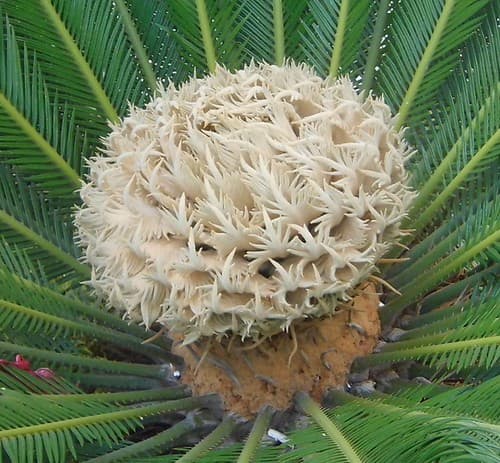
/images/plants/sago-palm/attribution.json.Yes. Sago Palm is toxic to dogs and cats.
Severity: severe. If your pet has been exposed, call the ASPCA Animal Poison Control Center at (888) 426-4435. Your veterinarian's emergency line is the other call to make.
Safe native alternative: Dwarf Palmetto. See the full list of swaps in our toxic plants for dogs in Texas guide.
Light
full sun
Water
low
Size
36"–120" H × 36"–96" W
Bloom
N/A
Sago Palm (Cycas revoluta) is the single most dangerous plant in a Texas yard with dogs. The ASPCA Animal Poison Control Center classifies it as severely toxic to dogs, cats, and horses, and the Merck Veterinary Manual lists it among the highest-risk ornamental plants for pets. All parts of the plant are toxic, but the seeds (the orange-red "nuts" at the center) contain the highest concentration of cycasin, the primary toxin.
Symptoms of Sago Palm ingestion in dogs: vomiting (often within 15 minutes to a few hours), bloody diarrhea, lethargy, seizures, and acute liver failure. According to ASPCA Animal Poison Control data, the case fatality rate is approximately 50% even with aggressive veterinary treatment, and as little as one or two seeds can kill a medium-sized dog. If your dog has eaten any part of a Sago Palm, call the ASPCA at (888) 426-4435 or your emergency vet immediately. Do not wait for symptoms.
Sago Palms are not native to Texas. They are sold as ornamentals at most big-box garden centers and used in commercial landscaping across South Texas and the Gulf Coast for the tropical look. There is no warning label at point of sale, and the plant is often placed at child and pet height near checkout aisles.
Safe native alternative: Dwarf Palmetto (Sabal minor). Native to East Texas, handles shade, stays under 6 feet, and is not on the ASPCA toxic plant list. It gives you the same tropical-fan look without the emergency vet bill. Pair with Inland Sea Oats and Turk's Cap for a shade bed. If you currently have a Sago Palm and pets, the safest move is full removal, not just fencing it off; pets can still reach fallen leaves and seeds from outside the fence.
Before you buy
Your city may pay you to plant this
Cities and water utilities offer rebates for replacing lawn with native and water-wise plants. We track 452 programs across 44 states, each with a link to the provider and the date we last checked it.
Find rebates in your areaIf something looks wrong
Common plant problems, and what to check first
These come up on almost any plant. Each guide lists the likely causes in the order they are worth ruling out, with one thing to check before you act on any of them, and links to the source it came from.
- It is dying right after planting
- Leaves turning yellow
- Wilting even though I watered it
- Brown crispy leaf tips
- Bugs on the plant
Pollinator Patch flags toxic plants like Sago Palm so you can find a dog and cat-safe native alternative for your yard.
Planning a bed around it? Start a free plan with this plant
Not sure where to start? Take the 2-minute yard quiz