San diego barrelcactus
Ferocactus viridescens
Last reviewed: September 2026
San diego barrelcactus (Ferocactus viridescens) is a perennial succulent native to CA. It blooms in April and May. The flowers draw bees.
Toxicity unknown
San diego barrelcactus (Ferocactus viridescens) is not listed by the ASPCA Animal Poison Control Center (opens in new tab) or the other sources we check, so we have no verdict for it either way. Absence from those lists is not a clearance. If your pet shows symptoms after eating any plant, call the ASPCA at (888) 426-4435.
Light
full sun
Water
low
Size
6"–18" H × 8"–18" W
Bloom
Apr, May
Native to
CA
Pollinators
bees
Before you buy
Your city may pay you to plant this
Cities and water utilities offer rebates for replacing lawn with native and water-wise plants. We track 458 programs across 44 states, each with a link to the provider and the date we last checked it.
Find rebates in your areaBrowse plants for this ecoregion
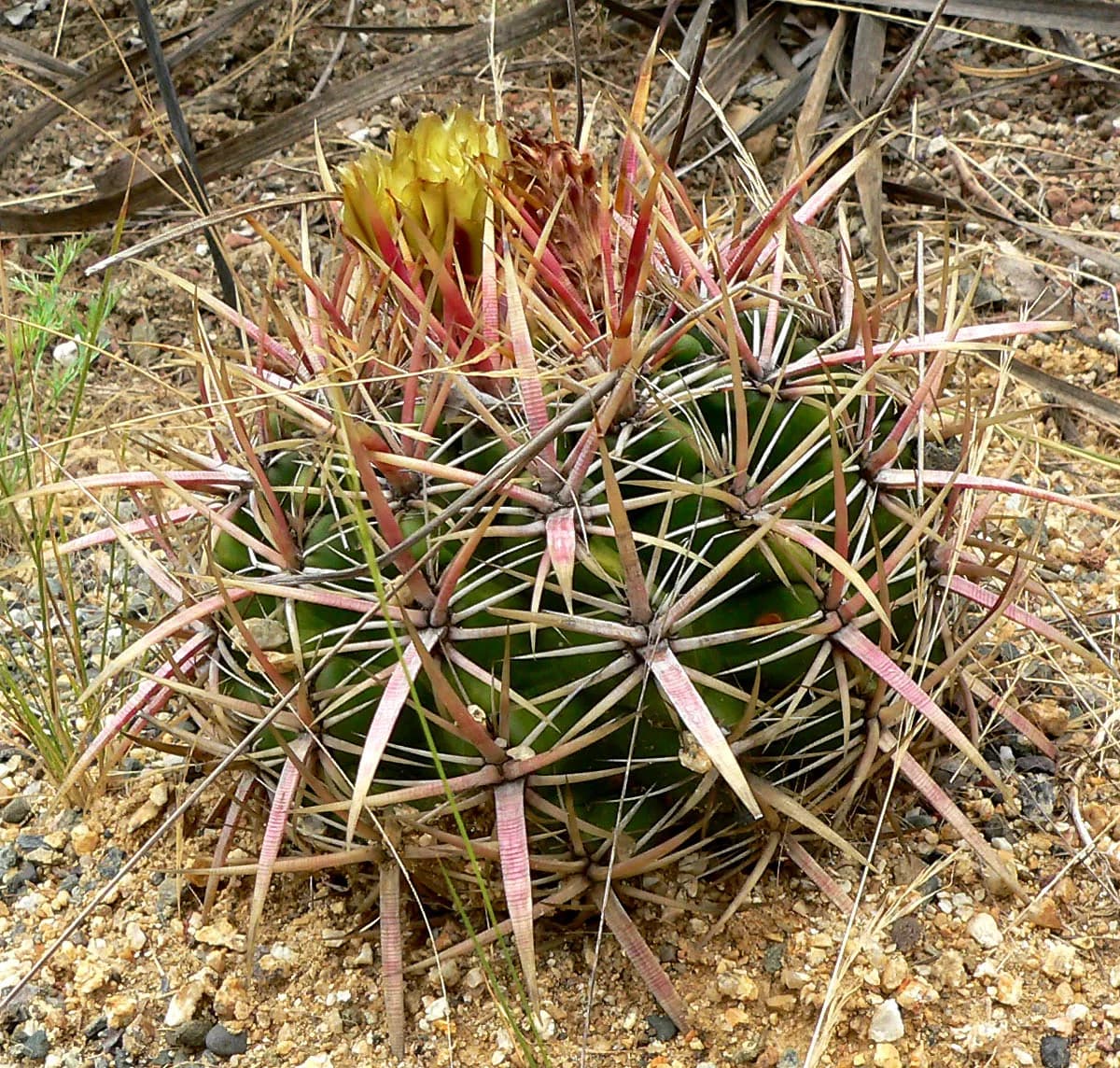
A rounded, heavily spined barrel cactus native to coastal bluffs and dry mesas. Produces yellow to greenish flowers in a ring near the crown in spring, followed by fleshy fruit.
Growing San diego barrelcactus
Grow San diego barrelcactus in full sun and low water. Mature plants reach 6 to 18 inches tall and spread 8 to 18 inches wide.
How to care for San diego barrelcactus, by region
How to care for San diego barrelcactus where it is actually grown: year-round basics plus what to do each season, region by region, with the sources for each.
Care guidance last updated: September 2026
Southern California/Northern Baja Coast (includes Los Angeles, CA)
Year-round
San Diego barrel cactus is native to a narrow strip of the Southern California and northern Baja California coast, and most of that range sits in San Diego County. It is not documented as native to the Los Angeles area, so treat it here as a well-suited low-water succulent rather than a local native planting.
- Plant in full sun in fast-draining soil. A cactus and succulent mix with plenty of mineral grit works well in containers or amended garden beds.
- Once established, water at most once a month during the growing season, and let the soil dry out completely between waterings.
- It tolerates cold down to about 30 degrees Fahrenheit, so most of the Los Angeles basin's mild winters are fine, but a hard freeze in colder inland pockets can damage it.
- The long spines are a real hazard to bare skin, kids, and pets. Give the plant distance from walkways, patios, and play areas.
Fall
Fall's cooling temperatures and the start of the Mediterranean climate's rainy season make it a good stretch for planting or transplanting this cactus, without the stress of summer heat.
- Fall is a good planting window. The soil is still warm but the worst heat has passed.
- Cut back watering as natural rain returns. This species does not need supplemental water on top of a normal fall rain.
- Check the planting site's drainage before the rainy season starts. Standing water around the base over the wet months is the biggest risk to this plant.
- Hold off on fertilizing. Barrel cactus growing in the ground generally do not need it.
Winter
Winter is the wettest season in the Los Angeles area, and this cactus is most vulnerable now to both excess water and occasional cold snaps in colder inland spots.
- Make sure the planting site drains well before winter rains arrive. A cactus sitting in soggy soil for days is at real risk of rot.
- No supplemental water is usually needed through a normal rainy winter.
- In colder inland valleys, protect young or newly planted cactus if a hard freeze below the low 30s is forecast. Established plants tolerate cold to about 30 degrees Fahrenheit.
- Keep the spine setback from front walkways in mind, since milder winter weather tends to draw people closer to garden beds than summer heat does.
Setting the cactus back at least a couple feet from a front walkway or driveway edge keeps the spines from becoming a hazard while still reading as an intentional, low-water design choice.
Spring
Spring is bloom season for San Diego barrel cactus, when it produces yellow to greenish flowers with red or pink-tinged edges near the crown.
- Spring is a reasonable season to plant new specimens, once the coolest nights have passed and the soil has started to warm.
- Water sparingly even as flowers open. Cacti bloom mostly on stored reserves rather than active feeding.
- Watch the crown for flower buds. They form on the newest growth at the top of the plant.
- Brace or stake new transplants if the root ball is still small, so wind or foot traffic does not tip them before roots anchor.
Summer
Summer heat and dry air are what this cactus is built for, and it is the season it needs the least attention.
- Water at most once a month, and skip watering entirely during any especially hot, dry stretch. More water in summer heat raises the risk of rot, not thirst.
- Expect little visible growth. Barrel cacti grow slowly even in their best season.
- Check the spine clusters near the crown for mealybugs or scale, the most common pest issues on cactus in home gardens.
- Keep overhead irrigation meant for nearby plants from regularly splashing the cactus. Standing water at the base is the main cause of rot.
Sources: Calscape, Ferocactus viridescens (San Diego Barrelcactus) species profile (native range, light, water, soil, cold hardiness), U.S. Fish and Wildlife Service, San Diego Barrel Cactus (Ferocactus viridescens) species profile (native range concentrated in San Diego County, conservation status)
Wildlife value
Spring flowers attract native bees, and the fruit is eaten by small mammals and birds.
Common questions
- How much sun does San diego barrelcactus need?
- San diego barrelcactus grows best in full sun conditions.
- When does San diego barrelcactus bloom?
- San diego barrelcactus blooms in April and May.
- Where is San diego barrelcactus native?
- San diego barrelcactus (Ferocactus viridescens) is native to CA, per vouchered herbarium specimen records and regional native plant society lists.
- What pollinators does San diego barrelcactus attract?
- San diego barrelcactus draws bees.
Native range data from vouchered herbarium specimen records and regional native plant society lists. Pollinator and host plant associations compiled from GBIF, iNaturalist, and published ecological literature.
If something looks wrong
Common plant problems, and what to check first
These come up on almost any plant. Each guide lists the likely causes in the order they are worth ruling out, with one thing to check before you act on any of them, and links to the source it came from.
- It is dying right after planting
- Leaves turning yellow
- Wilting even though I watered it
- Brown crispy leaf tips
- Bugs on the plant
Ready to grow San diego barrelcactus? Add it to your garden in Pollinator Patch to track it and get season-by-season care guidance.