Scarlet betony
Stachys coccinea
Last reviewed: September 2026
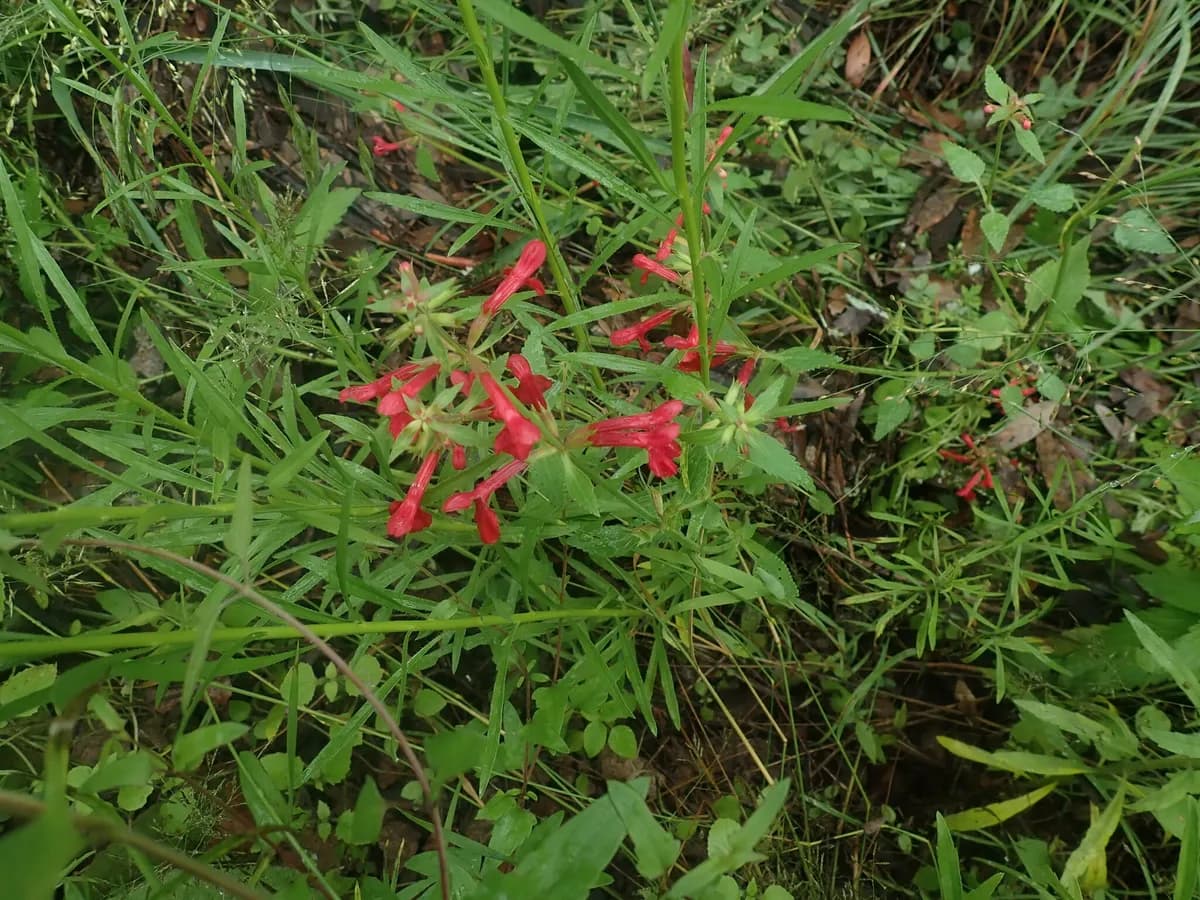
Stachys coccinea, or scarlet betony, is a low-water forb with tubular red flowers that bloom from April through October in full sun. It thrives in the hot, dry climates of the desert Southwest and draws hummingbirds, bees and butterflies.
Toxicity unknown
Scarlet betony (Stachys coccinea) is not listed by the ASPCA Animal Poison Control Center (opens in new tab) or the other sources we check, so we have no verdict for it either way. Absence from those lists is not a clearance. If your pet shows symptoms after eating any plant, call the ASPCA at (888) 426-4435.
Light
full sun
Water
medium
Size
12"–24" H × 12"–24" W
Bloom
Apr, May, Jun, Jul, Aug, Sep, Oct
Native to
TX, NM, AZ
Pollinators
hummingbirds, bees, butterflies
Before you buy
Your city may pay you to plant this
Cities and water utilities offer rebates for replacing lawn with native and water-wise plants. We track 459 programs across 44 states, each with a link to the provider and the date we last checked it.
Find rebates in your areaPicture natives in your own yard
Upload a photo of your yard and Patch Vision shows a rendering of it planted with natives for your region, like Scarlet betony.


Browse plants for this ecoregion
A mounding, semi-woody perennial forb with soft, hairy, wrinkled foliage and spikes of tubular scarlet-red flowers held above the foliage through the warm season. Thrives in rocky, well-drained soils and tolerates heat and drought once established.
Growing Scarlet betony
Grow Scarlet betony in full sun and medium water. Mature plants reach 12 to 24 inches tall and spread 12 to 24 inches wide. Expect low maintenance to keep it looking intentional in a front yard.
How to care for Scarlet betony, by region
How to care for Scarlet betony where it is actually grown: year-round basics plus what to do each season, region by region, with the sources for each.
Care guidance last updated: July 2026
Cross Timbers (includes Fort Worth, TX)
Year-round
Scarlet betony is a low-maintenance, HOA-friendly perennial forb that forms a tidy mound 12 to 24 inches tall, topped with bright red tubular flowers from spring through fall.
- Give it full sun to afternoon shade. In North Texas summer heat it holds up best with some relief from the hottest afternoon sun.
- Plant in well-drained soil and water regularly through the first growing season, then cut back to occasional deep watering once it is established.
- Space plants 12 to 18 inches apart. The clump spreads slowly and stays compact rather than sprawling.
- Pinch or shear back leggy stems once or twice during the growing season to keep the mound dense and neat.
- Scarlet betony is native to Texas, most commonly in the Hill Country and west into the Trans-Pecos. North Texas sits at the edge of its natural range.
Its compact, rounded habit and long bloom window read as an intentional, cared-for planting rather than an overgrown patch.
Fall
Scarlet betony keeps blooming into October in North Texas, then eases into dormancy as nights cool and the first frost approaches around mid November.
- Let it keep flowering through fall as nights cool. There is no need to cut back until foliage is actually damaged by frost.
- If dividing or moving the clump, September and October are a lower-stress window than the summer heat.
- Reduce watering frequency as temperatures drop and autumn rainfall typically picks up.
- After the first hard freeze blackens the foliage, leave the dead stems in place for now rather than cutting back immediately. They give the crown some frost protection.
Frost-blackened stems left standing can look unkempt to neighbors. If that is a concern, cut back to 4 to 6 inches instead and expect slightly slower spring regrowth.
Winter
In a mild North Texas winter, scarlet betony often stays semi-evergreen, but a hard freeze will blacken the foliage down to the ground.
- After a hard freeze blackens the top growth, cut the clump back to about 4 to 6 inches. New growth returns from the crown in spring.
- During an occasional severe Arctic outbreak, a layer of mulch over the crown gives extra winter protection.
- Hold off on watering except during extended dry, mild spells. The plant is dormant or semi-dormant and does not need regular water.
- Do not heavily prune live green growth during a mild winter, since that growth may survive intact and bloom again early.
Cutting frost-killed stems back to a low, even 4 to 6 inch clump keeps the bed looking maintained rather than dead through the winter months.
Spring
Spring is the best time to plant scarlet betony, and it typically puts on its heaviest bloom flush of the year before summer heat arrives.
- Plant new nursery starts in March or April, after the mid March last frost, so roots establish before summer heat.
- Water two to three times a week for the first six to eight weeks after planting, until new growth shows it has rooted in.
- Shear back any winter damaged or leggy stems to about 6 inches in early March to encourage a fresh, dense flush of growth.
- Expect the heaviest bloom of the year in April and May, when red flower spikes cover the mound.
A hard spring shearing followed by fast regrowth keeps the bed looking deliberate rather than winter worn, right when a fresh curb-appeal impression matters most.
Summer
Once established, scarlet betony tolerates North Texas summer heat and drought well, though it appreciates a break from the hardest afternoon sun during the 100 degree stretch.
- Deep water once a week during July and August dry spells, more often for plants still in their first summer.
- If it is planted in full sun, watch for scorched or curled leaf edges during 100F-plus afternoons. Afternoon shade reduces this stress.
- Deadhead spent flower spikes every couple of weeks to keep new red blooms coming through the heat.
- Skip fertilizer. Scarlet betony handles poor, lean soil without it.
Sources: LBJ Wildflower Center: Stachys coccinea (Scarlet Betony), Native Plant Society of Texas: Texas Betony, Central Texas Gardener: Texas Betony (community tip)
Texas Blackland Prairies (includes Dallas, TX)
Year-round
Scarlet betony is a low-maintenance, HOA-friendly perennial forb that forms a tidy mound 12 to 24 inches tall, topped with bright red tubular flowers from spring through fall.
- Give it full sun to afternoon shade. In North Texas summer heat it holds up best with some relief from the hottest afternoon sun.
- Plant in well-drained soil and water regularly through the first growing season, then cut back to occasional deep watering once it is established.
- Space plants 12 to 18 inches apart. The clump spreads slowly and stays compact rather than sprawling.
- Pinch or shear back leggy stems once or twice during the growing season to keep the mound dense and neat.
- Scarlet betony is native to Texas, most commonly in the Hill Country and west into the Trans-Pecos. North Texas sits at the edge of its natural range.
Its compact, rounded habit and long bloom window read as an intentional, cared-for planting rather than an overgrown patch.
Fall
Scarlet betony keeps blooming into October in North Texas, then eases into dormancy as nights cool and the first frost approaches around mid November.
- Let it keep flowering through fall as nights cool. There is no need to cut back until foliage is actually damaged by frost.
- If dividing or moving the clump, September and October are a lower-stress window than the summer heat.
- Reduce watering frequency as temperatures drop and autumn rainfall typically picks up.
- After the first hard freeze blackens the foliage, leave the dead stems in place for now rather than cutting back immediately. They give the crown some frost protection.
Frost-blackened stems left standing can look unkempt to neighbors. If that is a concern, cut back to 4 to 6 inches instead and expect slightly slower spring regrowth.
Winter
In a mild North Texas winter, scarlet betony often stays semi-evergreen, but a hard freeze will blacken the foliage down to the ground.
- After a hard freeze blackens the top growth, cut the clump back to about 4 to 6 inches. New growth returns from the crown in spring.
- During an occasional severe Arctic outbreak, a layer of mulch over the crown gives extra winter protection.
- Hold off on watering except during extended dry, mild spells. The plant is dormant or semi-dormant and does not need regular water.
- Do not heavily prune live green growth during a mild winter, since that growth may survive intact and bloom again early.
Cutting frost-killed stems back to a low, even 4 to 6 inch clump keeps the bed looking maintained rather than dead through the winter months.
Spring
Spring is the best time to plant scarlet betony, and it typically puts on its heaviest bloom flush of the year before summer heat arrives.
- Plant new nursery starts in March or April, after the mid March last frost, so roots establish before summer heat.
- Water two to three times a week for the first six to eight weeks after planting, until new growth shows it has rooted in.
- Shear back any winter damaged or leggy stems to about 6 inches in early March to encourage a fresh, dense flush of growth.
- Expect the heaviest bloom of the year in April and May, when red flower spikes cover the mound.
A hard spring shearing followed by fast regrowth keeps the bed looking deliberate rather than winter worn, right when a fresh curb-appeal impression matters most.
Summer
Once established, scarlet betony tolerates North Texas summer heat and drought well, though it appreciates a break from the hardest afternoon sun during the 100 degree stretch.
- Deep water once a week during July and August dry spells, more often for plants still in their first summer.
- If it is planted in full sun, watch for scorched or curled leaf edges during 100F-plus afternoons. Afternoon shade reduces this stress.
- Deadhead spent flower spikes every couple of weeks to keep new red blooms coming through the heat.
- Skip fertilizer. Scarlet betony handles poor, lean soil without it.
Sources: LBJ Wildflower Center: Stachys coccinea (Scarlet Betony), Native Plant Society of Texas: Texas Betony, Central Texas Gardener: Texas Betony (community tip)
In an HOA neighborhood
Scarlet betony is an HOA-friendly choice. Maintenance level: low. Tidiness: 4 out of 5.
Works well in: front yard, foundation, street edge, mid zone.
Wildlife value
Tubular red flowers are a strong hummingbird magnet and also draw bees and butterflies for nectar throughout a long bloom season.
Common questions
- When does scarlet betony bloom?
- Scarlet betony generally flowers from April through October, with the heaviest bloom during the warmer summer months.
- What pollinators are attracted to Stachys coccinea?
- The tubular red flowers draw hummingbirds along with bees and butterflies, which feed on the nectar throughout the long bloom season.
- How much water does scarlet betony need?
- It is a low-water plant once established and does best in well-drained soil, tolerating occasional extra moisture but not standing water.
- How much sun does scarlet betony require?
- It grows best in full sun but can tolerate part sun or light part shade, especially in the hottest desert climates.
- Is Scarlet betony HOA-friendly?
- Scarlet betony is generally an HOA-friendly choice in the right placement, with low maintenance.
These answers were drafted with an AI model from this plant's data. Verify care details with a local expert.
Native range data from vouchered herbarium specimen records and regional native plant society lists. Pollinator and host plant associations compiled from GBIF, iNaturalist, and published ecological literature.
If something looks wrong
Common plant problems, and what to check first
These come up on almost any plant. Each guide lists the likely causes in the order they are worth ruling out, with one thing to check before you act on any of them, and links to the source it came from.
- It is dying right after planting
- Leaves turning yellow
- Wilting even though I watered it
- Brown crispy leaf tips
- Bugs on the plant
Ready to grow Scarlet betony? Add it to your garden in Pollinator Patch to track it and get season-by-season care guidance.