Scarlet keckiella
Keckiella ternata
Last reviewed: September 2026
Toxicity unknown
Scarlet keckiella (Keckiella ternata) is not listed by the ASPCA Animal Poison Control Center (opens in new tab) or the other sources we check, so we have no verdict for it either way. Absence from those lists is not a clearance. If your pet shows symptoms after eating any plant, call the ASPCA at (888) 426-4435.
Light
full sun
Water
low
Size
36"–72" H × 36"–60" W
Bloom
Apr, May, Jun, Jul
Native to
CA
Pollinators
hummingbirds, bees
Before you buy
Your city may pay you to plant this
Cities and water utilities offer rebates for replacing lawn with native and water-wise plants. We track 458 programs across 44 states, each with a link to the provider and the date we last checked it.
Find rebates in your areaBrowse plants for this ecoregion
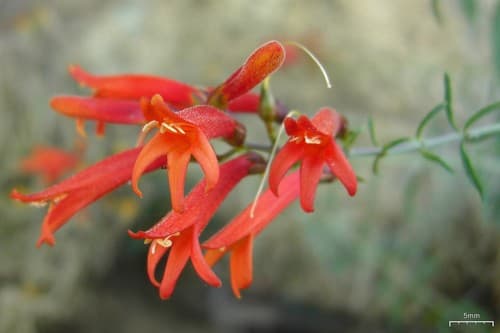
A woody, evergreen shrub with slender arching branches and whorls of narrow leaves. Tubular orange-red flowers appear along the stems in late spring and summer, held above a loose, open growth habit typical of chaparral shrubs.
How to care for Scarlet keckiella, by region
How to care for Scarlet keckiella where it is actually grown: year-round basics plus what to do each season, region by region, with the sources for each.
Care guidance last updated: September 2026
Mojave Basin and Range (includes Victorville, CA)
Year-round
Scarlet keckiella is native to the chaparral and mountain woodlands of Southern California. The Victorville area sits on the high desert floor, at the drier, hotter edge of the foothill habitat this species typically favors, so it grows best here in a spot that echoes those foothill conditions rather than open desert ground. It is a wand-branched shrub, usually 3 to 6 feet tall and wide, with bright red tubular flowers in late spring and summer that draw hummingbirds and native pollinators, and it serves as a caterpillar host plant for several moth and butterfly species.
- Plant on a slope or against a wall that offers some afternoon shade, echoing the foothill canyons this species prefers over flat open desert.
- Give it well draining soil and avoid low spots where water collects after rare desert rains.
- Water more than you would in its core chaparral range. Victorville's heat and low humidity dry out soil faster.
- Expect a summer dormant, sparser look during the hottest, driest stretch of the year.
Best used as an accent near a wall or slope rather than open front yard exposure in this hotter, drier setting.
Fall
Fall brings relief from Victorville's summer heat, and it is a good time to plant or prune scarlet keckiella.
- Plant in fall so roots establish during the cooler months ahead.
- Prune out summer dieback once temperatures moderate.
- Reduce watering frequency as the weather cools.
Winter
Winter nights in Victorville's high desert can drop well below freezing, colder than much of this species' coastal range, though it is noted as cold hardy into higher elevations.
- Mulch the root zone to buffer against hard freezes, especially for a young plant.
- Reduce or stop supplemental watering during cold, wet spells.
- Hold off on pruning until the coldest nights have passed.
Spring
Spring is a relatively mild window in Victorville before summer desert heat sets in, and scarlet keckiella blooms with red tubular flowers during this period.
- This is the best planting window here, giving roots time to establish before summer heat arrives.
- Watch for hummingbirds visiting the flowers as they open.
- Water regularly while the plant is newly established, tapering off as it takes hold.
Summer
Victorville's high desert summers are hot and dry, well beyond what scarlet keckiella experiences in its cooler coastal and foothill range, and the plant needs more attention here to get through the season.
- Water more often than you would in a coastal Southern California garden. Check soil moisture through the hottest weeks.
- Provide afternoon shade if possible. Full, unshaded desert sun here is more intense than this species typically sees.
- A sparse, dormant look in peak summer heat is expected, not a sign of failure.
Sources: Calscape (California Native Plant Society), Keckiella ternata plant profile (habit, height, bloom, pollinators, host plant use), Theodore Payne Foundation Native Plant Database, Keckiella ternata var. ternata (sun, water, soil, bloom season, size, cold hardiness, summer dormancy)
Sierra Nevada (includes South Lake Tahoe, CA)
Year-round
Scarlet keckiella's well documented native range is the chaparral and mountain woodlands of Southern California and northern Baja California. The Lake Tahoe area, in the Sierra Nevada, is well north of and ecologically different from that range, so a planting here is a garden choice rather than a local native planting, even though the species is noted as cold hardy to around 8,000 feet in elevation, which is close to Lake Tahoe's own elevation. It is a wand-branched shrub, usually 3 to 6 feet tall and wide, with bright red tubular flowers that draw hummingbirds and other pollinators.
- Because this is well outside its documented range, treat it as an experimental planting and watch how it performs through a full Sierra Nevada winter.
- Give it full sun and sharply well draining soil. Heavy, wet Sierra soils are a bigger risk to this plant than cold.
- Even where it is native, this species is drought tolerant and prefers infrequent water once established.
- Expect a summer dormant, sparser look, which combined with an unfamiliar setting can make it easy to mistake for a struggling plant.
Given the uncertainty of growing this species so far outside its known range, treat it as a trial planting rather than a guaranteed foundation shrub here.
Fall
Fall at Lake Tahoe turns cold quickly, well ahead of the mild fall this species experiences in Southern California, so timing matters more here.
- Avoid planting new keckiella late in fall. Give any new plant a full growing season before its first Sierra Nevada winter.
- Reduce watering as the weather cools and any early snow arrives.
- Hold off on pruning going into winter, since fresh cuts are more vulnerable to hard freezes.
Winter
Winters at Lake Tahoe are cold and snowy, testing this species at the upper edge of its noted cold hardiness.
- A heavy mulch layer over the root zone offers real protection through a Sierra Nevada winter.
- Snow cover can actually help insulate the root zone, even though it looks harsh above ground.
- Do not assume a plant that looks dead after winter is gone. Wait for the ground to warm before deciding whether it survived.
Spring
Spring at Lake Tahoe's elevation is short and cool, arriving later than in this species' Southern California range.
- Wait until the ground has thawed and hard frosts have passed before planting.
- Watch closely for how the plant responds. Its bloom timing here is untested compared to its native Southern California range.
- Avoid heavy watering right after planting in cool, still wet spring soil.
Summer
Summer is the most favorable season for scarlet keckiella at Lake Tahoe, with warmer, drier weather closer to what this species is used to.
- Water occasionally, letting soil dry between waterings, similar to how it is grown in its native Southern California range.
- Watch for bloom and hummingbird visits during this window.
- A sparse, dormant look in the driest part of summer is normal for the species, not unique to this location.
Sources: Calscape (California Native Plant Society), Keckiella ternata plant profile (habit, height, bloom, pollinators, host plant use), Theodore Payne Foundation Native Plant Database, Keckiella ternata var. ternata (sun, water, soil, bloom season, size, cold hardiness, summer dormancy)
Southern California Mountains (includes Big Bear Lake, CA)
Year-round
Scarlet keckiella grows in the chaparral and mountain woodlands of Southern California, including the San Bernardino Mountains around Big Bear Lake, and it tolerates cold into the higher elevations of its range. It is a wand-branched shrub that typically grows 3 to 6 feet tall and wide, with narrow leaves in whorls of three and bright red tubular flowers in late spring and summer that draw hummingbirds, native bees, butterflies, and moths, several of which use it as a caterpillar host plant.
- Choose a spot with full sun to part shade and soil that drains well. Big Bear's rocky mountain soils suit it.
- Water deeply but infrequently once established, tapering off well before the cold season.
- This species is noted as cold hardy to around 8,000 feet in elevation, which covers the Big Bear Lake area.
- Expect a period of sparser, dormant looking growth in the hottest part of summer.
A tidy, upright habit makes it a workable background shrub for an HOA-conscious mountain community yard.
Fall
Fall is a good time to plant scarlet keckiella around Big Bear Lake, before winter cold sets in.
- Plant or transplant while soil is still workable and before the first hard freeze.
- Cut back dead or damaged wood once summer dormancy has passed.
- Reduce watering as nights cool and any early season moisture arrives.
Winter
Winters at Big Bear Lake bring snow and hard freezes, and an established scarlet keckiella relies on its noted cold hardiness through this season.
- A mature, well rooted plant should handle the area's winter cold, which is within the elevation range this species tolerates.
- A young or newly planted specimen benefits from mulch over the root zone through the first winter.
- Hold off on pruning until the coldest weather has passed, since fresh cuts are more vulnerable to freeze damage.
Spring
Spring arrives later at Big Bear Lake's elevation, and scarlet keckiella typically leafs out and starts blooming as the last frosts pass.
- Wait until the risk of hard frost has passed before planting new keckiella from containers.
- Bright red flowers begin opening as the weather warms, drawing hummingbirds.
- Prune only to remove winter dieback, saving heavier shaping for after bloom.
Summer
Summer at this elevation is warm by day and cool at night, and scarlet keckiella blooms into the season before slowing down.
- Water occasionally during dry spells, letting the soil dry out between waterings.
- A thinner, less leafy look in late summer is normal dormancy for this species.
- Afternoon shade can help in the sunniest, most exposed spots.
Sources: Calscape (California Native Plant Society), Keckiella ternata plant profile (habit, height, bloom, pollinators, host plant use), Theodore Payne Foundation Native Plant Database, Keckiella ternata var. ternata (sun, water, soil, bloom season, size, cold hardiness, summer dormancy)
Southern California/Northern Baja Coast (includes Los Angeles, CA)
Year-round
Scarlet keckiella (blue-stemmed keckiella) is native to the chaparral and mountain foothills of Southern California, including the canyons and hillsides around the Los Angeles basin, so a planting here sits within its documented native range. It is a wand-branched shrub that typically grows 3 to 6 feet tall and wide, with narrow leaves arranged in whorls of three and bright red tubular flowers from late spring into summer. Hummingbirds are its main pollinator, and native bees, butterflies, and moths also visit it, with several moth and butterfly species using it as a caterpillar host plant.
- Give it full sun to part shade and well draining soil. Los Angeles's dry hillsides and canyons are close to its natural growing conditions.
- Water deeply but infrequently once established. This plant is drought tolerant and prone to root problems if kept too wet.
- Expect it to go summer dormant and look sparse in the hottest months. Planting it alongside an evergreen native shrub can hide the bare look.
- It hosts several moth and butterfly caterpillars, so a chewed leaf here and there is normal, not a problem to treat.
Its upright, wand-like form works well as a background or accent shrub in an HOA-friendly native bed, especially once it fills in.
Fall
Fall is a good planting and pruning window for scarlet keckiella around Los Angeles, as temperatures cool and the first rains may arrive.
- Prune out dead or crossing wood now, after the plant has finished its summer dormancy.
- Fall is one of the best times to plant new natives here, giving roots time to establish before next summer's heat.
- Reduce supplemental water as cooler weather and any rain return.
Winter
Winters around Los Angeles are mild, and an established scarlet keckiella needs little care through the cooler months.
- Rely on winter rain for most of the plant's water needs. Extra irrigation is rarely necessary.
- Watch for new growth starting as days lengthen, ahead of the spring bloom.
- Frost is rare in the LA basin, but a young plant in a cold pocket can be covered on the rare hard freeze night.
Spring
Spring is when scarlet keckiella comes into bloom around Los Angeles, with bright red tubular flowers opening on the previous year's wood.
- Watch for hummingbirds visiting the red flowers. This is the plant's main pollinator.
- This is a good time to plant new keckiella from containers, while nights are still cool and rain may still fall.
- Hold off on heavy pruning until after bloom finishes, so you do not cut off the season's flowers.
Summer
Summer heat around Los Angeles can push scarlet keckiella into a period of summer dormancy, with thinner foliage and a sparser look.
- Water only occasionally, and let the soil dry between waterings. Too much summer water is a more common problem than too little.
- A thin, sparse look in the hottest months is normal dormancy, not a sign of a dying plant.
- Mulch around the base to keep roots cooler and reduce how often you need to water.
Sources: Calscape (California Native Plant Society), Keckiella ternata plant profile (habit, height, bloom, pollinators, host plant use), Theodore Payne Foundation Native Plant Database, Keckiella ternata var. ternata (sun, water, soil, bloom season, size, cold hardiness, summer dormancy)
In an HOA neighborhood
Scarlet keckiella is an HOA-friendly choice. Maintenance level: low. Tidiness: 3 out of 5.
Works well in: foundation planting, native garden bed, pollinator border.
- open, arching habit can look leggy without occasional pruning
Wildlife value
The long tubular flowers are shaped for hummingbird pollination and also draw native bees.
Common questions
- How much sun does Scarlet keckiella need?
- Scarlet keckiella grows best in full sun conditions.
- When does Scarlet keckiella bloom?
- Scarlet keckiella blooms in April, May, June, and July.
- Where is Scarlet keckiella native?
- Scarlet keckiella (Keckiella ternata) is native to CA, per vouchered herbarium specimen records and regional native plant society lists.
- What pollinators does Scarlet keckiella attract?
- Scarlet keckiella draws hummingbirds and bees.
- Is Scarlet keckiella HOA-friendly?
- Scarlet keckiella is generally an HOA-friendly choice in the right placement, with low maintenance.
Native range data from vouchered herbarium specimen records and regional native plant society lists. Pollinator and host plant associations compiled from GBIF, iNaturalist, and published ecological literature.
If something looks wrong
Common plant problems, and what to check first
These come up on almost any plant. Each guide lists the likely causes in the order they are worth ruling out, with one thing to check before you act on any of them, and links to the source it came from.
- It is dying right after planting
- Leaves turning yellow
- Wilting even though I watered it
- Brown crispy leaf tips
- Bugs on the plant
Ready to grow Scarlet keckiella? Add it to your garden in Pollinator Patch to track it and get season-by-season care guidance.