Scorpion's Tail
Heliotropium angiospermum
Last reviewed: September 2026
Heliotropium angiospermum, or scorpion's tail, produces small white flowers on curled spikes almost year round in Florida and Texas, growing best in full sun on sandy, well-drained soil with low water needs.
Scorpion's Tail (Heliotropium angiospermum) is not on the ASPCA Animal Poison Control Center toxic plant list for dogs or cats (aspca.org (opens in new tab), last reviewed 2026-05-21). If your pet shows symptoms after eating any plant, call the ASPCA at (888) 426-4435.
Light
full sun
Water
low
Size
12"–36" H × 12"–36" W
Bloom
Jan, Feb, Mar, Apr, May, Jun, Jul, Aug, Sep, Oct, Nov, Dec
Native to
FL, TX
Pollinators
butterflies, bees
Before you buy
Your city may pay you to plant this
Cities and water utilities offer rebates for replacing lawn with native and water-wise plants. We track 452 programs across 44 states, each with a link to the provider and the date we last checked it.
Find rebates in your areaBrowse plants for this ecoregion
Scorpion's Tail is a low-growing native perennial that produces small white or pale blue flowers nearly year-round. This drought-tolerant plant forms a compact mound and thrives in hot, sunny conditions with minimal water requirements.
Growing Scorpion's Tail
Grow Scorpion's Tail in full sun and low water. Mature plants reach 12 to 36 inches tall and spread 12 to 36 inches wide. Expect low maintenance to keep it looking intentional in a front yard.
How to care for Scorpion's Tail, by region
How to care for Scorpion's Tail where it is actually grown: year-round basics plus what to do each season, region by region, with the sources for each.
Care guidance last updated: September 2026
Cross Timbers (includes Fort Worth, TX)
Year-round
Scorpion's tail is an easy, fast growing bloomer for Fort Worth yards, though North Texas winters usually cut it back hard or kill it outright.
- Give it full sun to part shade, with a little afternoon shade during Fort Worth's hottest summer weeks.
- It is not picky about soil. It handles the clay and limestone based soils common around Fort Worth as long as the spot drains and does not stay soggy after rain.
- Water it deeply but not often. Once it is established it handles dry spells well and does not want constant moisture.
- It grows fast, usually 1 to 3 feet tall and wide, and blooms nearly year round with tiny white flowers in curled spikes that draw butterflies and bees.
- It is native to Texas, but the documented native range for this plant is the Gulf Coast Prairies, the Southern Texas Plains, and the Rio Grande Valley, not the Fort Worth area. Treat it here as a good pollinator plant rather than a local native.
- The ASPCA lists heliotrope plants, the Heliotropium group this species belongs to, as toxic to horses because of pyrrolizidine alkaloids, which can cause liver disease if eaten in large amounts over a long time. That ASPCA entry does not list dogs or cats as at risk.
Fall
Fall is the last stretch of bloom before Fort Worth's first freeze arrives.
- The plant usually keeps blooming right up until the first freeze, which typically lands in this area sometime in November.
- Do a tidy cutback of any leggy or frost nipped growth as the weather cools to keep the bed looking neat heading into winter.
- If you want to save seed for next year, fall is a good time to collect the small seeds from spent flower spikes before frost hits.
- Hold off on new plantings late in the season since young plants have less time to establish before cold weather arrives.
A fall cutback of frost nipped or leggy stems keeps the front yard looking intentional instead of ragged heading into winter.
Winter
Winter usually knocks scorpion's tail back hard or kills it outright in Fort Worth, so plan to treat it as a tender perennial.
- This is a tropical, frost sensitive plant. A normal Fort Worth winter freeze typically kills the top growth and can kill the whole plant.
- After a freeze, cut back the blackened dead stems for a tidy winter look rather than leaving them standing.
- A layer of mulch over the root zone can help it come back from the roots in spring, though it is not certain to survive Fort Worth's colder winters.
- Many North Texas gardeners just treat it as an annual here and replant in spring rather than counting on it to return.
Cutting back the dead frozen stems after a freeze gives the front bed a tidy winter look instead of bare brown sticks.
Spring
Spring is planting and cleanup time for scorpion's tail in Fort Worth, once the last frost has passed.
- Wait until after the last frost in this area, usually by mid March, before planting new starts outside.
- If your plant froze back over winter, cut away the dead brown stems in early spring once you see new green growth at the base.
- New volunteer seedlings often pop up nearby since this plant self seeds easily. Thin out or transplant the ones you do not want.
- A light layer of compost worked into the soil is plenty. It does not need heavy feeding to bloom well.
Cutting back winter killed growth in early spring keeps the front bed looking tended instead of dead and brown.
Summer
Summer is when scorpion's tail blooms hardest in Fort Worth, and a little grooming keeps it tidy.
- This is peak bloom season, with nonstop small white flowers with yellow centers along curled spikes.
- Water during long dry stretches, especially for a plant that has been in the ground less than a year. Established plants handle Fort Worth's summer heat and dry spells well.
- It grows fast and can get leggy or straggly by midsummer. Trim it back by about a third to keep a neater shape and push out fresh blooms.
- Deadhead spent flower spikes if you want to cut down on the volunteer seedlings that come from its prolific self seeding.
Trimming back leggy summer growth keeps the plant from looking overgrown in a front bed.
Sources: Native Plant Society of Texas, Heliotropium angiospermum, Lady Bird Johnson Wildflower Center, Heliotropium angiospermum, ASPCA, Toxic and Non-Toxic Plants: Heliotrope, Native Gardeners, Scorpion Tail growing guide
Southern Coastal Plain (includes Orlando, FL)
Year-round
Scorpion's tail is a Florida native wildflower that grows into a loose, rounded mound of narrow green leaves topped with curling white flower spikes that bloom nearly year round in Central Florida, including the Orlando area. It typically reaches one to three feet tall and wide, prefers full sun to partial shade, and does best in well drained sandy soil. It grows fast and is often short lived, usually needing replacement every few years, and it reseeds itself readily so volunteer seedlings are common nearby.
- Plant in full sun to partial shade in well drained, sandy soil for the strongest bloom and most compact form.
- Water regularly through the first season to establish roots, then ease off, since established plants tolerate moderate drought and some salt exposure.
- Expect a fast grower that is relatively short lived, plan on replacing plants every few years as older stands decline.
- The curling white flower spikes draw a steady stream of nectar seeking butterflies in Central Florida, according to the Florida Native Plant Society and Lady Bird Johnson Wildflower Center.
- This species is native to Florida. The ASPCA's page on the Heliotropium genus, which is not specific to this species, lists heliotropes as a concern for horses because of pyrrolizidine alkaloids that can cause liver disease with large or repeated ingestion, and it does not list heliotrope as toxic to dogs or cats.
Fall
Fall in Orlando brings drier air and the start of the region's dry season, typically from October into early December, and it is a good time to shape the plant and clear out excess self-sown seedlings before winter.
- Cut the plant back by about a third in early fall to encourage a fuller shape heading into the cooler months, since it is a fast, short lived grower that benefits from occasional renewal pruning.
- Thin out volunteer seedlings that sprouted over summer, leaving only the ones you want to keep for next year.
- Taper off watering as rainfall drops in the dry season. Established plants in sandy soil handle the drier stretch well.
- Watch the extended forecast in late November and December. An unusually early cold snap can nip new growth even though hard freezes are rare this far south.
A fall cutback and thinning pass keeps the bed looking deliberate and edged going into the neighborhood's quieter winter months, rather than leggy or wild at the property line.
Winter
Winters in the Orlando area are mild, with only occasional light frost and rare hard freezes, so scorpion's tail usually keeps growing and blooming through the season with minimal dieback.
- Expect the plant to keep flowering through a typical mild Orlando winter, since hard freezes are infrequent this far south in Central Florida.
- If a freeze warning is issued, cover young or newly planted scorpion's tail overnight. Established plants generally tolerate a light frost with only minor leaf burn.
- Leave any frost nipped stems in place until new growth resumes in late winter or early spring, cutting too early risks removing wood that is still alive.
- Hold off on fertilizing during winter. The plant's growth naturally slows with cooler, shorter days.
Spring
Spring in the Orlando area runs from the typical mid February last frost into May, and it is the best window to plant scorpion's tail. Warming soil and longer days push strong new growth and the first heavy flush of curling white blooms.
- Plant new scorpion's tail after the typical mid February last frost date for Orlando, so young roots are not caught by a late cold snap.
- Cut back any stems that browned from a rare winter freeze once new green growth appears at the base, this keeps the plant tidy and encourages fuller regrowth.
- Watch for volunteer seedlings from last year's self sown seed and thin the crowded ones early while they are still easy to pull.
- Hold off on heavy fertilizer. Established plants in Central Florida's sandy soil generally do fine on rainfall and occasional watering alone.
Summer
Summer is Orlando's hot, humid rainy season, and it is when scorpion's tail blooms hardest, sending up curling white flower spikes continuously through the heat.
- Skip supplemental watering during a normal Central Florida wet season. Daily summer rain is usually enough for this drought tolerant plant.
- Expect fast, sometimes leggy growth in the heat. Pinch or lightly shear stem tips to keep the mound compact and full.
- The plant self-seeds readily, so pull volunteer seedlings from beds and walkway edges while they are still small if you want a controlled planting.
- Give plants some airflow and avoid crowding them together. Humid, still conditions can invite fungal leaf spotting in a wet Orlando summer.
Keeping the mound sheared and volunteer seedlings pulled from the edges through the wet season helps the planting read as tended rather than overgrown from the street.
Sources: Heliotropium angiospermum (Scorpion's-tail), Lady Bird Johnson Wildflower Center native plant database, Heliotropium angiospermum plant profile, Florida Native Plant Society, Heliotropium angiospermum species record, Atlas of Florida Plants (University of South Florida), Toxic and Non-Toxic Plants: Heliotrope, ASPCA (genus-level page, not species-specific to Heliotropium angiospermum)
Texas Blackland Prairies (includes Dallas, TX)
Year-round
Scorpion's tail is an easy, fast growing bloomer for Dallas yards, though North Texas winters usually cut it back hard or kill it outright.
- Give it full sun to part shade, with a little afternoon shade during Dallas's hottest summer weeks.
- It is not picky about soil. It handles the heavy blackland prairie clay common around Dallas as long as the spot drains and does not stay soggy after rain.
- Water it deeply but not often. Once it is established it handles dry spells well and does not want constant moisture.
- It grows fast, usually 1 to 3 feet tall and wide, and blooms nearly year round with tiny white flowers in curled spikes that draw butterflies and bees.
- It is native to Texas, but the documented native range for this plant is the Gulf Coast Prairies, the Southern Texas Plains, and the Rio Grande Valley, not the Dallas area. Treat it here as a good pollinator plant rather than a local native.
- The ASPCA lists heliotrope plants, the Heliotropium group this species belongs to, as toxic to horses because of pyrrolizidine alkaloids, which can cause liver disease if eaten in large amounts over a long time. That ASPCA entry does not list dogs or cats as at risk.
Fall
Fall is the last stretch of bloom before Dallas's first freeze arrives.
- The plant usually keeps blooming right up until the first freeze, which typically lands in this area sometime in November.
- Do a tidy cutback of any leggy or frost nipped growth as the weather cools to keep the bed looking neat heading into winter.
- If you want to save seed for next year, fall is a good time to collect the small seeds from spent flower spikes before frost hits.
- Hold off on new plantings late in the season since young plants have less time to establish before cold weather arrives.
A fall cutback of frost nipped or leggy stems keeps the front yard looking intentional instead of ragged heading into winter.
Winter
Winter usually knocks scorpion's tail back hard or kills it outright in Dallas, so plan to treat it as a tender perennial.
- This is a tropical, frost sensitive plant. A normal Dallas winter freeze typically kills the top growth and can kill the whole plant.
- After a freeze, cut back the blackened dead stems for a tidy winter look rather than leaving them standing.
- A layer of mulch over the root zone can help it come back from the roots in spring, though it is not certain to survive Dallas's colder winters.
- Many North Texas gardeners just treat it as an annual here and replant in spring rather than counting on it to return.
Cutting back the dead frozen stems after a freeze gives the front bed a tidy winter look instead of bare brown sticks.
Spring
Spring is planting and cleanup time for scorpion's tail in Dallas, once the last frost has passed.
- Wait until after the last frost in this area, usually by mid March, before planting new starts outside.
- If your plant froze back over winter, cut away the dead brown stems in early spring once you see new green growth at the base.
- New volunteer seedlings often pop up nearby since this plant self seeds easily. Thin out or transplant the ones you do not want.
- A light layer of compost worked into the soil is plenty. It does not need heavy feeding to bloom well.
Cutting back winter killed growth in early spring keeps the front bed looking tended instead of dead and brown.
Summer
Summer is when scorpion's tail blooms hardest in Dallas, and a little grooming keeps it tidy.
- This is peak bloom season, with nonstop small white flowers with yellow centers along curled spikes.
- Water during long dry stretches, especially for a plant that has been in the ground less than a year. Established plants handle Dallas's summer heat and dry spells well.
- It grows fast and can get leggy or straggly by midsummer. Trim it back by about a third to keep a neater shape and push out fresh blooms.
- Deadhead spent flower spikes if you want to cut down on the volunteer seedlings that come from its prolific self seeding.
Trimming back leggy summer growth keeps the plant from looking overgrown in a front bed.
Sources: Native Plant Society of Texas, Heliotropium angiospermum, Lady Bird Johnson Wildflower Center, Heliotropium angiospermum, ASPCA, Toxic and Non-Toxic Plants: Heliotrope, Native Gardeners, Scorpion Tail growing guide
Want these tasks as reminders timed to your yard? Pollinator Patch turns this guidance into a season-by-season care plan for the plants you actually grow.
In an HOA neighborhood
Scorpion's Tail is an HOA-friendly choice. Maintenance level: low. Tidiness: 2 out of 5.
Works well in: front yard, foundation, street edge, mid zone.
Wildlife value
The nearly continuous blooming cycle provides nectar for butterflies and native bees throughout most of the year. This makes it particularly valuable as a consistent pollinator resource in native landscapes.
Common questions
- When does scorpion's tail bloom?
- In Florida and Texas, Heliotropium angiospermum can flower nearly continuously through the year, with blooms appearing from January through December in warm sites.
- What pollinators visit scorpion's tail?
- The small white flowers draw butterflies and bees, making it a useful nectar source in sunny garden beds and open, disturbed ground.
- What growing conditions does scorpion's tail need?
- It grows as a forb in full sun and prefers low water once established, tolerating sandy or well-drained soils common in Florida and Texas landscapes.
- What does scorpion's tail look like?
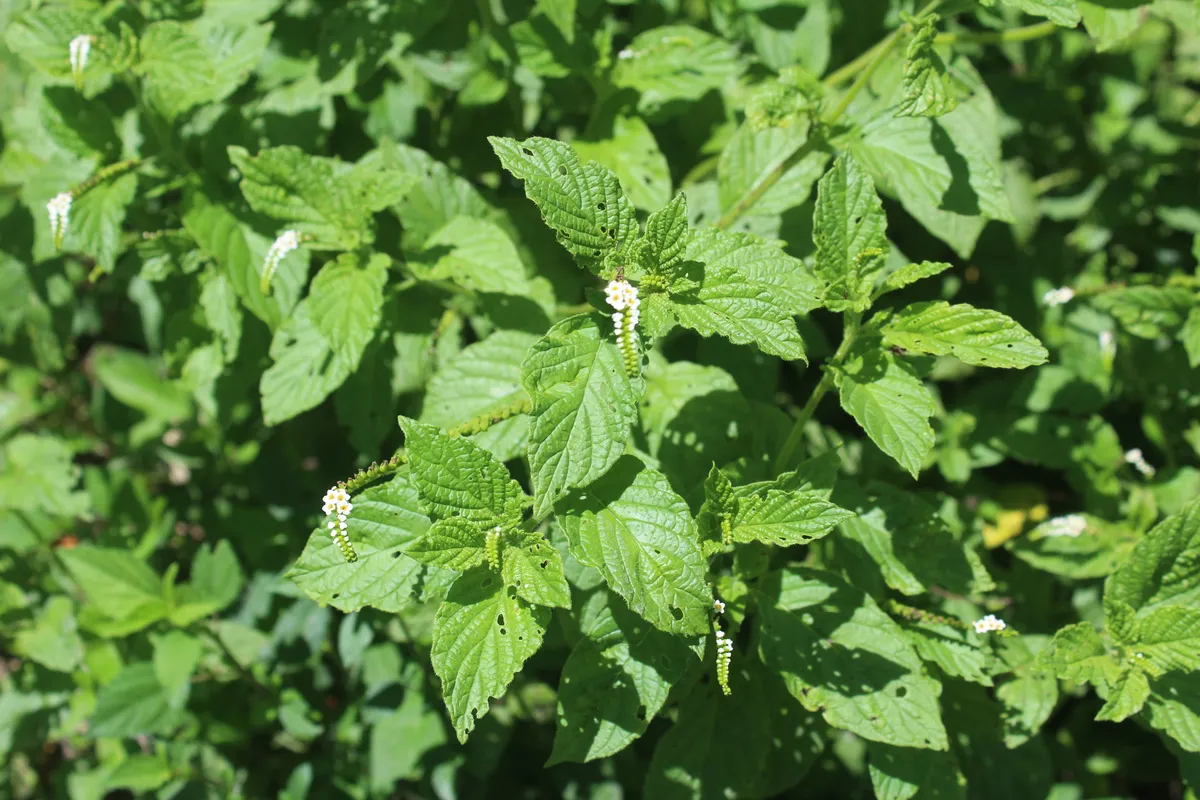
- It forms curled, one-sided flower spikes lined with tiny white blooms, a shape that gives the plant its common name.
- Is Scorpion's Tail toxic to dogs?
- Scorpion's Tail is not on the ASPCA Animal Poison Control Center toxic plant list for dogs (aspca.org).
- Is Scorpion's Tail toxic to cats?
- Scorpion's Tail is not on the ASPCA Animal Poison Control Center toxic plant list for cats (aspca.org).
- Is Scorpion's Tail HOA-friendly?
- Scorpion's Tail is generally an HOA-friendly choice in the right placement, with low maintenance.
These answers were drafted with an AI model from this plant's data. Verify care details with a local expert.
Native range data from vouchered herbarium specimen records and regional native plant society lists. Pollinator and host plant associations compiled from GBIF, iNaturalist, and published ecological literature.
If something looks wrong
Common plant problems, and what to check first
These come up on almost any plant. Each guide lists the likely causes in the order they are worth ruling out, with one thing to check before you act on any of them, and links to the source it came from.
- It is dying right after planting
- Leaves turning yellow
- Wilting even though I watered it
- Brown crispy leaf tips
- Bugs on the plant
Ready to grow Scorpion's Tail? Add it to your garden in Pollinator Patch to track it and get season-by-season care guidance.
Planning a bed around it? Start a free plan with this plant
Not sure where to start? Take the 2-minute yard quiz