Sharp Blazing Star
Liatris acidota
Last reviewed: August 2026
Toxicity unknown
Sharp Blazing Star (Liatris acidota) is not listed by the ASPCA Animal Poison Control Center (opens in new tab) or the other sources we check, so we have no verdict for it either way. Absence from those lists is not a clearance. If your pet shows symptoms after eating any plant, call the ASPCA at (888) 426-4435.
Light
full sun
Water
low
Size
24"–36" H × 12"–36" W
Bloom
Jun, Jul, Aug, Sep, Oct, Nov
Native to
LA, TX
Pollinators
butterflies, bees, nectar insects
Before you buy
Your city may pay you to plant this
Cities and water utilities offer rebates for replacing lawn with native and water-wise plants. We track 452 programs across 44 states, each with a link to the provider and the date we last checked it.
Find rebates in your areaBrowse plants for this ecoregion
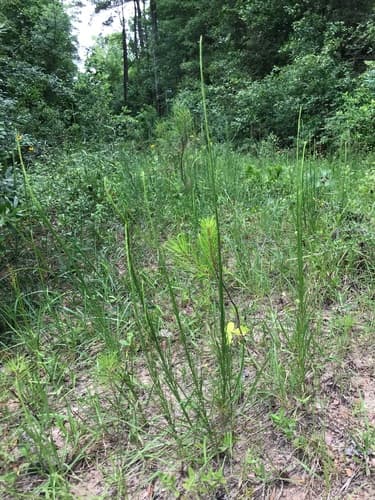
Sharp Blazing Star produces tall spikes of purple flowers from summer through late fall, creating dramatic vertical accents in the landscape. This drought-tolerant native perennial forms clumps of narrow leaves and maintains a relatively compact footprint while providing extended seasonal color.
How to care for Sharp Blazing Star, by region
How to care for Sharp Blazing Star where it is actually grown: year-round basics plus what to do each season, region by region, with the sources for each.
Care guidance last updated: September 2026
Mississippi Valley Loess Plains (includes Memphis, TN)
Year-round
Sharp Blazing Star is a Louisiana and Texas Gulf Coast native being grown here in Memphis as a garden planting outside its native range. Give it full sun and well-drained soil and it settles in as a tough, low-water perennial.
- Give it full sun, at least 6 hours of direct light a day, for the strongest flower spikes.
- Plant in well-drained soil. Memphis sits on silt loam over a clay subsoil that sheds water slowly after storms, so a raised bed or a gentle slope helps roots avoid standing water.
- Water regularly through the first growing season to get roots established, then back off. Once established, this plant handles dry spells well and does not want soggy soil.
- Expect upright purple flower spikes 2 to 3 feet tall from early summer into fall, with bees and butterflies visiting the blooms.
- This is a Louisiana and Texas Gulf Coast native, not a native plant of the Memphis area. Treat it as a well-behaved non-native garden pick rather than a straight native swap.
Upright purple spikes kept to a defined clump read as tidy and intentional in a front bed, an easy HOA-friendly look.
Fall
Fall carries the last of the bloom in Memphis's mild autumn and is a good window to divide crowded clumps.
- Blooming can run into October in a mild Memphis fall, some of the latest color in a native-leaning bed.
- After flowering finishes, cut spent stalks back, or leave the seed heads standing for winter interest and for finches.
- Once the weather cools but before the ground freezes, fall is a good window to divide crowded corm clumps and replant the divisions.
- Reduce watering as growth slows and cooler, wetter fall weather sets in.
- Skip heavy fall fertilizing, which can push soft new growth right before Memphis's first freeze.
Tidy, upright seed heads through fall read as an intentional four-season planting, and a light edge-trim keeps that look clearly maintained.
Winter
Winter is dormant season for Sharp Blazing Star. In Memphis, good drainage matters more than cold protection.
- The plant dies back to the ground and rests as an underground corm through the Memphis winter.
- Memphis winters bring occasional freezes and quick cold snaps, but for a plant with Gulf Coast origins the bigger risk is wet, cold soil sitting around the corm, not the cold air itself.
- A light mulch layer over the dormant corm can help even out freeze-thaw swings, but keep wet mulch off the crown itself.
- Leave dried stalks standing through winter for habitat value and texture, or cut back to the base for a tidier look.
- Hold off on planting new divisions during winter dormancy. Wait for spring or fall, the plant's active growing windows.
Trimmed stalks or a neat mulch ring over winter keep the bed looking intentional through the dormant season.
Spring
Spring is planting and early regrowth season for Sharp Blazing Star in the Memphis area, and the season to watch drainage most closely.
- Plant potted Sharp Blazing Star after the last hard frost, once the soil has warmed and dried out some from spring rain.
- Clean up last year's dead foliage before new grass-like shoots emerge from the corm.
- Water new plantings regularly through spring while roots establish, especially between spring storms.
- Watch drainage closely after heavy spring rain. Memphis's clay-heavy subsoil can stay wet for days, and soggy roots in spring are the most common way this plant struggles.
- New growth shows up as a low tuft of narrow leaves well before the flower stalk rises later in the season.
Low, grassy spring foliage sits neatly at the front of a bed with no pruning drama needed before bloom.
Summer
Summer is bloom season and the plant's most drought-tolerant stretch through Memphis's hot, humid months.
- Expect the purple bottlebrush flower spikes to open from the top down starting in early to midsummer and continuing into fall.
- Once established, Sharp Blazing Star handles Memphis summer heat and dry stretches with little extra water. Water only during extended drought.
- Avoid overhead watering in the evening. Memphis summer humidity stays high, and wet foliage overnight can invite leaf spotting.
- Deadhead spent spikes to tidy the look, or leave a few standing for birds and self-sown seedlings.
- Bees and butterflies are drawn to the blooms, so expect visible pollinator activity through the summer.
A row of blooming spikes along a walkway reads as a deliberate, cared-for planting, an easy way to earn the HOA-friendly look.
Sources: Lady Bird Johnson Wildflower Center - Liatris acidota plant profile, University of Tennessee Extension, Tennessee Smart Yards - Liatris, USDA NRCS Official Series Description - Memphis series
Want these tasks as reminders timed to your yard? Pollinator Patch turns this guidance into a season-by-season care plan for the plants you actually grow.
In an HOA neighborhood
Sharp Blazing Star is an HOA-friendly choice. Maintenance level: low. Tidiness: 4 out of 5.
Works well in: front yard, foundation, street edge, mid zone.
Wildlife value
Excellent pollinator plant that attracts butterflies, bees, and other nectar-feeding insects throughout its long blooming period. The extended bloom time from June through November provides crucial late-season nectar when many other flowers have finished.
Common questions
- How much sun does Sharp Blazing Star need?
- Sharp Blazing Star grows best in full sun conditions.
- When does Sharp Blazing Star bloom?
- Sharp Blazing Star blooms in June, July, August, September, October, and November.
- Where is Sharp Blazing Star native?
- Sharp Blazing Star (Liatris acidota) is native to LA, TX, per vouchered herbarium specimen records and regional native plant society lists.
- What pollinators does Sharp Blazing Star attract?
- Sharp Blazing Star draws butterflies, bees, and nectar insects.
- Is Sharp Blazing Star HOA-friendly?
- Sharp Blazing Star is generally an HOA-friendly choice in the right placement, with low maintenance.
Native range data from vouchered herbarium specimen records and regional native plant society lists. Pollinator and host plant associations compiled from GBIF, iNaturalist, and published ecological literature.
If something looks wrong
Common plant problems, and what to check first
These come up on almost any plant. Each guide lists the likely causes in the order they are worth ruling out, with one thing to check before you act on any of them, and links to the source it came from.
- It is dying right after planting
- Leaves turning yellow
- Wilting even though I watered it
- Brown crispy leaf tips
- Bugs on the plant
Ready to grow Sharp Blazing Star? Add it to your garden in Pollinator Patch to track it and get season-by-season care guidance.
Planning a bed around it? Start a free plan with this plant
Not sure where to start? Take the 2-minute yard quiz