Southern Blue Flag Iris
Iris virginica
Last reviewed: September 2026
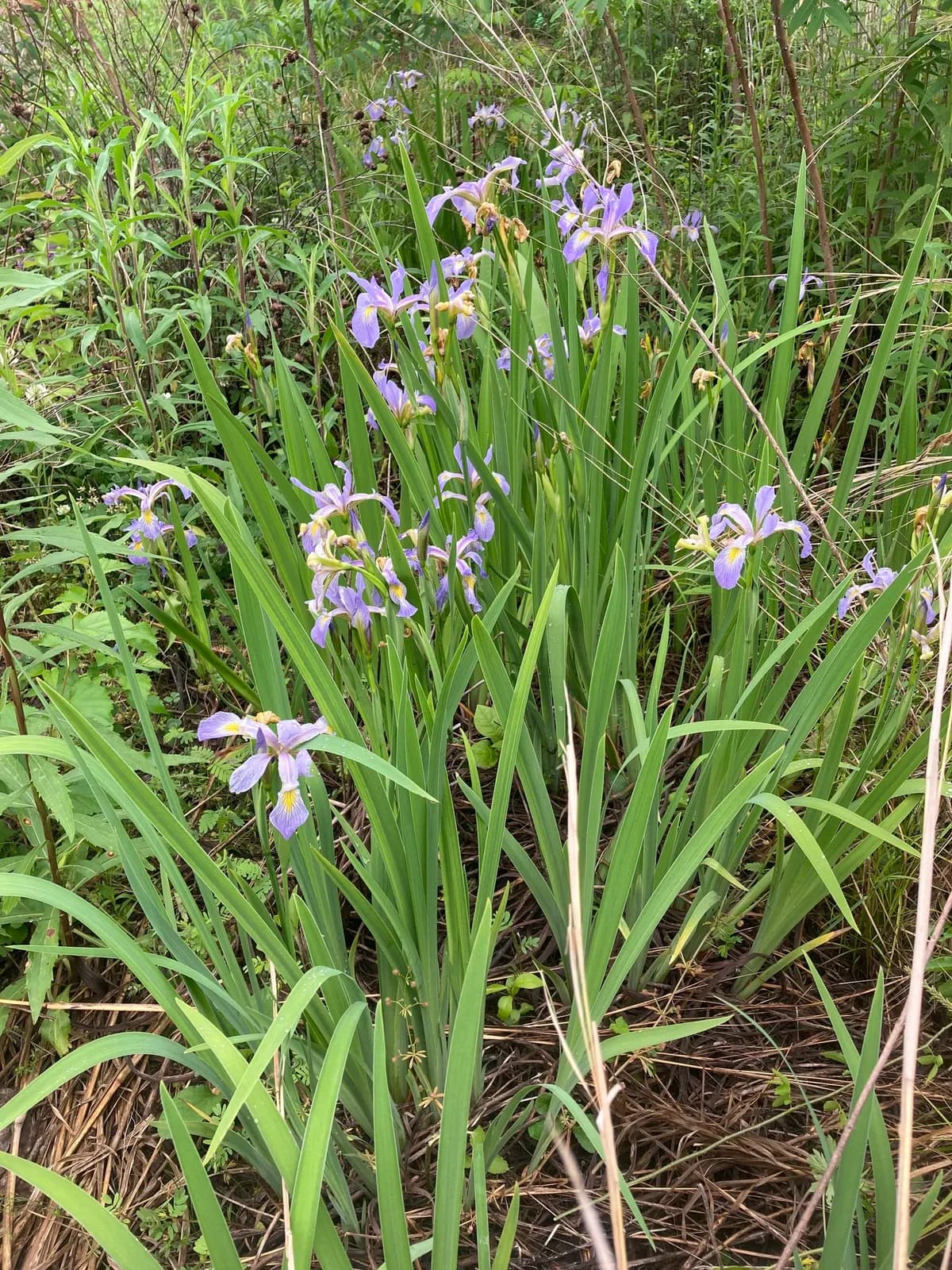
Iris virginica, the Southern Blue Flag Iris, blooms from March through August with blue-violet flowers. It grows well in wet meadows, marsh edges and roadside ditches in full sun to part sun.
Southern Blue Flag Iris is toxic to dogs and cats.
Listed as toxic by the ASPCA Animal Poison Control Center (opens in new tab) (last reviewed 2026-05-21). If your pet has been exposed, call the ASPCA Animal Poison Control Center at (888) 426-4435and your veterinarian's emergency line.
Pollinator Patch flags toxic plants so you can choose a pet-safe native alternative for your yard.
The USDA PLANTS Database (opens in new tab) does not flag Southern Blue Flag Iris as toxic to livestock.
Light
full sun
Water
high
Size
24"–36" H × 12"–24" W
Bloom
Mar, Apr, May, Jun, Jul, Aug
Native to
AL, AR, FL, GA and 23 more states
Pollinators
butterflies, bees, hummingbirds
Deer
Resistant (per Prairie Moon Nursery)
Before you buy
Your city may pay you to plant this
Cities and water utilities offer rebates for replacing lawn with native and water-wise plants. We track 452 programs across 44 states, each with a link to the provider and the date we last checked it.
Find rebates in your areaBrowse plants for this ecoregion
Southern Blue Flag Iris produces striking blue to purple flowers with yellow markings from spring through summer. This moisture-loving perennial forms upright clumps of sword-like leaves and thrives in consistently wet soils or shallow water features.
Growing Southern Blue Flag Iris
Grow Southern Blue Flag Iris in full sun and high water. Mature plants reach 24 to 36 inches tall and spread 12 to 24 inches wide. Expect low maintenance to keep it looking intentional in a front yard.
How to care for Southern Blue Flag Iris, by region
How to care for Southern Blue Flag Iris where it is actually grown: year-round basics plus what to do each season, region by region, with the sources for each.
Care guidance last updated: September 2026
Cross Timbers (includes Fort Worth, TX)
Year-round
Southern blue flag iris grows two to three feet tall and needs consistently wet to moist soil, so plan on a pond edge, rain garden low spot, or another spot that holds water rather than a regular flower bed.
- Give it full sun to light afternoon shade for the best bloom.
- Site it at a pond margin, a rain garden basin, or any low spot in the yard that collects and holds rainwater.
- Keep the soil consistently moist to wet. This is a high water need plant and it will struggle if the ground dries out for long stretches.
- Expect a clump two to three feet tall and one to two feet wide that spreads wider over the years as the rhizome grows.
Fall
Fall is division season, once the leaves start to yellow.
- Divide crowded clumps in early fall as the leaves turn yellow, keeping the thin roots attached to each rhizome section, and replant right away into wet ground.
- Cutting back yellowed foliage after dividing keeps the planting looking tidy heading into winter.
Dividing clumps and cutting back yellowed foliage in fall keeps a front-facing rain garden or pond edge tidy for curb appeal.
Winter
Foliage dies back after a hard freeze, but the rhizome is the part that overwinters and sends up new growth each spring.
- Expect the leaves to yellow and collapse after a hard freeze. This is normal and the plant regrows from the rhizome.
- Do not let the pond edge or rain garden basin go completely dry over winter. The rhizome still wants some soil moisture even while dormant.
- There is no need to cut the collapsed foliage back right away. Leaving it in place for a few weeks can help buffer the crown through the coldest snaps.
Spring
Spring is the main growth and bloom window here, with flower stalks opening in May.
- Watch for blue, purple, or white blooms on tall stalks in May.
- Cross Timbers spring rains usually keep a low, water-holding spot wet on their own, but check a rain garden or pond edge planting between storms and add water if it starts to dry out.
- Spring is a good time to plant new divisions since the ground is naturally moist and the plant is entering active growth.
Summer
Fort Worth summers turn hot with less reliable rain, which is the hardest stretch of the year for a wetland plant like this one.
- Rainfall drops off in summer, so plan on supplemental watering to keep the root zone from drying out, especially if the pond or rain garden basin is not fed by regular storms.
- Leave the strappy foliage standing once the May through July bloom window closes. It keeps feeding the rhizome for next year.
- Fort Worth Prairie soils are often thin over limestone and drain fast in spots, so a naturally low, water-holding site or a lined feature works better here than a raised or well-drained bed.
Sources: Iris virginica (Virginia iris), Native Plants of North America Database, Ecological Regions of North Central Texas, Cross Timbers and Prairies, Iris virginica, Native Plant Society of Texas
Eastern Corn Belt Plains (includes Columbus, OH)
Year-round
Southern blue flag iris is a native Ohio wetland perennial that needs consistently wet soil and full sun, and every part of the plant is toxic if eaten.
- This wetland iris wants full sun to light shade and soil that stays consistently wet to evenly moist, not soil that dries out between waterings.
- It is hardy in USDA zones 5 through 9, and Columbus sits solidly inside that range.
- Ohio is within its native range according to USDA PLANTS and the Lady Bird Johnson Wildflower Center, so this iris belongs in an Ohio native planting.
- Every part of the plant is toxic if eaten, with the rhizome carrying the highest concentration of toxins, so keep pets and kids from chewing on it.
- Wear gloves when you handle or divide the rhizome. The sap can irritate skin.
Fall
Fall is division season for crowded clumps, and it is also when the toxic rhizome is most likely to be handled directly, so gloves and pet caution matter.
- Late summer to fall, right after flowering finishes, is the best time to divide an overcrowded clump so new divisions can establish before winter.
- Wear gloves when dividing. The rhizome sap can irritate skin, and the toxic compounds are concentrated in the rhizome.
- Keep any trimmed or discarded rhizome pieces away from pets and kids since they are toxic if eaten.
- Foliage naturally starts to brown as the plant goes dormant. There is no urgent care task beyond keeping the soil from drying out before frost.
Dividing overcrowded clumps in fall and clearing spent stalks keeps a front-yard planting looking neat.
Winter
Winter is a quiet dormant stretch. This iris is fully hardy in Columbus and needs nothing beyond leaving the rhizome undisturbed.
- This iris is fully cold hardy through Columbus winters. USDA zones 5 through 9 cover Ohio's zone 6 with room to spare.
- Foliage dies back and the plant offers no winter interest. That is normal and needs no special care.
- Leave the dormant rhizome undisturbed in the ground. Do not divide or transplant during winter dormancy.
- If the bed still has browned foliage from fall, there's no rush to remove it. It won't harm the dormant rhizome either way.
Cutting back any remaining browned foliage gives a tidier winter look for a street-facing bed, though it is optional for plant health.
Spring
Spring brings bloom and active growth, so this is the season to keep the soil steadily wet and watch new foliage for snail damage.
- Bloom starts in late spring, usually May into June in the Columbus area, with blue-violet flowers that have a yellow throat marking.
- Keep soil consistently moist through spring rains and dry spells alike. This iris does not tolerate drying out even briefly.
- Spring is an acceptable time to plant potted nursery starts so roots establish before summer heat, though fall after bloom is the better window for dividing an existing clump.
- Check new growth for snails, which can chew ragged holes in the leaves.
Summer
Summer is about steady moisture and deadheading spent blooms, and this iris otherwise stays low-maintenance and pest-free.
- Flowering can continue into early summer. Once blooms fade, snip the spent flower stalks down to the base.
- Consistent moisture matters most in summer heat. Water deeply during dry stretches rather than letting the soil dry out.
- This iris has no serious insect or disease problems in most Ohio gardens, though soggy, overcrowded clumps can develop soft rot.
- It tolerates standing water at pond edges or in low spots that flood after storms, which makes it a good rain garden choice.
Snipping spent flower stalks after bloom keeps a front-yard bed looking tidy for street-facing plantings.
Sources: Lady Bird Johnson Wildflower Center - Iris virginica, ASPCA - Toxic and Non-Toxic Plants: Iris, USDA NRCS Plant Guide - Iris virginica (Virginia Iris), Clemson HGIC - Rain Garden Plants: Iris versicolor and Iris virginica, Missouri Botanical Garden Plant Finder - Iris virginica
Mississippi Alluvial Plain (includes Memphis, TN)
Year-round
Southern blue flag iris is a wetland native that is right at home in the wet, heavy clay and loess soils around Memphis. It wants full sun and soil that stays evenly moist to wet all year, and it slowly builds into tidy clumps you can divide every few years.
- Give it full sun and soil that never fully dries out. It is one of the few irises that tolerates sitting in a few inches of standing water for stretches, which makes it a strong fit for rain garden basins and pond edges.
- It grows well in the heavy clay and loess soils common around Memphis. There is no need to amend for drainage since this plant wants slow-draining, moisture-holding soil.
- Clumps reach 2 to 3 feet tall and spread slowly by rhizomes. Divide every 3 to 4 years, either in early fall right after bloom or in early-to-mid spring, so the patch does not get overcrowded.
- Every part of this iris, especially the rhizome, contains compounds that cause drooling, vomiting, and diarrhea in dogs, cats, and horses if chewed or dug up and eaten. Keep pets from digging at the base of the clump.
Its growth habit is a defined, upright clump rather than a spreading mat, so it reads as an intentional planting along a rain garden or drainage edge instead of a wild patch, which fits HOA-friendly foundation and wet-area plantings.
Fall
Fall, right after the growing season winds down, is the best window this iris gets each year for dividing and resetting clumps around Memphis.
- Divide and transplant crowded clumps in fall after flowering has long finished. This is the preferred timing over spring division according to Clemson Extension.
- Cut back any foliage that has yellowed or died back, but leave healthy green fans in place going into the cooler months.
- New divisions benefit from steady water while their roots settle in before winter, so do not let a fall dry spell go unwatered.
Winter
Winters around Memphis are mild enough that this wetland-native iris just sits dormant in the ground with no digging up or covering needed.
- Leave the rhizomes in place through winter. This species is a Tennessee wetland native and is built to handle the region's winter conditions without extra protection.
- If a hard freeze follows an unusually dry stretch, a light watering beforehand helps, since this plant is used to staying moist to wet even in the cold months.
- Skip fertilizing over winter. None of the care sources for this plant call for it, and the priority in the cold season is just keeping the bed from drying out.
Spring
Spring is when this iris wakes up and starts pushing new leaf fans. Around Memphis this is also one of the two best-timed windows to divide crowded clumps, the other being right after fall bloom.
- Watch for new sword-shaped leaf fans emerging from the rhizomes as soil warms. Keep the bed consistently moist through this growth flush.
- Early-to-mid spring is a good time to divide an overcrowded clump if you missed the fall window. Lift the rhizome mass, cut it into sections with at least one fan of leaves each, and reset shallow with the top of the rhizome barely covered.
- Blooms open toward the end of spring into early summer, so do not expect flowers until the season is well underway.
Summer
Summer brings the tail end of bloom and then the hot, humid stretch this iris is built for. The main job is keeping the clay bed from drying out during Memphis dry spells.
- Flowers with light bluish-purple petals wrap up by early summer. After bloom, leave the strappy foliage in place since it keeps feeding the rhizome for next year.
- Water deeply during any dry stretch so the soil stays evenly moist to wet. This plant is more likely to struggle from a bed drying out than from too much water.
- Snails can chew on the foliage in humid weather. Damage is usually cosmetic and this iris is not a favorite target for deer or rabbits.
Sources: Lady Bird Johnson Wildflower Center - Iris virginica, University of Tennessee Tennessee Yards and Neighbors - Iris virginica, Clemson HGIC - Rain Garden Plants: Iris versicolor and Iris virginica, ASPCA Toxic and Non-Toxic Plants - Snake Lily (Iris species), ASPCA Toxic and Non-Toxic Plants - Iris (Iris species, lists horses)
Northeastern Coastal Zone (includes New York, NY)
Year-round
Southern blue flag is a wetland iris, so the single decision that makes or breaks it is where you put it. It wants full sun and ground that actually stays wet: the low point of a rain garden, the outfall of a downspout, a pond or ditch edge, or a bed you have committed to watering all season. It is hardy through New York City winters and dies back to the ground each year. Keep in mind that dogs dig, and the rhizome is the part of an iris that carries the most of the plant's irritating compounds.
- Put it where water collects and lingers, in full sun; it will even grow in standing water up to about 6 inches deep (Missouri Botanical Garden)
- In an ordinary garden bed it will survive if the soil is kept evenly moist, but it usually stays smaller than it would in a wet spot (Missouri Botanical Garden)
- Rated for USDA zones 5 to 9, which comfortably covers the New York City area at 7a to 7b, and it reaches 1 to 3 feet tall and about as wide (Missouri Botanical Garden)
- ASPCA lists Iris species as toxic to dogs, cats, and horses, with the highest concentration of the toxic compounds in the rhizomes, so keep a digging dog away from the roots and call a vet if a pet chews one (ASPCA)
- The blue flag most people meet around New York City is a different species, Iris versicolor; the New York Natural Heritage Program lists Iris virginica as state-endangered in New York and known there only from Niagara River islands (New York Natural Heritage Program)
Its leaves tend to lean and lie down toward the water rather than standing stiffly upright, so in a front yard give it a defined edge or a clear planted band. That reads as an intentional wet-area planting rather than something that got away from you.
Fall
Fall is the main working season for this plant. It is the preferred time to divide a crowded clump, and it is when the one cleanup that really matters happens. Adult iris borer moths lay their eggs on iris foliage in August and September, so cutting the leaves down and hauling the debris away after the first hard frost removes next year's problem before it starts.
- Fall after flowering is the preferred window to divide and move these irises, with early spring as the fallback if you miss it (Clemson Cooperative Extension)
- When you divide, trim the foliage back to 6 to 8 inches, split the clump so each piece has several fans and a solid root system, and get them back in the ground promptly (Iowa State University Extension)
- Wear gloves while you dig and split rhizomes, and wash up afterward (Clemson Cooperative Extension)
- After the first killing frost, cut all foliage down to 1 to 2 inches and clear every scrap of it out of the bed (UConn Home and Garden Education Center)
- That cleanup is the primary iris borer control, because the moths lay eggs on iris foliage in August and September and those eggs sit on the old leaves all winter (University of Minnesota Extension)
Cutting the foliage to 1 to 2 inches after frost is the HOA-friendly move as well as the practical one. It leaves a low, clearly maintained bed going into winter instead of a collapsed brown clump sitting in the front yard until April.
Winter
There is almost nothing to do in winter. The plant dies back to the ground and sits out the cold, and New York City sits well inside its hardiness range, so no covering or wrapping is needed. The one thing worth catching up on is any foliage cleanup you skipped in the fall, and the one thing worth thinking about is whether the spot stayed wet enough last year.
- It is rated for USDA zones 5 to 9, which covers the New York City area, so a normal winter here needs no protection (Missouri Botanical Garden)
- If the old leaves never got cut and hauled off after frost, do it on a mild winter day or in very early spring, before the overwintering borer eggs hatch (UConn Home and Garden Education Center)
- Keep mulch light around the rhizome rather than heaping it on, since a buried, soggy rhizome is the setup for rot (UConn Home and Garden Education Center)
- Use the off season to judge the site: if the spot went bone dry more than once last year, plan a spring move to a lower, wetter place, because a dry rain garden is the usual reason this plant fades out (Clemson Cooperative Extension)
Spring
Spring rain does most of your watering, so the work here is cleanup and watching. Iris borer eggs sit on last year's dead iris leaves over winter and hatch in spring, and the young borers climb the new fans and tunnel down into the rhizome. Get the old foliage and debris out of the bed before new growth is well underway. Spring is also a workable window to divide or move a crowded clump.
- Before the new fans get going, rake out any old iris leaves and debris left from last year, since that is where the borer eggs overwintered (University of Minnesota Extension)
- Through spring, look over the new fans for chewed holes or tan, water-soaked streaks, and crush any borer you find inside a leaf (University of Minnesota Extension)
- Early spring works for dividing or relocating a crowded clump: lift it once new growth shows, split it so each piece has several growing points and a good root system, and replant right away (Iowa State University Extension)
- When you set out a new plant or a division, remember beardless irises like this one go in with the rhizome about 2 to 3 inches below the soil, not resting at the surface the way bearded iris does (UConn Home and Garden Education Center)
- Flowering in New York runs from early May, so expect the first buds toward the end of spring rather than at the start of it (New York Natural Heritage Program)
Summer
Bloom finishes somewhere between June and July here, and then the job is to stop the plant from pouring energy into seed. Pinch off faded flowers, and cut each finished stalk back into the leaves. Leave the green foliage alone, because it is feeding next year's rhizome. The other summer risk is a hot dry August drying out the spot, which this plant does not tolerate well.
- As each flower fades, pinch it off, and once a whole stalk is finished cut it down to where it emerges from the leaves so no seed pods form (UConn Home and Garden Education Center)
- Do not cut the green leaves back in summer; they are how the rhizome builds up for next season (UConn Home and Garden Education Center)
- Bloom here runs roughly May into July, so by August you are in upkeep mode rather than waiting on more flowers (Clemson Cooperative Extension)
- This plant needs consistent moisture the whole season, so in a July or August dry stretch soak the area deeply instead of letting it bake (Clemson Cooperative Extension)
- In July, if a fan shows browning leaf tips, dig around the rhizome and check for a borer inside; a rhizome that has gone soft, slimy, and foul-smelling has bacterial soft rot following the borer damage (University of Minnesota Extension)
Spent bloom stalks and fattening green seed pods are the part a neighbor notices from the sidewalk. Cutting each stalk down as it finishes keeps a front bed looking tended straight through July.
Sources: Missouri Botanical Garden Plant Finder, Iris virginica, ASPCA Toxic and Non-Toxic Plants, Iris (Iris species), New York Natural Heritage Program, Southern Blue Flag conservation guide, Lady Bird Johnson Wildflower Center, Iris virginica, University of Minnesota Extension, Iris borers, Iowa State University Extension, Transplanting and Dividing Iris
Piedmont (includes Atlanta, GA)
Year-round
Southern blue flag iris is a native wetland plant for the Atlanta area, and it wants consistently wet to moist soil rather than a typical dry perennial bed.
- This iris is native to Georgia's wetlands, marshes, and pond edges, so it fits a boggy spot, rain garden, or pond edge better than a standard dry border.
- It's classified as an obligate wetland species, meaning in the wild it almost always grows with wet roots. Give it soil that stays consistently moist to wet, not one that dries out between waterings.
- Full sun brings the best bloom, though a little afternoon shade helps it handle Atlanta's hot, humid summers.
- Expect a clump about 2 to 3 feet tall with strappy green leaves and blue to purple flowers. Deer tend to leave it alone.
- The rhizomes are toxic to dogs and cats if chewed, with the highest concentration of toxic compounds in the rhizome itself. Keep curious pets from digging at the base of the plant.
Fall
Fall is division and cleanup season for this iris in Atlanta's mild autumn, before winter dormancy sets in.
- Early fall, once foliage starts to yellow, is the best time to divide a crowded clump. Keep the stringy roots attached to each rhizome section when you divide.
- Clear old, yellowing leaf debris from around the base this fall. Leaf spot and borer pests can overwinter on old foliage left in place.
- Keep soil evenly moist through fall as temperatures cool. This species doesn't shift to drought tolerance just because the weather cools off.
- In the Piedmont's mild winters, some foliage may stay green rather than fully dying back until a hard freeze arrives.
Clearing yellowing leaves and dividing overgrown clumps in fall keeps a front-yard bed from looking ragged going into winter.
Winter
Winters in the Atlanta Piedmont are mild (zone 7b to 8a), so this iris needs little active care beyond keeping the root zone from drying out completely.
- This iris is deciduous to semi-evergreen here. Foliage may die back partway or stay green through a mild winter, depending on how cold it gets.
- Don't let the root zone dry out completely over winter. As an obligate wetland species, it prefers damp soil over dry even while dormant.
- No fertilizing or pruning is needed in winter. Save major cutback and cleanup for fall or early spring instead.
- Established clumps generally don't need winter mulch or frost protection in zone 7b/8a, unlike more cold-sensitive perennials.
A neat, cut-back clump reads as intentional over winter rather than looking neglected along a front walk or bed edge.
Spring
Spring is bloom season for this iris in Atlanta, plus a good low-stress window to get new plants or divisions in the ground while the soil is naturally moist.
- Blooms open in mid to late spring in the Atlanta area, typically peaking in April and May.
- Keep soil consistently moist to wet as the plant comes out of dormancy and pushes new growth.
- Deadhead old flower stalks once bloom finishes. This redirects the plant's energy into next year's growth instead of seed production.
- New plants or nursery divisions can go in the ground now while spring rain keeps the soil naturally damp.
Removing spent flower stalks keeps a front-yard planting looking neat and tended while it's visible from the street.
Summer
Atlanta's hot, humid summers are peak growing season for this iris, and it needs steady moisture through the heat rather than drought-tolerant treatment.
- Keep the soil wet to consistently moist all summer. This plant naturally grows in marshes and pond edges and doesn't handle a dry spell well.
- In Atlanta's intense summer heat, some afternoon shade helps prevent leaf scorch, even though the species is rated for full sun.
- Watch for iris borer damage and iris leaf spot, both more common in hot, humid weather. Remove any yellowing or damaged leaves as you spot them instead of waiting for fall.
- Trim spent or damaged foliage back to the base as needed to keep the clump looking clean through the growing season.
Sources: USDA PLANTS Database, Iris virginica (IRVI) profile, Lady Bird Johnson Wildflower Center, Iris virginica, ASPCA, Snake Lilly (Iris species) toxicity, Clemson HGIC, Iris factsheet
Ridge and Valley (includes Harrisburg, PA)
Year-round
Southern blue flag iris is a wetland-loving perennial. In the Harrisburg area it needs full sun and soil that stays consistently moist to wet year round, not a typical dry perennial bed.
- Give it full sun and soil that never fully dries out, this iris is built for pond edges, rain gardens, and low spots that stay damp, not average front-yard beds.
- It grows roughly 2 to 3 feet tall and is rated highly deer resistant, both a good fit for an HOA-friendly front bed once the wet-site requirement is met.
- This species is native across a wide swath of the eastern and central US, including Pennsylvania, so it is a legitimate regional native choice for a consistently wet spot.
- Keep pets away from the rhizome (the thick underground stem), it carries the highest concentration of the plant's toxic compounds and can cause drooling, vomiting, lethargy, and diarrhea in dogs and cats if chewed or dug up.
- In Harrisburg's zone 6b/7a climate, expect a full winter dieback of the top growth each year, this is normal and the rhizome comes back from the same spot in spring as long as the site stays damp.
Fall
Early fall, as foliage yellows, is the recommended window to divide crowded clumps, and the site still needs to stay damp heading into dormancy.
- Once foliage begins to yellow in early fall, this is the best window to lift and divide crowded clumps, per Lady Bird Johnson Wildflower Center's guidance for this species.
- Cut back yellowed foliage to a few inches after it dies down, this leaves a tidier winter silhouette along the front of the bed.
- Keep the soil damp through fall, do not let the site dry out heading into winter dormancy.
- If dividing, replant the divisions right away into a spot that stays consistently wet, the rhizomes will not survive sitting dry for long.
Cutting back yellowed foliage in fall keeps a tidy, HOA-friendly winter silhouette along the front bed.
Winter
This iris is fully cold hardy through Harrisburg's zone 6b/7a winters, it just cannot go bone dry while dormant.
- In the Harrisburg area (zone 6b/7a) this iris is fully cold hardy, the rhizome overwinters fine as long as the site does not go bone dry.
- Expect no top growth over winter, the bed will look bare, this is normal winter dieback for this species, not plant loss.
- Keep mulch light and off the crown of the rhizome, a heavy mulch layer piled directly over it can trap excess moisture and invite rot.
- If the planting sits at a pond edge or rain garden, ice forming over standing water is fine, the rhizome sits below the waterline and is insulated from hard freezes.
Spring
Spring is active growth and the main bloom window, running later in Harrisburg's cooler zone than in warmer parts of the plant's range.
- As soil thaws in April, the strap-like leaf fans resume growth, keep the site consistently damp through spring, this plant does not tolerate the soil drying out even briefly.
- In the Harrisburg area, expect flowers to open mid to late spring, roughly mid-May into June, a few weeks behind gardens in warmer zones further south.
- Once bloom finishes, cut spent flower stalks back to the base, this sends energy back into the rhizome instead of seed production.
- A light topdressing of compost is plenty, this species is adapted to nutrient-rich wet sites and does not need heavy spring fertilizing.
Cutting spent flower stalks back after bloom keeps the front bed looking tended through late spring.
Summer
Bloom wraps up by early summer, Harrisburg's hot, humid stretch calls for staying on top of soil moisture and watching foliage health.
- Harrisburg summers turn hot and humid, keep the root zone consistently moist, a boggy spot or the damp edge of a rain garden holds water far better than a raised, well-drained bed.
- Flowering is usually finished by early summer, trim spent stalks down at the base once blooming stops.
- Watch leaves for streaking or chewed patches during humid stretches, a sign of iris borer or leaf spot, remove affected leaves and throw them out rather than composting them.
- This is not a drought-tolerant plant, a dry stretch that would be fine for most perennials can stress it, supplemental watering is worth it if the site dries out.
Sources: Lady Bird Johnson Wildflower Center, Iris virginica, USDA PLANTS Database, Iris virginica (IRVI) native status, ASPCA, Snake Lilly / Iris species toxic plant profile
Southeastern Plains (includes Tallahassee, FL)
Year-round
Virginia iris, also called Southern blue flag, is a moisture loving native perennial that fits well into wet, sunny spots around a Tallahassee yard, from rain garden basins to pond edges. It forms upright fans of sword shaped leaves topped with blue to violet flowers each spring.
- Give it full sun to light shade and soil that stays consistently moist to wet. It tolerates standing water for part of the year and works well in rain garden basins, pond edges and low wet spots.
- It is native to Florida's marshes, wet pinelands and swamps according to the Florida Native Plant Society and the Lady Bird Johnson Wildflower Center. Its flowers are pollinated mainly by bumblebees and long horned bees, and butterflies visit for nectar without pollinating it effectively.
- Divide crowded clumps every three to four years, ideally in late summer or early fall once the foliage starts to yellow.
- Keep pets away from the rhizomes. ASPCA lists Iris species, a genus level listing rather than one specific to Iris virginica, as toxic to dogs and cats, with the highest concentration of irritating compounds in the underground rhizome.
Fall
Fall is prime time to lift and divide Virginia iris around Tallahassee, once summer humidity eases and before the first frost, which typically arrives in late November.
- Divide crowded clumps in September or October. Discard the older, woody center of the rhizome fan and replant the vigorous outer sections.
- Cut back any yellowed or borer damaged foliage to a few inches, which cleans up the look of the bed heading into cooler months.
- Fall is also a good time to plant new divisions, since Tallahassee's mild late season gives roots months to settle in before next year's heat arrives.
Dividing crowded clumps in fall keeps the planting compact and deliberate looking rather than sprawling, which matters most in a front-facing bed.
Winter
Winters in Tallahassee are mild with only occasional frost, so Virginia iris goes semi dormant rather than dying back completely.
- Leave the wet soil area alone through winter. The rhizomes need consistent moisture even while growth slows down.
- A light frost may brown some leaf tips. There is no need to cut the whole plant back, just trim damaged tips once new spring growth shows the cold snap has passed.
- This slow season is a good time to plan where to add more native wetland companions for next spring.
Trimming only the frost damaged tips, instead of cutting the whole clump down, keeps a winter silhouette that still reads as tended.
Spring
Spring is bloom season for Virginia iris around Tallahassee, with flower spikes typically opening from April into May as the soil warms after the last frost, usually by mid March.
- Let the spring flush of blue to violet blooms finish and fade naturally before doing any cleanup, since the plant is still building energy in its rhizomes during and right after flowering.
- If you missed the fall division window, right after bloom is an acceptable backup time to divide an overcrowded clump.
- Keep the planting area consistently moist as spring rainfall becomes less reliable heading into early summer. This species does not want to dry out.
A tidy, upright clump of blooming iris along a wet swale or pond edge reads as an intentional planting rather than an overgrown patch.
Summer
Summer in Tallahassee brings heat, humidity and regular afternoon storms, conditions Virginia iris tolerates well as long as its roots stay wet.
- Keep the bed moist through any dry stretch between storms. This species is comfortable with standing water and does not need a dry summer rest the way upland perennials do.
- Check new leaf fans for narrow trails or ragged notches, an early sign of iris borer caterpillars tunneling in from the leaf tips. Extension guidance recommends removing and destroying affected leaves before the borer reaches the rhizome.
- Hold off on fertilizer during peak summer heat. A light early spring feeding is enough for most seasons.
Sources: Lady Bird Johnson Wildflower Center, Iris virginica plant profile, Florida Native Plant Society, Iris virginica plant page, ASPCA Toxic and Non-Toxic Plants: Iris (genus-level page, not species-specific to Iris virginica), Virginia Cooperative Extension, Iris Borer (ENTO-140), lists blueflag iris as a host
Southern Coastal Plain (includes Orlando, FL)
Year-round
Southern Blue Flag Iris is native to Florida's marshes, wet pinelands, and pond edges, so it fits naturally into a damp, low spot in an Orlando yard.
- Southern Blue Flag Iris is native to Florida's marshes, wet pinelands, and pond edges, so it fits naturally into a damp, low spot in an Orlando yard.
- Give it full sun to partial shade and soil that stays consistently moist to wet. It tolerates standing water at a pond or ditch edge.
- Expect a clumping habit that reaches about two to four feet tall, with upright, sword shaped leaves that stay attractive after the bloom period ends.
- Divide crowded clumps after flowering finishes to keep the planting healthy and tidy.
- The rhizomes and leaves are toxic to dogs and cats if chewed, with signs like drooling, vomiting, and lethargy, so keep it out of reach of pets that dig or chew roots.
The upright, grassy foliage and contained clumping habit read as tidy and intentional in a front bed or along a drainage swale, an easy plant to point to if an HOA reviewer asks about a wet corner of the yard.
Fall
Fall in the Orlando area stays warm, with frost typically not arriving until early December, so this iris keeps growing well past summer.
- Keep watering through fall as the rainy season tapers off and natural rainfall drops.
- Fall is a good backup window to divide or transplant clumps if it was not done after spring bloom.
- Clear fallen leaves and debris from the base of the clump so the crown does not sit wet and invite rot.
- No major pest problems are typical for a healthy, established clump this time of year.
Winter
Winter in the Orlando area is mild, in USDA zone 9b to 10a, with only occasional light frost, so this iris comes through the cool season with little trouble.
- A hard freeze can brown the foliage. Wait until the cold has passed, then cut back any frost damaged leaves.
- Cut back on watering frequency since evaporation slows in cooler weather, but do not let the root zone dry out completely.
- Winter is a quieter period before the spring flush of new growth and flowering.
- Established clumps in Central Florida's mild winters do not need frost cloth or other protection in a typical year.
Spring
Spring is bloom season for Southern Blue Flag Iris around Orlando, with lavender to purple flowers opening as the weather warms.
- Flowers typically open in spring and last only a short period, so enjoy the bloom window when it comes.
- Keep soil consistently moist through spring. Dry spells during the bloom period can cut flowering short.
- Once flowers fade, this is the best time to divide crowded clumps and replant the divisions.
- A light, balanced feeding after bloom can help a pale or crowded clump recover, though this wetland plant rarely needs much fertilizer.
Summer
Orlando's hot, rainy summers suit this wetland iris well, since afternoon storms usually keep pond edges and low beds naturally moist.
- Summer rain often supplies enough water on its own. Check that the planting spot is not drying out between storms during a dry stretch.
- Leave the healthy sword shaped foliage in place through summer. It keeps working for the plant even once flowers are gone.
- Trim only yellowed or damaged leaf tips, not the whole leaf, to keep the clump looking tidy.
- This iris has no summer dormancy in Central Florida's heat, so steady moisture matters right through the season.
Sources: Lady Bird Johnson Wildflower Center, Iris virginica plant profile, ASPCA, Snake Lilly (Iris species) toxic plant profile, UF IFAS Gardening Solutions, Blue Flag Iris
Texas Blackland Prairies (includes Dallas, TX)
Year-round
Southern blue flag iris needs the same consistently wet to moist soil in Dallas, but the native Blackland Prairie clay here is heavier and more alkaline than a lot of other North Texas ground, which is worth planning around.
- Give it full sun to light afternoon shade.
- Site it at a pond margin, a rain garden basin, or another low spot that holds water rather than a typical bed.
- Keep the soil consistently moist to wet. This is a high water need plant.
- Dallas-area native soil is black, calcareous, alkaline Blackland Prairie clay, and this iris has a low tolerance for that much lime in the soil, so blending in compost or using an imported rich soil mix at the water feature will serve it better than planting straight into unamended native clay.
- Expect a clump two to three feet tall and one to two feet wide that widens over time as the rhizome spreads.
Fall
Fall is the time to divide crowded clumps, once the leaves start to yellow.
- Divide in early fall as the leaves turn yellow, keep the thin roots attached to each rhizome piece, and replant right away into wet ground.
- This is also a good time to work compost into the surrounding clay if you are establishing a new clump, since it softens the native soil around the roots.
Dividing crowded clumps and cutting back yellowed foliage in fall keeps a front-facing rain garden or pond edge tidy for curb appeal.
Winter
Foliage dies back after a freeze, and the rhizome carries the plant through winter to send up new growth in spring.
- Expect the leaves to yellow and collapse after a hard freeze. This is normal.
- Do not let the clay basin dry out completely over winter. Even dormant, the rhizome wants some soil moisture.
- Heavy Blackland clay holds cold and moisture differently than sandy soil, so avoid letting water pool so long around the crown that it freezes solid against it during a hard freeze.
Spring
Spring brings the bloom and some of the heaviest rain of the year in Dallas, which suits this wetland iris well.
- Look for blue, purple, or white blooms on tall stalks in May.
- Blackland Prairie clay holds water well once it is wet, but it also cracks open fast once it dries out, so check a new planting between spring storms.
- Spring is a good time to plant new divisions while the ground is naturally damp.
Summer
Summer heat combined with Dallas's heavy clay is the toughest stretch this plant will face all year.
- Rain slows down in summer and Blackland clay bakes hard when it dries, so plan on regular supplemental water at the pond edge or rain garden basin.
- Leave the foliage standing through the May to July bloom window and after. It keeps feeding the rhizome.
- A cracked, dry clay bed pulls away from the root mass, so keep mulch on the surface to slow moisture loss between waterings.
Sources: Iris virginica (Virginia iris), Native Plants of North America Database, Ecological Regions of North Central Texas, Blackland Prairie, Iris virginica, Native Plant Society of Texas
Western Allegheny Plateau (includes Pittsburgh, PA)
Year-round
Virginia iris, also called Southern Blue Flag, is a moisture-loving perennial that grows well in Pittsburgh's zone 6a to 6b climate as long as it gets consistently wet to moist soil and good sun.
- Give it full sun to light part shade, aiming for at least 4 to 6 hours of direct sun a day for the best flowering.
- This iris wants soil that stays moist to wet and it tolerates standing water. It is a strong pick for a low spot in the yard that stays soggy after rain, a pond edge, or a rain garden.
- Pittsburgh's clay-heavy native soil actually holds water well, which this plant likes. If your bed drains fast instead, work in compost so it does not dry out between rains.
- The species is native to wetlands in two separate parts of the country: the coastal plain from southeastern Virginia to Texas, and a separate northern range running from Ontario and western New York west to Minnesota and Nebraska. Neither range reaches western Pennsylvania, so treat it here as a well-behaved, non-invasive garden plant rather than a true local native.
- Keep dogs and cats from digging up or chewing the rhizomes. The roots, sap and seeds are toxic if eaten and can also irritate skin on contact.
Fall
Fall cleanup after the first hard frost is the single most useful task for Virginia iris in the Pittsburgh area, both for tidiness and for cutting down next year's pest problems.
- After a hard frost blackens the foliage, usually by mid to late October in the Pittsburgh area, cut the leaves back to a few inches above the ground and remove the debris from the bed rather than composting it in place.
- This fall cleanup is the most effective way to cut down on iris borer problems next year. The moth lays its eggs on old leaf debris that overwinters near the plant, so removing and destroying that debris removes the eggs too.
- No need to fertilize or feed in fall. This iris does fine in average to rich soil without extra feeding going into winter.
- If you missed dividing a crowded clump in early summer, it is better to wait for next year's June to July window rather than disturbing the roots right before winter.
Cutting back the blackened foliage after frost keeps the front bed looking neat through winter instead of collapsed and brown.
Winter
Virginia iris is fully winter hardy in the Pittsburgh area and needs no special protection, though clay soil can shift a shallow rhizome during freeze and thaw cycles.
- Virginia iris is winter hardy down to USDA zone 5a, so Pittsburgh's zone 6a to 6b winters are well within what this plant tolerates without extra protection.
- The rhizomes sit at or just below the soil surface. In Pittsburgh's clay-heavy soil, repeated freezing and thawing can sometimes heave a shallow rhizome partway out of the ground over winter. If you spot one exposed after a thaw, push it back down and firm the soil around it.
- No need to cut anything back or add winter mulch for cold protection if you already did the fall cleanup. The bed is ready to sit dormant.
- This is a good season to plan ahead if you want to add or expand a planting. Line up new rhizomes now so they are ready to go in once you hit the June to July division and planting window next year.
Spring
Spring is when Virginia iris wakes up and blooms in the Pittsburgh area, usually flowering in May once the ground has warmed.
- Wait until the last frost has passed, typically the third or fourth week of April in the Pittsburgh area, before doing any new planting or moving rhizomes.
- Once new growth starts, keep the soil consistently moist. Spring rain is often enough here, but check a new planting if there is a dry stretch.
- Flowers open in May and last a couple of weeks. There is no need to deadhead spent blooms for the plant's health, though snipping them off keeps the clump looking neater.
- If leaves look ragged or chewed near the base early in the season, that can be early iris borer damage. The moth lays its eggs on old foliage the previous fall, which is why the fall cleanup below matters.
Summer
By summer, Virginia iris has finished blooming in the Pittsburgh area and needs steady moisture, with early to mid summer being the window to divide crowded clumps.
- Blooming wraps up by early to mid June in the Pittsburgh area. After that, leave the strappy green leaves in place. They keep feeding the rhizome for next year's flowers.
- Keep the soil moist through summer. Pittsburgh gets humid stretches but also dry spells, and this iris does not like drying out the way many perennials do.
- If a clump is three years old or more, or flowering has gotten sparse, June through July is the recommended window to lift and divide it. Cut the rhizomes apart with a clean knife, let the cut surface dry in open air for a day or two, then replant.
- While the plant is out of the ground for dividing, check the rhizomes for soft, tunneled spots from iris borer and discard any damaged sections instead of replanting them.
Sources: Lady Bird Johnson Wildflower Center: Iris virginica, Lady Bird Johnson Wildflower Center: Iris virginica var. shrevei, ASPCA: Toxic and Non-Toxic Plants, Iris, NC State Extension Plant Toolbox: Iris virginica, GardenSoon: Growing a Garden in Pittsburgh, Zone 6b Playbook (community tip), UMN Extension: Iris Borers
Want these tasks as reminders timed to your yard? Pollinator Patch turns this guidance into a season-by-season care plan for the plants you actually grow.
In an HOA neighborhood
Southern Blue Flag Iris is an HOA-friendly choice. Maintenance level: low. Tidiness: 4 out of 5.
Works well in: front yard, foundation, street edge, mid zone.
Wildlife value
The showy flowers attract butterflies, bees, and hummingbirds throughout the extended blooming season. Seeds provide food for waterfowl and other birds.
Common questions
- When does Southern Blue Flag Iris bloom?
- Iris virginica generally flowers from March into August, with the heaviest bloom in late spring and early summer.
- How much water does Iris virginica need?
- This iris prefers consistently wet to moist soil and grows well at pond margins, in ditches, and in low areas that hold water after rain.
- What light conditions suit Iris virginica best?
- Full sun produces the strongest bloom, though the plant also tolerates part sun, especially where summers are hot and soil stays moist.
- What pollinators visit Southern Blue Flag Iris?
- Bees and butterflies are the main visitors to the flowers, and hummingbirds will also stop at the blooms.
- What kind of habitat does this iris grow in?
- Look for it in wet meadows, marsh edges, roadside ditches, and along the shallow margins of ponds and slow streams.
- Is Southern Blue Flag Iris toxic to dogs?
- Yes. Southern Blue Flag Iris is listed as toxic to dogs by the ASPCA Animal Poison Control Center (aspca.org). If your pet has been exposed, call the ASPCA Animal Poison Control Center at (888) 426-4435.
- Is Southern Blue Flag Iris toxic to cats?
- Yes. Southern Blue Flag Iris is listed as toxic to cats by the ASPCA Animal Poison Control Center (aspca.org). If your cat has been exposed, call the ASPCA Animal Poison Control Center at (888) 426-4435.
- Is Southern Blue Flag Iris toxic to livestock?
- The USDA PLANTS Database does not flag Southern Blue Flag Iris as toxic to livestock.
- Is Southern Blue Flag Iris HOA-friendly?
- Southern Blue Flag Iris is generally an HOA-friendly choice in the right placement, with low maintenance.
These answers were drafted with an AI model from this plant's data. Verify care details with a local expert.
Native range data from vouchered herbarium specimen records and regional native plant society lists. Pollinator and host plant associations compiled from GBIF, iNaturalist, and published ecological literature.
If something looks wrong
Common plant problems, and what to check first
These come up on almost any plant. Each guide lists the likely causes in the order they are worth ruling out, with one thing to check before you act on any of them, and links to the source it came from.
- It is dying right after planting
- Leaves turning yellow
- Wilting even though I watered it
- Brown crispy leaf tips
- Bugs on the plant
Pollinator Patch flags toxic plants like Southern Blue Flag Iris and shows pet-safe natives for your ecoregion instead.
Planning a bed around it? Start a free plan with this plant
Not sure where to start? Take the 2-minute yard quiz