Spruce Pine
Pinus glabra
Last reviewed: October 2026
Spruce Pine is an evergreen conifer of the southeastern coastal plain, often found on moist bottomlands and river terraces where it tolerates more shade than most pines.
Toxicity unknown
Spruce Pine (Pinus glabra) is not listed by the ASPCA Animal Poison Control Center (opens in new tab) or the other sources we check, so we have no verdict for it either way. Absence from those lists is not a clearance. If your pet shows symptoms after eating any plant, call the ASPCA at (888) 426-4435.
The USDA PLANTS Database (opens in new tab) does not flag Spruce Pine as toxic to livestock.
Light
full sun
Water
medium
Size
360"–720" H × 180"–360" W
Bloom
N/A
Native to
AL, FL, GA, LA and 2 more states
Before you buy
Your city may pay you to plant this
Cities and water utilities offer rebates for replacing lawn with native and water-wise plants. We track 459 programs across 44 states, each with a link to the provider and the date we last checked it.
Find rebates in your areaPicture natives in your own yard
Upload a photo of your yard and Patch Vision shows a rendering of it planted with natives for your region, like Spruce Pine.


Browse plants for this ecoregion
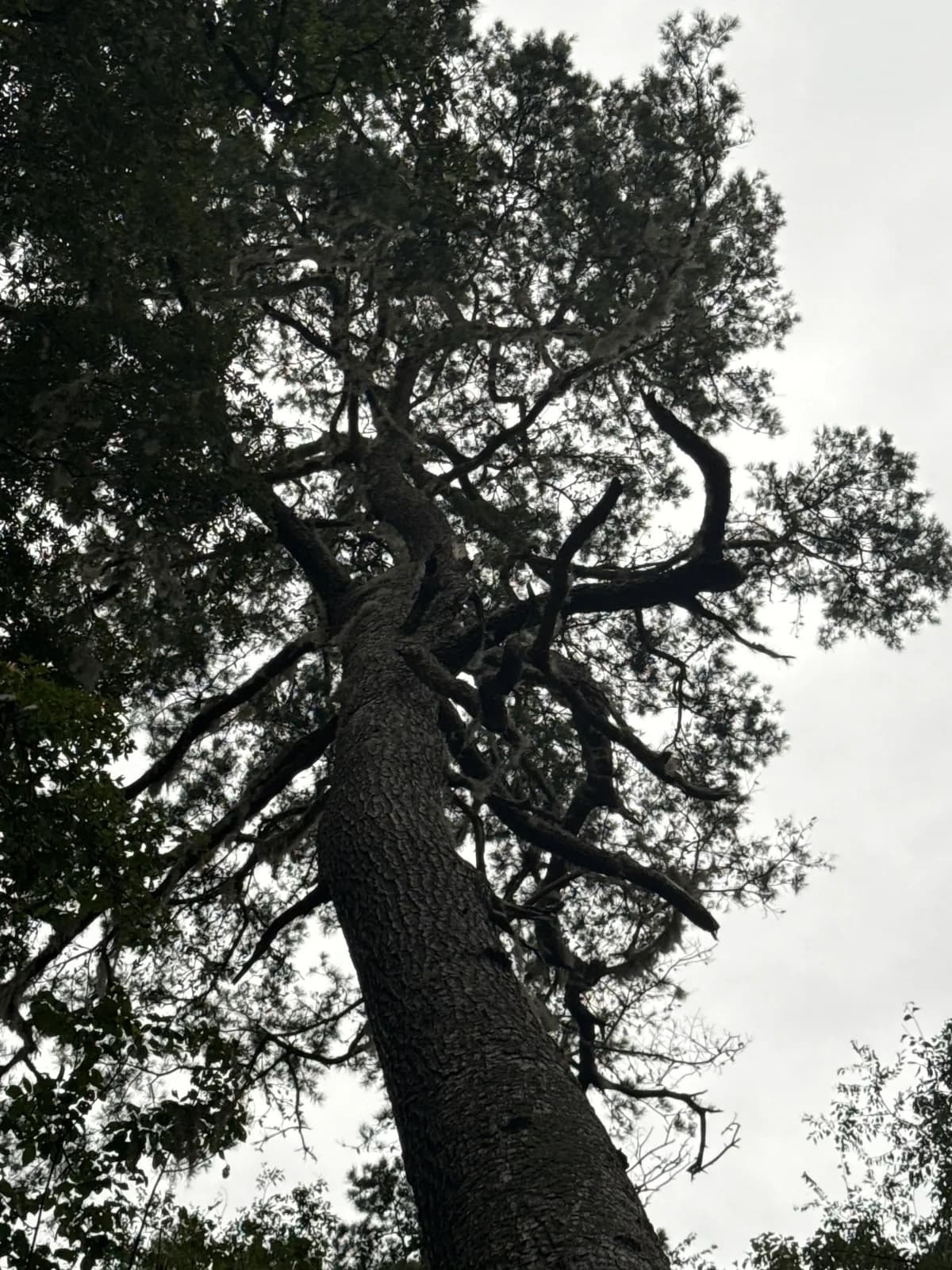
Spruce pine is a tall, graceful evergreen that develops a straight trunk and open, irregular crown. This fast-growing pine reaches 30-60 feet tall with a spread of 15-30 feet, making it an excellent shade tree for larger properties.
Growing Spruce Pine
Grow Spruce Pine in full sun and medium water. Mature plants reach 360 to 720 inches tall and spread 180 to 360 inches wide. Expect low maintenance to keep it looking intentional in a front yard.
In an HOA neighborhood
Spruce Pine is an HOA-friendly choice. Maintenance level: low. Tidiness: 4 out of 5.
Works well in: front yard, mid zone, street edge.
- Large mature size requires adequate space
- May drop pine needles seasonally
Wildlife value
Provides nesting sites and shelter for birds, while seeds feed wildlife like squirrels and songbirds. The tree supports various native insects that serve as food sources for birds.
Common questions
- How much sun does Spruce Pine need?
- Spruce Pine grows best in full sun but is more shade tolerant than many other southern pines, so it can persist in part sun or part shade under a forest canopy.
- What soil moisture does Spruce Pine prefer?
- This tree favors moist, well drained sites such as river bottoms, stream banks, and low woods, and it does not handle prolonged drought well.
- Is Spruce Pine a fast growing tree?
- Spruce Pine has a moderate growth rate compared to other pines and tends to develop a dense, rounded crown as it matures in mixed hardwood forests.
- When does Spruce Pine produce pollen cones?
- Like other southern pines, Spruce Pine typically releases pollen from its cones in early spring, though exact timing varies with local weather.
- Is Spruce Pine toxic to livestock?
- The USDA PLANTS Database does not flag Spruce Pine as toxic to livestock.
- Is Spruce Pine HOA-friendly?
- Spruce Pine is generally an HOA-friendly choice in the right placement, with low maintenance.
These answers were drafted with an AI model from this plant's data. Verify care details with a local expert.
Native range data from vouchered herbarium specimen records and regional native plant society lists. Pollinator and host plant associations compiled from GBIF, iNaturalist, and published ecological literature.
If something looks wrong
Common plant problems, and what to check first
These come up on almost any plant. Each guide lists the likely causes in the order they are worth ruling out, with one thing to check before you act on any of them, and links to the source it came from.
- It is dying right after planting
- Leaves turning yellow
- Wilting even though I watered it
- Brown crispy leaf tips
- Bugs on the plant
Ready to grow Spruce Pine? Add it to your garden in Pollinator Patch to track it and get season-by-season care guidance.