Michaelmas Daisy
Symphyotrichum novi-belgii
Last reviewed: October 2026
Symphyotrichum novi-belgii, the Michaelmas daisy, blooms from August through October in full sun with medium to consistently moist soil, drawing bees and butterflies to late season gardens.
Toxicity unknown
Michaelmas Daisy (Symphyotrichum novi-belgii) is not listed by the ASPCA Animal Poison Control Center (opens in new tab) or the other sources we check, so we have no verdict for it either way. Absence from those lists is not a clearance. If your pet shows symptoms after eating any plant, call the ASPCA at (888) 426-4435.
Light
full sun
Water
medium
Size
24"–48" H × 18"–36" W
Bloom
Aug, Sep, Oct
Native to
CT, MA, MD, ME and 10 more states
Pollinators
bees, butterflies
Before you buy
Your city may pay you to plant this
Cities and water utilities offer rebates for replacing lawn with native and water-wise plants. We track 460 programs across 44 states, each with a link to the provider and the date we last checked it.
Find rebates in your areaPicture natives in your own yard
Upload a photo of your yard and Patch Vision shows a rendering of it planted with natives for your region, like Michaelmas Daisy.


Browse plants for this ecoregion
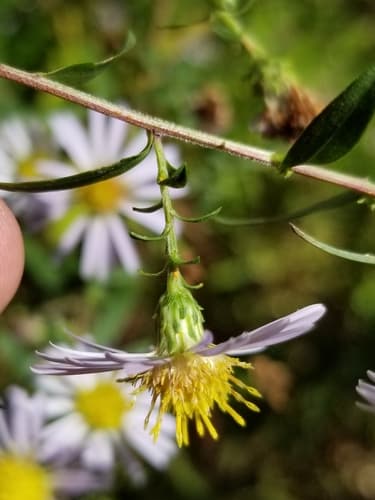
Clump-forming late-season perennial with masses of daisy-like purple flowers held atop upright stems.
Growing Michaelmas Daisy
Grow Michaelmas Daisy in full sun and medium water. Mature plants reach 24 to 48 inches tall and spread 18 to 36 inches wide. Expect moderate maintenance to keep it looking intentional in a front yard.
How to care for Michaelmas Daisy, by region
How to care for Michaelmas Daisy where it is actually grown: year-round basics plus what to do each season, region by region, with the sources for each.
Care guidance last updated: September 2026
Central Appalachians (includes Johnstown, PA)
Year-round
This Michaelmas Daisy is a bushy, late-blooming perennial that fills out through the growing season and puts on its main flower show from late summer into fall. In the Johnstown area it handles zone 6a to 6b winters without extra protection once it is established.
- Give it full sun to light afternoon shade. More sun makes for a fuller, more upright plant with more flowers.
- Plant it in moist, well-drained soil. Loam, clay, and sandy soil all work, and it tolerates soil that isn't especially rich.
- Expect a mature clump 3 to 5 feet tall and 1 to 3 feet wide. Space new plants 1 to 3 feet apart so air can move between them.
- Lift and divide the clump every 2 to 3 years in spring. This keeps growth vigorous and the bloom full instead of thin and woody in the middle.
- Watch for powdery mildew, a white coating on the leaves that shows up in humid, still air. Good spacing and full sun are the best prevention, and New York-type asters like this one are especially prone to it.
A spring pinch or two keeps the clump compact and upright, so it reads as a tended flower bed instead of a floppy patch by the walkway.
Fall
Fall is this aster's main event in Johnstown. It opens its blue-violet to pink flowers from late summer and keeps blooming until the season's first hard frost cuts it short.
- Expect the main flower display from late summer into fall, with blue-violet to pink blooms about an inch to an inch and a quarter wide.
- Deadhead spent flower clusters through the season to keep the display tidy and to encourage the last buds to open.
- Bloom typically continues until the first hard frost, which in the Johnstown area usually falls within the first two or three weeks of October, though it can run later some years.
- After frost blackens the foliage, leave the stems standing rather than cutting the plant to the ground. The hollow stems and seed heads support overwintering insects and feed birds through winter.
Deadheading through fall keeps the bed looking tended for an HOA-conscious homeowner right up until frost.
Winter
Winter care here is mostly about doing nothing. This aster is hardy through Johnstown's zone 6a to 6b winters as long as the standing stems and a layer of mulch are left in place until spring.
- Leave the frost-killed stems and seed heads standing through winter instead of cutting the plant back. They shelter insects and give birds seeds to feed on into late winter.
- A 2-inch layer of mulch around the base helps buffer the freeze-thaw cycles common in this part of Pennsylvania. Keep it off the crown itself.
- No pruning is needed until spring. Wait until new growth shows at the base before cutting the old stems down.
- This species is winter hardy across USDA zones 4a through 8b, which comfortably covers Johnstown's zone 6a to 6b, so there's no need to dig it up or move it indoors.
Standing stems and seed heads look bare and brown through winter, not manicured. If the bed faces the street, plant this toward the back where the winter texture reads as intentional rather than unkept.
Spring
Spring in Johnstown is when this aster takes its shape for the year. Divide it, feed it lightly, and start pinching it back once new growth is up so it fills out instead of stretching tall and floppy.
- Wait to cut back last year's dead stems until new growth is visible low on the plant. Cutting too early removes shelter that overwintering insects may still be using.
- Once new shoots are a few inches tall, divide crowded clumps and replant the divisions right away in amended, well-drained soil.
- Work a thin layer of compost or balanced fertilizer into the soil around the base and refresh the mulch to about 2 inches.
- Starting when stems reach about 6 inches, pinch the growing tips every few weeks into early June. This builds a shorter, bushier plant that needs less staking later in the season.
Leaving last year's stems standing into spring can look untidy at the front of a bed. Tuck this plant toward the back of a border or behind lower plants so the wait doesn't stand out from the street.
Summer
Summer here is mostly about keeping the plant from drying out during hot stretches and from flopping open before its fall bloom.
- Water regularly during hot, dry weeks. This aster is sensitive to moisture swings, and both too little and too much water can cause it to drop lower leaves or bloom poorly.
- Stop pinching new growth by mid to late June so the plant has time left in the season to set flower buds before its late-summer bloom.
- Stake or otherwise support taller stems if the clump starts to lean, especially after heavy rain.
- Keep watching for powdery mildew as summer humidity builds. Thin crowded stems for airflow rather than reaching for a treatment.
Sources: Symphyotrichum novi-belgii, NC State Extension Gardener Plant Toolbox, Symphyotrichum novi-belgii, Lady Bird Johnson Wildflower Center, September Birth Month Flower: Aster (Symphyotrichum spp), Penn State Extension Luzerne County, Put Down Those Pruners: Pollinators Need Your Garden Garbage, Xerces Society
In an HOA neighborhood
Michaelmas Daisy is an HOA-friendly choice. Maintenance level: moderate. Tidiness: 3 out of 5.
Works well in: border planting, pollinator bed, naturalized planting.
- can spread by rhizomes in consistently moist soil
Wildlife value
Host plant for Pearl Crescent.
Late-season blooms are a key nectar source for migrating monarchs and other pollinators, and the foliage is a larval host plant for the Pearl Crescent butterfly per BAMONA.
Common questions
- When does Michaelmas daisy bloom?
- Symphyotrichum novi-belgii typically flowers from August into October, providing color as many other perennials are finishing their season.
- What pollinators visit Michaelmas daisy?
- Bees and butterflies regularly visit the flowers of Symphyotrichum novi-belgii, making it a useful late season nectar source in pollinator gardens.
- What growing conditions does this plant need?
- This forb grows best in full sun with medium to consistently moist soil, and it tolerates a range of light from full sun to part shade.
- Is Michaelmas daisy evergreen or deciduous?
- It is a deciduous herbaceous perennial that dies back to the ground each year and regrows in spring.
- Is Michaelmas Daisy HOA-friendly?
- Michaelmas Daisy is generally an HOA-friendly choice in the right placement, with moderate maintenance.
These answers were drafted with an AI model from this plant's data. Verify care details with a local expert.
Native range data from the World Checklist of Vascular Plants (Kew). Pollinator and host plant associations compiled from GBIF, iNaturalist, and published ecological literature.
If something looks wrong
Common plant problems, and what to check first
These come up on almost any plant. Each guide lists the likely causes in the order they are worth ruling out, with one thing to check before you act on any of them, and links to the source it came from.
- It is dying right after planting
- Leaves turning yellow
- Wilting even though I watered it
- Brown crispy leaf tips
- Bugs on the plant
Ready to grow Michaelmas Daisy? Add it to your garden in Pollinator Patch to track it and get season-by-season care guidance.