Dense Blazing Star
Liatris spicata
Last reviewed: September 2026
Liatris spicata, or dense blazing star, sends up tall purple flower spikes from July through September and grows well in full sun with medium moisture, drawing bees, butterflies, and moths to meadows and garden beds.
Toxicity unknown
Dense Blazing Star (Liatris spicata) is not listed by the ASPCA Animal Poison Control Center (opens in new tab) or the other sources we check, so we have no verdict for it either way. Absence from those lists is not a clearance. If your pet shows symptoms after eating any plant, call the ASPCA at (888) 426-4435.
The USDA PLANTS Database (opens in new tab) does not flag Dense Blazing Star as toxic to livestock.
Light
full sun
Water
medium
Size
24"–48" H × 12"–24" W
Bloom
Jul, Aug, Sep
Native to
AL, AR, CO, CT and 33 more states
Pollinators
bees, butterflies, moths
Deer
Resistant (per Prairie Moon Nursery)
Before you buy
Your city may pay you to plant this
Cities and water utilities offer rebates for replacing lawn with native and water-wise plants. We track 452 programs across 44 states, each with a link to the provider and the date we last checked it.
Find rebates in your areaBrowse plants for this ecoregion
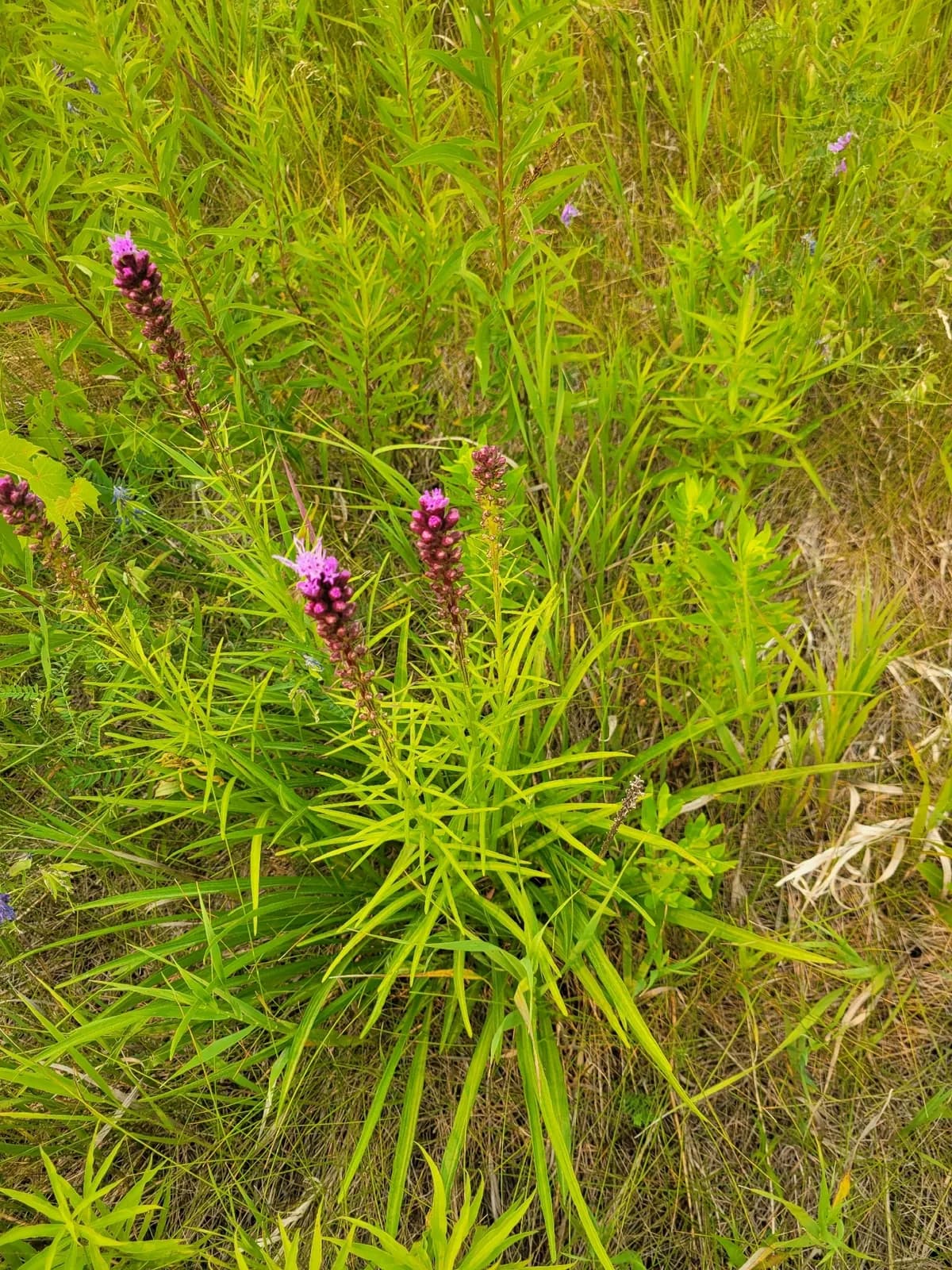
Marsh blazingstar produces tall spikes of bright purple flowers that bloom from top to bottom in summer and fall. This native perennial forms neat clumps with grass-like foliage and creates striking vertical accents in the landscape.
Growing Dense Blazing Star
Grow Dense Blazing Star in full sun and medium water. Mature plants reach 24 to 48 inches tall and spread 12 to 24 inches wide. Expect low maintenance to keep it looking intentional in a front yard.
How to care for Dense Blazing Star, by region
How to care for Dense Blazing Star where it is actually grown: year-round basics plus what to do each season, region by region, with the sources for each.
Care guidance last updated: September 2026
Central Appalachians (includes Johnstown, PA)
Year-round
Dense blazing star is a dependable upright perennial for the Johnstown area. It grows from an underground corm, sends up grassy foliage, then tall purple bottlebrush spikes in mid to late summer that open from the top down. It wants full sun and handles the clay and rocky soils common on the Allegheny Plateau, as long as the spot drains well through our wet winters. It is native to Pennsylvania, most often found in the western and southeastern parts of the state, which covers the Johnstown area. Plant it once and it comes back every year.
- Full sun and average to moist, well drained soil, tolerates clay
- Grows from a corm and slowly forms small colonies over the years
Fall
In fall the spikes fade to tan and the foliage yellows as the plant heads into dormancy. Johnstown's growing season runs on the shorter side, with the average first fall frost landing around October 3, so fall planting works best done early, by mid September, to give roots time to settle before the ground cools. This is also when to decide whether to leave the seedheads standing for birds and winter shape.
- Average first fall frost lands around October 3 in Johnstown, so plant earlier in the season than you would further south
- Leave seedheads up through fall if you want to feed birds over winter
Winter
Johnstown winters are cold and snowy, and dense blazing star rides them out fully dormant as a corm underground. The standing dead stems add some structure and keep feeding birds through the season. The bigger risk here is a low spot that stays soggy through snowmelt and spring rain, since poorly drained soil, not the cold itself, is what can rot the corm.
- The corm is hardy through Johnstown winters, well drained soil matters more than the cold
- Standing stems can be left up over winter for structure and bird food
Spring
Spring is the best planting window in the Johnstown area. Frost risk here often lingers into early May, so wait until the ground has warmed and the last frost has passed before setting out new plants. Once it wakes up, the corm sends out fresh grassy shoots that fill in through early summer. Getting new plants in by late spring gives the roots time to settle in before summer heat and humidity arrive.
- Wait until after the average last frost, around early May in Johnstown, to plant
- Water new plantings regularly their first season while roots establish
Summer
Summer is when dense blazing star earns its spot in the garden. The purple spikes open top down starting in July and keep going into late summer, and they pull in bees and butterflies. Johnstown summers run warm and humid with fairly reliable rain, so established plants usually get by on what falls from the sky. During a dry stretch, a deep watering keeps the blooms going strong.
- Blooms July through September, with each spike opening from the top down
- Johnstown gets close to 48 inches of rain a year, so extra watering is only needed in dry spells
Sources: Pennsylvania Flora Project: Liatris spicata, NC State Extension Plant Toolbox: Liatris spicata, Lady Bird Johnson Wildflower Center: Liatris spicata bloom period, Frost Dates by City and Zone: Johnstown, PA (community tip)
Cross Timbers (includes Fort Worth, TX)
Year-round
Marsh Blazingstar (Liatris spicata), also called dense blazing star or gayfeather, is an upright perennial in the aster family that sends up tall purple flower spikes in late summer and needs full sun and well drained soil to come back reliably for years with little care.
- Give it full sun, at least 6 hours a day; in shade the flower spikes lean and flop.
- Space plants 12 to 18 inches apart; expect a mature clump 2 to 4 feet tall and 1 to 2 feet wide.
- Water deeply about once a week to establish new plants, then rely mostly on rainfall once settled in; soggy winter soil will rot the corm.
- In heavy black clay, plant it high on a slight mound or work in coarse material for drainage; in the sandier soils west of the metro it drains faster and will need water more often through the first summer.
- Marsh Blazingstar is not on the ASPCA toxic plant list for dogs or cats, and its flowers draw nectaring butterflies including painted ladies.
Fall
By fall the flower spikes are fading and going to seed, and this is the season when the plant's dried, upright form can read as either tidy structure or clutter, depending on whether it gets cut back.
- Let the spent flower spikes stand through fall; the seed heads feed songbirds.
- Skip fall fertilizing; it isn't needed and can weaken winter hardiness.
- This is not the season to divide or transplant it; wait for spring.
- Cut back only the stalks that have flopped into a walkway or lawn edge, and leave the rest standing for winter interest.
A dried, upright seed head reads as intentional winter structure; a collapsed stalk across a walkway reads as neglect, so trim only what has flopped.
Winter
Marsh Blazingstar dies back to the ground in winter and goes fully dormant; there is little to do besides a late cutback and making sure the ground doesn't stay waterlogged during freezes.
- Cut the dried stalks back to 2 to 4 inches once they've gone fully brown, typically by late February.
- Skip watering during dormancy unless the season is unusually dry.
- Mild North Texas winters usually don't call for mulch protection, but a light layer helps ahead of a hard Arctic freeze.
- Nothing will show above ground for weeks; new shoots emerge from the base once soil warms in spring, so an empty spot isn't a dead plant.
A clean, even cutback to a few inches keeps the bed reading as maintained rather than abandoned over winter.
Spring
Spring, after the last frost in mid March, is the best time to get a new Marsh Blazingstar in the ground so its roots can establish before the hard summer heat arrives.
- Plant after the last frost once the soil has warmed and dried out some.
- Water new plants two to three times a week for the first month to help roots establish.
- Skip fertilizer at planting; rich soil makes the tall stems more likely to flop later.
- Watch for new grass-like foliage emerging from the base in April; established clumps can be divided now every 3 to 4 years if they get crowded.
- In heavy black clay, plant slightly high on a mound so the corm isn't sitting in wet soil after spring rains; in the sandier soils west of the metro, water more often since it drains faster.
Planting in a tidy cluster near the front walk reads as an intentional bed from day one, well before any bloom shows.
Summer
Summer is bloom season: the tall purple flower spikes open from the top down through July, August and September, and it's also when the plant is most likely to flop or dry out during North Texas's hardest heat stretch.
- Expect spikes to start opening in July and continue into September.
- Water deeply about once a week during long stretches of 100F-plus days with no rain; established plants tolerate drought, but bloom quality drops if it stays bone dry for weeks.
- Grow it among neighboring perennials for support, or stake it, if stems lean once spikes reach 3 to 4 feet.
- Deadhead spent spikes to keep the look tidy, or leave some standing if seed for birds is wanted later.
- Keep mulch from staying soggy against the base; a wet crown in summer heat invites rot.
A cluster of 3 or more upright purple spikes reads as a clear, intentional accent; a single stray stalk can read as a weed, so group them.
Sources: Missouri Botanical Garden Plant Finder: Liatris spicata, ASPCA Cat-Safe Plant List (Liatris not listed as toxic), Lady Bird Johnson Wildflower Center: Liatris spicata
Edwards Plateau (includes San Antonio, TX)
Year-round
Dense blazing star is an upright perennial with tall purple flower spikes that bloom from the top down, July through September. Around San Antonio the main adjustment from a typical planting guide is the soil: Edwards Plateau ground tends to be thin, rocky, and alkaline (caliche), while this plant prefers deeper, evenly moist, average soil.
- Full sun, medium water forb, 2 to 4 feet tall, deer resistant.
- Prefers evenly moist, average soil. In caliche or fast-draining rocky ground, work in compost before planting or choose a lower spot that holds a little more moisture.
- A documented host plant for the bleeding flower moth (Schinia sanguinea), whose larvae feed on Liatris species, and it draws bees, butterflies, and moths for nectar.
- USDA's PLANTS Database lists this species as not toxic to livestock. Our records do not include a separate cat, dog, or horse determination.
Fall
Bloom finishes and the plant heads into dormancy. The main fall task is deciding when to cut it back.
- Flowering wraps up by late September into October.
- Cut stems back to a few inches once they brown, or leave the spikes standing through winter for seed heads if you want to feed birds. Either option is fine for the plant's health.
- Hold off on dividing until late winter or early spring, per the spring guidance above.
Cutting stems back once they brown gives a tidy winter silhouette instead of a bed of dead stalks, which tends to read better for HOA sightlines.
Winter
The corm goes fully dormant. San Antonio's mild winters, with occasional hard freezes, rarely bother a dormant, established corm.
- Nothing shows above ground. The corm is dormant and stores its energy underground.
- No watering needed during dormancy. The Edwards Plateau's naturally drier winter suits a dormant corm better than a soggy site would.
- A light layer of mulch can help buffer an occasional hard freeze, though established plantings in zone 8b typically get through winter without extra protection.
Spring
Spring is the best window to get corms in the ground in the Edwards Plateau, before summer heat sets in. Plants stay low and grass-like this early, with no bloom yet.
- Best window to plant or divide corms is late winter into early spring, before new growth is more than a few inches tall.
- Water regularly while new plantings establish. San Antonio's spring can turn dry quickly, and thin rocky soil drains fast.
- No pruning needed yet. The plant stays low until early summer, so this is a good time to plan where taller neighbors will help support it later.
Summer
Peak bloom season. Hot, dry San Antonio summers and thin rocky soil are the main stress points for this plant here.
- Blooms July through September, with spikes opening from the top down and peak activity from bees, butterflies, and moths.
- Keep watering through dry stretches. Medium water needs plus fast-draining Edwards Plateau soil mean this plant dries out quicker here than in richer ground further east.
- No fertilizing needed on an established planting. Average soil is enough once it is settled in.
Tall flower spikes can lean or flop in wind, especially in thin soil that does not anchor roots as firmly. A light stake or a spot next to sturdier neighbors keeps the bed looking tidy through peak bloom.
Sources: USDA PLANTS Database - Liatris spicata (LISP), Xerces Society - Plants for Pollinators: Blazingstar, Lady Bird Johnson Wildflower Center - Liatris spicata
Erie Drift Plain (includes Cleveland, OH)
Year-round
Dense blazing star is an easy upright perennial for the Cleveland area. It grows from a little underground bulb called a corm, sends up grassy leaves, and then tall purple bottlebrush flower spikes in mid to late summer. It likes full sun and handles the wetter clay soils around here better than most blazing stars, but it still hates sitting in soggy ground all winter. Give it a spot that drains and it will come back year after year.
- Plant it in full sun, at least 6 hours of direct light, so the spikes stand up straight instead of flopping.
- In heavy lake-effect clay, mix a shovelful of compost into the planting hole to help winter water drain away from the corm.
- It is not on the ASPCA toxic plant list, so it is a calm pick for yards with dogs or cats.
- Water new plants through the first summer, then it mostly takes care of itself with our 40 inches of rain.
Fall
In fall the spikes turn tan and the foliage fades as the plant heads toward dormancy. This is a fine second planting window in Cleveland, and it is also when you decide to leave the seedheads standing. Those seedheads feed birds and add winter shape.
- You can plant in early fall, around September, so roots settle before the ground freezes.
- Leave the tan seedheads standing rather than cutting them; goldfinches feed on them into winter.
- Clear soggy fallen leaves off the crown so the corm does not sit wet under a wet mat.
- Hold off on cutting back now; the standing stems protect the corm through lake-effect cold.
Standing tan seedheads are intentional winter structure, not neglect, but a tidy front-yard clump reads better than a sprawling one. Keeping the stems upright and the surrounding bed edged helps it look purposeful and avoids a violation letter.
Winter
Winter in Cleveland means cold and heavy lake-effect snow, and dense blazing star is fully dormant underground as a corm. The standing stems and seedheads give the yard structure and keep feeding birds. The main risk this season is a wet, poorly drained spot rotting the corm, not the cold itself.
- Leave the dried stems and seedheads up through most of winter for birds and winter interest.
- Do the once-a-year hard cutback in late winter, around February, cutting old stems to a few inches above the ground before new growth starts.
- Make sure snowmelt drains away from the crown; standing water in heavy clay is the real winter danger.
- No mulch piled on the crown; a heavy wet blanket over the corm invites rot.
The late-winter cutback is the moment this plant looks most cared for, so cutting the old stems low and clearing the debris signals intention and helps avoid a violation letter. A clean February trim resets the front-yard clump before neighbors are out looking.
Spring
Spring is a good planting and wake-up time in Cleveland. Once the ground thaws and dries a bit, you will see fresh grassy shoots push up from the corm. This is the window to get new plants or divisions in so they settle before our humid summer.
- Plant corms or potted plants after the last hard frost, usually mid to late April, into full sun.
- Set corms about 2 to 4 inches deep in loosened soil so heavy clay does not trap water on top of them.
- Pull early weeds around the new shoots by hand so nothing crowds the young leaves.
- Skip heavy fertilizer; a thin layer of compost is plenty and keeps growth sturdy, not floppy.
Summer
Summer is showtime. The tall purple spikes open from the top down in July and August and are covered in bees and butterflies. Cleveland summers are warm and humid with steady rain, which this plant handles well, but good airflow keeps the foliage clean.
- Give it room and full sun so air moves around the leaves and humidity does not cause spotting.
- Water deeply only during a real dry stretch; do not keep the soil constantly wet.
- Leave the flowers alone as they fade so seeds can form for the goldfinches.
- If a spike leans after a storm, a single stake keeps it upright and tidy.
A leaning spike after a summer storm can read as messy from the curb, so a quiet stake keeps the plant looking intentional and helps avoid a violation letter. Front-yard clumps look best kept upright and contained.
Sources: Lady Bird Johnson Wildflower Center: Liatris spicata, ASPCA Toxic and Non-Toxic Plants database, Missouri Botanical Garden Plant Finder: Liatris spicata
High Plains (includes Lubbock, TX)
Year-round
Dense blazing star is not confirmed native to the Lubbock area, so treat it as a garden perennial that needs more water and better drainage than what grows here naturally.
- This is an eastern and midwestern prairie plant. The Lady Bird Johnson Wildflower Center lists its native range as New Jersey to Michigan and Illinois, south to Florida and Louisiana, not the Texas High Plains, so do not count on it thriving here without extra help.
- In the wild it grows in moist meadows, marsh edges, and wet prairie openings, very different from Lubbock's dry, caliche-clay High Plains ground, so plan on extra watering and amended drainage from the start.
- Give it full sun and average to medium soil moisture. Missouri Botanical Garden notes it tolerates summer heat and humidity well but is intolerant of soggy soil in winter, so drainage matters as much as watering.
- The tall purple flower spikes are a real draw for monarchs and other migrating butterflies, plus bees and other pollinators, according to the Xerces Society.
- Checked directly against the ASPCA's toxic and non-toxic plant list and dense blazing star does not appear on it, so treat its toxicity to dogs, cats, and horses as undetermined rather than assuming there is no risk.
Fall
Fall is when you decide whether to cut back for a tidy look or leave seed heads standing for wildlife before winter.
- Once flowering finishes, you can cut the flower stalks back or leave them standing. Missouri Botanical Garden notes the small seeds are attractive to songbirds, so leaving some stalks up feeds birds into fall.
- For a tidier, HOA-friendly front yard look, cut spent stalks down close to the basal leaves once they have browned.
- Fall is also a reasonable time to divide crowded corm clumps, spacing new sets about a foot apart.
- Taper off watering as the plant goes dormant, but do not let it dry out completely if fall stays hot in Lubbock.
Cutting spent flower stalks back once they brown keeps the front bed tidy for fall curb appeal.
Winter
Winter dormancy is the highest risk season here because the corms do not tolerate sitting in wet, heavy soil.
- Missouri Botanical Garden notes this species is intolerant of wet soils in winter, which is a real risk in Lubbock's heavier clay and caliche pockets if the bed does not drain well.
- Cut back any remaining dead stalks for a clean winter look, or leave a few standing for overwintering insects if a less tidy bed is fine with you.
- Hold off on winter watering except during extended dry, mild spells. The corms are dormant and do not need regular moisture right now.
- This species is hardy in USDA zones 3 to 8, and Lubbock's High Plains winters fall within that range, so cold alone is not the main risk here, wet feet is.
Cutting back dead winter stalks gives a clean, dormant look at the curb.
Spring
Spring is for getting new corms or divisions established before Lubbock's dry summer heat sets in.
- Plant corms or nursery starts in full sun in average, well drained soil, following Missouri Botanical Garden's growing guide for this species.
- Water deeply and regularly while roots establish. Since this is not a High Plains native, it will not tough out dry spells the way locally native plants do.
- Work compost or coarse sand into heavy clay or caliche soil before planting to improve drainage, since the plant dislikes standing water even though it wants regular moisture.
- Growing new plants from seed is slow to establish, so starting from corms or small potted plants gives a head start in a shorter growing season.
Summer
Summer is bloom time, and also the toughest stretch for a moisture loving plant in a dry Lubbock yard.
- Flower spikes open from the top down from mid summer into fall, which is prime time for monarchs and other butterflies to stop and nectar, per the Xerces Society's pollinator plant guide.
- Increase watering during hot, dry stretches. This species tolerates summer heat and humidity but still needs more moisture than Lubbock's roughly 18 inches of annual rain provides on its own.
- Watch taller stems for flopping in High Plains wind and stake them if needed.
- Keep drainage in mind even while watering more. Wet feet combined with heat stress invites root problems.
Staking tall spikes before they flop into the walkway or lawn keeps the bed looking tidy from the street.
Sources: Lady Bird Johnson Wildflower Center - Liatris spicata, Missouri Botanical Garden Plant Finder - Liatris spicata, Xerces Society - Plants for Pollinators: Blazingstar, ASPCA Toxic and Non-Toxic Plants List
Northeastern Coastal Zone (includes New York, NY)
Year-round
Dense blazing star is a widely grown eastern US wildflower with tall purple flower spikes, valued by native bees and by a moth found only on Liatris.
- Its documented native range runs from New Jersey to Michigan and Illinois, south to Florida and Louisiana. The Lady Bird Johnson Wildflower Center notes it has also become naturalized further northeast, and New York's own flora atlas lists its native status in the state as unresolved, so treat a New York City area plant as a well-suited garden choice rather than a confirmed local native.
- Prefers full sun and moist, well-drained soil, but tolerates clay, loam, and sandy soil, and handles occasionally dry conditions once established.
- Grows from a corm, a bulb-like underground stem, and sends up tall, dense purple flower spikes from around July through September.
- As a Liatris species, it is part of the only plant genus known to host the bleeding flower moth, whose pink caterpillars camouflage against the purple flower spikes.
- Moderately resistant to deer browsing, and goldfinches and other seed-eating birds feed on the ripening seed heads in fall.
Fall
In fall, cut spent flower stems down to a shorter height rather than removing them completely, and let the seed heads feed birds before winter.
- Once flowering finishes, cut dead stems back to about 12 to 24 inches rather than all the way to the ground, and leave that shorter stem through winter instead of removing it entirely.
- Goldfinches and other seed-eating birds feed on the ripening seed heads, so holding off on a full cutback through fall gives them a food source.
- Fall is also a reasonable time to plant new corms or divide existing clumps before the ground freezes.
Trimming stems to about 12 to 24 inches, instead of leaving full-height dead spikes standing, gives a tidier, more intentional look for a front-yard bed while still leaving some stem habitat for winter.
Winter
Winter care for blazing star is mostly hands-off. Leave the shortened stems standing and let the corms rest dormant in the soil.
- Leave the stems trimmed in fall standing rather than clearing the bed to bare soil. The Xerces Society notes many native bees use standing dead stems for winter nesting and shelter.
- The corms need no winter protection in well-drained soil, though a soggy, poorly drained spot can rot corms over a wet winter, so improve drainage if the bed tends to stay waterlogged.
- No pruning or feeding is needed until new growth resumes in spring.
Spring
Spring is when blazing star's corms send up new grass-like foliage, and it is a workable time to divide crowded clumps.
- New strappy leaves emerge from the corm in spring. Established plants need no special care beyond normal bed cleanup.
- Corms can attract voles and other small mammals, especially on young plants, so wire mesh over the crown of a newly planted corm can help it survive its first year.
- If a clump has grown crowded over a few years, spring is a workable time to lift and divide the corms, alongside the more common route of growing new plants from seed.
Summer
Summer is bloom season, when blazing star sends up its tall purple flower spikes and draws in bees, butterflies, and its specialist moth.
- Flower spikes open from the top down, unusual among tall spiky-flowered perennials, and bloom from around July through September.
- Full sun and consistently moist soil give the fullest bloom. During a hot, dry stretch, a deep watering during flowering helps more than letting the bed dry out completely.
- Tall spikes can flop in an open, windy front-yard spot. Staking, or planting among sturdier neighboring perennials, keeps them upright without needing to cut them back.
- Small pink caterpillars on the flower spikes in mid to late summer are usually bleeding flower moth larvae, a specialist that feeds only on Liatris and is not a pest to treat.
Staking floppy flower spikes, rather than letting them lean into a walkway or sidewalk, keeps the bed looking tended through peak bloom.
Sources: Lady Bird Johnson Wildflower Center - Liatris spicata, NC State Extension Gardener Plant Toolbox - Liatris spicata, Missouri Department of Conservation - Blazing Stars (Liatris), Xerces Society - Save the Stems
Northern Piedmont (includes Lancaster, PA)
Year-round
Dense Blazing Star is an upright, native perennial with tall purple flower spikes that does well in Lancaster County's sunny yards and typical clay-loam farmland soils. It is easy-care, deer resistant, and reliably hardy through Northern Piedmont winters.
- Give it full sun, at least 6 hours of direct light a day; plants grown in too much shade tend to grow weak and flop over, needing a stake to stay upright.
- It handles Lancaster County's clay-loam soils well as long as the site drains; it prefers average to moist soil but the corms can struggle if they sit in standing water.
- It is documented as native to Pennsylvania and is most often found in the southeastern part of the state, the region that includes Lancaster County.
- Plants typically reach 3 to 5 feet tall, so give them room toward the back of a bed or border rather than the front edge.
- It is moderately resistant to deer browsing, which helps in unfenced Lancaster County front yards where deer pressure is common.
The narrow, upright flower spikes read as a tidy vertical accent rather than a sprawling patch, which tends to suit HOA-friendly foundation beds.
Fall
By early fall, Dense Blazing Star finishes blooming and its spikes turn tan and papery. Leave the stems standing through fall instead of cutting the bed back, since they feed songbirds and shelter wild bees over winter.
- Bloom finishes by early fall, usually by September in the Northern Piedmont; the spent flower spikes turn tan and can be left standing for winter interest and seed for songbirds.
- Rather than a full fall cleanup, cut stems back to about 12 to 24 inches instead of all the way to the ground; wild, stem-nesting bees use the hollow, cut stems to overwinter.
- The corms go dormant below ground once nights turn consistently cold in fall; no digging or winter protection is needed in this hardiness zone.
- Fall is not the preferred time to divide clumps; wait until early spring instead so new roots have a full growing season to establish.
- If seed heads are left standing, expect goldfinches and other songbirds to work the planting through fall.
Cutting the stems down to knee height rather than leaving the full seed stalks reads as intentional structure rather than a messy yard to neighbors used to a clean fall cutback.
Winter
Dense Blazing Star's corm rests dormant underground through the Northern Piedmont winter and needs no digging, wrapping, or mulching in Lancaster County's zone 6b/7a climate. Leaving the trimmed stems standing gives wild bees a place to overwinter.
- Dense Blazing Star is reliably hardy through Lancaster County's zone 6b/7a winters with no digging or wrapping needed; it is rated hardy from zone 3 up through zone 8b or 9 depending on the source.
- Leave the cut stems standing at 12 to 24 inches rather than clearing the bed in fall; wild, stem-nesting bees overwinter inside the hollow stems, and the stubble can be cleared once it breaks down naturally by spring.
- Site it in well-drained ground rather than a low spot that collects water; this species tolerates occasional wet soil better than most other blazing stars but still does best without sitting in standing water for weeks at a time.
- A sunny bed near a driveway, walkway, or foundation that gets normal Lancaster County snow cover needs no extra winter mulch; the dormant corms sit safely below the frost line.
- Resist the urge to divide or transplant in winter; wait for early spring once the ground has thawed and new growth is about to resume.
Spring
In spring, Dense Blazing Star sends up new growth from its underground corm and is ready for planting or dividing once the soil has thawed and dried out. Go easy on fertilizer so the new stems grow sturdy instead of weak and floppy.
- New growth emerges from the corm in mid to late spring; wait until the ground has thawed and dried before working the soil around the base.
- Spring is the best time to divide crowded clumps or separate corms, replanting them right away so roots can establish before summer heat arrives.
- This species naturally grows in moist meadows, fields, and marsh edges, so it handles damp spring soil better than most other blazing star species, though a well-drained planting hole is still best.
- New spring foliage is worth checking for deer browsing since deer often test unfamiliar plants early in the season, though blazing star is only lightly grazed as a moderately deer-resistant species.
- Skip heavy spring fertilizing; extra nitrogen tends to produce weak, floppy stems that are more likely to need staking later in the season.
Summer
Summer is when Dense Blazing Star puts on its show, with tall purple spikes blooming from the top down from July into September. It is a strong draw for bees and butterflies and holds up well in Lancaster County's hot, humid summers.
- Flower spikes open top-down through mid-summer into early fall, typically July through September in the Northern Piedmont; each spike stays showy for several weeks as it works its way down the stem.
- It tolerates Lancaster County's hot, humid Piedmont summers and handles occasional dry spells once established, though a deep soak during extended drought helps keep the spikes from wilting.
- Penn State Extension's York County program lists it among recommended pollinator perennials for southeastern Pennsylvania gardens, prized for how many bees and butterflies visit it while blooming.
- Taller stems can flop in wind or heavy summer storms, especially in richer soil; a simple stake or grow-through ring set early in the season keeps the planting looking tidy in a street-facing bed.
- Skip deadheading if you want the show to continue naturally into fall; goldfinches and other songbirds feed on the ripening seed heads later in the season.
Staking taller stems ahead of a summer storm keeps the bed looking neat for HOA-conscious homeowners with plantings visible from the street.
Sources: Liatris spicata, NC State Extension Gardener Plant Toolbox, Rain Garden Plants: Blazing Star (Liatris spicata), Penn State Extension, Dense Blazingstar (Liatris spicata), Flora of Pennsylvania, How and When to Divide Liatris Plants, GrowIt BuildIt (community tip), Liatris spicata (Dense Blazing Star), Lady Bird Johnson Wildflower Center, Attract Beneficial Insects with Native Pollinator Plants, Penn State Extension (York County)
Southern Coastal Plain (includes Orlando, FL)
Year-round
Dense blazing star is native to Florida, including the Central Florida coastal plain around Orlando, where it grows in moist flatwoods, seep slopes, and marsh edges. It is an upright perennial with purple flower spikes blooming July through September.
- Full sun, medium water forb, 2 to 4 feet tall, deer resistant.
- Native to Florida in wet to mesic flatwoods, bogs, and savannas, per the Florida Native Plant Society. Prefers sandy, acidic to neutral soil with steady moisture but not standing water.
- A documented host plant for the bleeding flower moth (Schinia sanguinea), whose larvae feed on Liatris species, and it draws bees, butterflies, and moths for nectar.
- USDA's PLANTS Database lists this species as not toxic to livestock. Our records do not include a separate cat, dog, or horse determination.
Fall
Bloom finishes as the wet season tapers off. The main fall task is deciding when to cut it back.
- Flowering wraps up by late September into October.
- Cut stems back to a few inches once they brown, or leave the spikes standing for winter seed heads if you want to feed birds. Either option is fine for the plant's health.
- Hold off on dividing until late winter or early spring, per the spring guidance above.
Cutting stems back once they brown gives a tidy winter silhouette instead of a bed of dead stalks, which tends to read better for HOA sightlines.
Winter
The corm goes dormant through Central Florida's mild, drier winter.
- Nothing shows above ground. The corm is dormant and stores its energy underground.
- Winter here is naturally the dry season, which suits a dormant corm. Avoid overwatering.
- Zone 9b to 10a means hard freezes are rare, but on an occasional light-frost night a layer of mulch protects the dormant corm. Established plantings usually need no extra protection.
Spring
Spring is the tail end of Central Florida's dry season, a good window to plant or divide corms before summer heat and rain arrive.
- Best window to plant or divide corms is late winter into early spring, before the wet season starts around June.
- Water new plantings regularly until established. Central Florida's spring can still run dry before the rains return.
- Sandy soil drains fast, so new plantings need more frequent watering here than in a moisture-retentive site.
Summer
Peak bloom lines up with Central Florida's wet season, when heavy rain and humidity are the main things to manage.
- Blooms July through September, the same months as Central Florida's wettest stretch.
- Established plants handle the wet season's rainfall well, but sandy sites that stay saturated for long stretches raise the risk of corm rot. A slightly raised bed or well-drained spot helps.
- Expect steady bee, butterfly, and moth activity during bloom, including the Liatris-specialist bleeding flower moth.
Tall flower spikes can flop in heavy summer rain and wind. A light stake or a spot next to sturdier neighbors keeps the bed tidy through peak bloom.
Sources: Florida Native Plant Society - Liatris spicata, USDA PLANTS Database - Liatris spicata (LISP), Xerces Society - Plants for Pollinators: Blazingstar
Texas Blackland Prairies (includes Dallas, TX)
Year-round
Marsh Blazingstar (Liatris spicata), also called dense blazing star or gayfeather, is an upright perennial in the aster family that sends up tall purple flower spikes in late summer and needs full sun and well drained soil to come back reliably for years with little care.
- Give it full sun, at least 6 hours a day; in shade the flower spikes lean and flop.
- Space plants 12 to 18 inches apart; expect a mature clump 2 to 4 feet tall and 1 to 2 feet wide.
- Water deeply about once a week to establish new plants, then rely mostly on rainfall once settled in; soggy winter soil will rot the corm.
- In heavy black clay, plant it high on a slight mound or work in coarse material for drainage; in the sandier soils west of the metro it drains faster and will need water more often through the first summer.
- Marsh Blazingstar is not on the ASPCA toxic plant list for dogs or cats, and its flowers draw nectaring butterflies including painted ladies.
Fall
By fall the flower spikes are fading and going to seed, and this is the season when the plant's dried, upright form can read as either tidy structure or clutter, depending on whether it gets cut back.
- Let the spent flower spikes stand through fall; the seed heads feed songbirds.
- Skip fall fertilizing; it isn't needed and can weaken winter hardiness.
- This is not the season to divide or transplant it; wait for spring.
- Cut back only the stalks that have flopped into a walkway or lawn edge, and leave the rest standing for winter interest.
A dried, upright seed head reads as intentional winter structure; a collapsed stalk across a walkway reads as neglect, so trim only what has flopped.
Winter
Marsh Blazingstar dies back to the ground in winter and goes fully dormant; there is little to do besides a late cutback and making sure the ground doesn't stay waterlogged during freezes.
- Cut the dried stalks back to 2 to 4 inches once they've gone fully brown, typically by late February.
- Skip watering during dormancy unless the season is unusually dry.
- Mild North Texas winters usually don't call for mulch protection, but a light layer helps ahead of a hard Arctic freeze.
- Nothing will show above ground for weeks; new shoots emerge from the base once soil warms in spring, so an empty spot isn't a dead plant.
A clean, even cutback to a few inches keeps the bed reading as maintained rather than abandoned over winter.
Spring
Spring, after the last frost in mid March, is the best time to get a new Marsh Blazingstar in the ground so its roots can establish before the hard summer heat arrives.
- Plant after the last frost once the soil has warmed and dried out some.
- Water new plants two to three times a week for the first month to help roots establish.
- Skip fertilizer at planting; rich soil makes the tall stems more likely to flop later.
- Watch for new grass-like foliage emerging from the base in April; established clumps can be divided now every 3 to 4 years if they get crowded.
- In heavy black clay, plant slightly high on a mound so the corm isn't sitting in wet soil after spring rains; in the sandier soils west of the metro, water more often since it drains faster.
Planting in a tidy cluster near the front walk reads as an intentional bed from day one, well before any bloom shows.
Summer
Summer is bloom season: the tall purple flower spikes open from the top down through July, August and September, and it's also when the plant is most likely to flop or dry out during North Texas's hardest heat stretch.
- Expect spikes to start opening in July and continue into September.
- Water deeply about once a week during long stretches of 100F-plus days with no rain; established plants tolerate drought, but bloom quality drops if it stays bone dry for weeks.
- Grow it among neighboring perennials for support, or stake it, if stems lean once spikes reach 3 to 4 feet.
- Deadhead spent spikes to keep the look tidy, or leave some standing if seed for birds is wanted later.
- Keep mulch from staying soggy against the base; a wet crown in summer heat invites rot.
A cluster of 3 or more upright purple spikes reads as a clear, intentional accent; a single stray stalk can read as a weed, so group them.
Sources: Missouri Botanical Garden Plant Finder: Liatris spicata, ASPCA Cat-Safe Plant List (Liatris not listed as toxic), Lady Bird Johnson Wildflower Center: Liatris spicata
Western Allegheny Plateau (includes Pittsburgh, PA)
Year-round
Dense blazing star is a native Pennsylvania wildflower with tall purple pink flower spikes that open top down. It grows from an underground corm, holds up well in this region's clay soil, and is one of the best late summer draws for bees, butterflies, and migrating monarchs.
- Plant in full sun, at least 6 hours a day, for the strongest flower spikes
- Average to moist soil works well, it tolerates Pittsburgh clay as long as water does not sit around the roots
- Space plants so air can move between them and cut down on leaf spotting
- Skip piling winter mulch against the crown, wet mulch against the corm invites rot
The tall, narrow spikes grow in a defined upright clump instead of sprawling, and deadheading after bloom keeps the bed looking tended.
Fall
Fall brings the last of the flower spikes, still feeding migrating monarchs before the plant dies back for the year.
- Let the last spikes finish, they keep feeding pollinators into September
- Cut stems to the ground once they brown, or leave them standing into winter for bird seed and garden interest
- Avoid working wet clay around the plant this time of year, compacting it makes winter drainage worse
Winter
Winter is the highest risk season for this plant in Pittsburgh clay. The corm can rot if it sits in cold standing water, and that is the main threat, not the cold itself.
- Good drainage matters more than mulch, if the spot holds water after storms a raised bed or grit amended soil helps more than anything else
- A light 2 to 3 inch mulch layer after the ground freezes can help in exposed spots, but keep it off the crown
- This plant handles zone 6a and 6b winter cold with no trouble, wet feet is the real danger
Spring
Spring is when new grass like shoots come up from the corm. The plant is slow to show itself, so give the ground time and keep it well drained while it gets going.
- New shoots usually show up mid to late spring, later than a lot of other perennials, so do not assume it died over winter
- Skip heavy fertilizer, average soil is enough and rich soil can lead to floppy stems later
- If the bed stayed wet all winter, check for soft or mushy spots on the corm before it leafs out
Summer
Summer is bloom season. Spikes open from the top down over 4 to 6 weeks starting around July, and this is when the plant does its real work feeding bees, butterflies, and monarchs building up fuel for fall migration.
- Full sun keeps stems sturdier and the spikes more upright through bloom
- Water during dry stretches, an established plant tolerates some drought but blooms best with even moisture
- Deadhead spent spikes to keep the planting tidy, or leave a few on to set seed for birds
Sources: Flora of Pennsylvania, Liatris spicata, Lady Bird Johnson Wildflower Center, Liatris spicata, Missouri Botanical Garden Plant Finder, Liatris spicata, NC State Extension Plant Toolbox, Liatris spicata, Xerces Society, Plants for Pollinators: Blazingstar, Penn State Extension, Rain Garden Plants: Blazing Star
Want these tasks as reminders timed to your yard? Pollinator Patch turns this guidance into a season-by-season care plan for the plants you actually grow.
In an HOA neighborhood
Dense Blazing Star is an HOA-friendly choice. Maintenance level: low. Tidiness: 4 out of 5.
Works well in: front yard, foundation, street edge, mid zone.
- May need staking in windy locations
- Foliage dies back completely in winter
Wildlife value
Host plant for bleeding flower moth.
The dense flower spikes are magnets for bees, butterflies, and moths throughout the long blooming period. Seeds provide food for goldfinches and other birds in fall and winter.
Common questions
- When does Liatris spicata bloom?
- Liatris spicata typically blooms from July through September, producing dense spikes of small purple flowers along upright stems.
- What pollinators visit Liatris spicata?
- Liatris spicata attracts bees, butterflies, and moths, offering a reliable nectar source during the late summer months when many other blooms have faded.
- How much sun and water does Liatris spicata need?
- Liatris spicata performs best in full sun with medium soil moisture. It can tolerate part sun and adapts to soils that are occasionally wetter or drier than average.
- What kind of setting suits Liatris spicata in a garden or landscape?
- Liatris spicata fits well in moist meadows, prairie plantings, and perennial borders where it has open sky above and steady access to moisture through the growing season.
- Is Dense Blazing Star toxic to livestock?
- The USDA PLANTS Database does not flag Dense Blazing Star as toxic to livestock.
- Is Dense Blazing Star HOA-friendly?
- Dense Blazing Star is generally an HOA-friendly choice in the right placement, with low maintenance.
These answers were drafted with an AI model from this plant's data. Verify care details with a local expert.
Native range data from the World Checklist of Vascular Plants (Kew). Pollinator and host plant associations compiled from GBIF, iNaturalist, and published ecological literature.
If something looks wrong
Common plant problems, and what to check first
These come up on almost any plant. Each guide lists the likely causes in the order they are worth ruling out, with one thing to check before you act on any of them, and links to the source it came from.
- It is dying right after planting
- Leaves turning yellow
- Wilting even though I watered it
- Brown crispy leaf tips
- Bugs on the plant
Ready to grow Dense Blazing Star? Add it to your garden in Pollinator Patch to track it and get season-by-season care guidance.
Planning a bed around it? Start a free plan with this plant
Not sure where to start? Take the 2-minute yard quiz