Michaelmas Daisy
Symphyotrichum pilosum
Last reviewed: September 2026
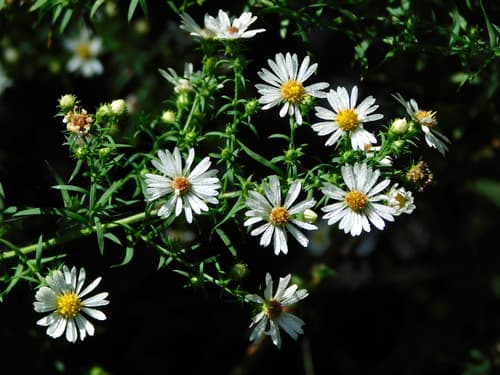
Symphyotrichum pilosum, or frost aster, covers itself in small white daisy-like flowers from August through October. It grows well in full sun with medium water and is common in open fields, meadows, and roadsides.
Toxicity unknown
Michaelmas Daisy (Symphyotrichum pilosum) is not listed by the ASPCA Animal Poison Control Center (opens in new tab) or the other sources we check, so we have no verdict for it either way. Absence from those lists is not a clearance. If your pet shows symptoms after eating any plant, call the ASPCA at (888) 426-4435.
The USDA PLANTS Database (opens in new tab) does not flag Michaelmas Daisy as toxic to livestock.
Light
full sun
Water
medium
Size
12"–48" H × 12"–36" W
Bloom
Aug, Sep, Oct
Native to
AL, AR, CT, DE and 30 more states
Pollinators
bees, butterflies, beetles
Before you buy
Your city may pay you to plant this
Cities and water utilities offer rebates for replacing lawn with native and water-wise plants. We track 459 programs across 44 states, each with a link to the provider and the date we last checked it.
Find rebates in your areaPicture natives in your own yard
Upload a photo of your yard and Patch Vision shows a rendering of it planted with natives for your region, like Michaelmas Daisy.


Browse plants for this ecoregion
Michaelmas daisy produces clouds of small white flowers with yellow centers from late summer through fall. This hardy perennial forms upright clumps that can spread gradually and provides excellent late-season color when many other plants are finished blooming.
Growing Michaelmas Daisy
Grow Michaelmas Daisy in full sun and medium water. Mature plants reach 12 to 48 inches tall and spread 12 to 36 inches wide. Expect moderate maintenance to keep it looking intentional in a front yard.
How to care for Michaelmas Daisy, by region
How to care for Michaelmas Daisy where it is actually grown: year-round basics plus what to do each season, region by region, with the sources for each.
Care guidance last updated: September 2026
Western Allegheny Plateau (includes Pittsburgh, PA)
Year-round
Frost aster is a native perennial in the Pittsburgh area. It fills out over the growing season and produces a cloud of small white fall flowers, so give it a spot with room to spread.
- Plant in full sun to part shade. It handles the region's heavy clay soils and does not need rich garden soil.
- It spreads by seed and by rhizomes, so plan for it to fill in a bed over a few seasons or divide it if it gets more crowded than you want.
- Confirmed native to Pennsylvania by USDA PLANTS and the Lady Bird Johnson Wildflower Center.
- Deadhead spent flowers through the bloom season to keep the plant looking tidy and to extend flowering.
Edge the bed or contain the spread so the mature clump reads as an intentional planting rather than an overgrown patch. That keeps a front yard planting HOA-friendly.
Fall
Fall is when frost aster earns its name. It blooms from August into October, often right up to Pittsburgh's first frost.
- Expect small white, daisy-like flowers with yellow centers from August through October, continuing until the area's average first freeze around October 20.
- Deadhead if you want to limit self-seeding. This aster spreads readily by seed in the region's moist clay soils.
- The late blooms are one of the last nectar sources of the season for bees and other pollinators.
- Leave some spent flower heads standing into late fall for birds and overwintering insects.
A mass planting of the fall bloom reads as a deliberate flower bed rather than an unmown patch, which keeps it HOA-conscious for a front yard.
Winter
Frost aster dies back to the ground for Pittsburgh's cold winters and does not need special protection in this climate.
- Above ground growth dies back after hard frost, which is normal for this region's winter climate.
- The Pittsburgh area falls in USDA plant hardiness zone 6b, so this perennial is well matched to local winter lows.
- Leave the dead stems standing over winter for wildlife value, then cut them back in early spring.
- No mulching or winter protection is typically needed once plants are established in the region's clay soils.
Spring
In a Pittsburgh spring, cut back last year's dead stems and let new growth come up as frost risk fades toward late April.
- Cut old stems down to a few inches above the ground in early spring before new growth starts. This keeps the clump tidy and lowers disease risk.
- New growth typically appears in April, ahead of the area's average last freeze around April 25.
- Divide crowded clumps in early spring if the patch has spread further than you want.
- The region's clay soils hold spring moisture well, so extra watering is rarely needed this season.
Summer
Through Pittsburgh's warm, humid summer, pinch the stems back once or twice to keep frost aster bushy before it blooms in fall.
- Pinch or shear stems back by about a third from late spring into early July to keep growth bushy and less likely to flop.
- Stop pinching after mid-July. Pruning later than that delays the fall bloom and reduces flower count.
- Water during extended dry spells, otherwise the region's summer rainfall is usually enough.
- Give plants some airflow. Humid, still air can bring on powdery mildew on the leaves.
Sources: USDA PLANTS Database, Symphyotrichum pilosum profile, Lady Bird Johnson Wildflower Center, Native Plant Database entry for Symphyotrichum pilosum, Missouri Botanical Garden Plant Finder, Symphyotrichum pilosum, National Weather Service Pittsburgh (PBZ), Climate Page, USDA Plant Hardiness Zone Map (2023)
In an HOA neighborhood
Michaelmas Daisy takes more care to keep looking intentional in a front yard. Maintenance level: moderate. Consider it for backyard or mid-zone beds rather than the street edge.
Works well in: backyard only.
- Can appear weedy and unkempt during growing season
- Tends to flop or become leggy without maintenance
- May spread aggressively and look wild
Wildlife value
Host plant for silvery checkerspot, pearl crescent.
The abundant small flowers attract bees, butterflies, and beetles during the critical late summer and fall period when nectar sources become scarce. This plant is especially valuable for migrating monarchs and other butterflies preparing for winter.
Common questions
- When does frost aster bloom?
- Frost aster blooms from August through October, with masses of small white flowers appearing late in the growing season as many other plants finish flowering.
- What pollinators does frost aster attract?
- Bees, butterflies, and beetles regularly visit frost aster for nectar and pollen, making it a useful late-season food source as fall approaches.
- How much light and water does frost aster need?
- Frost aster does best in full sun with medium soil moisture, though it tolerates drier conditions once its roots are established.
- What kind of habitat does frost aster prefer?
- It grows well in open fields, meadows, roadsides, and other disturbed or sunny ground, often forming dense clumps of narrow leaves topped with small flowers.
- Is Michaelmas Daisy toxic to livestock?
- The USDA PLANTS Database does not flag Michaelmas Daisy as toxic to livestock.
- Is Michaelmas Daisy HOA-friendly?
- Michaelmas Daisy takes more care to look intentional in a front yard. Consider it for backyard or mid-zone beds rather than the street edge.
These answers were drafted with an AI model from this plant's data. Verify care details with a local expert.
Native range data from vouchered herbarium specimen records and regional native plant society lists. Pollinator and host plant associations compiled from GBIF, iNaturalist, and published ecological literature.
If something looks wrong
Common plant problems, and what to check first
These come up on almost any plant. Each guide lists the likely causes in the order they are worth ruling out, with one thing to check before you act on any of them, and links to the source it came from.
- It is dying right after planting
- Leaves turning yellow
- Wilting even though I watered it
- Brown crispy leaf tips
- Bugs on the plant
Ready to grow Michaelmas Daisy? Add it to your garden in Pollinator Patch to track it and get season-by-season care guidance.