Tampa verbena
Glandularia tampensis
Last reviewed: August 2026
Toxicity unknown
Tampa verbena (Glandularia tampensis) is not listed by the ASPCA Animal Poison Control Center (opens in new tab) or the other sources we check, so we have no verdict for it either way. Absence from those lists is not a clearance. If your pet shows symptoms after eating any plant, call the ASPCA at (888) 426-4435.
Light
full sun
Water
medium
Size
12"–24" H × 18"–30" W
Bloom
Mar, Apr, May, Jun, Sep, Oct
Native to
FL
Pollinators
butterflies, bees
Before you buy
Your city may pay you to plant this
Cities and water utilities offer rebates for replacing lawn with native and water-wise plants. We track 452 programs across 44 states, each with a link to the provider and the date we last checked it.
Find rebates in your areaBrowse plants for this ecoregion
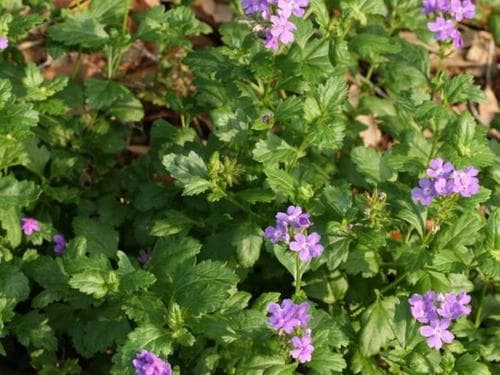
This vervain is a sprawling perennial forb with divided leaves and rounded clusters of purple flowers that bloom over much of the year. It grows in open, sandy habitat.
How to care for Tampa verbena, by region
How to care for Tampa verbena where it is actually grown: year-round basics plus what to do each season, region by region, with the sources for each.
Care guidance last updated: September 2026
Southern Coastal Plain (includes Orlando, FL)
Year-round
Tampa vervain, also called Tampa verbena, is a Florida endemic wildflower native only to this state, documented in the pine flatwoods, live oak hammocks, and open sandy ground that make up the same coastal plain region Orlando sits in. It is state-listed as endangered, so healthy garden plants should come from a native plant nursery, never dug from the wild. Give it full sun to light afternoon shade and sandy, well-drained, acidic to neutral soil, and expect it to behave more like a one to three year plant than a long-term perennial.
- Full sun is best. It tolerates light afternoon shade but blooms less there.
- Wants sandy, well-drained, acidic to neutral soil. Avoid heavy clay or spots where water sits.
- Sprawling habit, spreading about 3 to 4 feet wide and reaching up to 2 feet tall, so give it room rather than crowding it against other plants.
- Short-lived. Plan on 1 to 3 years per plant and replace from nursery stock or cuttings rather than counting on it to reseed itself.
- Buy only from a native plant nursery. It is a Florida-endangered species, and collecting it from the wild is not allowed.
Fall
As Orlando's rainy season eases and temperatures drop, give Tampa vervain a light, tidying prune to clean up summer's sprawling growth and encourage another flush of flowers. Fall also falls inside the plant's normal planting window, so it is a fine time to add new starts.
- Give the plant a light prune once summer rain lets up. The Florida Wildflower Foundation notes light pruning keeps it neat in more formal beds, though it is otherwise low-maintenance.
- Deadhead spent flower clusters as they fade to keep the bed looking tended rather than overgrown.
- Fall sits within the plant's normal planting window, which the Florida Wildflower Foundation lists as February through December.
- Keep skipping fertilizer and heavy irrigation. Lean, well-drained sandy soil is what this species is adapted to.
A fall cutback and deadheading here reads as intentional, tended care rather than a plant going to seed, which matters if the bed is visible from the street.
Winter
Orlando's winters fall within Tampa vervain's usual hardiness range, so it should stay green through a typical winter, but an occasional hard freeze can blacken its leaves and stems. When that happens, leave the damaged growth in place until the cold snap fully passes, then clean it up.
- Orlando's climate sits inside Tampa vervain's normal hardiness range, listed by the Florida Wildflower Foundation as zones 9A to 10B, so no frost cloth is needed as routine practice.
- A hard freeze can still cause damage. The Florida Wildflower Foundation notes verbena can sustain freeze damage even within Florida's borders.
- Wait until the cold snap has fully passed before trimming any freeze-blackened growth. Cutting too early exposes the crown to more cold.
- Blooming slows but usually continues at a low level, since the Lady Bird Johnson Wildflower Center lists this species as flowering sporadically in every month of the year.
Freeze-blackened stems left standing through a cold snap can look dead out front. Trim them back once the cold has passed so the bed reads as tended, not neglected.
Spring
Spring is Tampa vervain's biggest bloom period, and it falls inside the plant's normal planting window, so it is a good time to add new starts and let them settle in before summer heat and rain arrive. Water new plantings regularly while roots establish, then ease off.
- Peak bloom season. Expect the heaviest flush of lavender-pink flowers now.
- Good window for new plantings. Water regularly until roots establish, then taper off.
- Flowers draw Gulf fritillaries, hawkmoths, long-tailed skippers, and native bees such as bumble and orchid bees, per the Florida Wildflower Foundation.
- Space new plants 3 to 4 feet apart. Crowding shortens bloom life and invites disease.
Summer
Summer in Central Florida brings Orlando's heaviest rain, and Tampa vervain's biggest risk this season is too much water sitting around the roots, not the heat itself. Keep it in well-drained ground and skip supplemental irrigation on top of the rainy season.
- Skip extra watering during the summer rainy season. The plant wants lean, well-drained sand, not constantly wet roots.
- Watch for leaf spotting or stem rot after long wet stretches. Thin crowded stems for airflow.
- Blooming continues through summer, though the heaviest flush is spring into early summer.
- If growth gets long and sprawling from summer rain, a light cutback keeps stems from flopping over walkways or lawn edges.
Sources: Lady Bird Johnson Wildflower Center, Glandularia tampensis (Tampa verbena) plant profile, Florida Natural Areas Inventory, Tampa Vervain field guide (PDF), Florida Wildflower Foundation, Verbena species profile (PDF)
Want these tasks as reminders timed to your yard? Pollinator Patch turns this guidance into a season-by-season care plan for the plants you actually grow.
Wildlife value
Host plant for Common Buckeye.
The long bloom period makes it a reliable nectar source for butterflies and bees, and the genus is a documented larval host for the Common Buckeye.
Common questions
- How much sun does Tampa verbena need?
- Tampa verbena grows best in full sun conditions.
- When does Tampa verbena bloom?
- Tampa verbena blooms in March, April, May, June, September, and October.
- Where is Tampa verbena native?
- Tampa verbena (Glandularia tampensis) is native to FL, per the World Checklist of Vascular Plants (Kew).
- What butterflies or moths does Tampa verbena host?
- Tampa verbena is a larval host plant for Common Buckeye.
Native range data from the World Checklist of Vascular Plants (Kew). Pollinator and host plant associations compiled from GBIF, iNaturalist, and published ecological literature.
If something looks wrong
Common plant problems, and what to check first
These come up on almost any plant. Each guide lists the likely causes in the order they are worth ruling out, with one thing to check before you act on any of them, and links to the source it came from.
- It is dying right after planting
- Leaves turning yellow
- Wilting even though I watered it
- Brown crispy leaf tips
- Bugs on the plant
Ready to grow Tampa verbena? Add it to your garden in Pollinator Patch to track it and get season-by-season care guidance.
Planning a bed around it? Start a free plan with this plant
Not sure where to start? Take the 2-minute yard quiz