Texas Bluebonnet
Lupinus texensis
Light
full sun
Water
low
Size
12"–24" H × 12"–18" W
Bloom
Mar, Apr, May
Native to
North Texas
Pollinators
bees
Picture natives in your own yard
Upload a photo of your yard and Patch Vision shows a rendering of it planted with natives for your region, like Texas Bluebonnet.


Browse plants for this ecoregion
Texas Bluebonnet is a annual forb native to North Texas. It grows best in full sun with low water needs.
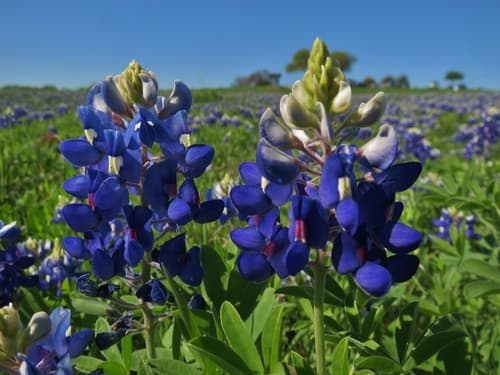
Texas Bluebonnet is the state flower and a spring icon. Blue spikes bloom March through May, often alongside Indian Paintbrush and other wildflowers. It is an annual that reseeds; let it go to seed if you want it to return next year.
Plant Bluebonnets in full sun with well-drained soil. They prefer lean, alkaline soil and can struggle in heavy clay. Scatter seed in fall for spring blooms. In HOA neighborhoods, a dedicated bed of Bluebonnets reads as intentional and distinctly Texan.
Bluebonnets fix nitrogen in the soil, benefiting nearby plants. They attract bees. Avoid fertilizing; too much nitrogen reduces flowering. Pair with Blackfoot Daisy or Winecup for a spring show that transitions into summer color.
Bee species data compiled from GBIF, iNaturalist, Discover Life, and the USGS Native Bee Inventory and Monitoring Lab. Plant-pollinator associations informed by published ecological literature.
How to care for Texas Bluebonnet, by region
How to care for Texas Bluebonnet where it is actually grown: year-round basics plus what to do each season, region by region, with the sources for each.
Care guidance last updated: July 2026
Cross Timbers (includes Fort Worth)
Year-round
Texas bluebonnet is genuinely native to the Cross Timbers, including the oak woodland and prairie mosaic around Fort Worth, not just planted there.
- It grows in full sun on fast-draining, often limestone or rocky soil, the openings and prairie edges within the Cross Timbers' mix of oak woodland and grassland (Lady Bird Johnson Wildflower Center).
- The Cross Timbers, both the eastern and western bands, is documented native range for this species, alongside the Blackland Prairie and Edwards Plateau (Native Plant Society of Texas).
- It fixes nitrogen in the soil through rhizobium bacteria on its roots, has special value to native bees and bumble bees, and serves as a larval host for hairstreak and elfin butterflies (Lady Bird Johnson Wildflower Center).
- The plant is toxic to dogs, particularly the seeds and pods, per the ASPCA Animal Poison Control Center plant database. Expect mild stomach upset in dogs and cats from casual nibbling, with more serious neurological signs possible in cases of livestock or heavy ingestion (ASPCA; Pet Poison Helpline).
Fall
Fall planting gets bluebonnet roots established in the Cross Timbers before winter sets in.
- Plant seed from September through early November, aiming for early October if you can (Lady Bird Johnson Wildflower Center).
- Nick or sand the seed coat before sowing. Scarified seed germinates far more reliably, up to 85 to 95 percent versus under 20 percent for untreated seed.
- Scatter seed onto bare, sunny ground rather than burying it. These seeds need light exposure at the surface to sprout.
- Pick the rockier, better-drained pockets of the yard over low spots that hold water, mimicking the woodland-edge openings bluebonnets favor naturally.
Winter
Winter is quiet root-building time for bluebonnet seedlings in the Cross Timbers.
- Seedlings sit as low rosettes through winter, and that sparse look is normal for the stage, not a sign the planting failed.
- Keep watering light. Bluebonnets don't want saturated soil, and winter rain plus clay-loam pockets in the Cross Timbers can hold more moisture than the roots like (Lady Bird Johnson Wildflower Center).
- Don't mulch over the rosettes. They're adapted to open, sun-exposed ground and can get smothered under a thick winter mulch layer.
- If fall planting was missed, late winter sowing still works, just expect a later and shorter spring bloom.
A visible, low green rosette through winter reads as a maintained bed rather than bare dirt if it faces the street.
Spring
Spring brings the bluebonnet bloom to the Cross Timbers, and holding off on mowing afterward is the key task.
- Flower spikes run blue and white from March through May, with April usually the peak show (Lady Bird Johnson Wildflower Center).
- Do not mow or deadhead right after the flowers fade. Seedpods need six to eight weeks after bloom to fully mature.
- Letting pods dry and pop open on their own is how the patch reseeds itself for next spring with no work from you.
- For a tidier edge while pods finish maturing, mow a border path around the patch instead of cutting into it.
A mowed border around the blooming patch signals intentional design, which helps in neighborhoods where a mass bluebonnet planting might otherwise look like an unmown lot.
Summer
Summer is die-back time for the annual bluebonnet in the Cross Timbers, with next year's seed already banked in the soil.
- Once pods dry and split open in early summer, the plants brown and die back. That's the normal end of an annual's life cycle.
- Wait until pods have clearly opened and dropped seed before cutting anything back.
- After seed drop, mow the dried stalks short or rake them away to clean up the bed.
- Skip watering the browned-out patch to try to save it. There's nothing left to revive, and it just invites weeds into bare summer ground.
Cutting back the dead stalks soon after seed drop keeps the bed from looking neglected through the summer.
Sources: Lupinus texensis (Texas bluebonnet) - Native Plant Database, Lupinus texensis - Native Plant Society of Texas, Bluebonnet - ASPCA Animal Poison Control, How to Grow Texas Bluebonnets - Lady Bird Johnson Wildflower Center, Native Backyards: Top 10 Tips for Growing Texas Bluebonnets (community tip)
East Central Texas Plains (includes College Station)
Year-round
Texas bluebonnet is native to the East Central Texas Plains, including the sandy Post Oak Savanna around College Station and the Bastrop Lost Pines area.
- It grows in full sun and tolerates a range of soils, including the sandier, more acidic soils of the Post Oak Savanna, though it still prefers good drainage over loose deep sand (Lady Bird Johnson Wildflower Center).
- The Northern and Southern Post Oak Savanna, including the Bastrop Lost Pines area, are documented native range for this species (Native Plant Society of Texas).
- As a legume it fixes its own nitrogen via rhizobium bacteria in its roots, has special value to native bees and bumble bees, and hosts hairstreak and elfin butterfly larvae (Lady Bird Johnson Wildflower Center).
- The whole plant, especially seeds and pods, is toxic to dogs per the ASPCA Animal Poison Control Center plant database. Dogs and cats typically show mild stomach upset from nibbling, while heavier exposure or livestock grazing can bring on more serious neurological signs (ASPCA; Pet Poison Helpline).
Fall
Fall is planting season for bluebonnet in the sandy soils around College Station.
- Sow seed from September through early November, with early October the sweet spot for most of Texas (Lady Bird Johnson Wildflower Center).
- Scarify the seed coat by nicking or sanding it first. Untreated seed germinates under 20 percent, while scarified seed can reach 85 to 95 percent.
- Choose a well-drained spot rather than the loosest, deepest sand on the property. Bluebonnets do well in most soils here except very loose sand.
- Broadcast seed on the surface and press it in lightly. It needs light to germinate and won't come up if buried.
Winter
Winter rosettes hold steady in the Post Oak Savanna while roots develop underground.
- Fall-sown seedlings spend winter as small, low rosettes, which is the expected look for this stage, not a stalled planting.
- Sandier soils here drain fast, so young plants may need slightly more attention to rainfall gaps than on heavier clay, though bluebonnets still don't want to sit wet (Lady Bird Johnson Wildflower Center).
- Leave the rosettes uncovered. A heavy mulch layer works against a plant built for open, sunny ground.
- Late winter sowing is still an option if fall planting was missed, though bloom will come later and last a shorter window.
A tidy rosette stage reads as tended ground cover rather than bare, unplanted soil.
Spring
Spring is peak bloom for bluebonnet in the Post Oak Savanna, and patience after flowering is what keeps the patch coming back.
- Blue-and-white spikes bloom March through May, usually peaking in April (Lady Bird Johnson Wildflower Center).
- Hold off on mowing or cutting back for six to eight weeks after bloom so seedpods can fully mature.
- Let pods dry and split open naturally. That's how the stand reseeds itself for next year without new seed from you.
- If you want a cleaner look while pods finish maturing, mow a defined border around the patch instead of touching the plants.
A mowed edge around the blooming patch makes a mass planting read as designed rather than an overgrown corner of the yard.
Summer
By summer the annual bluebonnet has finished its cycle in the Post Oak Savanna, browning out after dropping seed.
- Once seedpods dry and split in early summer, the plants brown and die back. That's the normal end of the annual life cycle, not a problem to fix.
- Wait until pods have visibly opened and dropped seed before cutting the dead stalks back.
- After seed drop, mow the stalks short or rake them off to tidy the bed for the rest of the season.
- Skip extra summer watering on the browned patch. There's no living plant to save, and it mostly just encourages weeds in the sandy soil.
Clearing the dried stalks soon after seed drop keeps a front-facing bed from looking neglected in the heat of summer.
Sources: Lupinus texensis (Texas bluebonnet) - Native Plant Database, Lupinus texensis - Native Plant Society of Texas, Bluebonnet - ASPCA Animal Poison Control, How to Grow Texas Bluebonnets - Lady Bird Johnson Wildflower Center, Native Backyards: Top 10 Tips for Growing Texas Bluebonnets (community tip)
Edwards Plateau (includes San Antonio)
Year-round
Texas bluebonnet is the state flower and one of the best true natives for the Edwards Plateau, a fast, reseeding annual that turns rocky Hill Country slopes blue every spring.
- Wants full sun and fast-draining, alkaline or limestone soil, exactly what the Edwards Plateau has plenty of, and it actually struggles in rich or soggy beds (Lady Bird Johnson Wildflower Center).
- This is core native range, not just planted range: Texas bluebonnet grows wild across the Edwards Plateau and Blackland Prairie, and it fixes nitrogen in the soil through a partnership with rhizobium bacteria in its roots (Lady Bird Johnson Wildflower Center).
- It has special value to native bees and bumble bees and also serves as a larval host plant for hairstreak and elfin butterflies, so a bluebonnet patch is doing real ecological work, not just looking good (Lady Bird Johnson Wildflower Center).
- The whole plant, especially the seeds and pods, is toxic to dogs per the ASPCA Animal Poison Control Center plant database. Clinical signs in dogs and cats are usually mild stomach upset, but grazing livestock and horses can see more serious neurological effects, so keep pets from chewing on the pods (ASPCA; Pet Poison Helpline).
Fall
Fall is when you plant bluebonnet seed on the Edwards Plateau, so the roots can establish before spring bloom.
- The best sowing window is September through early October, right as the weather cools but before hard frost (Lady Bird Johnson Wildflower Center).
- Scratch or nick the hard seed coat before sowing, called scarification, or germination rates stay under 20 percent instead of the 85 to 95 percent you get from scarified seed.
- Scatter seed on bare soil and press it in rather than burying it deep. Bluebonnets germinate on the surface and need light to sprout.
- Skip the fertilizer. Extra nitrogen just pushes leafy growth at the expense of flowers next spring.
Winter
Bluebonnet seedlings spend winter as a low rosette, quietly building roots before the spring show.
- Seedlings that germinated in fall sit as small ground-hugging rosettes through winter and look unremarkable, which is normal, not a sign of trouble.
- They need very little water this time of year. Soggy winter soil is more likely to rot young plants than cold is to kill them (Lady Bird Johnson Wildflower Center).
- Leave the rosettes alone and skip winter mulch piled on top of them. They're adapted to bare, exposed limestone soil and don't want to be smothered.
- If you missed fall planting, you can still direct-sow in late winter, but bloom will be later and shorter than a fall-planted patch.
A tidy, low rosette reads as an intentional bed to neighbors and HOA reviewers, not a bare or neglected patch.
Spring
Spring is bloom season on the Edwards Plateau, the whole reason to grow this plant, and also the season you have to hold off on mowing.
- Expect blue-and-white spikes from March through May, peaking in April across the Hill Country (Lady Bird Johnson Wildflower Center).
- Do not mow, deadhead, or cut back the spent flower spikes right after bloom. The plant needs six to eight weeks after flowering to form and mature its seedpods.
- Let pods dry and pop open on the plant. That's how the patch reseeds itself for next year with no replanting from you.
- If you want a tidier look while pods finish maturing, mow a clear edge or path around the patch rather than cutting the bluebonnets themselves.
A defined mowed edge around the blooming patch signals intentional design and keeps a mass planting from reading as an overgrown lot.
Summer
By summer the annual bluebonnet plants have finished their job and died back, and the patch is just dropped seed waiting for fall.
- Texas bluebonnet is a true annual. Once seedpods have dried and split open in early summer, the parent plants brown out and die, and that's expected, not a failure.
- Wait until pods have clearly dried and opened before any mowing or cleanup, so the seed has actually dropped into the soil.
- Once seed is down, you can mow the dead stalks short or rake them off. The bare-looking soil afterward already holds next year's seed.
- Don't water the bare patch through summer heat trying to revive it. There's nothing living there to save, and extra water can encourage weeds to take the spot instead.
Cutting back the dried stalks promptly after seed drop keeps the bed from looking neglected during the browned-out summer stretch.
Sources: Lupinus texensis (Texas bluebonnet) - Native Plant Database, Bluebonnet - ASPCA Animal Poison Control, Bluebonnet Is Toxic To Dogs - Pet Poison Helpline, How to Grow Texas Bluebonnets - Lady Bird Johnson Wildflower Center, Native Backyards: Top 10 Tips for Growing Texas Bluebonnets (community tip)
Ouachita Mountains (includes Broken Bow, OK)
Year-round
Texas bluebonnet is a winter annual wildflower with deep blue, white-tipped flower spikes. In this far southeastern corner of Oklahoma, near the Red River and the Texas and Arkansas borders, it grows at the edge of its genuine wild range in prairie openings and along roadsides, not deep in the pine-oak forest interior of the Ouachita Mountains. It fixes its own nitrogen, so skip the fertilizer, and it wants well-drained, alkaline to neutral soil and full sun.
- Native to prairie openings, disturbed ground, and roadsides at the southeastern edge of Oklahoma, not the forested interior of the Ouachita Mountains, per Flora of the Southern and Mid-Atlantic States (FSUS), which places the native range at southwestern Arkansas and southeastern Oklahoma south through Texas.
- Plant in full sun. In shaded woodland spots common across this ecoregion, bloom will be sparse or absent.
- Needs sharp drainage. Heavy, wet clay in low spots leads to root rot.
- Toxic to dogs, cats, and horses if eaten in quantity, per the ASPCA Animal Poison Control Center plant database entry for lupine. Keep grazing animals and chewing pets away from dense plantings.
- Serves as a larval host plant for hairstreak and elfin butterflies and has special value to native bees and bumble bees, per the Lady Bird Johnson Wildflower Center, citing the Xerces Society for Invertebrate Conservation.
A spring bluebonnet planting along a front walk or mailbox reads as tidy and intentional, especially once seedlings are established as low winter rosettes rather than bare dirt.
Fall
Fall is planting season. Seed goes in the ground from September through early November so it can germinate and form a low rosette before winter.
- Scarify seed (nick or lightly sand the hard seed coat) before planting. Unscarified seed germinates at low rates, while scarified seed germinates reliably within about 10 days.
- Soaking scarified seed in lukewarm water for 12 to 24 hours before planting can also help it take up water and sprout.
- Sow into well-drained, sunny ground. Avoid low spots that collect water after fall rain.
- Do not add nitrogen fertilizer. The plant partners with root bacteria to fix its own nitrogen, and extra fertilizer favors leafy growth over flowers.
Fall seeding produces winter rosettes that read as a deliberate, low, tidy groundcover rather than bare dirt through the cooler months.
Winter
Winter is dormancy as a low rosette. Seedlings from fall planting sit close to the ground through the cold months and hold there until spring warmth triggers the flower stalks.
- The flat rosette of leaves is the normal winter form. It is not stunted or struggling, it is waiting for a winter chill period that the plant needs before it will bloom.
- Water lightly if the ground goes dry during a rainless winter stretch, but let the top inch of soil dry between waterings. Overwatering is the top cause of failure.
- Skip winter fertilizer for the same nitrogen-fixing reason as fall.
- A hard freeze on established rosettes is normal for this plant and does not need row cover or protection in most winters.
A low winter rosette bed reads as intentional groundcover rather than a dead or neglected planting, which helps if an HOA does winter curb-appeal walkthroughs.
Spring
Spring is bloom season. Flower spikes open from the bottom up over several weeks, usually running from late March into May depending on how mild the winter was.
- Flowers open in sequence up the spike, so a planting stays showy for weeks rather than blooming all at once.
- Do not deadhead every spent bloom if you want next year's volunteers. Let some seed pods dry and split on the plant before any spring cleanup.
- Watch for aphids on flower spikes in warm spring weeks. A strong water spray from the hose usually clears light infestations.
- By late spring the plant is setting seed and starting to yellow. That fading look is the plant finishing its lifecycle, not a problem to fix.
Peak bloom is the highest curb-appeal window. If a front-yard planting needs to look its best for a specific date, plan around late March through April.
Summer
By early summer the plant has finished its annual lifecycle and died back. Summer is seed-collecting and bare-ground season, not active growth.
- The plant is done for the year by early to midsummer. Dying, browning foliage is normal, not a sign of disease or neglect.
- Collect dry, split seed pods before mowing or clearing the bed, if you want to save seed for fall reseeding.
- Once the plant is fully dead, clear the spent stems. The bare spot is expected until fall planting or volunteer germination.
- This is a good window to plan what warm-season companion plants will fill the gap the bluebonnet leaves behind.
A bare bed in midsummer can look like a stalled project to a neighbor or HOA reviewer. Mulching the empty space keeps it looking tended between the spring bloom and fall planting.
Sources: FSUS - Flora of the Southern and Mid-Atlantic States, Lupinus texensis, Lady Bird Johnson Wildflower Center, Lupinus texensis, ASPCA Animal Poison Control Center, Lupine, Lady Bird Johnson Wildflower Center, How to Grow Texas Bluebonnets
Southern Texas Plains (includes McAllen)
Year-round
Texas bluebonnet reaches its native southern range in the South Texas Plains, where it grows on brushland openings but faces tougher heat and drought than farther north.
- It needs full sun and fast-draining, alkaline soil, which fits the region's caliche and clay-loam pockets, but South Texas heat and lower rainfall make it a shorter-lived bloom season than in Central Texas (Lady Bird Johnson Wildflower Center).
- Southern Texas Plains is documented native range for this species, with the plant's overall distribution reaching south to San Luis Potosí in northern Mexico (Native Plant Society of Texas; Wikipedia).
- It fixes its own nitrogen via root-associated rhizobium bacteria, has special value to native bees and bumble bees, and hosts hairstreak and elfin butterfly larvae (Lady Bird Johnson Wildflower Center).
- The whole plant, especially seeds and pods, is toxic to dogs per the ASPCA Animal Poison Control Center plant database. Dogs and cats usually get mild stomach upset from nibbling, while livestock or heavy ingestion can bring on more serious neurological signs (ASPCA; Pet Poison Helpline).
Fall
Fall planting in South Texas needs to start on the earlier side of the window to beat the region's fast warmup.
- Aim for September into October for sowing. Waiting until November like the rest of the state risks not enough cool weather to establish roots before spring heat arrives (Lady Bird Johnson Wildflower Center).
- Scarify seed by nicking or sanding the coat first. It's the difference between under 20 percent and 85 to 95 percent germination.
- Pick a spot with real drainage, not compacted caliche that stays bone dry then floods in a downpour. Bluebonnets want moisture at germination but not standing water.
- Broadcast seed onto bare soil and press it in. It won't come up if buried, since it needs light to germinate.
Winter
Winter is mild in South Texas, so bluebonnet rosettes may grow faster here than in the rest of the state, but drought stress is still the main risk.
- Rosettes stay low through winter, and mild South Texas winters mean less risk of freeze damage than farther north, but also less reliable rainfall to keep roots developing (Lady Bird Johnson Wildflower Center).
- A light supplemental watering during a dry winter stretch can help here, something that's rarely needed farther north in the state.
- Don't mulch heavily over the rosettes. They're built for open, sun-exposed ground, not a covered bed.
- Late winter sowing is an option if fall planting was missed, but expect a shorter, earlier-ending bloom given the region's faster warmup into spring.
Spring
Bloom arrives earlier and burns out faster in South Texas than in Central Texas, so timing your patience after flowering matters.
- Expect blue-and-white blooms to start earlier here, often in late February to March, and finish sooner than the March-to-May window seen farther north (Lady Bird Johnson Wildflower Center).
- Still hold off on mowing or cutting back for six to eight weeks after bloom so seedpods can mature.
- Rising South Texas heat can push pods to mature and dry faster than in cooler regions, so check the patch regularly rather than assuming a fixed timeline.
- Let pods split open on their own to reseed the patch, since this is the main way a South Texas stand persists through the region's harsher summers.
A mowed border around the patch during the shorter South Texas bloom window helps it read as a planned bed rather than an unmown gap.
Summer
Summer arrives hard and early in South Texas, and the annual bluebonnet is long finished by the time real heat sets in.
- Plants brown out and die back once pods dry and split, typically earlier in the season here than in Central or North Texas given the faster warmup.
- Wait for pods to fully open and drop seed before clearing the dead stalks.
- Clear dried stalks promptly. South Texas summer heat and any monsoon-season moisture together can otherwise encourage mold on matted dead growth.
- Skip watering the spent patch. There's no living plant to save, and in this climate extra water on bare ground mostly helps weeds and invasive grasses take hold.
Clearing dead stalks early in the South Texas heat keeps a curbside bed looking maintained through the long, hot off-season.
Sources: Lupinus texensis (Texas bluebonnet) - Native Plant Database, Lupinus texensis - Native Plant Society of Texas, Bluebonnet - ASPCA Animal Poison Control, How to Grow Texas Bluebonnets - Lady Bird Johnson Wildflower Center, Native Backyards: Top 10 Tips for Growing Texas Bluebonnets (community tip)
Texas Blackland Prairies (includes Dallas)
Year-round
Texas bluebonnet is native to the Blackland Prairies, its historic core range, and thrives in the heavy clay prairie soil around Dallas and Austin.
- It's adapted to full sun and calcareous clay loam soil, tolerating the high-limestone, high-pH clay that defines the Blackland Prairie (Lady Bird Johnson Wildflower Center).
- The Blackland Prairie and Edwards Plateau are the species' primary native ecoregions in Texas, so a Dallas-area bluebonnet planting is right in its historic home range, not an import (Native Plant Society of Texas).
- As a legume, it fixes its own nitrogen through root-associated rhizobium bacteria, and it has special value to native bees and bumble bees while also hosting hairstreak and elfin butterfly larvae (Lady Bird Johnson Wildflower Center).
- The whole plant is toxic to dogs, especially the seeds and pods, per the ASPCA Animal Poison Control Center plant database. Dogs and cats typically get mild stomach upset from nibbling; larger amounts or livestock exposure can cause more serious neurological signs (ASPCA; Pet Poison Helpline).
Fall
Sow bluebonnet seed into Blackland clay in early fall so roots get established before winter.
- September through early November is the planting window, with early October usually the sweet spot for most of Texas including the Dallas area (Lady Bird Johnson Wildflower Center).
- Scarify the seed first, nicking or sanding the hard coat, since unscarified seed germinates at under 20 percent and scarified seed can hit 85 to 95 percent.
- Heavy clay holds moisture longer than sandy soil, so avoid overwatering right after sowing. Bluebonnets germinate fine on the surface and don't want to sit wet.
- Broadcast seed onto bare, scratched-up soil rather than tilling deep. Bluebonnets need light to germinate and won't come up from being buried.
Winter
Bluebonnet seedlings ride out winter on the Blackland Prairie as small rosettes, storing energy for spring.
- Fall-germinated seedlings sit low to the ground as rosettes through winter, which looks sparse but is exactly how the plant is supposed to spend this season.
- Clay soil drains slower than sandy soil, so watch for standing water after winter rain. Waterlogged clay is harder on young bluebonnets than the cold itself (Lady Bird Johnson Wildflower Center).
- Leave the rosettes bare. Piling mulch over them can smother a plant adapted to open, sunbaked prairie soil.
- Late winter is still workable for direct sowing if you missed fall, though bloom will come later and be shorter than a fall-planted stand.
A neat rosette stage reads as tended ground cover rather than bare dirt, which matters if the bed is visible from the street.
Spring
Spring bloom is the payoff on Blackland clay, and the mowing hold-off matters here as much as anywhere in the state.
- Blue-and-white flower spikes run March through May, with peak color usually in April (Lady Bird Johnson Wildflower Center).
- Hold off on mowing or cutting back spent spikes for six to eight weeks after bloom so seedpods have time to mature.
- Let the pods dry and split open on their own. That natural reseeding is what keeps a Dallas-area patch coming back without you buying new seed.
- If the look needs to stay tidy for the street, mow a clean border around the patch instead of touching the bluebonnets themselves.
A mowed edge around a blooming bluebonnet stand is the single easiest way to make a mass planting look designed instead of overgrown.
Summer
Summer is die-back season for this annual on the Blackland Prairie, and the bare patch afterward already holds next year's seed.
- Once seedpods dry and split in early summer, the annual plants brown out and die. That's the normal end of the life cycle, not a plant health problem.
- Hold off cutting back until pods have clearly opened and dropped seed into the soil.
- After seed drop, mow the dead stalks short or rake them off to tidy the bed for the rest of summer.
- Don't try to keep the dying patch green with extra water. There's no plant left to save, and wet clay in summer heat mostly just invites weeds.
Clearing the browned-out stalks soon after seed drop keeps a curbside bed from reading as neglected through the hottest part of summer.
Sources: Lupinus texensis (Texas bluebonnet) - Native Plant Database, Lupinus texensis - Native Plant Society of Texas, Bluebonnet - ASPCA Animal Poison Control, How to Grow Texas Bluebonnets - Lady Bird Johnson Wildflower Center, Native Backyards: Top 10 Tips for Growing Texas Bluebonnets (community tip)
Western Gulf Coastal Plain (includes Houston)
Year-round
Texas bluebonnet is native to the Gulf Coast Prairies, including the coastal prairie around Houston, though the region's humidity and heavier rainfall call for extra care with drainage.
- It needs full sun and, crucially in this humid region, fast drainage. Standing water or heavy clay that stays wet is the biggest risk to bluebonnets here (Lady Bird Johnson Wildflower Center).
- The Gulf Coast Prairies and Marshes ecoregion is documented native range for this species, alongside the Blackland Prairie and Edwards Plateau (Native Plant Society of Texas).
- It fixes nitrogen through rhizobium bacteria on its roots, has special value to native bees and bumble bees, and hosts hairstreak and elfin butterfly larvae (Lady Bird Johnson Wildflower Center).
- The whole plant, especially the seeds and pods, is toxic to dogs per the ASPCA Animal Poison Control Center plant database. Dogs and cats generally get mild stomach upset from nibbling, with more serious neurological signs possible in livestock or with heavy ingestion (ASPCA; Pet Poison Helpline).
Fall
Fall planting on the Gulf Coast means picking the highest, best-drained spot in the yard before the wet season starts.
- Sow seed September through early November, with early October generally the best timing (Lady Bird Johnson Wildflower Center).
- Scarify seed by nicking or lightly sanding the coat. This alone moves germination from under 20 percent to 85 to 95 percent.
- In the Houston area, drainage matters more than almost anywhere else in the state. Pick a raised bed or slope, never a spot where water pools after rain.
- Broadcast seed on the surface rather than burying it. Bluebonnets need light exposure to germinate.
Winter
Winter is the riskiest season for bluebonnet on the Gulf Coast, mainly because of wet soil, not cold.
- Seedlings sit as low rosettes through winter, which is the normal look, but Houston's mild, rainy winters mean root rot is the real threat, not frost (Lady Bird Johnson Wildflower Center).
- Check that water isn't pooling around the rosettes after heavy winter rain. If it is, that spot likely won't support bluebonnets long term.
- Don't mulch over the rosettes. They want open, exposed soil, and coastal humidity plus mulch is a good recipe for rot.
- If a fall planting failed to soggy soil, late winter reseeding in a drier, raised spot is worth trying instead of the same low spot again.
Spring
Spring bloom on the Gulf Coast is the payoff for good drainage, and holding off on mowing after bloom still applies.
- Blue-and-white flower spikes appear March through May, peaking around April in most of Texas (Lady Bird Johnson Wildflower Center).
- Do not mow or cut back spent flower stalks right after bloom. Seedpods need six to eight weeks to mature after flowering.
- Let the pods dry and split open naturally so seed drops for next year's stand.
- Watch drainage through spring rain too. A well-drained bluebonnet patch on the coast can still drown in a wet spring if the spot floods.
A mowed border around the blooming patch keeps a mass planting looking intentional rather than like an unmown section of yard.
Summer
Summer die-back happens fast on the Gulf Coast, and the humid heat means cleanup shouldn't wait.
- Once pods dry and split in early summer, the annual plants brown out and die. That's expected, not disease.
- Wait for pods to clearly open and drop seed before cutting anything back.
- In Houston's humidity, dead plant matter left in a wet bed can mat down and encourage fungal issues, so clear the dried stalks fairly soon after seed drop.
- Don't try to water the dying patch back to life. There's nothing left to save, and wet soil in coastal summer heat is prime weed territory.
Prompt cleanup after seed drop matters more here than inland, since matted dead growth in humid coastal heat looks neglected fast.
Sources: Lupinus texensis (Texas bluebonnet) - Native Plant Database, Lupinus texensis - Native Plant Society of Texas, Bluebonnet - ASPCA Animal Poison Control, How to Grow Texas Bluebonnets - Lady Bird Johnson Wildflower Center, Native Backyards: Top 10 Tips for Growing Texas Bluebonnets (community tip)
Before you buy
Your city may pay you to plant this
Cities and water utilities offer rebates for replacing lawn with native and water-wise plants. We track 459 programs across 44 states, each with a link to the provider and the date we last checked it.
Find rebates in your areaIf something looks wrong
Common plant problems, and what to check first
These come up on almost any plant. Each guide lists the likely causes in the order they are worth ruling out, with one thing to check before you act on any of them, and links to the source it came from.
- It is dying right after planting
- Leaves turning yellow
- Wilting even though I watered it
- Brown crispy leaf tips
- Bugs on the plant
Ready to grow Texas Bluebonnet? Add it to your garden in Pollinator Patch to track it and get season-by-season care guidance.