Texas Red Oak
Quercus buckleyi
Last reviewed: September 2026
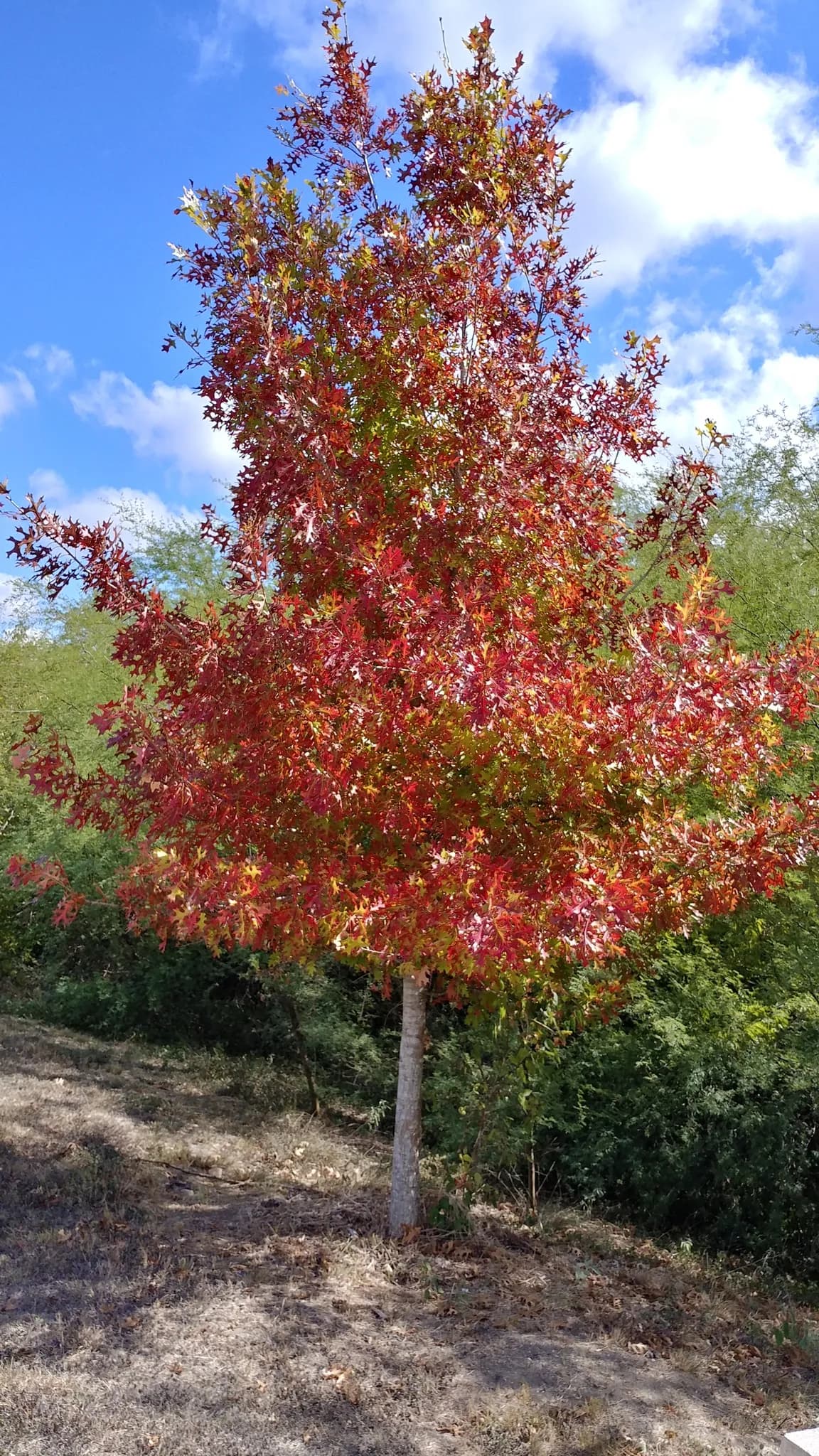
Texas Red Oak (Quercus buckleyi) is not on the ASPCA Animal Poison Control Center toxic plant list for dogs or cats (aspca.org (opens in new tab), last reviewed 2026-05-21). If your pet shows symptoms after eating any plant, call the ASPCA at (888) 426-4435.
Light
full sun
Water
low
Size
480"–600" H × 600"–720" W
Bloom
Mar, Apr, May
Native to
OK, TX
Before you buy
Your city may pay you to plant this
Cities and water utilities offer rebates for replacing lawn with native and water-wise plants. We track 452 programs across 44 states, each with a link to the provider and the date we last checked it.
Find rebates in your areaBrowse plants for this ecoregion
Texas Red Oak is a majestic native shade tree that develops a broad, rounded canopy with distinctive lobed leaves that turn brilliant red to orange in fall. This drought-tolerant oak grows slowly but steadily, eventually becoming a substantial landscape anchor that can live for generations.
How to care for Texas Red Oak, by region
How to care for Texas Red Oak where it is actually grown: year-round basics plus what to do each season, region by region, with the sources for each.
Care guidance last updated: August 2026
Texas Blackland Prairies (includes Dallas, TX)
Year-round
Texas red oak is a tough, deep rooted shade tree for the Dallas area that wants full sun to part shade, well drained soil, and only occasional deep watering once it is established.
- Give it full sun to part shade and well drained soil. It tolerates alkaline, clay, and limestone based soils and, unlike many other red oaks, does not develop chlorosis in the high pH soils common around Dallas.
- Water deeply but infrequently. Once established this tree has low water needs and handles North Texas drought well.
- This is a red oak, the group most vulnerable to oak wilt. Never prune or wound the tree from February through June, when the sap beetles that spread the fungus are most active, and paint any wound immediately no matter the season.
- Plan for a large mature tree, generally 30 to 50 feet tall with a wide canopy. Site it away from foundations, walkways, and power lines.
- Leaves and acorns are considered toxic if an animal eats a large quantity, so rake up fallen acorns in areas pets or grazing animals use.
A mature native oak with strong fall color reads as an intentional, HOA-friendly shade tree rather than an overgrown yard.
Fall
Fall is generally the best time to plant this oak in the Dallas area, and once the calendar turns past June the pruning risk for oak wilt drops off.
- Fall, roughly October through December, is considered the best planting window in North Texas. Soil is still warm enough to grow roots while summer heat stress is behind it, giving a new tree a head start before spring.
- Expect red to yellow fall color and a heavy leaf and acorn drop. Rake fallen acorns out of lawn and play areas since they are considered toxic in quantity to pets and grazing animals.
- Pruning moves into a lower risk window for oak wilt once sap beetle activity drops off after June. Still paint any cut or wound immediately, any time of year.
- Keep watering through fall but taper off as temperatures cool and rainfall increases. Check soil moisture with a screwdriver or finger test before watering rather than sticking to a fixed schedule.
A predictable fall rake up schedule keeps this oak looking like an intentional, HOA-friendly shade tree through leaf and acorn drop.
Winter
Winter is the best, lowest risk pruning season for this oak in the Dallas area's zone 8b climate, and watering needs drop way down while it is dormant.
- Dallas is in USDA hardiness zone 8b, with typical winter lows in the 15 to 20 degree Fahrenheit range, comfortably within what this cold hardy oak tolerates.
- The coldest stretch of winter is one of the two lower risk pruning windows for oak wilt. If a cut is needed, do it now, and paint the wound immediately regardless of season.
- This tree is dormant and drought tolerant once established, so cut back on watering, but check soil moisture during any extended dry winter spell and give it a deep soak if the top several inches of soil are dry.
- Skip fertilizer in winter. Wait for active spring growth before feeding a young tree, and only if a soil test shows a real need.
Spring
Spring is a hands off season for cutting this oak in the Dallas area. The only real jobs are careful watering as it warms and quick wound care if a storm breaks a branch.
- Do not prune or wound the tree from February through June. Texas A&M Forest Service names this window specifically because sap beetles that spread oak wilt to red oaks like this one are most active in late winter and spring.
- If a spring storm breaks a branch, do not wait for a dormant season cleanup. Paint the fresh wound right away to reduce oak wilt risk.
- As soil warms past about 40 degrees Fahrenheit, root growth resumes. Start or resume a deep weekly watering routine for any tree still in its first two growing seasons, roughly 6 to 8 gallons per inch of trunk diameter, applied slowly and infrequently rather than a little every day.
- Watch new spring leaves for cold snap or storm damage, but resist pruning it away until after June.
Summer
Summer heat and low rainfall make deep, infrequent watering the main task for this oak, while pruning is still off the table until late June ends.
- Keep up a 6 to 8 gallon per trunk diameter inch weekly deep soak for any young or newly planted tree through the hot months. Fill a shallow watering berm around the trunk and let it soak in rather than running a sprinkler daily.
- An established tree needs little supplemental water and handles Dallas area drought well, but a tree still in its first two growing seasons needs that regular deep watering through summer heat.
- The oak wilt pruning restriction runs through June 30. From July 1 on, pruning during the hottest stretch of summer is one of the two lower risk windows for this oak.
- Keep 2 to 3 inches of mulch out to the drip line to hold soil moisture, and keep mulch and string trimmers off the trunk itself.
Sources: Lady Bird Johnson Wildflower Center, Quercus buckleyi plant profile, Texas A&M Forest Service, Prevent the Spread of Oak Wilt in Texas, ASPCA, Toxic and Non-toxic Plants: Oak, Texas A&M AgriLife Extension (Dallas County), How to Water, Texas Master Gardener Program (Grayson County, Texas A&M AgriLife), Fall, Best Time to Plant Trees, PlantMaps, Dallas Texas Hardiness Zones
Want these tasks as reminders timed to your yard? Pollinator Patch turns this guidance into a season-by-season care plan for the plants you actually grow.
In an HOA neighborhood
Texas Red Oak takes more care to keep looking intentional in a front yard. Maintenance level: low. Consider it for backyard or mid-zone beds rather than the street edge.
Works well in: backyard only.
- Tree size exceeds typical HOA-friendly range
- Best suited for backyard or with special approval
Wildlife value
Supports over 500 species of butterflies and moths as caterpillar host plant, plus provides acorns for squirrels, deer, and birds. Spring flowers attract various pollinators though they are wind-pollinated.
Common questions
- How much sun does Texas Red Oak need?
- Texas Red Oak grows best in full sun conditions.
- When does Texas Red Oak bloom?
- Texas Red Oak blooms in March, April, and May.
- Where is Texas Red Oak native?
- Texas Red Oak (Quercus buckleyi) is native to OK, TX, per vouchered herbarium specimen records and regional native plant society lists.
- Is Texas Red Oak toxic to dogs?
- Texas Red Oak is not on the ASPCA Animal Poison Control Center toxic plant list for dogs (aspca.org).
- Is Texas Red Oak toxic to cats?
- Texas Red Oak is not on the ASPCA Animal Poison Control Center toxic plant list for cats (aspca.org).
- Is Texas Red Oak HOA-friendly?
- Texas Red Oak takes more care to look intentional in a front yard. Consider it for backyard or mid-zone beds rather than the street edge.
Native range data from vouchered herbarium specimen records and regional native plant society lists. Pollinator and host plant associations compiled from GBIF, iNaturalist, and published ecological literature.
If something looks wrong
Common plant problems, and what to check first
These come up on almost any plant. Each guide lists the likely causes in the order they are worth ruling out, with one thing to check before you act on any of them, and links to the source it came from.
- It is dying right after planting
- Leaves turning yellow
- Wilting even though I watered it
- Brown crispy leaf tips
- Bugs on the plant
Ready to grow Texas Red Oak? Add it to your garden in Pollinator Patch to track it and get season-by-season care guidance.
Planning a bed around it? Start a free plan with this plant
Not sure where to start? Take the 2-minute yard quiz