Virginia Wildrye
Elymus virginicus
Last reviewed: October 2026
Elymus virginicus, or Virginia wild rye, is a clump-forming cool-season grass that blooms from May through July. It grows well in part sun to full sun with medium to consistently moist soil, often along streambanks and in moist meadows.
Toxicity unknown
Virginia Wildrye (Elymus virginicus) is not listed by the ASPCA Animal Poison Control Center (opens in new tab) or the other sources we check, so we have no verdict for it either way. Absence from those lists is not a clearance. If your pet shows symptoms after eating any plant, call the ASPCA at (888) 426-4435.
The USDA PLANTS Database (opens in new tab) does not flag Virginia Wildrye as toxic to livestock.
Light
part sun
Water
medium
Size
36"–48" H × 12"–24" W
Bloom
Mar, Apr, May
Native to
AL, AR, AZ, CO and 37 more states
Pollinators
bees, butterflies, moths
Deer
Resistant (per Prairie Moon Nursery)
Before you buy
Your city may pay you to plant this
Cities and water utilities offer rebates for replacing lawn with native and water-wise plants. We track 459 programs across 44 states, each with a link to the provider and the date we last checked it.
Find rebates in your areaPicture natives in your own yard
Upload a photo of your yard and Patch Vision shows a rendering of it planted with natives for your region, like Virginia Wildrye.


Browse plants for this ecoregion
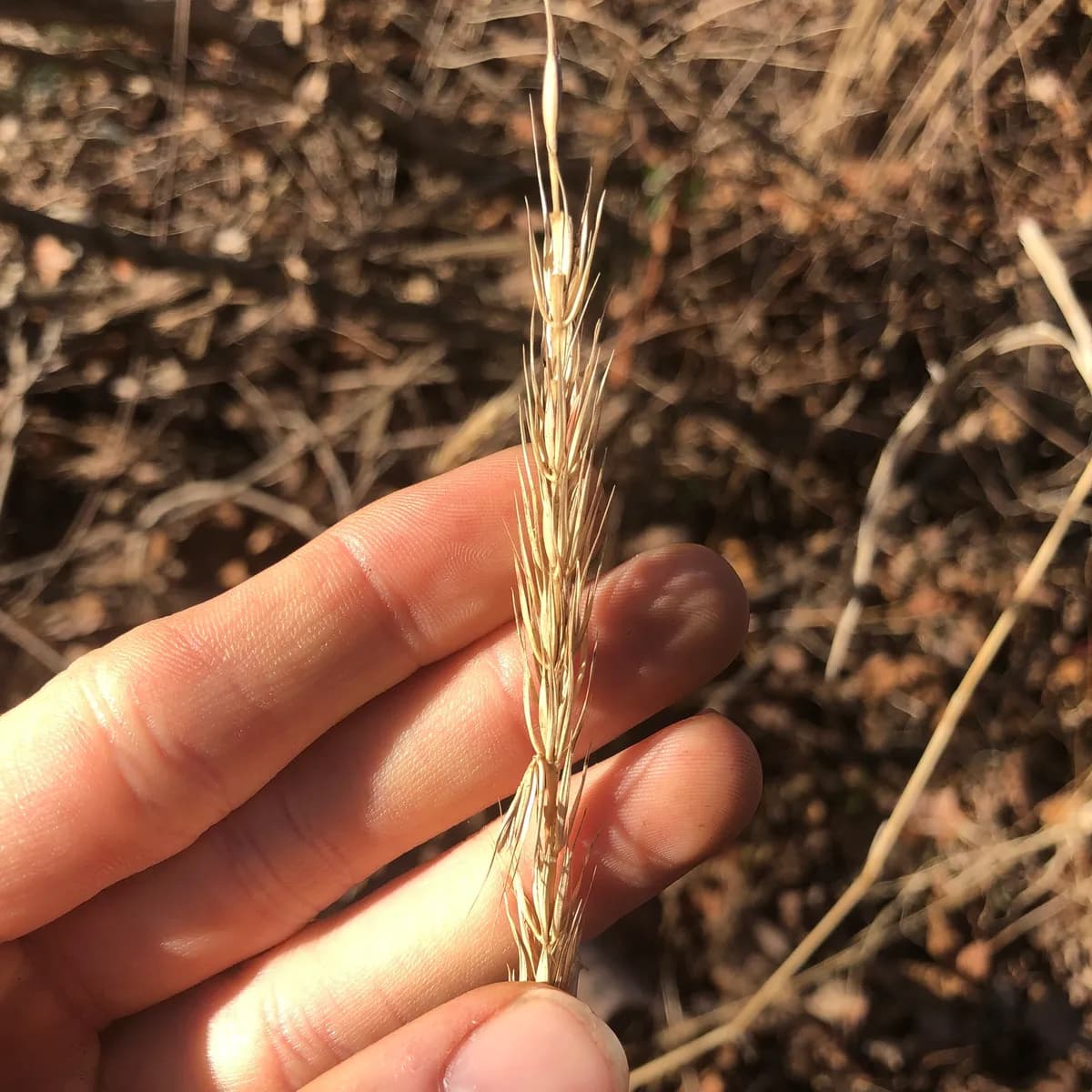
Virginia wild rye is a clumping native grass that forms neat, upright bunches reaching 2-4 feet tall. It produces attractive seed heads in late spring and summer, then goes dormant in winter. This cool-season grass works well as an ornamental alternative to non-native grasses.
Growing Virginia Wildrye
Grow Virginia Wildrye in part sun and medium water. Mature plants reach 36 to 48 inches tall and spread 12 to 24 inches wide. Expect low maintenance to keep it looking intentional in a front yard.
How to care for Virginia Wildrye, by region
How to care for Virginia Wildrye where it is actually grown: year-round basics plus what to do each season, region by region, with the sources for each.
Care guidance last updated: September 2026
Ouachita Mountains (includes Hot Springs, AR)
Year-round
Virginia wildrye is a cool season, clump forming grass that the Lady Bird Johnson Wildflower Center lists as native to Arkansas, and its habitat, moist banks and open shaded woods, matches the Ouachita Mountains around Hot Springs well. It grows in a distinct clump rather than spreading by rhizomes, so it stays put and fills in through self-seeding instead of running. It tolerates full sun down to fairly deep shade and mainly needs steady moisture, not a lot of hands on care.
- Prefers loam or clay soils that stay medium to wet, matching streambanks and moist woodland edges.
- One of the more shade tolerant native grasses, it works in dappled light under mature trees.
- Forms a clump and spreads mainly by dropped seed, it will not run through a bed the way a rhizomatous grass would.
- The seed heads carry sharp, barbed awns that can injure a dog's eyes, ears, or paws, so keep it out of spots where dogs dig or roll around.
Fall
Fall brings some of Virginia wildrye's best color, foliage and seed heads mature to tan, gold, or buff tones that carry well into winter. Cooler, wetter fall weather can spark a bit of renewed green growth at the base, which is typical for a cool season grass. This is a low input season, mostly just let the seed heads finish ripening and drop so next year's stand fills in.
- Foliage and seed heads shift to tan, golden brown, or buff shades through fall.
- Cooler fall temperatures and rain can trigger a bit of renewed green growth at the base.
- Hold off on a hard cutback now, the standing tan foliage and seed heads carry into winter and dropped seed is how the stand renews itself.
- Seed heads left standing continue to feed birds and small mammals through fall.
Leaving the tan seed heads standing through fall reads as an intentional grass planting rather than an unmowed patch, especially if the bed edges stay trimmed.
Winter
Through winter, Virginia wildrye stays semi-evergreen to evergreen in this region, holding tan to golden foliage and dried seed heads as a soft winter silhouette instead of dying back to bare ground. Leave the old growth standing until late winter, since that residual structure is doing a job and cutting it too early just means starting spring with bare dirt.
- Foliage is semi-evergreen to evergreen through winter, holding color and structure rather than collapsing.
- Dried seed heads left standing provide winter forage for birds and small mammals.
- Save the hard cutback for late winter, right before new spring growth starts, cutting earlier removes winter cover for no benefit.
- If a bed needs to look tidier midwinter, trim the outer edge of the clump instead of cutting the whole plant down early.
A standing clump of tan winter foliage with a trimmed edge reads as an intentional native planting, not neglect, even though the grass is not green this time of year.
Spring
Spring is Virginia wildrye's biggest growth push in this region. Texas A&M's rangeland plant program lists flowering from April through June for this species in the mid South, so expect fresh green blades filling in through March and bristly seed heads showing up by late spring. If last year's dried stalks are still standing, cut them back now before new growth gets tangled up in the old.
- Cut old foliage and dried seed stalks down to a few inches in late winter or very early spring, before new blades emerge.
- Flowering runs roughly April through June in this part of the plant's range.
- Spring rain in the Ouachitas usually covers its moisture needs, water only if the bed dries out between storms.
- Let some seed heads mature and drop instead of deadheading everything, the stand depends on self-seeding to fill in and persist.
Cutting the dried winter stalks down to a few inches in early spring reads as intentional garden upkeep, not an overgrown or neglected bed.
Summer
Once summer heat and humidity settle in around Hot Springs, this cool season grass slows down the way it is supposed to. Growth eases up and color shifts from green toward tan or buff as the seed finishes maturing and drops through the season, and that is normal dormancy, not a sign of a dying plant. Skip mowing or a hard cutback now, since the stand needs those ripening seed heads to renew itself.
- Growth slows and foliage color shifts from green toward tan or buff as seed matures, typical cool season grass behavior in summer heat.
- Avoid mowing or heavy trimming in summer, frequent cutting during this stretch depletes stands that rely on self-seeding.
- A partly shaded spot or steadier soil moisture keeps the clump looking better through the hottest weeks than a hot, dry, full sun spot will.
- Mature seed heads carry their sharpest awns now, so keep dogs from pushing through them.
Sources: Lady Bird Johnson Wildflower Center: Elymus virginicus var. virginicus, USDA NRCS Plant Guide: Virginia Wildrye (ELVI3), Texas A&M Rangeland Plants: Virginia Wildrye, New Moon Nursery: Elymus virginicus
In an HOA neighborhood
Virginia Wildrye is an HOA-friendly choice. Maintenance level: low. Tidiness: 3 out of 5.
Works well in: mid zone, foundation.
- May look sparse or weedy when dormant in winter
- Seed heads could be perceived as untidy by some HOAs
Wildlife value
The seeds provide food for birds and small mammals, while bees visit the flowers. This native grass also serves as host plant for several butterfly species.
Common questions
- When does Virginia wild rye bloom?
- Virginia wild rye blooms from May through July, sending up narrow, bristly seed heads on upright stems.
- What pollinators are associated with Virginia wild rye?
- Bees are known to visit Elymus virginicus, though as a grass it also relies on wind for pollen movement.
- What growing conditions does Virginia wild rye need?
- It does best with part sun to full sun and medium to consistently moist soil, and it is often found along streambanks, floodplains, and damp meadows.
- Can Virginia wild rye handle some shade?
- It tolerates part shade but grows more upright and produces fuller seed heads when given more direct sun.
- Is Virginia wild rye a warm-season or cool-season grass?
- It is a cool-season grass, greening up early in spring and setting seed by midsummer.
- Is Virginia Wildrye toxic to livestock?
- The USDA PLANTS Database does not flag Virginia Wildrye as toxic to livestock.
- Is Virginia Wildrye HOA-friendly?
- Virginia Wildrye is generally an HOA-friendly choice in the right placement, with low maintenance.
These answers were drafted with an AI model from this plant's data. Verify care details with a local expert.
Native range data from vouchered herbarium specimen records and regional native plant society lists. Pollinator and host plant associations compiled from GBIF, iNaturalist, and published ecological literature.
If something looks wrong
Common plant problems, and what to check first
These come up on almost any plant. Each guide lists the likely causes in the order they are worth ruling out, with one thing to check before you act on any of them, and links to the source it came from.
- It is dying right after planting
- Leaves turning yellow
- Wilting even though I watered it
- Brown crispy leaf tips
- Bugs on the plant
Ready to grow Virginia Wildrye? Add it to your garden in Pollinator Patch to track it and get season-by-season care guidance.