Wavy-leaf purple-coneflower
Echinacea simulata
Last reviewed: September 2026
Wavy-leaf purple-coneflower (Echinacea simulata) is a perennial forb native to AR, GA, IL, IN and 3 more states. It blooms in June, July, and August. The flowers draw bees and butterflies.
Toxicity unknown
Wavy-leaf purple-coneflower (Echinacea simulata) is not listed by the ASPCA Animal Poison Control Center (opens in new tab) or the other sources we check, so we have no verdict for it either way. Absence from those lists is not a clearance. If your pet shows symptoms after eating any plant, call the ASPCA at (888) 426-4435.
Light
full sun
Water
low
Size
24"–48" H × 12"–18" W
Bloom
Jun, Jul, Aug
Native to
AR, GA, IL, IN and 3 more states
Pollinators
bees, butterflies
Before you buy
Your city may pay you to plant this
Cities and water utilities offer rebates for replacing lawn with native and water-wise plants. We track 458 programs across 44 states, each with a link to the provider and the date we last checked it.
Find rebates in your areaBrowse plants for this ecoregion
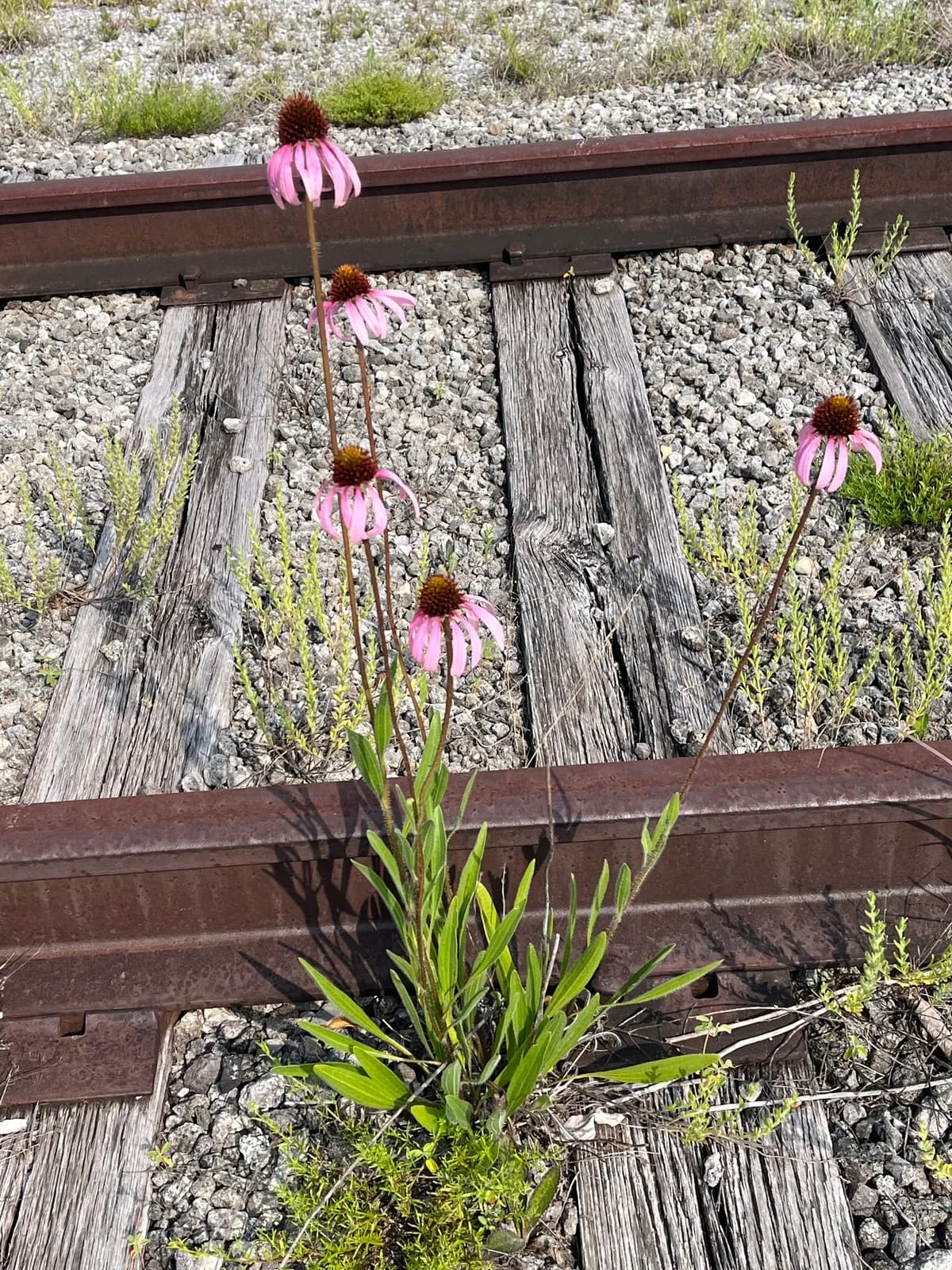
Upright perennial with rough, wavy-margined leaves and large daisy-like flowers with drooping pale pink petals surrounding a spiny bronze-orange central cone, blooming through summer on dry limestone glades and prairies.
Growing Wavy-leaf purple-coneflower
Grow Wavy-leaf purple-coneflower in full sun and low water. Mature plants reach 24 to 48 inches tall and spread 12 to 18 inches wide.
How to care for Wavy-leaf purple-coneflower, by region
How to care for Wavy-leaf purple-coneflower where it is actually grown: year-round basics plus what to do each season, region by region, with the sources for each.
Care guidance last updated: September 2026
Ouachita Mountains (includes Hot Springs, AR)
Year-round
The name most authorities use for Echinacea simulata is wavyleaf purple coneflower, also called glade coneflower or Ozark coneflower. Our database tags it as native to Arkansas, but the Lady Bird Johnson Wildflower Center's own range listing for this species does not include Arkansas, so this guidance treats that as unsettled rather than repeating it as fact. What is well documented is that it wants full sun, fast draining rocky or gravelly soil, and once established it shrugs off the dry spells common here.
- Full sun and quick draining soil, rocky, sandy, or gravelly, is the top requirement. Wet low spots are the main way to lose this plant.
- It grows from a taproot, so pick its spot with care. It resents being moved once settled in.
- Once established, expect it to handle Arkansas dry spells without regular supplemental watering.
- Treat any 'native here' claim with caution. The Lady Bird Johnson Wildflower Center's range listing for this species does not include Arkansas.
- Echinacea as a genus is not on the ASPCA's list of plants toxic to dogs, cats, or horses, though eating any plant material can still upset a pet's stomach.
Fall
Fall, along with spring, is a good time to divide an overgrown clump or move plants around the bed, since Arkansas falls stay mild enough for new roots to settle in before winter. Stop deadheading as days shorten and let the last round of flowers go to seed. Those seed heads are what carry the plant's wildlife value into winter.
- Divide crowded clumps in early fall so new divisions get several weeks of mild weather to root before frost.
- Leave this season's seed heads standing rather than cutting the plant back now.
- Water new fall divisions until the ground cools, then let rainfall take over.
- Clearing away any mildewed or yellowed leaves in fall cuts down on fungus that can overwinter nearby.
Winter
Leave the dried stems and seed heads standing through winter instead of cutting the plant to the ground in fall. Hot Springs winters are mild enough that an established plant's dormant taproot needs no extra mulch, and the standing stems and cones are what keep feeding goldfinches and sheltering overwintering insects. Cut the old growth back in late winter, just before new basal leaves start to show.
- Skip the fall cutback. Leave stems and seed heads up until late winter or early spring.
- No winter mulch needed on an established plant here. Good drainage matters more than winter cover.
- Watch for standing water around the crown after winter rain. The taproot rots in soil that stays soggy.
- Cut old stems down in late winter, right before new basal growth starts, to reset the plant for spring.
Leaving stems and seed heads up over winter can look unfinished to an HOA board used to a clean cut bed. A crisp edge along the planting line helps it read as intentional winter interest, not neglect.
Spring
In early spring, cut back any dead stems left standing from winter once new basal leaves appear, and this is also one of the two best windows, along with early fall, for dividing an overcrowded clump. Growth from the taproot is often slow to show, so do not assume a plant is dead just because it is late to leaf out. Skip heavy fertilizer, since this plant is built for lean, rocky glade soil and rich soil tends to make it floppy.
- Cut old flower stalks down to a few inches once you see new basal leaves.
- Spring is one of the two best times of year, with early fall, to divide a crowded clump.
- Skip fertilizer. Lean, rocky soil is what this plant is built for.
- Water new spring transplants regularly for their first few weeks, then taper off.
Summer
This coneflower blooms roughly June through August here, with pale pinkish purple petals and a notably bright lemon yellow center that helps tell it apart from other purple coneflowers. Deadhead spent blooms through the first part of summer to keep new flowers coming. Let the last flush of the season go to seed instead of deadheading, since those seed heads matter later in the year.
- Deadhead by cutting the spent flower stem back to the next leaf or bud to push out more blooms.
- Stop deadheading by late summer so the remaining flowers can form seed heads for fall and winter birds.
- Once established, it handles Arkansas summer heat and dry stretches without extra watering.
- Space plants for good air movement. Crowded, humid conditions are what invite powdery mildew on Echinacea.
Deadheading spent blooms through midsummer keeps the bed looking tended, which reads as intentional care, not neglect, to a passing HOA board.
Sources: Lady Bird Johnson Wildflower Center, Echinacea simulata species page, ASPCA, Purple Coneflower toxic and non-toxic plants page, Prairie Moon Nursery, Echinacea simulata (Ozark Coneflower) growing profile, Missouri Department of Conservation, Compatible, Adaptable Coneflowers, Ask Extension, coneflower care answer, Clemson Cooperative Extension HGIC, How to Grow Echinacea
Wildlife value
Nectar-rich flowers attract many species of bees and butterflies, and the seed heads feed goldfinches and other seed-eating birds in fall.
Common questions
- How much sun does Wavy-leaf purple-coneflower need?
- Wavy-leaf purple-coneflower grows best in full sun conditions.
- When does Wavy-leaf purple-coneflower bloom?
- Wavy-leaf purple-coneflower blooms in June, July, and August.
- Where is Wavy-leaf purple-coneflower native?
- Wavy-leaf purple-coneflower (Echinacea simulata) is native to AR, GA, IL, IN and 3 more states, per the World Checklist of Vascular Plants (Kew).
- What pollinators does Wavy-leaf purple-coneflower attract?
- Wavy-leaf purple-coneflower draws bees and butterflies.
Native range data from the World Checklist of Vascular Plants (Kew). Pollinator and host plant associations compiled from GBIF, iNaturalist, and published ecological literature.
If something looks wrong
Common plant problems, and what to check first
These come up on almost any plant. Each guide lists the likely causes in the order they are worth ruling out, with one thing to check before you act on any of them, and links to the source it came from.
- It is dying right after planting
- Leaves turning yellow
- Wilting even though I watered it
- Brown crispy leaf tips
- Bugs on the plant
Ready to grow Wavy-leaf purple-coneflower? Add it to your garden in Pollinator Patch to track it and get season-by-season care guidance.