Western Redbud
Cercis occidentalis
Last reviewed: September 2026
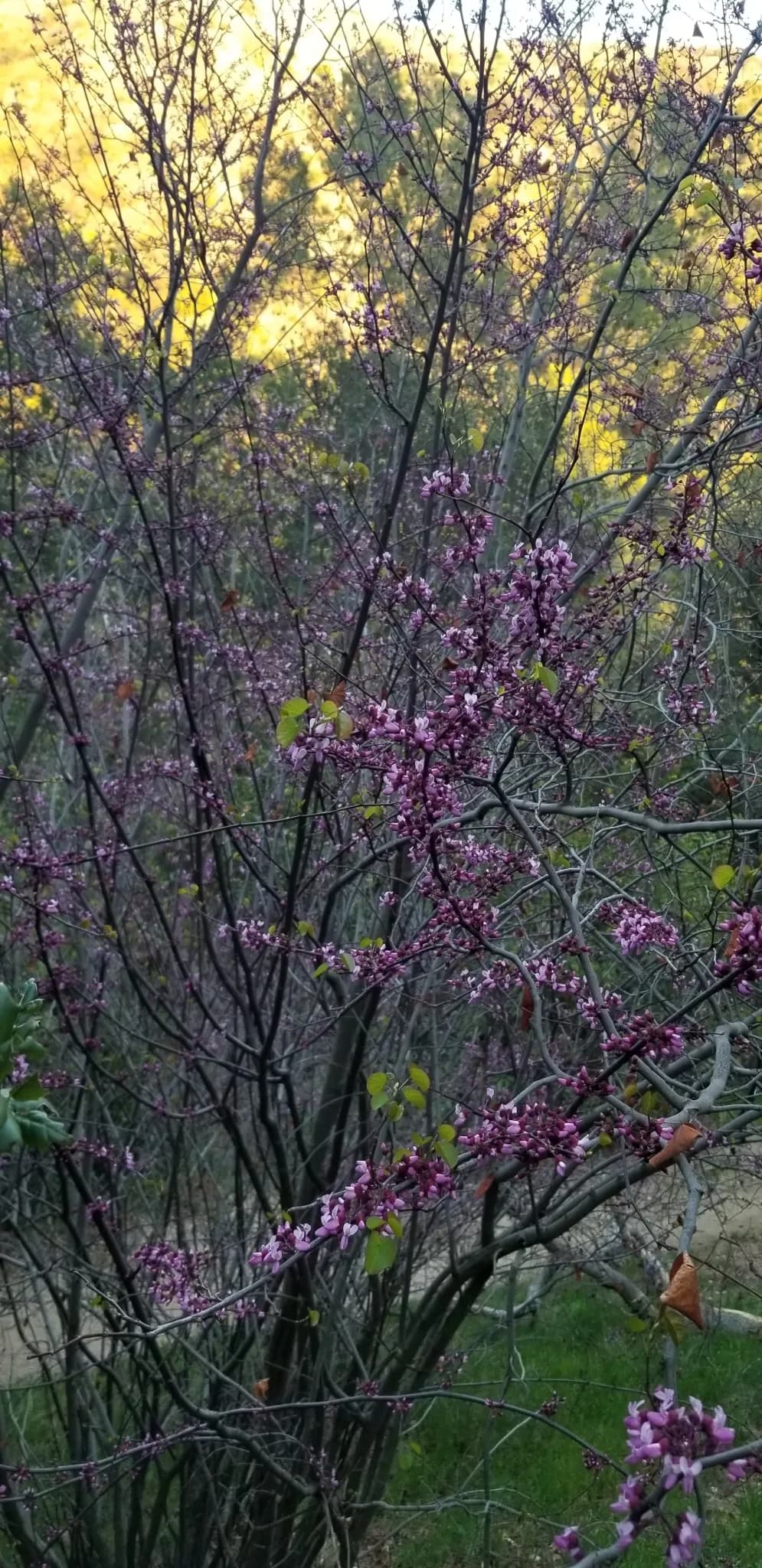
Western redbud is a small multi-trunked tree that covers itself in magenta-pink flowers from March through May before its heart-shaped leaves emerge. It thrives on dry, sunny slopes and rocky canyons and needs little water once established.
Toxicity unknown
Western Redbud (Cercis occidentalis) is not listed by the ASPCA Animal Poison Control Center (opens in new tab) or the other sources we check, so we have no verdict for it either way. Absence from those lists is not a clearance. If your pet shows symptoms after eating any plant, call the ASPCA at (888) 426-4435.
Light
full sun
Water
low
Size
120"–360" H × 120"–300" W
Bloom
Mar, Apr, May
Native to
CA, OR
Pollinators
bees, butterflies
Before you buy
Your city may pay you to plant this
Cities and water utilities offer rebates for replacing lawn with native and water-wise plants. We track 459 programs across 44 states, each with a link to the provider and the date we last checked it.
Find rebates in your areaPicture natives in your own yard
Upload a photo of your yard and Patch Vision shows a rendering of it planted with natives for your region, like Western Redbud.


Browse plants for this ecoregion
Western redbud is a small native tree with striking pink-purple flowers in early spring before leaves emerge. It features heart-shaped leaves that turn yellow in fall and attractive seed pods that persist through winter. This drought-tolerant tree works well as a focal point or in mixed borders.
Growing Western Redbud
Grow Western Redbud in full sun and low water. Mature plants reach 120 to 360 inches tall and spread 120 to 300 inches wide. Expect low maintenance to keep it looking intentional in a front yard.
How to care for Western Redbud, by region
How to care for Western Redbud where it is actually grown: year-round basics plus what to do each season, region by region, with the sources for each.
Care guidance last updated: August 2026
Central California Valley (includes Sacramento, CA)
Year-round
Western Redbud is a small native tree or large shrub that lights up with magenta-pink flowers in early spring, then rests through the hot dry summer. Once its roots are settled in, it wants almost no summer water in the Sacramento valley.
- Give it full sun and plant it on a slight mound in our heavy valley clay so water drains away from the trunk, since redbud hates wet feet in summer.
- Water deeply but not often through only the first summer or two while roots establish, then wean it off almost entirely.
- It is a bee and butterfly plant and a caterpillar host, so skip pesticides near it and let a little leaf-chewing go (host plant and pollinator value per Xerces Society and Calscape, California Native Plant Society).
- The number-one local killer is frequent summer water on an established plant, which invites crown and root rot in warm clay soil.
Fall
Fall is the best time to plant Western Redbud in the Sacramento valley, timed to the first rains so roots settle in before next summer. This is the planting window, not spring.
- Plant new redbud in October or November so the coming winter rains do the establishing for you.
- Set the root ball on a slight mound in heavy clay and water it in well at planting, then let the rains take over.
- In fall the leaves turn and drop and you may see flat brown seed pods, all normal, and the bare structure is part of the plant's yearly cycle.
- Do not start a regular watering habit just because you planted, one good soak at planting plus the rains is usually enough.
A newly planted redbud can look like a bare stick over winter, so a tidy mulch ring and a clear bed edge signal an intentional new planting rather than a dead twig to an HOA reviewer.
Winter
Winter is the valley's cool, wet growing season, and Western Redbud spends it leafless while its roots drink up the rain. Let the weather do the watering.
- Give little or no supplemental water in December through February, since winter rain and Tule fog keep the soil moist for you.
- This is the right time for any harder structural pruning while the branches are bare, though the plant needs very little.
- The mild valley frosts do not harm an established redbud, so no cold protection is needed.
- If you want more redbuds, winter's damp soil is a good time to collect and scatter or plant the seed for natural germination.
Spring
Spring is peak show for Western Redbud, when the bare branches erupt in magenta-pink flowers (March to May) before the round leaves unfold. The soil is still moist from winter rain, so it needs little help from you.
- Enjoy the bloom and let the flowers finish on their own, since bees and early butterflies are working them (pollinator value per Calscape, California Native Plant Society).
- Do most pruning right after bloom if you need to shape it, keeping cuts light so you do not remove next year's flower wood.
- Taper off any supplemental water as the days warm, letting the plant coast on leftover winter soil moisture.
- Pull spring weeds by hand around the base rather than watering or feeding, which redbud does not need in our soils.
Summer
Summer in the valley is hot and bone-dry, and an established Western Redbud rests through it. The single most important thing you can do is stop watering it.
- For an established tree, give little or no water at all through June to September, since summer irrigation on a summer-resting native is the top cause of rot and death here.
- If a redbud is still in its first summer or two after planting, water deeply and slowly maybe once every two or three weeks, then let the soil dry out fully between soakings.
- Expect some leaves to look tired or drop a little in the worst heat, which is normal drought rest and not a sign to start watering.
- Keep any lawn or thirsty plants and their sprinklers away from the trunk so it never sits in summer-wet clay.
To keep a resting redbud reading as intentional rather than neglected from the curb, keep a clean mulched ring and a defined bed edge under it so a few dropped leaves look like a cared-for planting, not a violation-letter problem.
Sources: Calscape, California Native Plant Society, Cercis occidentalis profile, Xerces Society, native plants for pollinators and host associations, Las Pilitas Nursery, Cercis occidentalis growing notes, UC Master Gardeners, planting California natives in fall for winter establishment, UC Davis Arboretum and Public Garden, All-Stars low-water California natives
Southern California/Northern Baja Coast (includes Los Angeles, CA)
Year-round
Western redbud is a small native tree that does well in Los Angeles when you pick a cooler inland or foothill spot rather than the immediate coast, water it well while it settles in, and then largely leave it alone.
- Give it full sun to light shade, it flowers best with plenty of sun but tolerates part shade in hot inland yards.
- Plant it in well drained soil, it handles clay and a wide pH range from acidic to alkaline just fine.
- Water deeply and fairly often for the first one to two years so the roots can establish, then cut back to occasional deep soaks once it is settled in.
- Expect a small multi trunked tree or large shrub, usually landing somewhere between 8 and 15 feet tall and about as wide in a Los Angeles yard.
- Pick a site with some winter chill, such as the San Fernando Valley, foothill neighborhoods, or inland canyons, rather than right along the beach, redbud wants a real winter to bloom and leaf out well.
Fall
In fall the leaves turn yellow to red before dropping, and the dry reddish brown seed pods that are left behind on bare branches are a normal part of the tree's winter look rather than something to clean up right away.
- Foliage shifts to yellow or red and drops gradually through fall, this is normal seasonal change, not a sign of a problem.
- The papery reddish brown seed pods left over from spring's flowers will often hang on through fall and winter and are part of the plant's natural look, you do not have to strip them off.
- Fallen pods and leaves are dry and light, a quick pass with a rake or blower is usually enough if you want a tidier looking bed underneath.
- This is a good window to do any structural pruning while the tree is heading into dormancy, focus on removing dead, crossing, or weak branches rather than heavy shaping.
A quick rake or blower pass on fallen leaves and pods keeps the bed looking tidy from the sidewalk without needing to strip the winter seed pods off the branches.
Winter
Winter is when western redbud goes fully dormant and bare, and in the Los Angeles area it is also the season that decides how well the tree will flower, since it needs a real cool stretch to bloom and leaf out well the following spring.
- Expect a completely bare, twiggy silhouette through winter, with the dry reddish brown seed pods from last year often still hanging on the branches.
- This species wants some winter chill to flower and leaf out well, which is part of why it does best in cooler inland Los Angeles neighborhoods and foothill spots rather than right along the immediate coast.
- Cut back watering in winter if the season brings normal rain, and hold off on new plantings or heavy pruning during a hard cold snap.
- Late winter, once the coldest nights have passed, is a good time to do any last structural pruning before new growth and flower buds start to push.
A neat, bare winter silhouette with the seed pods left in place reads as intentional rather than untidy, no extra winter cleanup is really needed.
Spring
Spring is western redbud's big show in Los Angeles, with bright magenta flowers covering the bare branches from around February into April before the leaves come in.
- Watch for brilliant magenta, pea shaped flowers to open directly on the bare branches, usually from February into April, ahead of the heart shaped leaves.
- Keep up regular watering through spring while Los Angeles's rainy season winds down, a deep soak every so often works better than frequent light sprinkles.
- Check new leaves for aphids every week or two while growth is fast, a strong spray of water from the hose usually knocks them off without needing a spray.
- If you want to shape the tree, wait until right after the flowers finish so you are not cutting off the bloom.
Summer
Once established, western redbud is genuinely drought tolerant through the Los Angeles summer, but a young tree still needs deep watering and inland heat calls for a bit of extra care.
- For a tree in its first one to two summers, water deeply on a regular schedule so the root system can finish developing, do not let it dry out completely between soaks.
- Once established, cut back to occasional deep summer watering, this species is genuinely drought tolerant and does not want to stay wet all summer.
- In hotter inland parts of the Los Angeles area, a little afternoon shade or a layer of mulch over the root zone helps keep roots cooler and cuts down on how often you need to water.
- The seed pods that followed spring's flowers are green and developing now, no action needed, they will dry and turn reddish brown as fall approaches.
Sources: Calscape: Western Redbud (Cercis occidentalis), Theodore Payne Foundation Native Plant Database: Cercis occidentalis, UC Master Gardeners of Placer County: Western Redbuds, Las Pilitas Nursery: Cercis occidentalis, Western Redbud, UC IPM: Aphids, Home and Landscape
In an HOA neighborhood
Western Redbud is an HOA-friendly choice. Maintenance level: low. Tidiness: 4 out of 5.
Works well in: front yard, foundation, street edge, mid zone.
- Leaf drop in fall requires seasonal cleanup
- Seed pods may be considered messy by some HOAs
Wildlife value
Host plant for western tussock moth.
Western redbud flowers provide valuable nectar for bees and butterflies in early spring when few other sources are available. Birds may also use the tree for nesting and shelter.
Common questions
- When does Western redbud bloom?
- Western redbud typically flowers from March through May, with clusters of small pink to magenta blooms appearing on bare branches before the leaves unfold.
- How much water does Western redbud need?
- Once established, Western redbud is drought tolerant and prefers infrequent, deep watering. It grows well with low to occasional moderate irrigation and does poorly in constantly wet soil.
- What kind of light does Western redbud need?
- Western redbud grows best in full sun but will also tolerate part sun, especially in hotter inland locations where some afternoon shade can help the foliage.
- Do pollinators visit Western redbud flowers?
- Yes, the early spring flowers of Western redbud are an important nectar source for bees, and butterflies also visit the blooms.
- Does Western redbud lose its leaves in winter?
- Yes, Western redbud is deciduous. It drops its rounded, heart-shaped leaves in fall and stays bare through winter until spring flowering begins.
- Is Western Redbud HOA-friendly?
- Western Redbud is generally an HOA-friendly choice in the right placement, with low maintenance.
These answers were drafted with an AI model from this plant's data. Verify care details with a local expert.
Native range data from vouchered herbarium specimen records and regional native plant society lists. Pollinator and host plant associations compiled from GBIF, iNaturalist, and published ecological literature.
If something looks wrong
Common plant problems, and what to check first
These come up on almost any plant. Each guide lists the likely causes in the order they are worth ruling out, with one thing to check before you act on any of them, and links to the source it came from.
- It is dying right after planting
- Leaves turning yellow
- Wilting even though I watered it
- Brown crispy leaf tips
- Bugs on the plant
Ready to grow Western Redbud? Add it to your garden in Pollinator Patch to track it and get season-by-season care guidance.