Western silver aster
Symphyotrichum sericeum
Last reviewed: August 2026
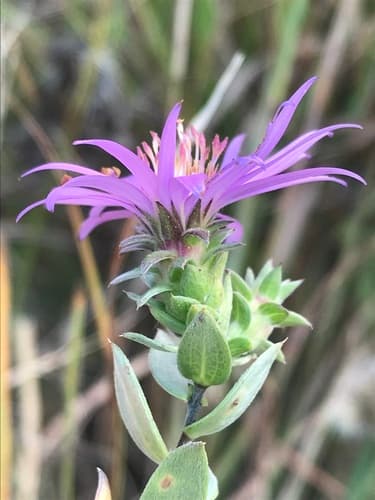
Western silver aster is a drought tolerant prairie forb that blooms in September and October with silvery lavender rays. It thrives in full sun and dry soil across Great Plains and Midwest grasslands.
Toxicity unknown
Western silver aster (Symphyotrichum sericeum) is not listed by the ASPCA Animal Poison Control Center (opens in new tab) or the other sources we check, so we have no verdict for it either way. Absence from those lists is not a clearance. If your pet shows symptoms after eating any plant, call the ASPCA at (888) 426-4435.
Light
full sun
Water
low
Size
12"–24" H × 12"–18" W
Bloom
Sep, Oct
Native to
AR, GA, IA, IN and 12 more states
Pollinators
bees, butterflies
Before you buy
Your city may pay you to plant this
Cities and water utilities offer rebates for replacing lawn with native and water-wise plants. We track 459 programs across 44 states, each with a link to the provider and the date we last checked it.
Find rebates in your areaPicture natives in your own yard
Upload a photo of your yard and Patch Vision shows a rendering of it planted with natives for your region, like Western silver aster.


Browse plants for this ecoregion
A clump-forming perennial forb with narrow, silvery-hairy leaves and a profusion of small daisy-like flowers with violet-purple rays and yellow centers in late summer and fall. Prefers dry, well-drained soils in full sun.
Growing Western silver aster
Grow Western silver aster in full sun and low water. Mature plants reach 12 to 24 inches tall and spread 12 to 18 inches wide. Expect moderate maintenance to keep it looking intentional in a front yard.
How to care for Western silver aster, by region
How to care for Western silver aster where it is actually grown: year-round basics plus what to do each season, region by region, with the sources for each.
Care guidance last updated: July 2026
Cross Timbers (includes Fort Worth, TX)
Year-round
Western silver aster is a low, silvery leaved native aster that covers itself in small violet purple, yellow centered flowers late in the growing season. It wants full sun and very little water once it has a season in the ground.
- Plant in full sun. It needs at least 6 hours of direct sun a day to bloom well and stay compact instead of flopping open.
- Give it dry, fast draining soil. In heavy black clay, plant it high on a slight mound or amend the hole for drainage; in the sandier soils west of the metro it drains on its own but will need water more often through its first summer.
- Space plants 12 to 18 inches apart. It slowly forms a small mounded clump 1 to 2 feet tall and a bit wider over a few seasons.
- It is a larval host plant for the pearl crescent butterfly, so expect some chewed leaves in late summer. That is the plant doing its job, not a pest problem to treat.
Fall
Fall is this plant's moment. From September into October it is covered in small violet purple, yellow centered flowers right as most of the yard is winding down.
- Expect peak bloom in September and October, the plant's only bloom window for the year.
- Leave the flowers in place rather than deadheading. The seed heads that follow feed goldfinches and sparrows through fall.
- Watch for caterpillars on the leaves in late summer into fall. Those are pearl crescent butterfly larvae using the plant as a host, not a pest to spray.
- This is also a good month to divide an overcrowded clump, digging and splitting the root mass into two or three sections to replant or share.
A blooming clump reads as a deliberate, tidy fall accent, a low mound of small flowers rather than anything that looks unkempt. Point to the bloom if a neighbor asks what it is.
Winter
North Texas winters are mild with only short hard freezes, and this aster goes fully dormant, dying back to a low rosette at the base.
- Leave the dried stems standing through winter rather than cutting them to the ground. Hollow stems and leaf litter shelter overwintering insects, including caterpillars from the fall generation.
- Cut the whole clump back to about 3 inches only in late February, just before new spring growth starts, if you want a tidier look sooner.
- No winter watering is needed in a normal year. Water only during an extended dry spell with no rain for several weeks.
- A hard, multi-day Arctic outbreak will brown the top growth further, but the root crown of an established plant handles it fine; do not replant early from that alone.
Standing dried stems can look neglected to a passerby. If tidiness matters more than the wildlife benefit this winter, cut back in December instead of waiting for late February.
Spring
Spring is the best time to get a new western silver aster in the ground here, while the soil is still cool and rain is more regular.
- Plant any time after the last frost in mid March through May, while spring rain is doing most of the watering for you.
- Water a new plant twice a week for its first three to four weeks so the roots can spread before the summer heat arrives.
- Cut back any dried flower stalks left standing from last fall to about 3 inches once new green growth appears at the base.
- Skip fertilizer. This plant is bred for lean, low fertility soil and rich soil makes it floppy and less compact.
A young plant is low and unremarkable in spring, nothing to explain to a neighbor yet.
Summer
Once established this plant is built for the hard part of a North Texas summer. It will not bloom yet, but it should hold its silvery low mound through the heat with little help.
- An established plant (its second summer or later) needs no supplemental water except during a stretch of three or more weeks without rain.
- A first-summer plant still needs a deep soak once a week during July and August, the stretch when new plantings are most likely to die here.
- Do not mulch heavily against the base. This aster wants dry air and dry soil around its crown, thick mulch invites rot in our humidity.
- If the lower leaves yellow and drop in the driest weeks, that is normal drought response, not a sign to add water.
Sources: USDA PLANTS Database, Symphyotrichum sericeum profile, Illinois Wildflowers, Silky Aster (community tip), Missouri Dept of Conservation, Pearl Crescent field guide
Texas Blackland Prairies (includes Dallas, TX)
Year-round
Western silver aster is a low, silvery leaved native aster that covers itself in small violet purple, yellow centered flowers late in the growing season. It wants full sun and very little water once it has a season in the ground.
- Plant in full sun. It needs at least 6 hours of direct sun a day to bloom well and stay compact instead of flopping open.
- Give it dry, fast draining soil. In heavy black clay, plant it high on a slight mound or amend the hole for drainage; in the sandier soils west of the metro it drains on its own but will need water more often through its first summer.
- Space plants 12 to 18 inches apart. It slowly forms a small mounded clump 1 to 2 feet tall and a bit wider over a few seasons.
- It is a larval host plant for the pearl crescent butterfly, so expect some chewed leaves in late summer. That is the plant doing its job, not a pest problem to treat.
Fall
Fall is this plant's moment. From September into October it is covered in small violet purple, yellow centered flowers right as most of the yard is winding down.
- Expect peak bloom in September and October, the plant's only bloom window for the year.
- Leave the flowers in place rather than deadheading. The seed heads that follow feed goldfinches and sparrows through fall.
- Watch for caterpillars on the leaves in late summer into fall. Those are pearl crescent butterfly larvae using the plant as a host, not a pest to spray.
- This is also a good month to divide an overcrowded clump, digging and splitting the root mass into two or three sections to replant or share.
A blooming clump reads as a deliberate, tidy fall accent, a low mound of small flowers rather than anything that looks unkempt. Point to the bloom if a neighbor asks what it is.
Winter
North Texas winters are mild with only short hard freezes, and this aster goes fully dormant, dying back to a low rosette at the base.
- Leave the dried stems standing through winter rather than cutting them to the ground. Hollow stems and leaf litter shelter overwintering insects, including caterpillars from the fall generation.
- Cut the whole clump back to about 3 inches only in late February, just before new spring growth starts, if you want a tidier look sooner.
- No winter watering is needed in a normal year. Water only during an extended dry spell with no rain for several weeks.
- A hard, multi-day Arctic outbreak will brown the top growth further, but the root crown of an established plant handles it fine; do not replant early from that alone.
Standing dried stems can look neglected to a passerby. If tidiness matters more than the wildlife benefit this winter, cut back in December instead of waiting for late February.
Spring
Spring is the best time to get a new western silver aster in the ground here, while the soil is still cool and rain is more regular.
- Plant any time after the last frost in mid March through May, while spring rain is doing most of the watering for you.
- Water a new plant twice a week for its first three to four weeks so the roots can spread before the summer heat arrives.
- Cut back any dried flower stalks left standing from last fall to about 3 inches once new green growth appears at the base.
- Skip fertilizer. This plant is bred for lean, low fertility soil and rich soil makes it floppy and less compact.
A young plant is low and unremarkable in spring, nothing to explain to a neighbor yet.
Summer
Once established this plant is built for the hard part of a North Texas summer. It will not bloom yet, but it should hold its silvery low mound through the heat with little help.
- An established plant (its second summer or later) needs no supplemental water except during a stretch of three or more weeks without rain.
- A first-summer plant still needs a deep soak once a week during July and August, the stretch when new plantings are most likely to die here.
- Do not mulch heavily against the base. This aster wants dry air and dry soil around its crown, thick mulch invites rot in our humidity.
- If the lower leaves yellow and drop in the driest weeks, that is normal drought response, not a sign to add water.
Sources: USDA PLANTS Database, Symphyotrichum sericeum profile, Illinois Wildflowers, Silky Aster (community tip), Missouri Dept of Conservation, Pearl Crescent field guide
In an HOA neighborhood
Western silver aster is an HOA-friendly choice. Maintenance level: moderate. Tidiness: 3 out of 5.
Works well in: mid zone, street edge.
- Can look informal or leggy by season's end if not cut back
Wildlife value
Host plant for pearl crescent butterfly.
Late-season flowers are an important nectar source for bees and butterflies, and the foliage serves as a larval host for pearl crescent butterflies.
Common questions
- When does Western silver aster bloom?
- Western silver aster typically flowers in September and October, providing late season color as many other prairie plants finish blooming.
- What growing conditions does Western silver aster need?
- This forb does best in full sun with low water once established, making it a good fit for dry prairies, rocky slopes, and other well drained sites.
- What pollinators visit Western silver aster?
- Bees and butterflies commonly visit the flowers of Western silver aster, drawn to its late season blooms when fewer other nectar sources are available.
- Does Western silver aster stay green year round?
- No. As an herbaceous forb, it dies back to the ground each year and produces new growth from its base in spring.
- Is Western silver aster HOA-friendly?
- Western silver aster is generally an HOA-friendly choice in the right placement, with moderate maintenance.
These answers were drafted with an AI model from this plant's data. Verify care details with a local expert.
Native range data from the World Checklist of Vascular Plants (Kew). Pollinator and host plant associations compiled from GBIF, iNaturalist, and published ecological literature.
If something looks wrong
Common plant problems, and what to check first
These come up on almost any plant. Each guide lists the likely causes in the order they are worth ruling out, with one thing to check before you act on any of them, and links to the source it came from.
- It is dying right after planting
- Leaves turning yellow
- Wilting even though I watered it
- Brown crispy leaf tips
- Bugs on the plant
Ready to grow Western silver aster? Add it to your garden in Pollinator Patch to track it and get season-by-season care guidance.