Nodding Onion
Allium cernuum
Last reviewed: October 2026
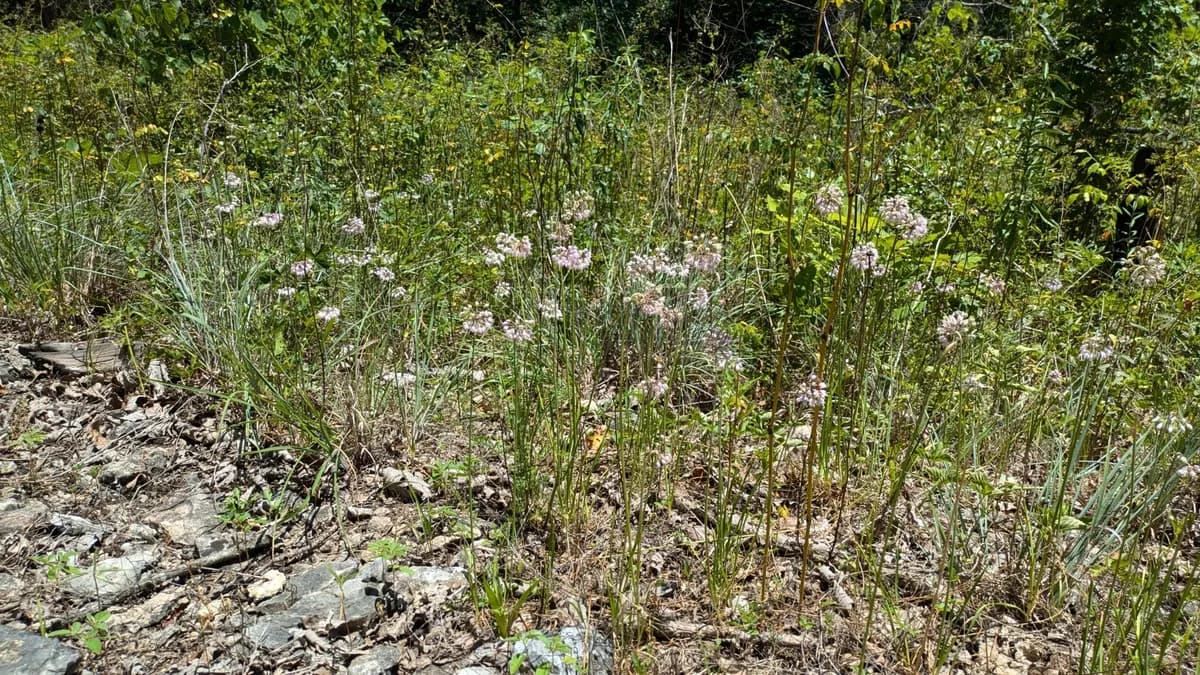
Allium cernuum, or nodding onion, produces drooping pink to lavender flower clusters from June through August and thrives in prairies, rocky slopes, and open woodland edges with part sun and medium moisture.
Toxicity unknown
Nodding Onion (Allium cernuum) is not listed by the ASPCA Animal Poison Control Center (opens in new tab) or the other sources we check, so we have no verdict for it either way. Absence from those lists is not a clearance. If your pet shows symptoms after eating any plant, call the ASPCA at (888) 426-4435.
Light
part sun
Water
medium
Size
8"–24" H × 6"–12" W
Bloom
Jun, Jul, Aug
Native to
AL, AR, AZ, CO and 28 more states
Pollinators
bees, butterflies, moths
Deer
Resistant (per Prairie Moon Nursery)
Before you buy
Your city may pay you to plant this
Cities and water utilities offer rebates for replacing lawn with native and water-wise plants. We track 459 programs across 44 states, each with a link to the provider and the date we last checked it.
Find rebates in your areaPicture natives in your own yard
Upload a photo of your yard and Patch Vision shows a rendering of it planted with natives for your region, like Nodding Onion.


Browse plants for this ecoregion
Wild onion is a graceful native bulb that produces clusters of drooping pink to white flowers on slender stems in summer. The narrow, grass-like leaves emerge in spring and die back by late summer, making this plant essentially dormant through fall and winter.
Growing Nodding Onion
Grow Nodding Onion in part sun and medium water. Mature plants reach 8 to 24 inches tall and spread 6 to 12 inches wide. Expect low maintenance to keep it looking intentional in a front yard.
How to care for Nodding Onion, by region
How to care for Nodding Onion where it is actually grown: year-round basics plus what to do each season, region by region, with the sources for each.
Care guidance last updated: October 2026
Cross Timbers (includes Fort Worth, TX)
Year-round
Nodding onion is a small grassy bulb that sends up pink, downward nodding flower clusters in early summer. Before you plant it, know that it belongs to the onion group, and the ASPCA lists onion and chives as toxic to dogs, cats and horses, so choose a spot away from where a pet chews or digs.
- Plant it where a dog does not dig and a cat does not graze. The ASPCA lists onion (Allium cepa) and chives (Allium schoenoprasum), both in the same Allium group as this plant, as toxic to dogs, cats and horses, with vomiting and damage to red blood cells among the reported signs. If a pet eats any part, call your vet or ASPCA Poison Control at (888) 426-4435.
- Give it full sun to part shade. In North Texas the afternoon is the punishing part of the day, so morning sun with light afternoon shade holds up better than an all day west facing wall.
- It likes neutral to alkaline soil and handles lime well, so heavy black clay suits it once drainage is sorted out: plant high on a slight mound 2 to 3 inches above grade, or mix a few inches of expanded shale into the planting area. In the sandier soils west of the metro it drains fast on its own but will need water more often through the first summer.
- Expect 8 to 24 inches tall and about a foot wide, with pink flowers from June into August.
- This is a seasonal presence, not year round greenery. After bloom the leaves yellow and the plant goes dormant underground until spring.
The foliage is thin and grassy, which can look scruffy when a single clump stands alone. It reads as intentional when you repeat the same clump three or four times along a clean edged bed line instead of dotting one here and there.
Fall
Autumn is when you divide crowded clumps and move bulbs around, and it is a good second planting window. The leaves yellow and die back on their own, which is normal and not a problem.
- Divide in September or October, about every third year or once you can count 8 to 10 bulbs in one clump. Lift the clump, pull the small offset bulbs apart by hand, and replant them 4 to 6 inches apart.
- Collect seed in September or October, when the capsules turn tan, if you want to sow more.
- Autumn planting works well here. In heavy black clay, set the bulb high on a slight mound so winter rain drains away from it. In the sandier soils west of the metro, plant at grade.
- Once the leaves have gone fully brown, usually November, cut them off at about 2 inches. Do not cut them while they are still green.
- Bag the dug bulbs, divisions and trimmings instead of leaving them on the lawn or in the driveway. The ASPCA lists onion and chives, the same Allium group as this plant, as toxic to dogs, cats and horses.
A short, even cutback once the foliage browns, paired with a clean bed edge, keeps the dormant patch reading as intentional through winter instead of looking like something nobody tended.
Winter
There is almost nothing to do. The bulbs sit underground through winter and handle anything North Texas throws at them, including a short hard freeze or a severe Arctic outbreak.
- Skip watering from December through February unless the winter turns bone dry. In a rainless stretch, one deep soaking a month is plenty.
- Keep about 2 inches of mulch over the spot, and mark it with a small stake or plant tag so you do not put a shovel through the bulbs while planting something else.
- If you did not cut the browned leaves back in November, do it in January. Take them off at about 2 inches so the crown stays easy to find.
- Pull cool season weeds such as henbit out of the patch in January and February, while the ground is soft and the onion leaves have not come up yet.
- There is no need to cover it during a freeze. This plant is hardy from zone 4a to 8b, far colder than our 8a to 8b winters.
Winter is when a dormant bulb patch looks like a bare gap, so an even mulch depth and a defined edge do the work of making the bed read as intentional until the leaves return in March.
Spring
Spring is the planting window and the wake up season. Grassy leaves push up as soon as the weather warms, and mid March, once the last frost has passed, is the time to get new plants or bulbs into the ground.
- Plant potted plants or bulbs from mid March through April, after the last frost. Set bulbs about 2 inches deep and 4 to 6 inches apart.
- In heavy black clay, plant high on a slight mound 2 to 3 inches above grade so water moves away from the bulb. In the sandier soils west of the metro you can plant at grade, but plan on watering more often.
- Water a new planting about twice a week for the first 4 to 6 weeks so roots get down deep before the July heat arrives.
- Wash your hands after handling bulbs, and do not leave loose bulbs or trimmings sitting on the ground where a pet could reach them. The ASPCA lists onion and chives, the same Allium group as this plant, as toxic to dogs, cats and horses.
- Pull cool season weeds out of the clump by hand in March, while the onion leaves are still short and easy to tell apart from the weeds.
Cutting a crisp bed edge in March, while the clumps are still only a few inches tall, is the cheapest way to make a young planting read as intentional from the street.
Summer
Flowers open in June and keep going into August. July and August are when new plantings die in North Texas, so summer is mostly about water, not work.
- Water a first year planting deeply once a week through July and August, closer to twice a week in the sandier soils west of the metro. An established clump can usually go 2 weeks between soakings.
- Snip spent flower stems off at the base once the pink has faded, usually late July, if you would rather it did not seed itself around the bed.
- Leave a few flower heads if you want more plants. The seed capsules ripen and turn tan in September and October.
- Do not cut the leaves back while they are still green, even if they flop over. Those leaves are feeding the bulb for next year.
- Keep about 2 inches of shredded mulch around the clump, pulled back off the leaves, to hold moisture through the rainless weeks.
Snipping the finished flower stems in late July keeps the planting looking cared for during the stretch when the rest of the yard looks tired, which is when a front yard draws the most comment.
Sources: ASPCA Toxic and Non-Toxic Plants: Onion (Allium cepa), ASPCA Toxic and Non-Toxic Plants: Chives (Allium schoenoprasum), Lady Bird Johnson Wildflower Center: Allium cernuum, NC State Extension Plant Toolbox: Allium cernuum
Erie Drift Plain (includes Buffalo, NY)
Year-round
Nodding onion likes full sun and soil that stays a little moist, and it looks best planted in small groups.
- Give it full sun and humus-rich soil that is neutral to a bit alkaline.
- Plant it in small groups for the best look.
- Divide the clump every third year or when it has 8 to 10 bulbs.
Flower stalks and leaves fade by late summer, so tuck it among tidier neighbors to keep the bed looking neat.
Fall
Fall is the time to collect seed and divide bulblets.
- Collect seed in September or October when capsules turn tan and seeds turn black.
- Sow seed outdoors in fall.
- Divide offset bulblets in fall if the clump is crowded.
Winter
In winter the bulbs rest underground, so leave them alone.
- Snow cover is fine for bulbs in the ground.
- Skip watering and fertilizing.
- Mark the spot so you do not dig it up in spring.
Spring
In spring the grassy leaves come up, so keep the soil lightly moist and wait out any late frost.
- Keep the spot in full sun.
- Water if a dry spell hits while leaves are growing.
- Spring in Buffalo can still freeze, so do not worry if tips get nipped.
Summer
Summer is bloom time, from June through August, and moist soil helps it do well.
- Expect pink or white nodding flowers.
- Water during dry stretches so the soil stays moist.
- No fertilizer is needed.
Northern Piedmont (includes Lancaster, PA)
Year-round
Nodding onion is an easy, low-fuss bulb for sunny spots in Lancaster. Give it good drainage and mostly leave it alone.
- Pick a spot with full sun and soil that drains well. Lancaster's neutral to limy soil suits it.
- Plant it in small groups of bulbs and mix it in with other perennials.
- Divide the clump every third year, or when you count 8 to 10 bulbs.
- Eating a lot of it can upset your stomach, so don't snack on the garden.
Fall
Fall is the best time to divide, sow seed, and plant bulbs in Lancaster. Leaves fade as the plant goes to sleep.
- Collect seed once the capsules turn tan and the seeds are black, usually September to October.
- Divide crowded clumps and replant the bulblets in fall.
- Sow seed outdoors in fall so winter cold can wake it up in spring.
Fading leaves can look ragged. Tuck the clump behind or among other perennials, and trim yellow leaves if they bother you.
Winter
Winter is rest time. The bulbs sleep underground and need almost nothing from you.
- It is hardy through Lancaster winters, which fall in zone 7.
- No watering or feeding is needed.
- Avoid soggy spots, since wet winter soil is the main risk to bulbs.
Spring
Spring is when the grassy leaves pop up. Lancaster's last frost is usually in mid to late April, and this bulb shrugs off cool weather.
- Expect thin, flat green leaves in March and April. Cold snaps will not hurt them.
- Water new plantings if a dry spell lasts more than a week or two.
- Mark the clump so you don't dig it up by mistake while planting nearby.
- Deer sometimes nibble new spring growth, so check young plants.
Summer
Summer is bloom time. Nodding pink to white flower heads show up from June through August.
- Once settled, it handles Lancaster's hot, humid stretches with little extra water.
- Give new plants a deep drink weekly in a dry spell, then ease off.
- Leave the blooms up for bees and butterflies, which visit them.
- Snip flowers before seed forms if you don't want it to self-seed.
Sources: Lady Bird Johnson Wildflower Center - Allium cernuum, University of Wisconsin Extension - Nodding Onion, NC State Extension Plant Toolbox - Allium cernuum
Southeastern Plains (includes Tallahassee, FL)
Year-round
Nodding onion is a bulb in the onion family with clusters of pink to white flowers that nod to one side. It is not native to Florida, but it can be grown as an ornamental bulb in a Tallahassee garden with the right drainage.
- Give it full sun, or light afternoon shade in Tallahassee's hot summers, and well drained soil. Soggy soil will rot the bulbs.
- Plant bulbs in fall, about 2 to 3 inches deep and 4 to 6 inches apart.
- Water regularly while it is actively growing and blooming, then let the soil dry out more once it goes dormant.
- Divide crowded clumps every 3 to 4 years in fall once you see 8 to 10 bulbs bunched together.
- It is in the same genus as onions and garlic, which the ASPCA lists as toxic to dogs and cats, so keep pets from digging up and chewing the bulbs.
Its grassy foliage and airy flower clusters read as tidy in a front bed as long as clumps are divided before they get crowded.
Fall
Fall is the best time to plant new bulbs and divide crowded clumps of nodding onion.
- Plant new bulbs in fall, 2 to 3 inches deep, in well drained soil.
- Divide clumps that have built up 8 to 10 bulbs to keep the planting from getting congested.
- Foliage dies back for dormancy around this time. That is normal and not a sign of a problem.
Winter
Nodding onion goes dormant over winter in Tallahassee and needs little attention until spring.
- No regular watering is needed while the bulbs are dormant.
- Well drained soil is what protects the bulbs through wet winter weather, so avoid low spots that stay soggy.
- Mark where bulbs are planted so you do not accidentally dig into them while they are leafless.
Spring
Spring is a quieter growth period for nodding onion, as it puts up grassy foliage ahead of its summer bloom.
- Keep soil moist but not soggy as new growth emerges.
- Spring is a fine time to plant potted nursery starts if you did not plant bulbs the previous fall.
- Watch for slug or snail damage on tender new leaves in damp spring weather.
Summer
Summer brings the nodding, bell-shaped flower clusters that give this plant its name, blooming from early to late summer.
- Water during dry stretches, but let the soil dry between waterings since wet summer soil can rot the bulbs.
- Deadhead spent flower clusters if you do not want it to self-seed around the bed.
- Good drainage matters more than extra water in Tallahassee's hot, humid summers.
Sources: NC State Extension Gardener Plant Toolbox - Allium cernuum, ASPCA - Toxic and Non-Toxic Plants: Onion, Lady Bird Johnson Wildflower Center - Allium cernuum
Texas Blackland Prairies (includes Dallas, TX)
Year-round
Nodding onion is a small grassy bulb that sends up pink, downward nodding flower clusters in early summer. Before you plant it, know that it belongs to the onion group, and the ASPCA lists onion and chives as toxic to dogs, cats and horses, so choose a spot away from where a pet chews or digs.
- Plant it where a dog does not dig and a cat does not graze. The ASPCA lists onion (Allium cepa) and chives (Allium schoenoprasum), both in the same Allium group as this plant, as toxic to dogs, cats and horses, with vomiting and damage to red blood cells among the reported signs. If a pet eats any part, call your vet or ASPCA Poison Control at (888) 426-4435.
- Give it full sun to part shade. In North Texas the afternoon is the punishing part of the day, so morning sun with light afternoon shade holds up better than an all day west facing wall.
- It likes neutral to alkaline soil and handles lime well, so heavy black clay suits it once drainage is sorted out: plant high on a slight mound 2 to 3 inches above grade, or mix a few inches of expanded shale into the planting area. In the sandier soils west of the metro it drains fast on its own but will need water more often through the first summer.
- Expect 8 to 24 inches tall and about a foot wide, with pink flowers from June into August.
- This is a seasonal presence, not year round greenery. After bloom the leaves yellow and the plant goes dormant underground until spring.
The foliage is thin and grassy, which can look scruffy when a single clump stands alone. It reads as intentional when you repeat the same clump three or four times along a clean edged bed line instead of dotting one here and there.
Fall
Autumn is when you divide crowded clumps and move bulbs around, and it is a good second planting window. The leaves yellow and die back on their own, which is normal and not a problem.
- Divide in September or October, about every third year or once you can count 8 to 10 bulbs in one clump. Lift the clump, pull the small offset bulbs apart by hand, and replant them 4 to 6 inches apart.
- Collect seed in September or October, when the capsules turn tan, if you want to sow more.
- Autumn planting works well here. In heavy black clay, set the bulb high on a slight mound so winter rain drains away from it. In the sandier soils west of the metro, plant at grade.
- Once the leaves have gone fully brown, usually November, cut them off at about 2 inches. Do not cut them while they are still green.
- Bag the dug bulbs, divisions and trimmings instead of leaving them on the lawn or in the driveway. The ASPCA lists onion and chives, the same Allium group as this plant, as toxic to dogs, cats and horses.
A short, even cutback once the foliage browns, paired with a clean bed edge, keeps the dormant patch reading as intentional through winter instead of looking like something nobody tended.
Winter
There is almost nothing to do. The bulbs sit underground through winter and handle anything North Texas throws at them, including a short hard freeze or a severe Arctic outbreak.
- Skip watering from December through February unless the winter turns bone dry. In a rainless stretch, one deep soaking a month is plenty.
- Keep about 2 inches of mulch over the spot, and mark it with a small stake or plant tag so you do not put a shovel through the bulbs while planting something else.
- If you did not cut the browned leaves back in November, do it in January. Take them off at about 2 inches so the crown stays easy to find.
- Pull cool season weeds such as henbit out of the patch in January and February, while the ground is soft and the onion leaves have not come up yet.
- There is no need to cover it during a freeze. This plant is hardy from zone 4a to 8b, far colder than our 8a to 8b winters.
Winter is when a dormant bulb patch looks like a bare gap, so an even mulch depth and a defined edge do the work of making the bed read as intentional until the leaves return in March.
Spring
Spring is the planting window and the wake up season. Grassy leaves push up as soon as the weather warms, and mid March, once the last frost has passed, is the time to get new plants or bulbs into the ground.
- Plant potted plants or bulbs from mid March through April, after the last frost. Set bulbs about 2 inches deep and 4 to 6 inches apart.
- In heavy black clay, plant high on a slight mound 2 to 3 inches above grade so water moves away from the bulb. In the sandier soils west of the metro you can plant at grade, but plan on watering more often.
- Water a new planting about twice a week for the first 4 to 6 weeks so roots get down deep before the July heat arrives.
- Wash your hands after handling bulbs, and do not leave loose bulbs or trimmings sitting on the ground where a pet could reach them. The ASPCA lists onion and chives, the same Allium group as this plant, as toxic to dogs, cats and horses.
- Pull cool season weeds out of the clump by hand in March, while the onion leaves are still short and easy to tell apart from the weeds.
Cutting a crisp bed edge in March, while the clumps are still only a few inches tall, is the cheapest way to make a young planting read as intentional from the street.
Summer
Flowers open in June and keep going into August. July and August are when new plantings die in North Texas, so summer is mostly about water, not work.
- Water a first year planting deeply once a week through July and August, closer to twice a week in the sandier soils west of the metro. An established clump can usually go 2 weeks between soakings.
- Snip spent flower stems off at the base once the pink has faded, usually late July, if you would rather it did not seed itself around the bed.
- Leave a few flower heads if you want more plants. The seed capsules ripen and turn tan in September and October.
- Do not cut the leaves back while they are still green, even if they flop over. Those leaves are feeding the bulb for next year.
- Keep about 2 inches of shredded mulch around the clump, pulled back off the leaves, to hold moisture through the rainless weeks.
Snipping the finished flower stems in late July keeps the planting looking cared for during the stretch when the rest of the yard looks tired, which is when a front yard draws the most comment.
Sources: ASPCA Toxic and Non-Toxic Plants: Onion (Allium cepa), ASPCA Toxic and Non-Toxic Plants: Chives (Allium schoenoprasum), Lady Bird Johnson Wildflower Center: Allium cernuum, NC State Extension Plant Toolbox: Allium cernuum
In an HOA neighborhood
Nodding Onion is an HOA-friendly choice in the right placement. Maintenance level: low. Tidiness: 2 out of 5.
Works well in: front yard, mid zone.
- Goes completely dormant leaving bare spots
- May look too wild or weedy for formal settings
- Common name 'wild onion' could raise concerns
Wildlife value
The nodding flower clusters are excellent for bees, butterflies, and moths during the summer bloom period. Seeds also provide food for birds.
Common questions
- When does Allium cernuum bloom?
- Nodding onion typically flowers from June through August, producing small pink to lavender umbels that droop or nod at the stem tip.
- What pollinators visit Allium cernuum?
- Bees, butterflies, and moths regularly visit the nodding clusters of flowers for nectar during the summer bloom period.
- How much light and water does nodding onion need?
- It grows best in part sun with medium moisture, though established plants tolerate drier, rockier soils once settled in.
- What kind of habitat suits Allium cernuum?
- It is often found in open prairies, glades, rocky outcrops, and dry to medium-moisture woodland edges where drainage is good.
- Is Nodding Onion HOA-friendly?
- Nodding Onion is generally an HOA-friendly choice in the right placement, with low maintenance.
These answers were drafted with an AI model from this plant's data. Verify care details with a local expert.
Native range data from the World Checklist of Vascular Plants (Kew). Pollinator and host plant associations compiled from GBIF, iNaturalist, and published ecological literature.
If something looks wrong
Common plant problems, and what to check first
These come up on almost any plant. Each guide lists the likely causes in the order they are worth ruling out, with one thing to check before you act on any of them, and links to the source it came from.
- It is dying right after planting
- Leaves turning yellow
- Wilting even though I watered it
- Brown crispy leaf tips
- Bugs on the plant
Ready to grow Nodding Onion? Add it to your garden in Pollinator Patch to track it and get season-by-season care guidance.