Yellowtop
Flaveria linearis
Last reviewed: August 2026
Toxicity unknown
Yellowtop (Flaveria linearis) is not listed by the ASPCA Animal Poison Control Center (opens in new tab) or the other sources we check, so we have no verdict for it either way. Absence from those lists is not a clearance. If your pet shows symptoms after eating any plant, call the ASPCA at (888) 426-4435.
Light
full sun
Water
medium
Size
18"–36" H × 12"–24" W
Bloom
Jun, Jul, Aug, Sep, Oct
Native to
FL
Pollinators
butterflies
Before you buy
Your city may pay you to plant this
Cities and water utilities offer rebates for replacing lawn with native and water-wise plants. We track 452 programs across 44 states, each with a link to the provider and the date we last checked it.
Find rebates in your areaBrowse plants for this ecoregion
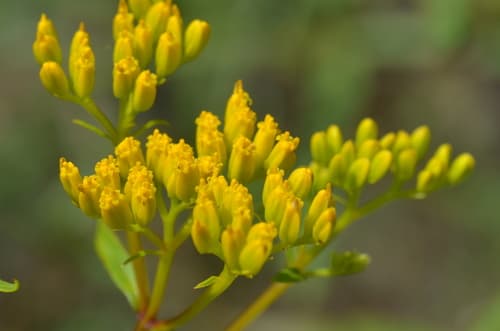
Yellowtop is an upright perennial forb or subshrub with narrow leaves and flat-topped clusters of small yellow flowers that bloom over much of the year. It grows in coastal flatwoods and the edges of brackish marshes.
How to care for Yellowtop, by region
How to care for Yellowtop where it is actually grown: year-round basics plus what to do each season, region by region, with the sources for each.
Care guidance last updated: September 2026
Southern Coastal Plain (includes Orlando, FL)
Year-round
Yellowtop is a fast growing Florida perennial with small clusters of tiny yellow flowers that bees and butterflies love. It naturally grows along Florida's coast, so in inland Orlando it is best treated as a well adapted garden plant rather than a true local native, and it still needs full sun and well drained soil to do its best.
- Give it full sun, at least six hours of direct light a day, for the fullest bloom.
- Plant in average to sandy, well drained soil. It does not need rich or heavily amended soil.
- Its documented native range is Florida's coastal counties from about Levy and St. Johns south to the Keys, so inland Orange County falls outside that range. Treat it here as a well adapted landscape plant rather than a local native.
- It is not on the current ASPCA toxic plant list for dogs or cats.
- Water two to three times a week while it establishes, then it tolerates dry spells once rooted in.
Fall
Fall is yellowtop's biggest bloom season in Central Florida, with clusters of small yellow flowers covering the plant and drawing in a long list of butterflies before the first cool front arrives.
- Fall is the main bloom season, small yellow flower clusters cover the plant from late summer into fall.
- Deadhead spent flower clusters to keep the plant tidy and to encourage more blooms before the first cool front.
- It is a nectar source for many Florida butterflies including cassius blue, Julia, and several skipper species, so keep it in a sunny, visible spot where they can find it.
- Orlando's first fall frost usually does not arrive until early December, so there is a long bloom window here before any cold slows it down.
Deadheading spent blooms keeps the plant looking tended rather than scraggly along the front of a bed, a quick habit that helps avoid a tidiness complaint before it starts.
Winter
Orlando winters are mild but can bring an occasional frost or hard freeze, so yellowtop may die back on top, and the trick is waiting for new growth before you prune so the bed looks intentional again quickly.
- Orlando usually sees its first light frost by mid December and its last possible frost close to early February, with an occasional harder freeze in between.
- After a freeze, wait about a week and look for new sprouting before you prune. Dead top growth actually helps protect the crown from the next cold snap.
- Yellowtop is rated hardy in zones 8b through 11, so Orlando's zone sits well within its comfort range, and a hard freeze is more likely to knock back the top growth than kill the plant outright.
- Mulch lightly around the base going into winter to buffer the roots during any cold snap.
Leaving obvious frost browned stems up over winter can read as neglect to an HOA inspector, but resist cutting right after a freeze. Wait for new growth, then prune back to the live wood so the bed looks intentional again fast.
Spring
Spring is when yellowtop wakes back up from winter and pushes out fresh green growth, so this is a good time to finish any cold cleanup and to plant new ones once the frost risk has passed.
- Wait until you see fresh new growth before cutting back any stems that got frost damaged over winter. Cutting too soon strips away the plant's own insulation against another cold snap.
- Scratch a stem lightly to check underneath. Green tissue means it is still alive, brown or black means prune back to that point.
- Orlando's average last frost lands in early February, so mid to late February through March is a solid window to plant new yellowtop.
- Hold off on fertilizer until the frost risk has passed, then a light feed can help push new growth.
Summer
Florida's hot, rainy summer pushes yellowtop into fast, leafy growth, so the main job is keeping it bushy instead of floppy and watching for a few common pests on the new growth.
- Expect fast, leafy growth through the rainy season from June through September.
- Pinch or trim lanky stems back by a few inches in early summer to keep the mound bushy instead of falling open.
- It handles humid heat and heavy rain well and usually needs no extra watering beyond normal summer rainfall.
- Check new growth for aphids or whitefly. A strong spray of water from the hose usually clears them.
- It has medium salt tolerance and takes stress well, so a missed watering during a dry stretch will not set it back much.
Sources: Florida Native Plant Society, Flaveria linearis plant profile, Atlas of Florida Plants, Flaveria linearis species page, ASPCA Toxic and Non-Toxic Plant List, Dogs, UF/IFAS Florida-Friendly Landscaping, Yellowtop plant profile, Florida Wildflower Foundation, Narrowleaf yellowtops (community tip), Almanac.com, Frost Dates for Orlando, Florida (community tip)
Want these tasks as reminders timed to your yard? Pollinator Patch turns this guidance into a season-by-season care plan for the plants you actually grow.
Wildlife value
It is an important nectar source for many butterflies, including long-distance migrants, thanks to its long, reliable bloom period.
Common questions
- How much sun does Yellowtop need?
- Yellowtop grows best in full sun conditions.
- When does Yellowtop bloom?
- Yellowtop blooms in June, July, August, September, and October.
- Where is Yellowtop native?
- Yellowtop (Flaveria linearis) is native to FL, per the World Checklist of Vascular Plants (Kew).
- What pollinators does Yellowtop attract?
- Yellowtop draws butterflies.
Native range data from the World Checklist of Vascular Plants (Kew). Pollinator and host plant associations compiled from GBIF, iNaturalist, and published ecological literature.
If something looks wrong
Common plant problems, and what to check first
These come up on almost any plant. Each guide lists the likely causes in the order they are worth ruling out, with one thing to check before you act on any of them, and links to the source it came from.
- It is dying right after planting
- Leaves turning yellow
- Wilting even though I watered it
- Brown crispy leaf tips
- Bugs on the plant
Ready to grow Yellowtop? Add it to your garden in Pollinator Patch to track it and get season-by-season care guidance.
Planning a bed around it? Start a free plan with this plant
Not sure where to start? Take the 2-minute yard quiz