Quick answer: Buffalo Grass stays under 6 inches unmowed, looks uniform and maintained from March through November, and uses roughly half the water of St. Augustine. It goes tan in winter, which some HOAs flag. The fix for that is a pre-approval request that cites Texas Property Code §202.007 (opens in new tab) and subsection (d-1), which limit HOA authority to ban drought-tolerant grass alternatives or reject them on aesthetic grounds.
St. Augustine is the default Texas lawn grass because it is widely available, establishes quickly, and stays green through the summer with enough water. That last part is doing a lot of work. "Enough water" for St. Augustine is about 1 inch per week during the growing season, and Texas summers are long. Buffalo Grass is the native alternative that most Texas homeowners haven't seriously considered, partly because of the winter dormancy question. That question has a workable answer.
What St. Augustine actually costs
St. Augustine requires approximately 1 inch of water per week from May through September in most of Texas. For a 5,000-square-foot lawn, that works out to roughly 60,000 to 80,000 gallons per year depending on rainfall. It also needs fertilization 2-4 times per year to stay dense, and regular mowing during the growing season, typically every 5-7 days in summer when growth is fastest.
It is a high-maintenance grass by any measure. It stays green reliably, which is why HOAs favor it, but the inputs required to keep it that way are significant. In drought years or during water restrictions, St. Augustine lawns decline quickly and can take an entire growing season to recover.
Buffalo Grass: what it looks like and how it behaves
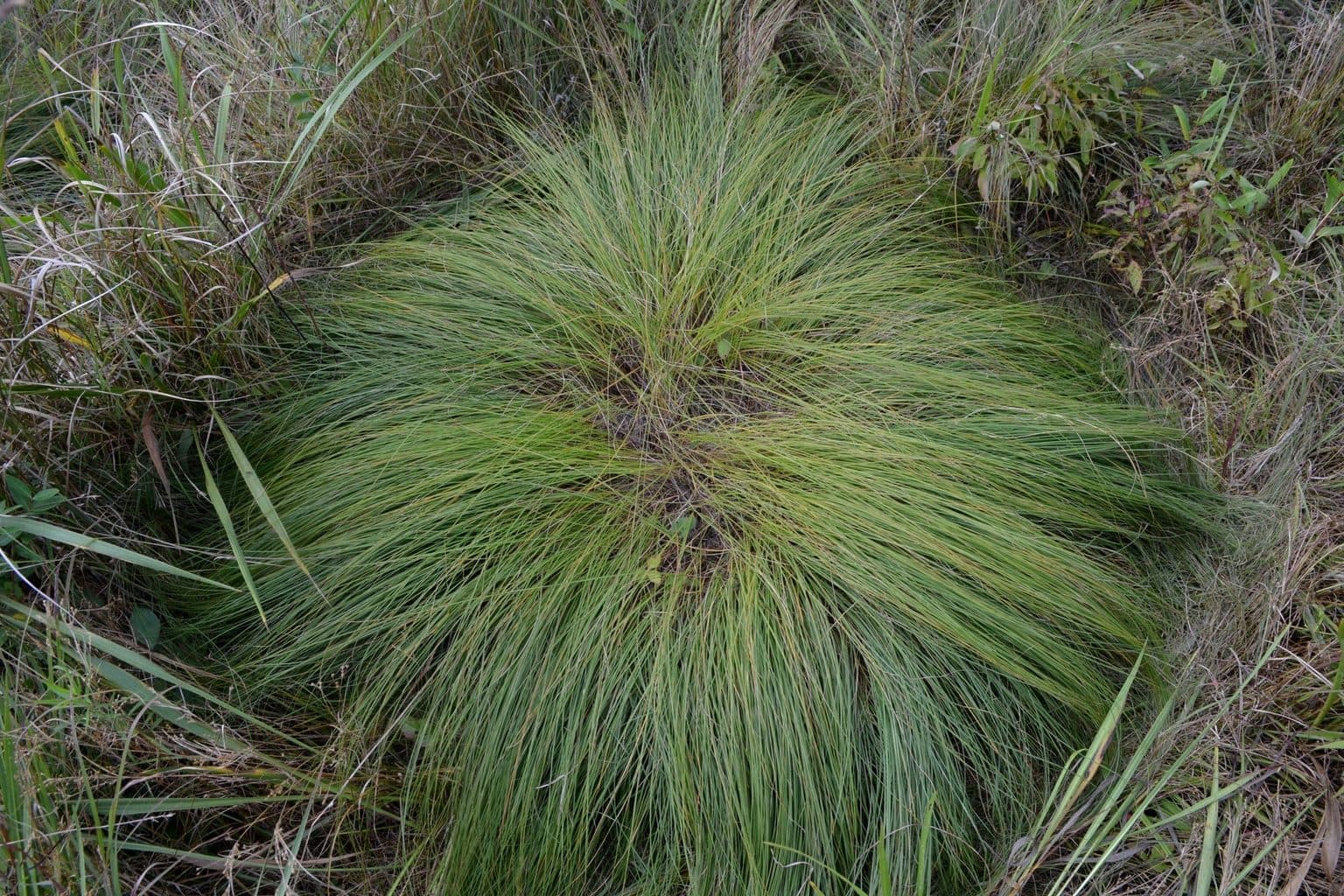
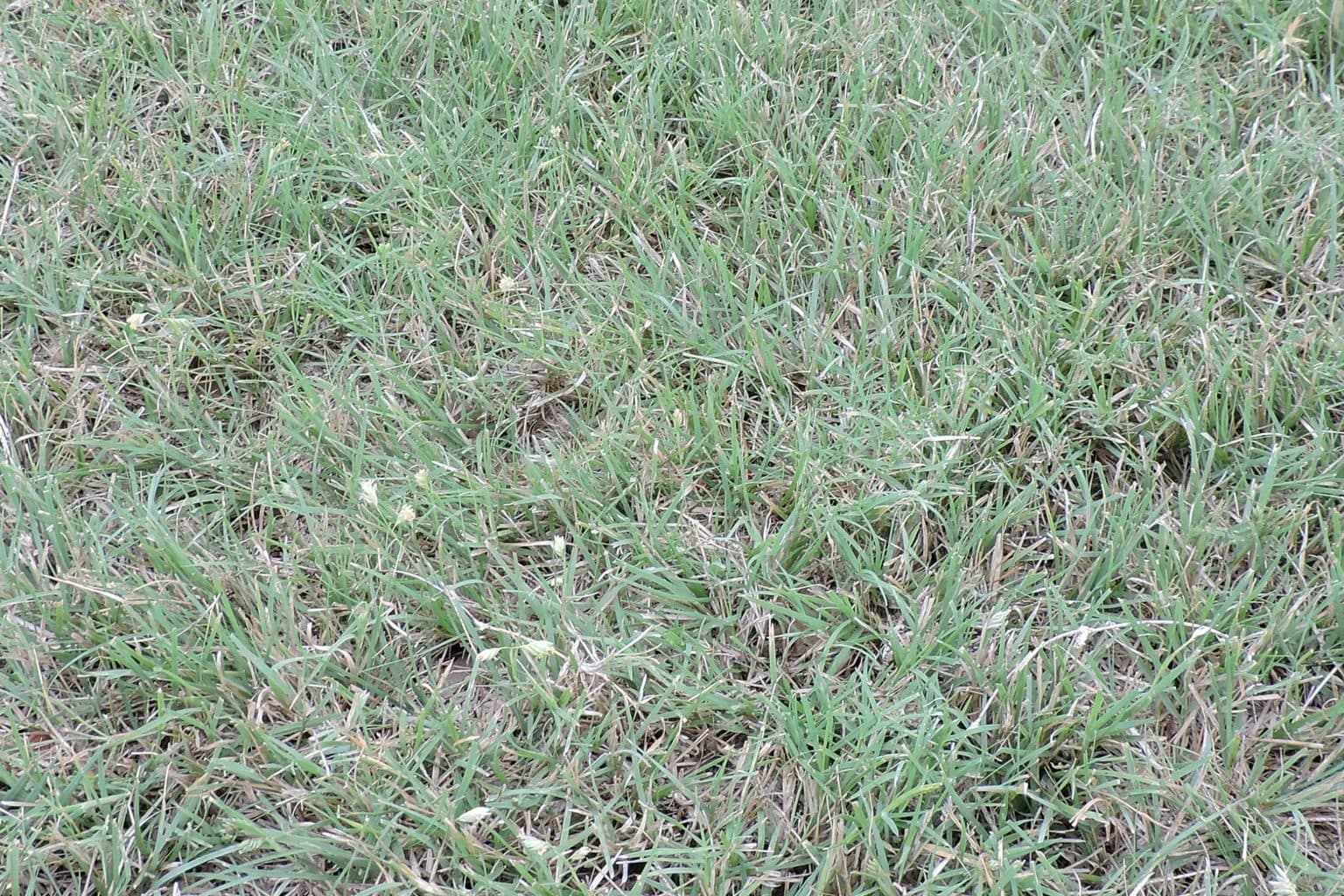
Buffalo Grass (Bouteloua dactyloides) is a native Texas prairie grass. Unmowed, it grows to 4-6 inches and stops. It does not produce visible seed heads at normal lawn height. The texture is fine, soft, and uniform. From March through November, it is green and tidy.
Once established (which takes 4-6 weeks of regular watering after planting), it uses about 25,000 to 35,000 gallons per year for the same 5,000-square-foot area. That is roughly half the water demand of St. Augustine. In a drought year, established Buffalo Grass goes dormant earlier but recovers faster because its root system is deeper.
HOA optics: the key distinction
Buffalo Grass reads as "maintained" because it has a consistent, low, uniform texture. It does not trigger the visual cues that get yards flagged under "neat and orderly" clauses: no tall seed heads, no patchy bare spots if managed correctly, no sprawling growth habit. What it does have is a winter color. That is the one real HOA risk, and it has a straightforward mitigation.
The winter dormancy question
Buffalo Grass goes dormant in December and stays tan through February. This is the primary objection HOA boards raise. In mild winters it can hold some green color into January, but in a typical Texas winter the dormancy is visible from the street.
Two strategies for managing this:
- •Maintain a narrow strip of Bermuda grass along the street-facing edge of your yard if your HOA is strict about winter color. Bermuda holds color longer than St. Augustine in mild winters and reads as maintained. Buffalo Grass fills the rest of the yard where it is less visible from the street.
- •Convert the back half of your front yard to Buffalo Grass first. The area closest to the street stays in its current grass. Over time, as your HOA sees the maintained appearance of the Buffalo Grass during the growing season, the case for full conversion gets easier to make.
Texas law and your pre-approval request
Texas Property Code §202.007 limits HOA authority to restrict water-efficient landscaping, and subsection (d-1) bars unreasonable aesthetic rejections of it. Buffalo Grass qualifies under both provisions.
A pre-approval request that names these statutes is harder for an HOA to deny without documented justification. Your request should include the specific grass species (Bouteloua dactyloides), the area to be converted, and a note that the conversion complies with Texas Property Code §202.007 and §202.007(d-1). This doesn't guarantee approval, but it establishes a paper trail that makes a denial more difficult to sustain if you appeal.
How to make the transition
The transition from St. Augustine to Buffalo Grass requires killing the existing turf first. St. Augustine spreads via stolons and will outcompete Buffalo Grass plugs if any live material remains. Two methods:
- •Solarization: cover the area with clear plastic in summer (July-August), secure the edges, and leave it for 4-6 weeks. The heat kills existing grass and most weed seeds. This is the slower method but avoids herbicides.
- •Herbicide: one application of glyphosate to actively growing St. Augustine followed by a second application 3 weeks later for any missed material. Wait 2 weeks after the second application before planting.
Plant Buffalo Grass plugs or sod in April or May when soil temperatures are above 60 degrees Fahrenheit. Water deeply once per week for the first 4-6 weeks. After establishment, reduce watering and let the grass find its own rhythm. Overwatering established Buffalo Grass encourages thatch and invites weeds.
For more native alternatives to traditional Texas lawns, see Stop Watering Your Lawn: Native Alternatives That Work.
Plan your yard with Pollinator Patch
See which native grasses and ground covers work for your Texas ecoregion and build a yard plan your HOA can review and approve.
Open the app