Quick answer: No. Under Nevada Revised Statute 116.330 (opens in new tab), a Nevada HOA cannot prohibit a unit owner from installing drought-tolerant landscaping in their exclusive-use area, including the front and back yard. The statute must be construed liberally in favor of drought-tolerant landscaping, and the board cannot unreasonably deny approval. Combined with the SNWA Water Smart Landscapes Rebate (up to $5 per square foot in the Las Vegas Valley), Nevada gives homeowners some of the strongest turf-conversion leverage in the country.
Nevada was one of the first states to lock HOA drought-tolerant landscaping protections into statute. NRS 116.330 has been on the books for years, and the Southern Nevada Water Authority pays homeowners more per square foot to remove turf than any other major water utility in the country. The combination is hard to argue with.
Here is exactly what the law protects, what your HOA can still require, and how to put the rebate program to work for you.
NRS 116.330: the statutory protection
Nevada Revised Statute 116.330 is part of the Common-Interest Ownership Act. It is titled "Right of units' owners to install or maintain drought tolerant landscaping" and it gives Nevada homeowners explicit statutory protection.
"The executive board shall not and the governing documents must not prohibit a unit's owner from installing or maintaining drought tolerant landscaping within such physical portion of the common-interest community as that owner has a right to occupy and use exclusively, including, without limitation, the front yard or back yard..."
NRS 116.330(1)
The statute applies to both the executive board's actions and the community's governing documents. A CC&R provision that prohibits drought-tolerant landscaping is not enforceable. This is a stronger formulation than most other states use.
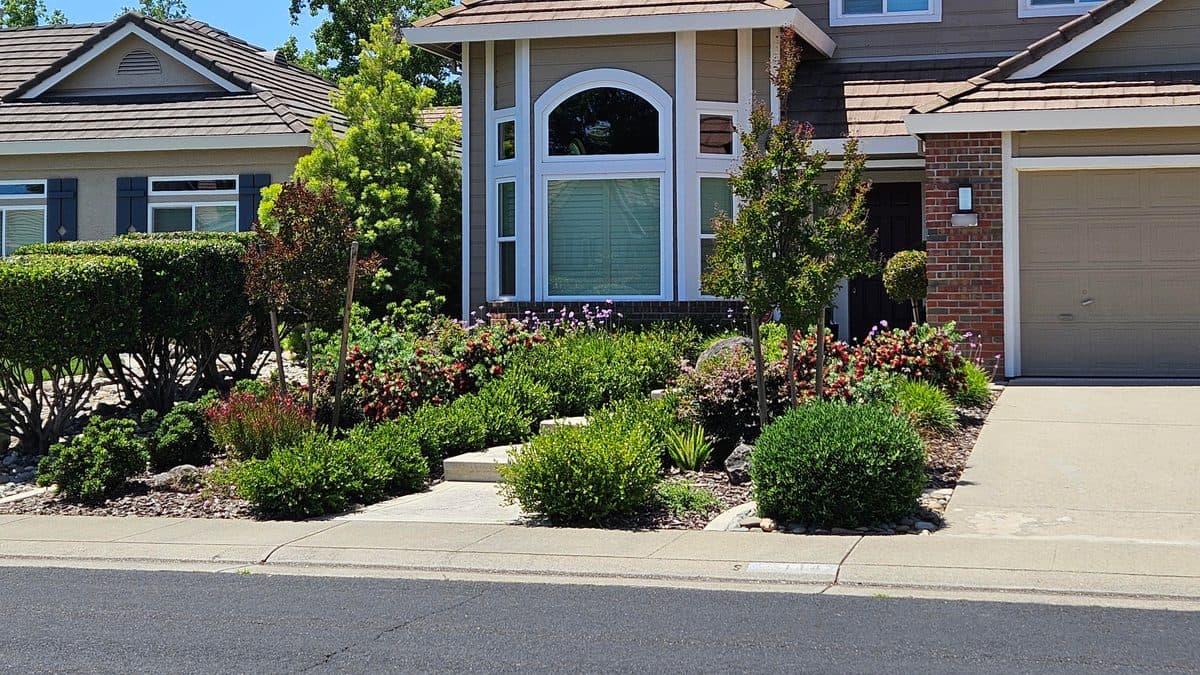
Nevada law defines "drought tolerant landscaping" broadly. It includes plants that conserve water and adapt to local conditions, decorative rock and other mulches, and artificial turf. That breadth matters: in a Las Vegas or Reno yard, the same statute protects a native plant bed, a decomposed-granite path, and an artificial-turf installation.
Liberal construction in your favor
The statute includes an unusual interpretive direction. Subsection (1) requires courts and boards to read the law liberally in favor of drought-tolerant landscaping:
"...the provisions of this subsection must be construed liberally in favor of effectuating the purpose of encouraging the use of drought tolerant landscaping, and the executive board shall not and the governing documents must not unreasonably deny or withhold approval for the installation of drought tolerant landscaping or unreasonably determine that the drought tolerant landscaping is not compatible with the style of the common-interest community."
NRS 116.330(1)
That language tilts the playing field. When a board denies an application, the burden of showing the denial was reasonable falls on the HOA, not the homeowner. Boards in Nevada know this and most architectural review committees approve drought-tolerant projects on the first or second pass.
What your HOA can still require
NRS 116.330 protects the right to install drought-tolerant landscaping but does not eliminate architectural review. The statute itself preserves the HOA's authority to:
- Require submission of a detailed description or plans for architectural review and approval
- Apply the community's approval procedures in the governing documents
- Require drought-tolerant landscaping be selected and designed "to the maximum extent practicable" to be compatible with the community style
- Apply maintenance and tidiness standards (no dead plants, no overgrowth)
- Set height limits near sidewalks, streets, and sight lines
The distinction matters. The HOA cannot ban drought-tolerant landscaping. It can require that your specific design fit the community character, and it can require a written plan before you start.
The SNWA rebate (your other lever)
The Southern Nevada Water Authority Water Smart Landscapes Rebate is the most aggressive turf-removal incentive in the country. Las Vegas Valley homeowners receive $5 per square foot for the first 10,000 square feet converted, and $2.50 per square foot above that, with a maximum of $50,000 per property over the lifetime of ownership.
That is not a small lever in an HOA dispute. When a homeowner submits a plan for architectural review with a pre-approved SNWA rebate attached, the project arrives backed by the regional water authority's policy. Combined with NRS 116.330's "construe liberally" direction, the path to approval gets short.
Northern Nevada has narrower options: Truckee Meadows Water Authority and the City of Reno offer water conservation incentives, but at lower dollar amounts. The state law (NRS 116.330) protects you everywhere in Nevada; the financial leverage is strongest in the Las Vegas Valley.
See current Nevada rebate programs for current amounts and application links.
How to submit a plan that gets approved
The architectural review submission that works best in Nevada is short, specific, and front-loaded with the legal and water-utility frame:
- Cover paragraph that names NRS 116.330 and identifies the project as drought-tolerant landscaping under the statutory definition
- Labeled plant list using both common and scientific names
- Simple bed layout showing plant placement, mulch zones, hardscape, and irrigation lines
- Maintenance schedule covering pruning, weeding, and irrigation
- Pre-approved SNWA Water Smart Landscapes Rebate letter, if available (Las Vegas Valley)
That packet usually clears architectural review on first submission. If it does not, the board's denial letter should identify the specific incompatibility with community style. Vague aesthetic objections do not satisfy the statute's reasonableness requirement.
Common pushback (and how to respond)
"Our CC&Rs require turf grass"
NRS 116.330(1) explicitly says "the governing documents must not prohibit" drought-tolerant landscaping. A CC&R provision that effectively requires turf is unenforceable to the extent it prohibits drought-tolerant alternatives. Cite the statute in writing and ask the board to identify which specific enforceable rule (not the turf requirement) your design violates.
"It doesn't fit the community style"
The statute requires "compatible with the style of the common-interest community" but also requires the board to construe the rule "liberally in favor" of drought-tolerant landscaping. Ask for the specific style incompatibility in writing. A general "it doesn't look like our neighborhood" objection is not enough.
"Artificial turf isn't allowed"
NRS 116.330's definition of drought-tolerant landscaping includes artificial turf. A blanket HOA prohibition on artificial turf in a unit owner's exclusive-use area is unenforceable under the statute.
When to involve a lawyer
Most Nevada disputes are resolved by submitting a clear plan with the statute cited up front. Consider talking to a Nevada HOA or real estate attorney if:
- Your HOA is fining you after you have submitted a plan citing NRS 116.330
- They are denying approval without identifying a specific enforceable style incompatibility
- They are threatening a lien on your property
- You are in the Las Vegas Valley and the board is rejecting a project that already has SNWA rebate pre-approval
A Nevada HOA attorney can usually resolve a denial with one letter citing NRS 116.330's liberal-construction language. It is worth one consultation before assuming the HOA's position is final.
This is not legal advice.
We are a gardening app, not lawyers. This post summarizes publicly available Nevada law as of 2026 from the Nevada Legislature (leg.state.nv.us). Your HOA's specific CC&Rs and your situation are unique. If you are facing fines or legal threats, talk to a Nevada HOA or real estate attorney.
People also ask
Can a Nevada HOA prohibit drought-tolerant landscaping?
No. NRS 116.330(1) explicitly prohibits both HOA boards and governing documents from banning drought-tolerant landscaping in a unit owner's exclusive-use area, including front and back yards.
What counts as drought-tolerant landscaping in Nevada?
Under NRS 116.330, drought-tolerant landscaping includes plants that conserve water and adapt to local conditions, decorative rock and other mulches, and artificial turf. The definition is broad. Most desert-adapted plant beds, decomposed-granite installations, and artificial-turf yards all qualify.
Can my Las Vegas HOA reject my SNWA rebate project?
Not for being drought-tolerant. The HOA can review your specific plan for compatibility with community style under NRS 116.330, but the statute requires "liberal" construction in favor of drought-tolerant landscaping. A pre-approved SNWA Water Smart Landscapes application carries significant weight in architectural review.
How much does Nevada pay for turf removal?
In the Las Vegas Valley, the SNWA Water Smart Landscapes Rebate pays $5 per square foot for the first 10,000 square feet converted, then $2.50 per square foot beyond that, up to $50,000 lifetime per property. Northern Nevada utilities (Truckee Meadows Water Authority and City of Reno) offer smaller programs.
Does NRS 116.330 apply to artificial turf?
Yes. The statute's definition of drought-tolerant landscaping explicitly includes artificial turf. An HOA cannot categorically prohibit artificial turf in a unit owner's exclusive-use area, though it can apply reasonable installation and appearance standards.