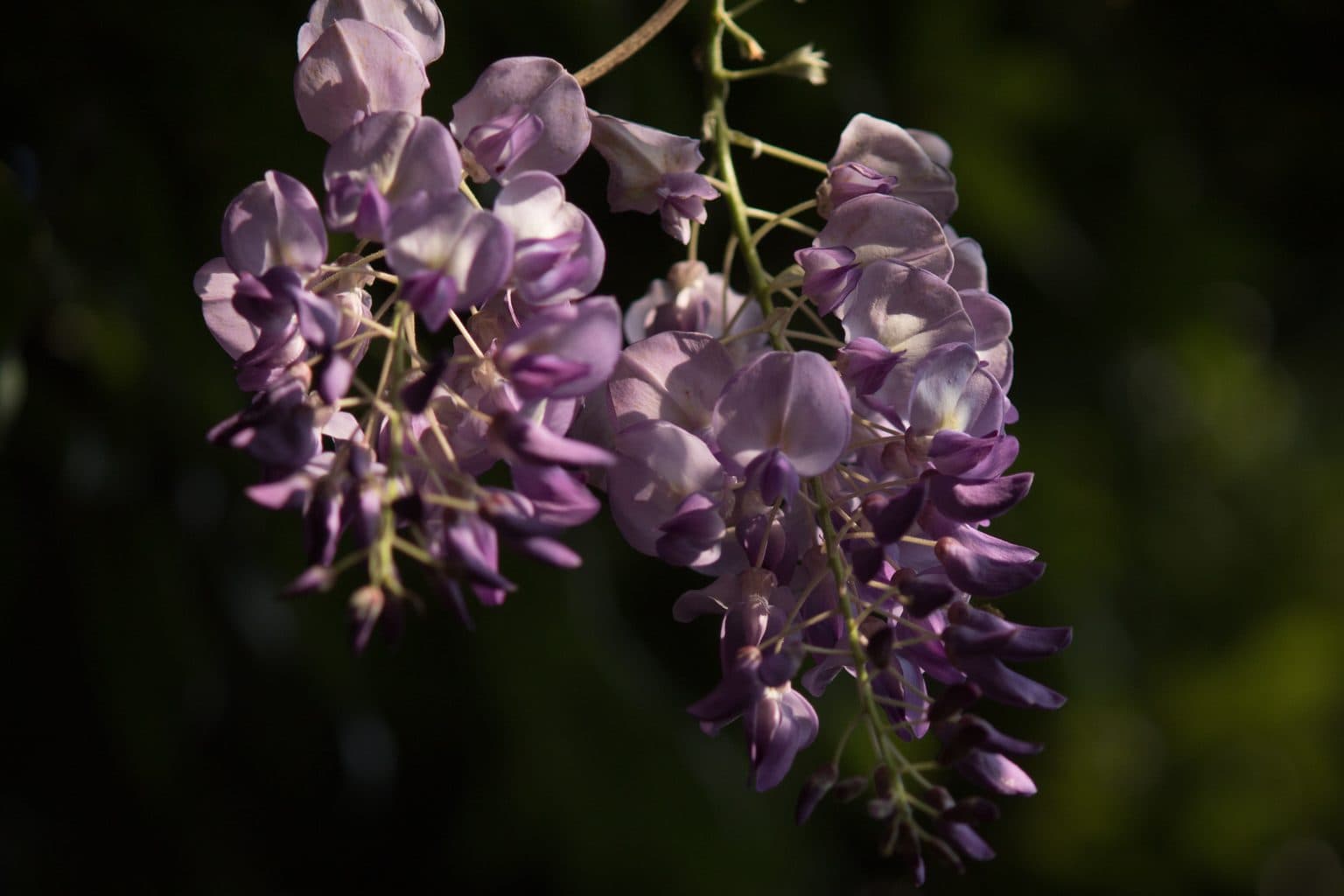
Quick answer: Yes. Wisteria (Wisteria species) is listed as toxic to dogs, cats, and horses by the ASPCA Animal Poison Control Center. Every part contains lectin and a glycoside called wisterin, with the seeds and seed pods carrying the highest dose. Signs in dogs include vomiting, sometimes with blood, diarrhea, and depression. If your dog ate wisteria, especially the pods, call the ASPCA Animal Poison Control Center at (888) 426-4435.
The dangling purple flowers are the draw, but the velvety seed pods that follow are the problem, and they hang at exactly dog height. This page covers what the toxin does, whether the native American Wisteria is any safer, and the dog-safe native vines that give you a similar look without the seed-pod risk.
What the ASPCA says
The ASPCA Animal Poison Control Center lists Wisteria as toxic to dogs, cats, and horses. The toxic agents are lectin and wisterin glycoside, present throughout the plant but concentrated in the seeds and pods. In dogs, ingestion typically causes vomiting that can contain blood, diarrhea, and depression. The seeds are potent enough that eating just a few pods can trigger serious gastrointestinal signs, so a dog chewing the pods is the scenario worth acting on quickly.
Unlike a plant whose only risk is the rare large nibble, wisteria pods are a concentrated dose in a small package, which is what moves this plant onto the act-now list rather than the watch-and-wait list. If you have a dog that mouths things in the yard, the pods in late summer and fall are the season to watch.
Is native American Wisteria any safer?
Not on toxicity. American Wisteria (Wisteria frutescens) and the closely related Texas-range Kentucky Wisteria are far better garden citizens than the rampant Chinese and Japanese species, which are invasive across much of the South. American Wisteria is less aggressive, blooms on new wood, and stays closer to where you put it. But it is the same genus and carries the same lectin and wisterin, so the ASPCA listing applies to it too. Choose the native one for the ecology, not for a safety margin around dogs.
| Vine | Dog Safe? | Notes |
|---|---|---|
| Wisteria (Wisteria spp.) | No | Toxic to dogs, cats, and horses per the ASPCA; seeds and pods worst |
| American Wisteria (Wisteria frutescens) | No | Native and far less invasive, but same genus and same toxins |
| Coral Honeysuckle (Lonicera sempervirens) | Yes | Not on ASPCA toxic plant list; red tubular flowers, hummingbird favorite |
| Crossvine (Bignonia capreolata) | Yes | Not on ASPCA toxic plant list; evergreen, well-behaved on a trellis |
If you wanted wisteria for the draped-flower look on a pergola or fence, the two natives at the bottom give you a flowering vine that is not on the ASPCA toxic plant list and does not drop a toxic seed pod every fall. Neither has the lavender color of wisteria, so this is a genuine trade. For most pet owners, losing the purple is worth losing the pods.
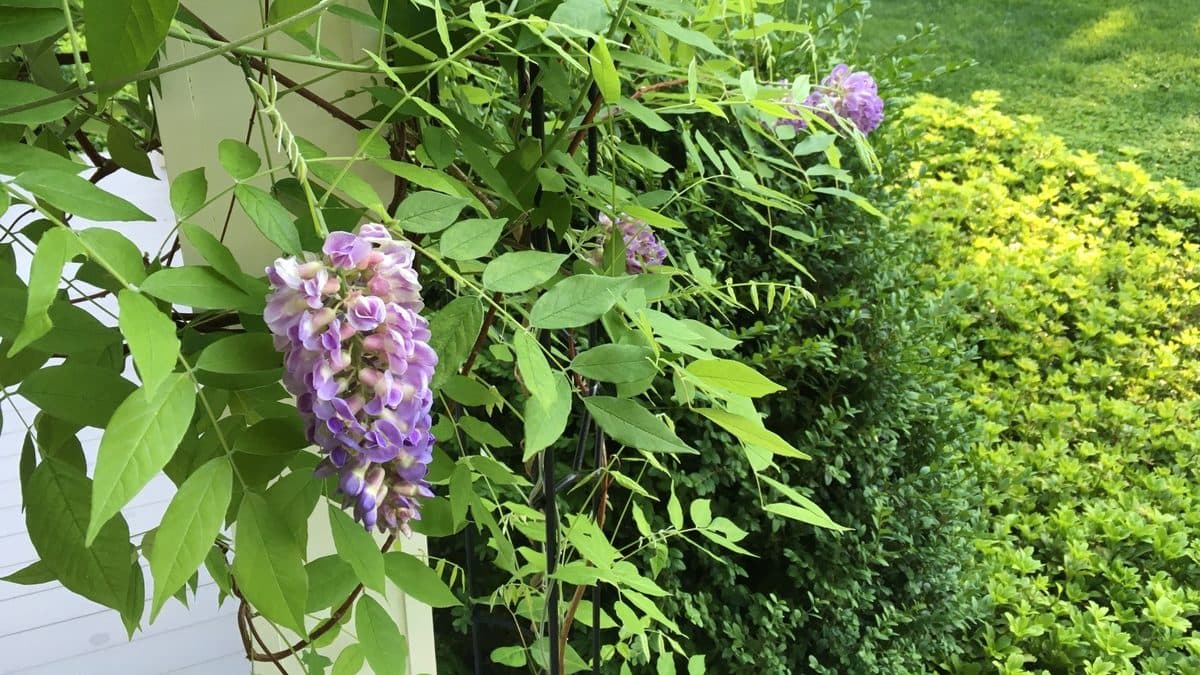
What to do if your dog ate wisteria
- Note what was eaten. Pods and seeds are the urgent case; a single leaf or spent flower is lower risk.
- Call the ASPCA Animal Poison Control Center at (888) 426-4435 or your vet right away. Do not wait for symptoms.
- Do not induce vomiting unless a vet tells you to.
- Watch for vomiting, especially with blood, diarrhea, and lethargy, and report them on the call.
For the same trellis look in a dog-safe vine, see is coral honeysuckle toxic to dogs and is crossvine toxic to dogs. To vet the rest of the yard, start with the six Texas yard plants most toxic to dogs.
If something goes wrong
ASPCA Animal Poison Control Center: (888) 426-4435 (24/7, fee may apply). Have the plant name ready when you call.
Checking more than one plant? See the full list of plants toxic to dogs and cats, with native alternatives, covering every plant on the ASPCA list.