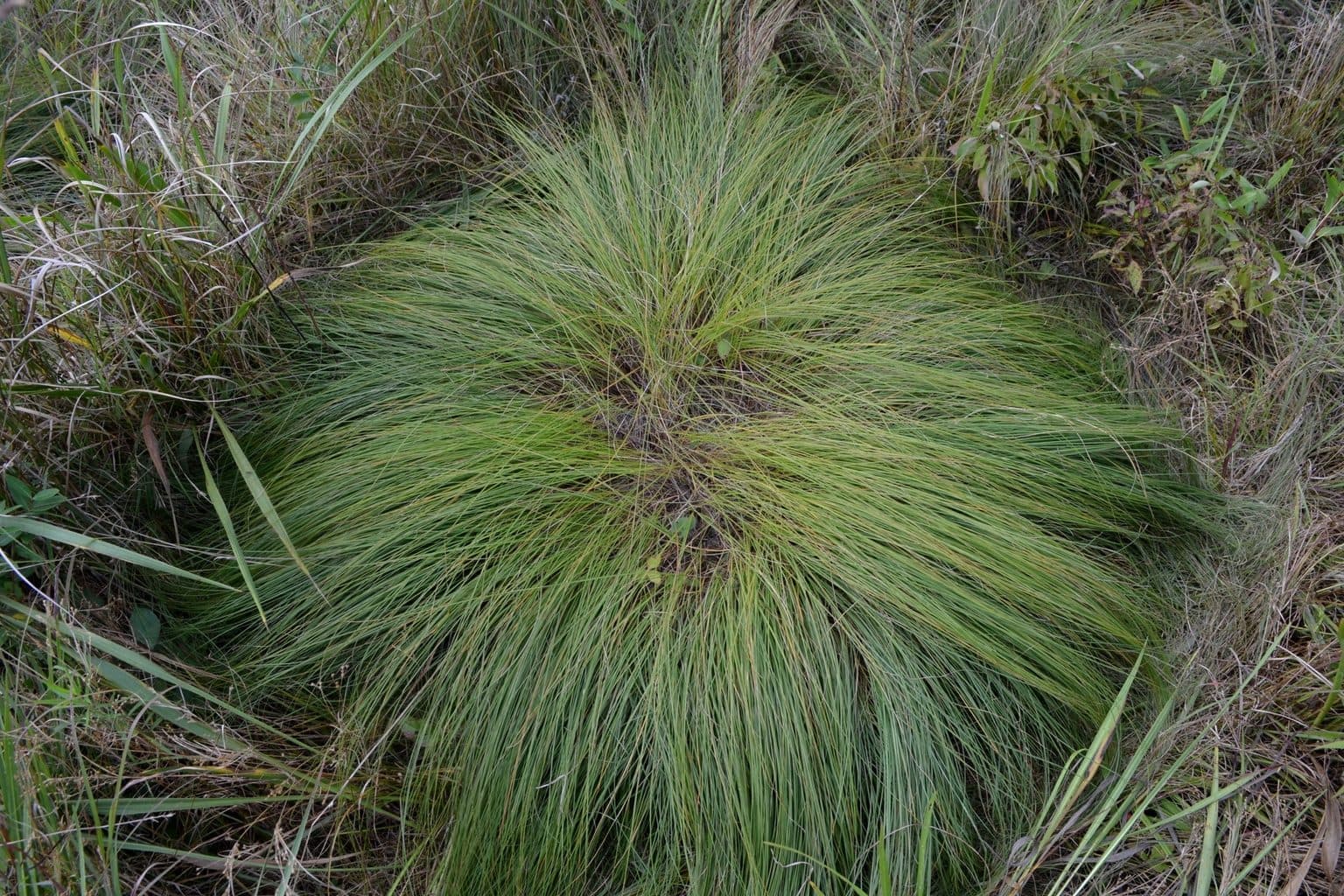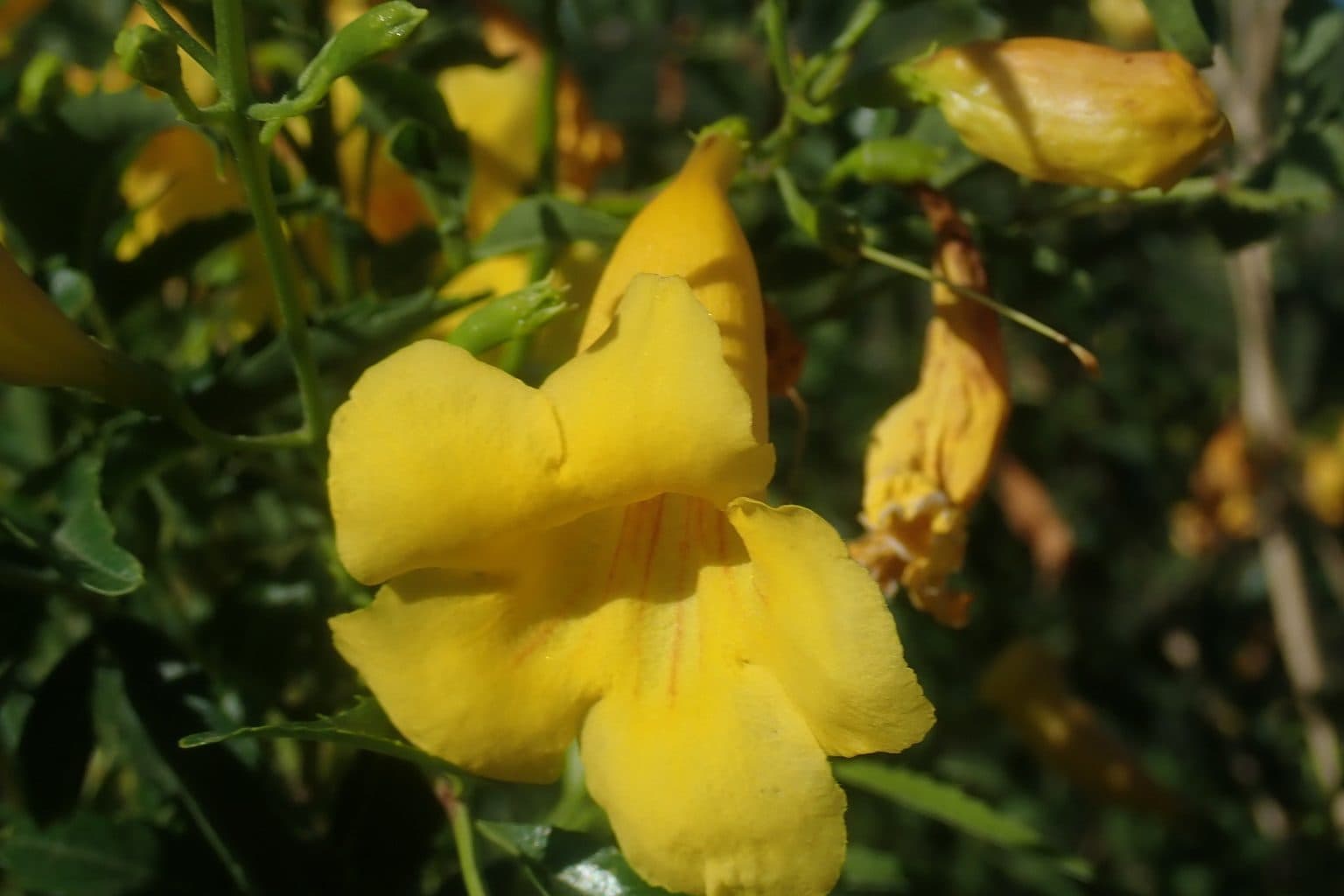
Quick answer: Which drought tolerant native plants work in Texas depends on your ecoregion. On the Edwards Plateau (San Antonio area), blackfoot daisy, damianita, Texas sage, and flame acanthus are all rated low or very low water in the Native Plant Society of Texas (NPSOT) plant database. On the High Plains (Lubbock area), buffalograss, blue grama, chocolate daisy, and plains zinnia are rated low to medium water or lower. Every one of them still needs regular water through its first year, because new roots have not reached deep soil yet (Texas A&M AgriLife Extension).
There is no single list of drought tolerant native plants for Texas. The state covers several ecoregions with different soil, rainfall, and winters, and a shrub that thrives on limestone near San Antonio is a different story from a grass holding a Lubbock yard together in a dry, windy summer.
This guide gives one list for each of those two regions, a plain look at what the first year of watering involves, and a few care notes that come straight from the plants' own database pages.
What drought tolerant means in the first year
Drought tolerance belongs to established plants. A new plant has a small root ball and cannot reach the deeper moisture an older one can. Larry Stein, a horticultural specialist with Texas A&M AgriLife Extension in Uvalde, said it directly in an AgriLife Today article from August 2023 (opens in new tab): "Even if folks have planted natives, without water those native plants can't survive." The article gives no schedule for new plantings, only the principle that they need water that first year.
For a schedule, the Dyck Arboretum of the Plains in Kansas, a garden of Great Plains natives, publishes a pattern in its Water Smart guide (opens in new tab). It waters new plants daily for the first two weeks, adjusted for weather and skipped on days it rains. After the first month it waters only when the top inch or two of soil has dried out, and it considers natives established in their second summer. Texas soils and heat vary a lot, so treat that as a starting rhythm and check the soil with a finger before you water.
Several plants below have the opposite problem once they are settled in. NPSOT says Texas sage is susceptible to cotton root rot if kept too moist, and that blackfoot daisy does not tolerate wet feet. Water new plants well in year one, then let the plants themselves set the pace. If you are weighing this against a lawn, our guide to stopping the lawn watering cycle with native alternatives covers the cost side.
Drought tolerant native plants for the Edwards Plateau (San Antonio area)
Each plant below lists the Edwards Plateau in the Native Plant Society of Texas (opens in new tab) plant database, and the size, sun, and water figures come from those same pages. These are plants for thin, rocky, well-drained soil, which is what much of the plateau has.
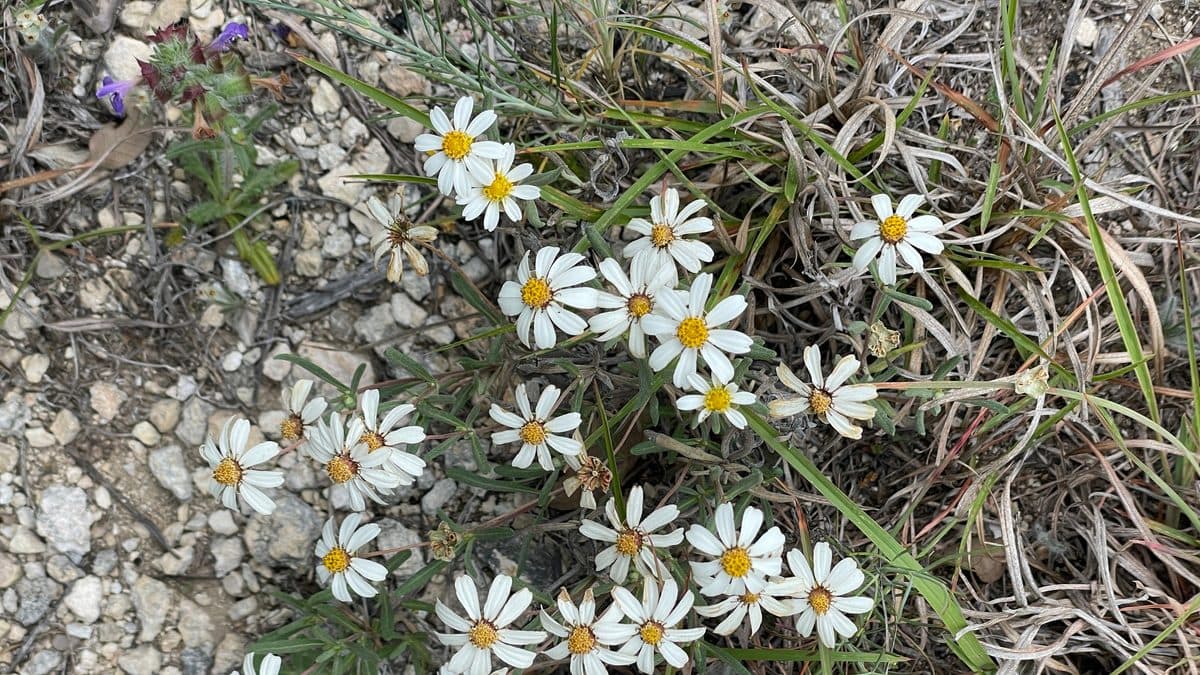
Blackfoot daisy (Melampodium leucanthum)
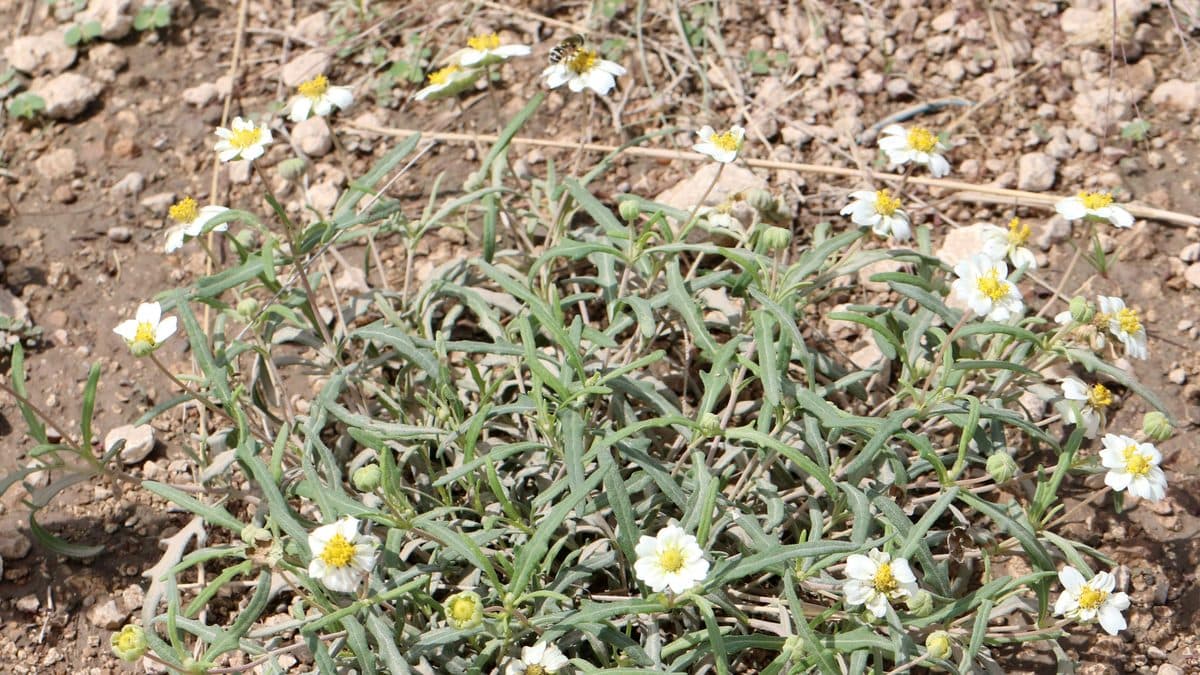
A low mound 6 to 18 inches tall and 1 to 2 feet wide, covered in white daisies with yellow centers from March to November. Water is low, and the Lady Bird Johnson Wildflower Center (opens in new tab) calls it heat and drought tolerant. NPSOT adds that it is a little tricky to establish and that drainage matters more than water, so it belongs in gravelly or rocky ground with no fertilizer and no rich soil (NPSOT (opens in new tab)). Bees and butterflies use it for nectar and pollen.
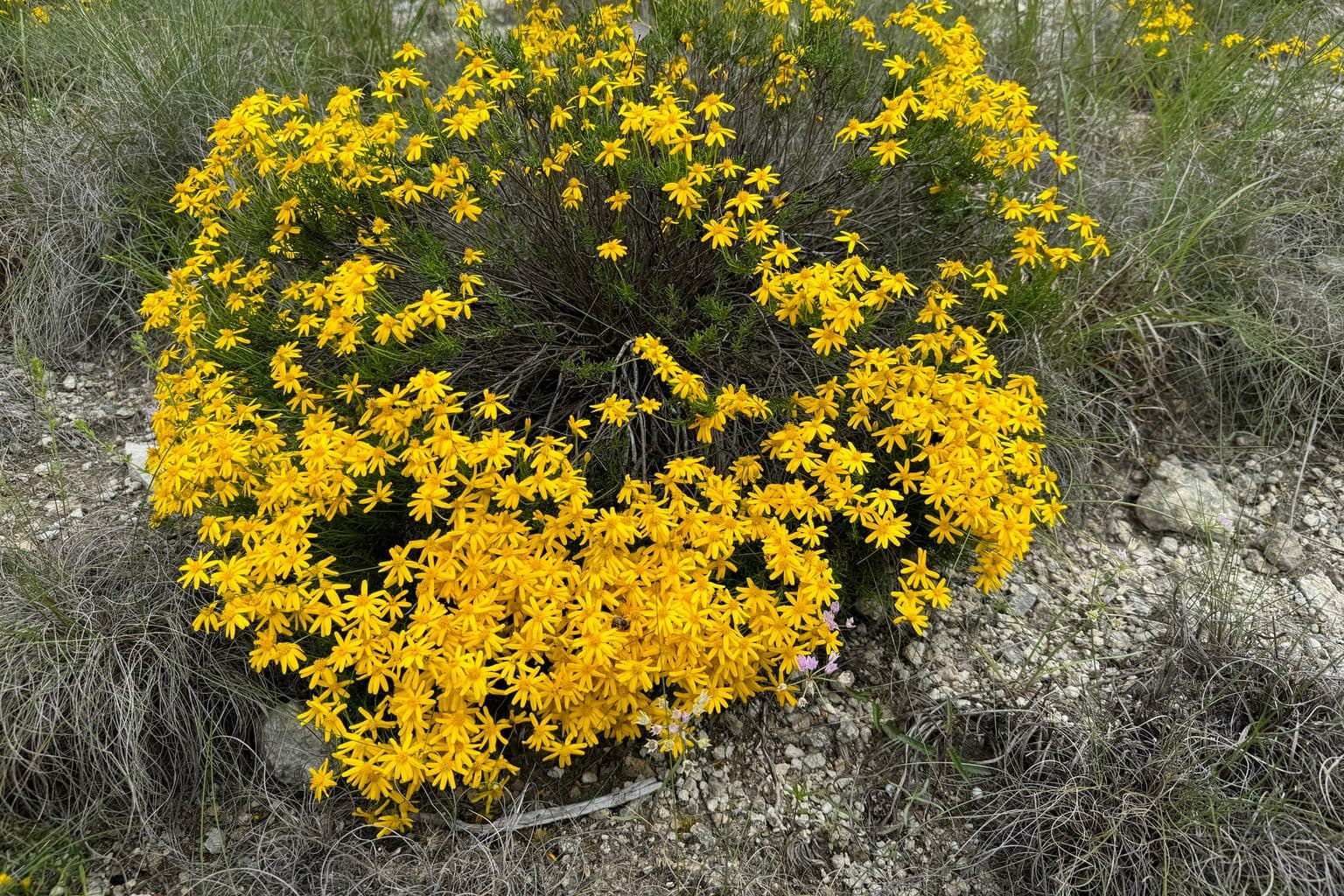
Damianita (Chrysactinia mexicana)
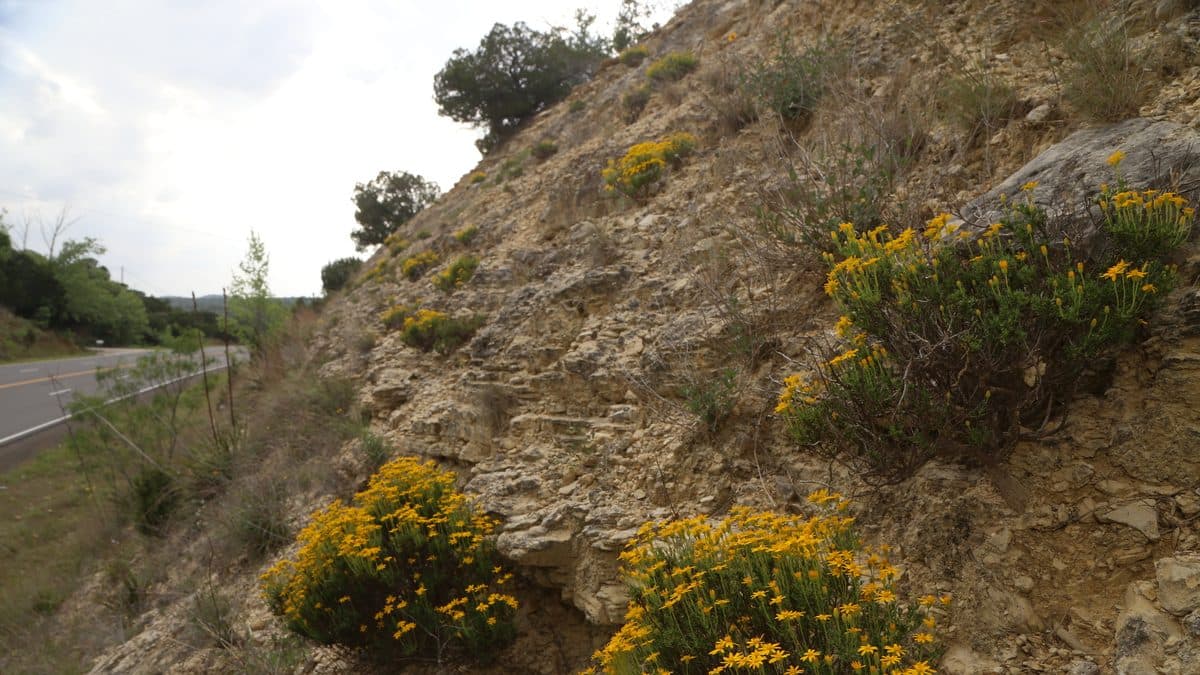
An evergreen, bushy little shrub, 1 to 2 feet tall and wide, with small yellow flowers from April to September, heaviest in spring. NPSOT rates its water use very low to low and calls it very drought tolerant, with a warning not to overwater. It grows in caliche, limestone, and other well-drained soils and gives bees and butterflies nectar and pollen (NPSOT (opens in new tab)).
Texas sage or cenizo (Leucophyllum frutescens)
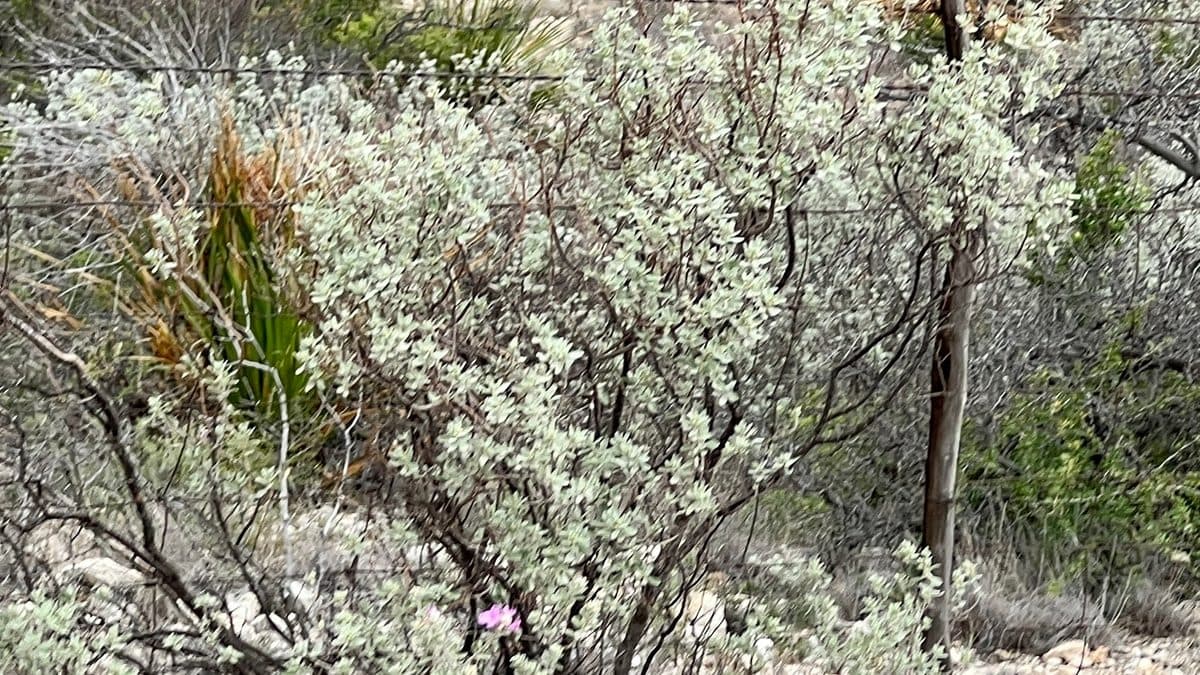
The big one of the group: 5 to 8 feet tall and 4 to 5 feet wide, with silvery leaves and pink, purple, or white flowers that open off and on through the growing season after rain. NPSOT lists sun to part shade and low water, and says not to fertilize or overwater it. It is also a larval host for the Theona checkerspot butterfly and the Calleta silkmoth (NPSOT (opens in new tab)). Give it room at the back of a bed, and read when to prune Texas sage before you reach for shears.
Flame acanthus (Anisacanthus quadrifidus var. wrightii)
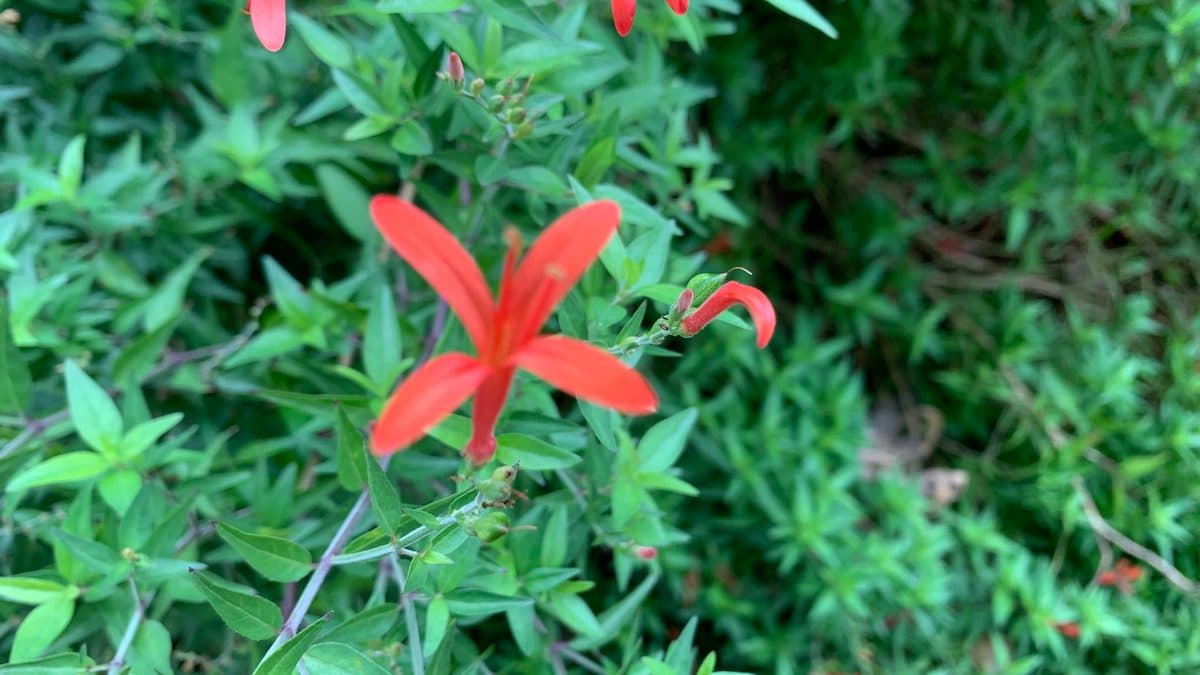
A deciduous shrub 3 to 5 feet tall and 3 to 4 feet wide, with orange-red tubular flowers from June to November. NPSOT lists it as drought tolerant with low water needs, in sun or part shade, and says it attracts hummingbirds, butterflies, and other nectar insects. It is a host for the Janais patch and Texas crescentspot butterflies. The plant loses its leaves in winter, and NPSOT suggests cutting it back by about a third in early winter for a tidier shape (NPSOT (opens in new tab)).
Drought tolerant native plants for the High Plains (Lubbock area)
The High Plains ecoregion includes the Llano Estacado, the flat tableland around Lubbock. Each plant below lists the High Plains in the NPSOT database, and for buffalograss, blue grama, and chocolate daisy the finer-scale regions name the Llano Estacado directly. Size, sun, and water figures again come from those pages.
Buffalograss (Bouteloua dactyloides)
The closest thing here to a lawn. It grows 3 to 12 inches tall in full sun, takes low water, and NPSOT calls it exceptionally cold and drought tolerant. It needs only about half an inch of rain a month to stay green, and it turns tan during drought or winter. NPSOT says you can mow it or leave it to grow naturally, and it hosts the green skipper butterfly (NPSOT (opens in new tab)). Our comparison of buffalograss and St. Augustine goes deeper on turf use.
Blue grama (Bouteloua gracilis)
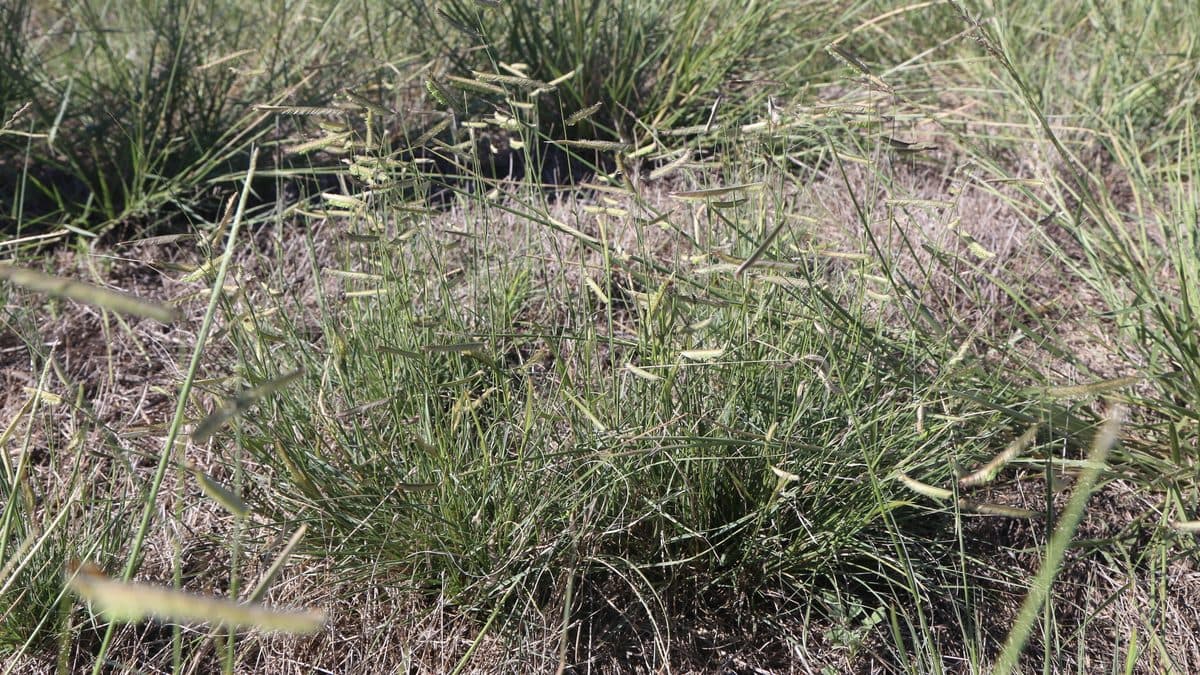
A clumping grass 1 to 3 feet tall and 1 to 2 feet wide, with low to medium water needs. NPSOT calls it very drought tolerant and says it can survive on as little as 7 inches of rain a year. Brown seed heads show up from July to October. NPSOT suggests leaving the dead stems standing through fall and winter for insects, then cutting them back in February, and lists it as a larval host for skippers (NPSOT (opens in new tab)).
Chocolate daisy (Berlandiera lyrata)
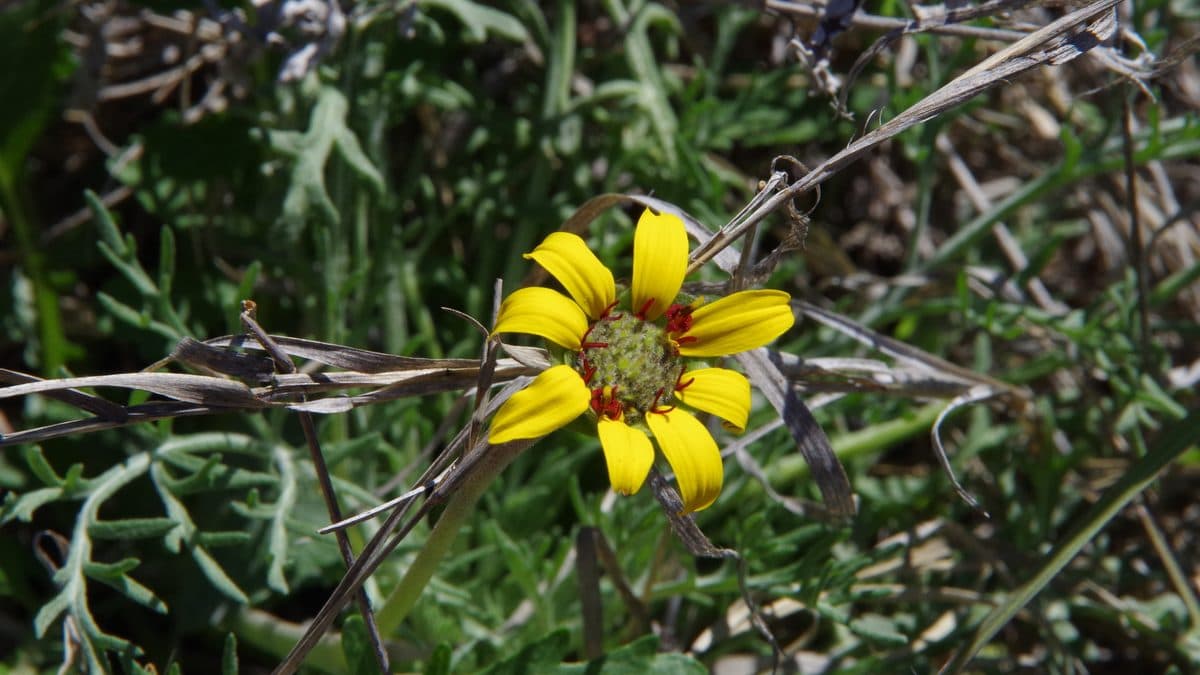
Yellow petals around a maroon center, blooming April through November on a low-water plant. NPSOT says the flower really does smell like chocolate on warm days, that it reseeds readily, and that it stays more compact in drier soil. The long taproot dislikes disturbance, so NPSOT recommends starting it from seed instead of dividing it. Hummingbirds visit it too (NPSOT (opens in new tab)).
Plains zinnia (Zinnia grandiflora)
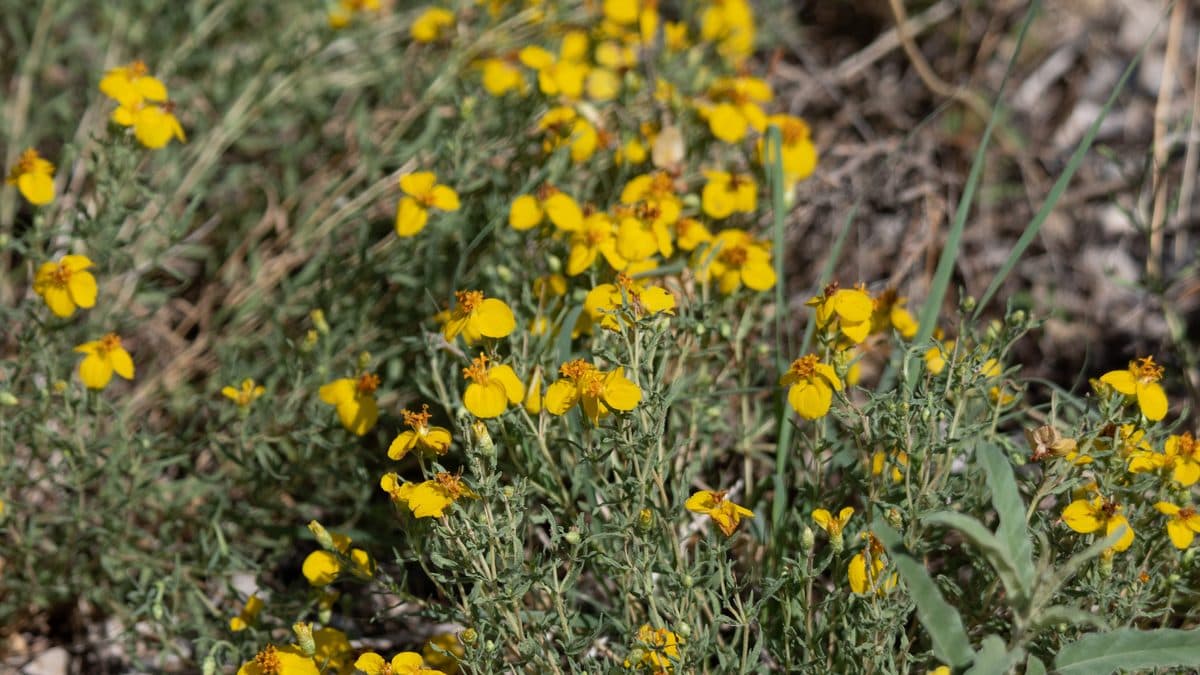
A small, spreading plant 6 to 9 inches tall and 6 to 12 inches wide, with yellow flowers from April through November. NPSOT lists low water and says it likes dry, gravelly rock gardens and well-drained flower beds. It spreads by rhizomes, goes dormant in winter in the Panhandle, and gives bees, butterflies, and moths nectar and pollen (NPSOT (opens in new tab)).
Blackfoot daisy again
The blackfoot daisy from the Edwards Plateau list also names the High Plains in NPSOT's database, so one plant can tie a San Antonio planting and a Lubbock planting together. The same drainage and no-fertilizer advice applies.
Putting a drought tolerant planting together
Plant in groups of the same species so the bed reads as intentional from the street, and set the taller shrubs (Texas sage, flame acanthus) behind the low ones. A crisp edge of stone or mulch helps a planting look cared for, which matters if you answer to an HOA. Then budget your effort for year one: frequent watering at the start, less as the weeks pass, and a lighter hand once the plants are established.
If you want a rebate to help with the cost, start at our rebates directory and apply before you pull any turf. In San Antonio, the SAWS WaterSaver guide walks through that process.
Sources
Ecoregions, size, sun, water, and wildlife: Native Plant Society of Texas plant database pages for each species (linked at each plant). Blackfoot daisy water and drought notes: Lady Bird Johnson Wildflower Center. First-year watering: Texas A&M AgriLife Today, August 3, 2023, and the Dyck Arboretum of the Plains. All pages read October 31, 2026.
People also ask
Do drought tolerant native plants in Texas need watering?
Yes, in their first year. A Texas A&M AgriLife Extension horticulturist says new plantings need water that first year, natives included. Once established, the plants in this guide are rated low or very low water in the NPSOT database, with blue grama at low to medium.
What are drought tolerant native plants for San Antonio?
Blackfoot daisy, damianita, Texas sage, and flame acanthus all list the Edwards Plateau in the NPSOT database and are rated low or very low water. Damianita is described as very drought tolerant.
What drought tolerant native plants grow in Lubbock?
Buffalograss, blue grama, chocolate daisy, and plains zinnia all list the High Plains ecoregion in the NPSOT database. NPSOT says blue grama can survive on as little as 7 inches of rain a year and that buffalograss needs about half an inch of rain a month to stay green.
Want the list for your own ZIP?
Pollinator Patch builds a plant plan for your ZIP code with a layout and a care schedule, so you know what to plant and when to water.