Quick answer: Prune Texas sage lightly and save any heavy cut for late winter. The Lady Bird Johnson Wildflower Center's Mr. Smarty Plants experts call late winter the best time and say the plant will probably sprout again even after an extreme cutback (Lady Bird Johnson Wildflower Center, Mr. Smarty Plants). Texas A&M AgriLife Extension says the same for most landscape plants: late winter or early spring, before growth begins (Texas A&M AgriLife Extension, Earth-Kind Landscaping). Skip the sheared ball. Trimming it too hard for shape costs you blooms.
Key takeaways
- Late winter is the best time for a hard cutback, and the plant will probably resprout even after an extreme one (Lady Bird Johnson Wildflower Center, Mr. Smarty Plants).
- For shape, tip prune. Cultivated Texas sage tends to get leggier with fewer blooms than it has in the wild, and tip pruning increases density (Lady Bird Johnson Wildflower Center).
- Shearing is the exception. The University of Arizona Campus Arboretum says shearing destroys the naturally dense structure and creates holes in the interior of the canopy.
- Texas sage flowers on the current season's wood, so trimming just before bloom can remove the flowers (University of Arizona Campus Arboretum, Lady Bird Johnson Wildflower Center).
- Go easy on late summer and fall pruning. Texas A&M AgriLife Extension warns that new growth from late pruning may not harden off before cold weather.
Texas sage already has a shape
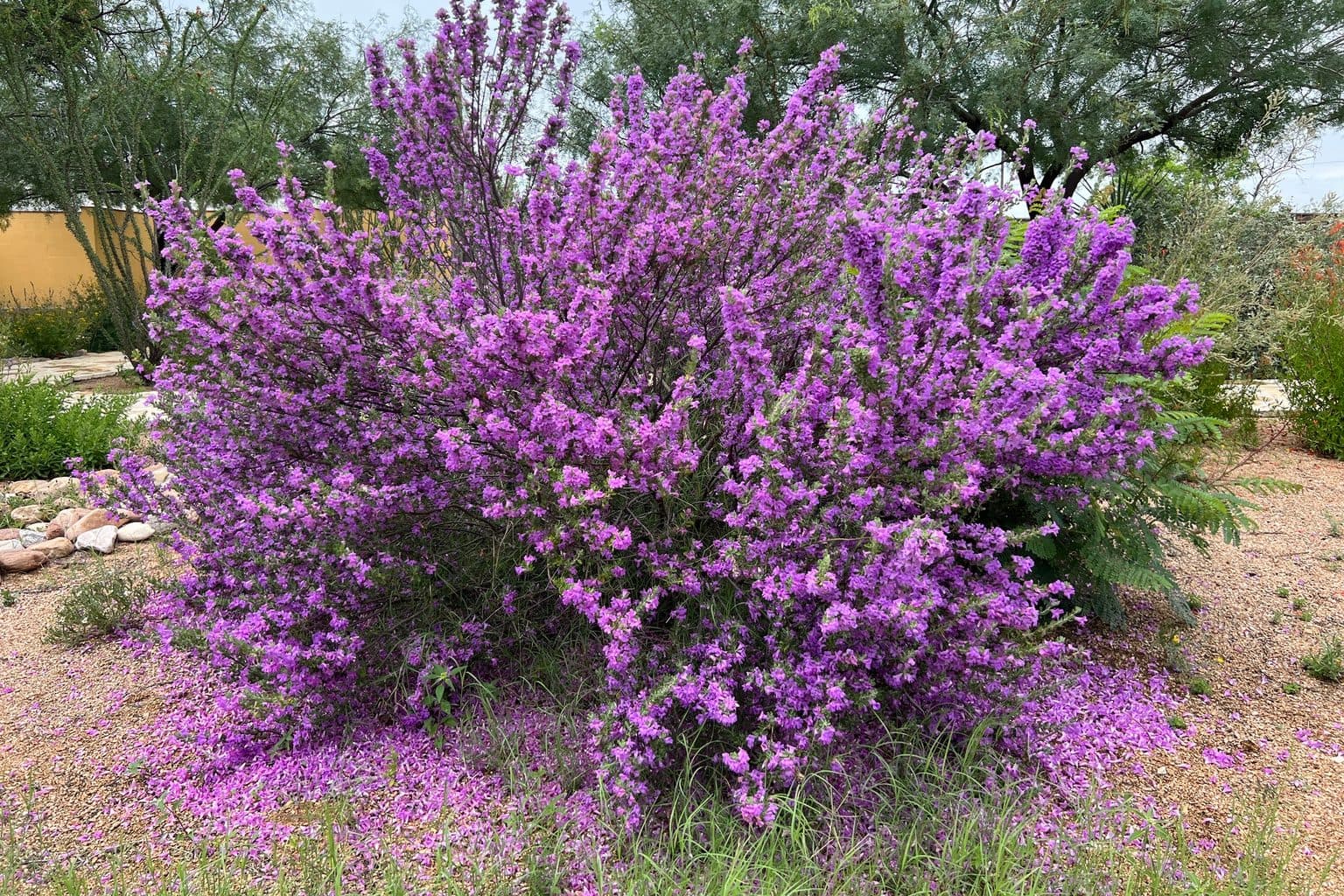
Most of the pruning mistakes with this shrub come from forgetting what it looks like when nobody touches it. Texas sage (Leucophyllum frutescens, also sold as cenizo and Texas ranger) is an evergreen shrub that grows up to about 10 feet tall, often shorter (Lady Bird Johnson Wildflower Center). The University of Arizona Campus Arboretum describes a naturally globular shape that does not require pruning (University of Arizona Campus Arboretum). A loose, slightly uneven mound is how it normally looks.
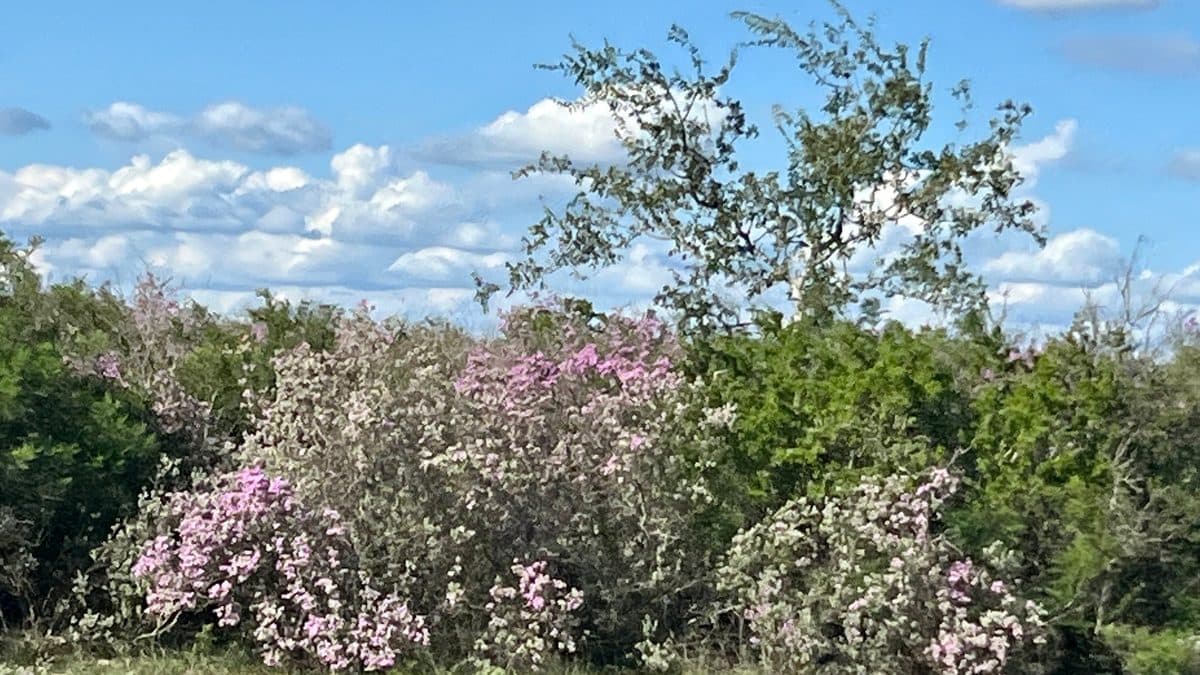
It grows natively from the western edge of the Edwards Plateau south through the Rio Grande Plains and into northern Mexico (PLANTanswers, from Texas A&M AgriLife Extension). A Wildflower Center answer to a Duncanville gardener noted that it is not native to north central Texas, though a plant that has done well for ten years there is clearly happy (Mr. Smarty Plants). Where you live changes the calendar a little. It does not change the shape.
When to prune Texas sage
Two sources point at the same window. A Cibolo gardener asked the Wildflower Center what to do about woody Texas sage that was leaning to one side, and the answer was that late winter is the best time to prune it, and that it would likely benefit from a severe cutback (Mr. Smarty Plants). Texas A&M AgriLife Extension gives the general rule for landscape shrubs: the best time to prune most plants is late winter or early spring before growth begins, and shrubs that bloom on the current spring's shoots should be pruned in late winter (Texas A&M AgriLife Extension, Earth-Kind Landscaping).
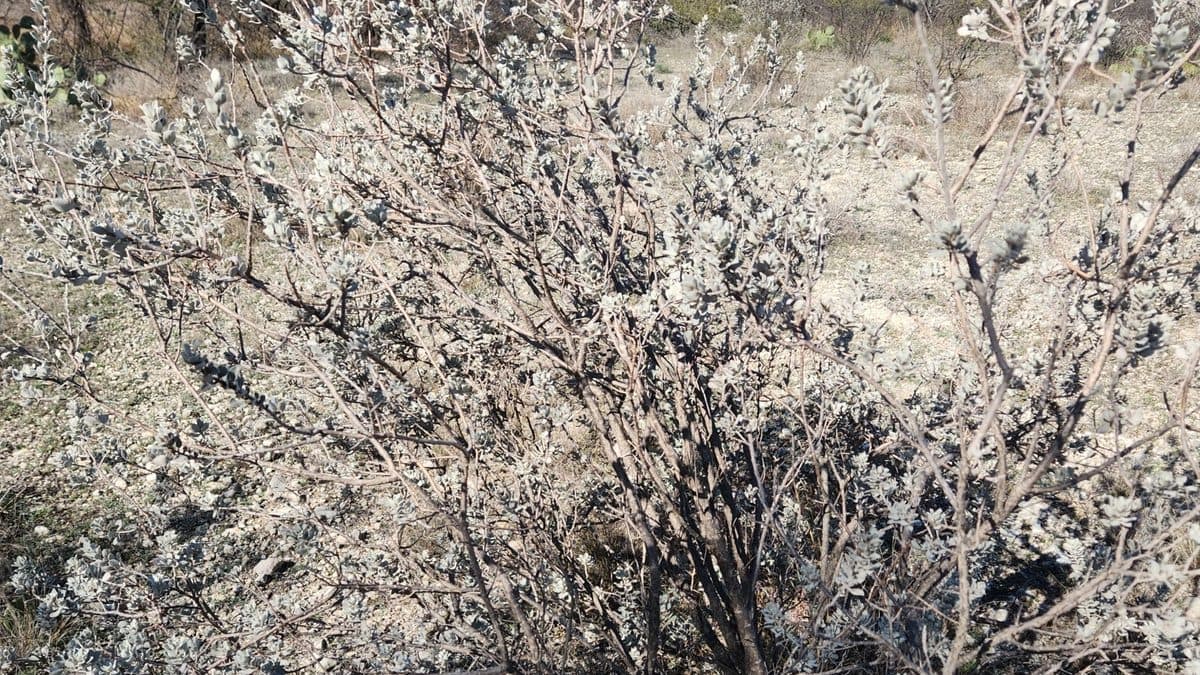
The timing works because of how the plant flowers. The University of Arizona Campus Arboretum says the pinkish-purple flowers are borne singly on the current season's wood (University of Arizona Campus Arboretum). So the buds do not exist yet in late winter. A cut then removes old wood and the new shoots carry the bloom. The Wildflower Center's general pruning answer makes the other half of the point: hard pruning, or even trimming the tips, just before a bloom period can remove all the bloom, so prune after it or well before it starts (Mr. Smarty Plants).
Texas sage makes that tricky, because it does not keep a tidy bloom season. The Wildflower Center lists several months of periodic flowering, often after summer showers, and PLANTanswers says it blooms throughout the growing season and that nobody has established what triggers it (Lady Bird Johnson Wildflower Center, PLANTanswers). That is why the experts split the job. Save big cuts for late winter, and treat the rest of the year as light work.
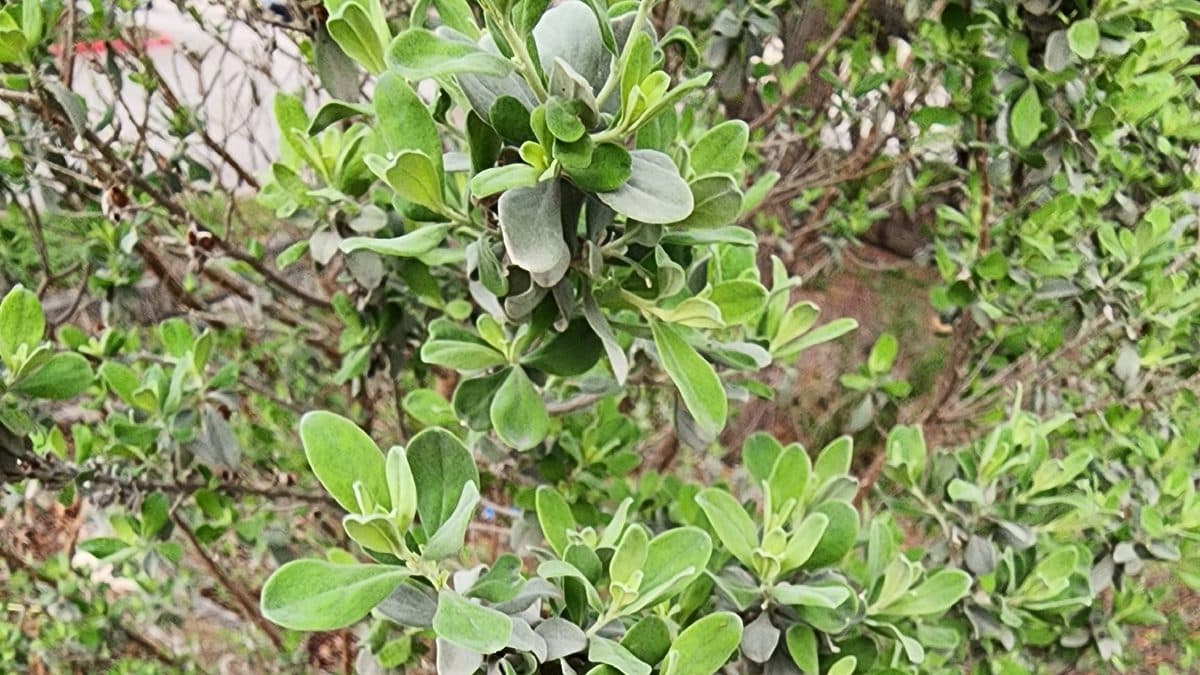
What about fall? Texas A&M AgriLife Extension advises limiting the amount of pruning done late in summer, because new growth may not harden off before cold weather and can suffer cold damage (Texas A&M AgriLife Extension, Earth-Kind Landscaping). That is a reason to make the big cut in late winter and not in fall. Our post on protecting native plants from a Texas freeze covers the other side of the same season. The Wildflower Center notes that in very cold winters Texas sage may lose a few leaves (Lady Bird Johnson Wildflower Center), so a bare-looking branch after a freeze is not an instruction to cut.
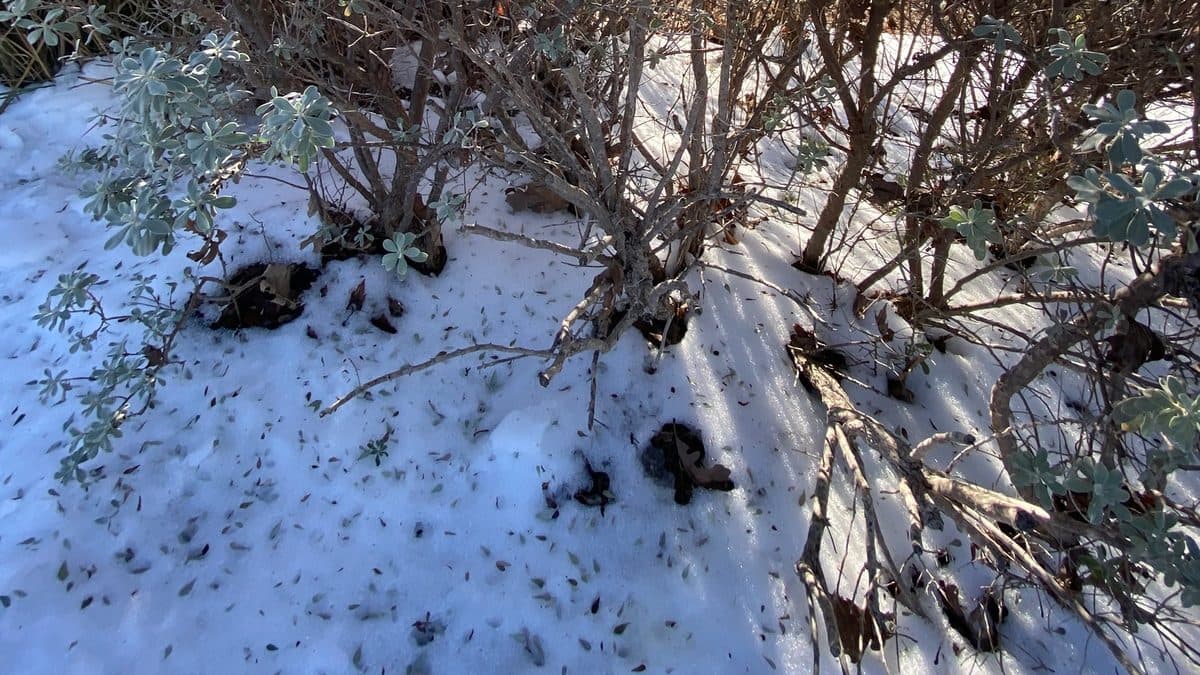
Why not to shear it
The Wildflower Center does list Texas sage as an ornamental that can be sheared as a hedge (Lady Bird Johnson Wildflower Center), and a row of them is common around parking lots. The catch is the cost to the plant. The University of Arizona Campus Arboretum says shearing, especially, should be avoided, because it destroys the naturally dense structure and creates unsightly holes in the interior of the canopy, which increases water use and reduces the shrub's lifespan (University of Arizona Campus Arboretum). Texas A&M AgriLife Extension recommends limiting shearing to hedges, topiary or a formal garden, and warns that it ruins the natural growth habit (Texas A&M AgriLife Extension, Earth-Kind Landscaping).
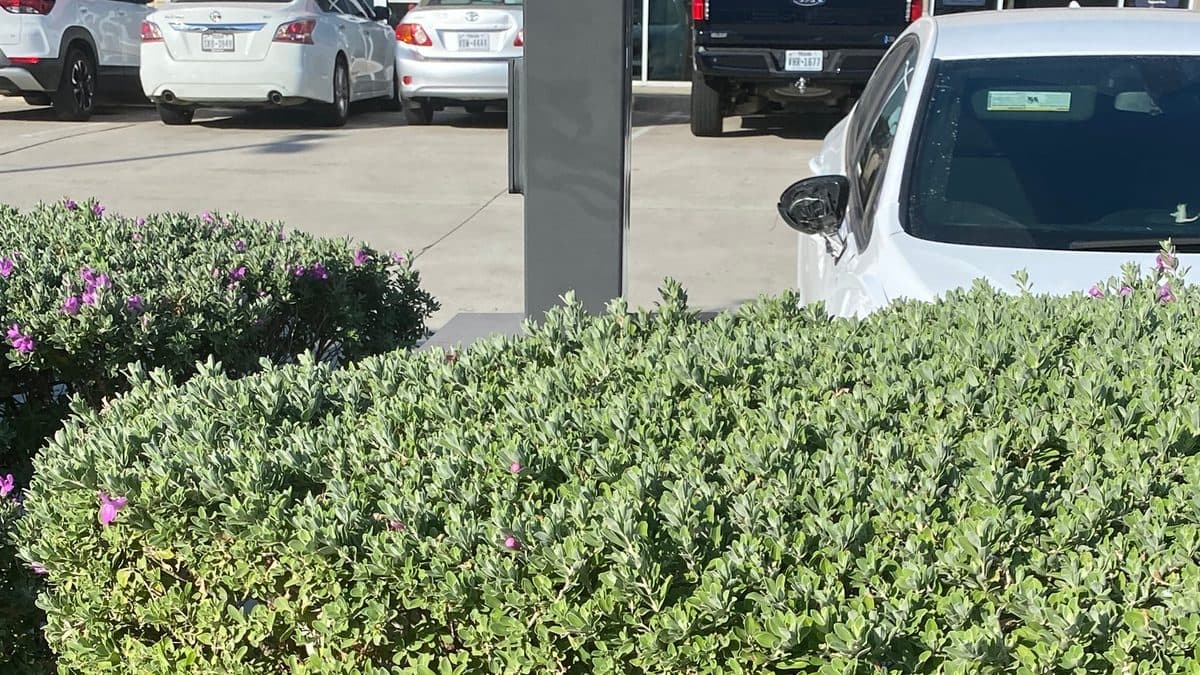
The Wildflower Center answer to the Duncanville question was blunter. Prune the bush gradually, it said, and do not whack it down to a shape you like, because trimming too severely for shape will cost you a lot of the pinky-purple blooms (Mr. Smarty Plants).
There is some research behind the frequency point too. A three-year trial on 'Green Cloud' Texas sage compared shearing every six weeks, shearing every six months, renewal pruning once a year and no pruning. The plants sheared every six months or left alone had about 45 percent more standing shoot mass than those sheared every six weeks or renewal pruned yearly, and the six-week shearing left the least leaf mass in the canopy (Acta Horticulturae 1279). It is one cultivar in one trial, so read it as a hint that frequent shearing is the hardest schedule on the plant.
How much you can take off
The sources give three levels of work, from gentlest to hardest. Start at the first and move down only if the plant needs it.
- Tip pruning, any time of year. The Wildflower Center plant profile says cultivated Texas sage tends to become leggier with fewer blooms than in nature, and that tip pruning increases density (Lady Bird Johnson Wildflower Center). Tip pruning means taking off only the ends of the branches. The Duncanville answer suggests doing it gradually and continuing until you have the shape you want (Mr. Smarty Plants). Keep it away from a flush of bloom, per the trimming answer above.
- Renewal, in late winter. Texas A&M AgriLife Extension's rejuvenation rule for overgrown shrubs is to remove about one third of the oldest, tallest branches at or slightly above ground level (Texas A&M AgriLife Extension, Earth-Kind Landscaping). That is a general shrub guideline, not a Texas sage rule, so treat it as a sensible ceiling for a plant you are not sure about.
- Hard cutback, early in the year. If a plant is badly placed and too big, the University of Arizona Campus Arboretum says rejuvenation pruning can be done early in spring, and that cutting the shrub to 12 to 18 inches from the ground creates a rapid flush of new growth that blooms in late summer (University of Arizona Campus Arboretum). The Wildflower Center gave similar advice for a leaning Cibolo plant. Note the Arizona source describes a desert climate, so in a wetter part of Texas treat it as the last resort.
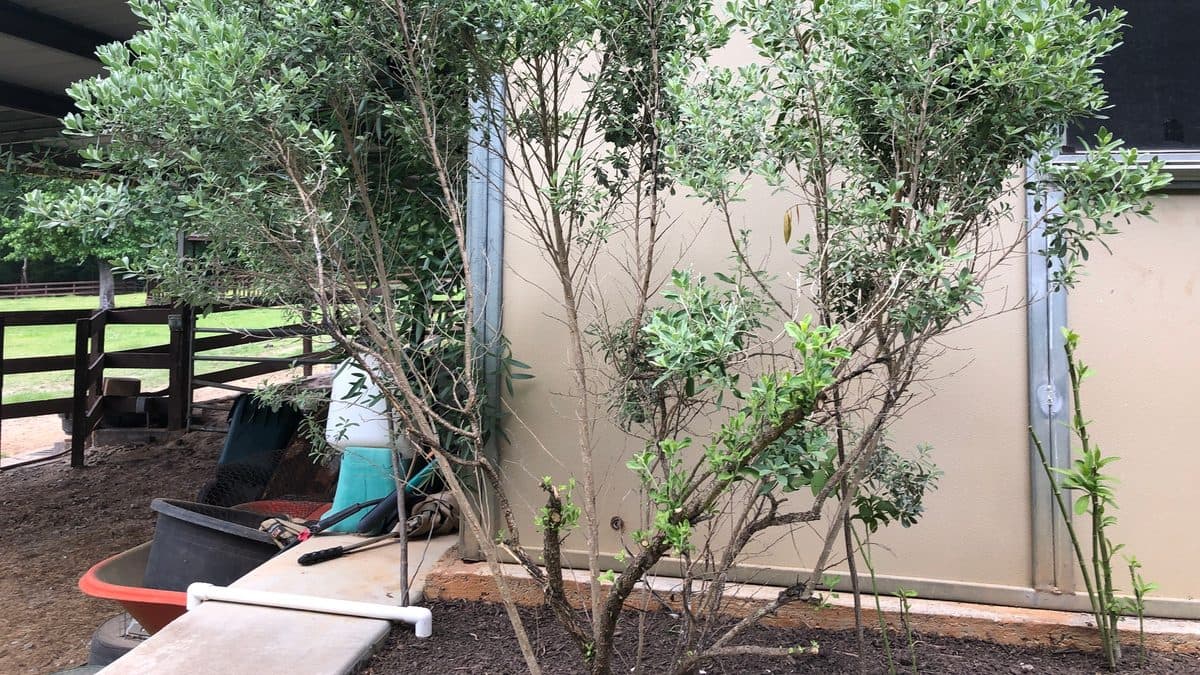
Light matters too. The Cibolo answer says Texas sage tends to get leggy in cultivation, especially in shade, and that a leaning plant is usually growing toward the strongest sun. It adds that the plant should be watered only sparingly and not fertilized (Mr. Smarty Plants). The plant profile adds that cenizo is easy to grow so long as it has good drainage and is susceptible to cotton root rot if the soil stays moist (Lady Bird Johnson Wildflower Center). If you keep pruning a plant that keeps going leggy, the fix may be sun and less water, not another cut.
How to prune Texas sage, step by step
- Look at the plant first. Is it just a little uneven, or tall and woody with leaves only at the top? A little uneven needs tip pruning, if anything. The tall, woody plant is the one for a renewal cut.
- Pick the window. For anything beyond tip pruning, choose late winter or early spring before new growth begins (Texas A&M AgriLife Extension, Earth-Kind Landscaping). If you are unsure, look at the branch tips for new leaves. Once they are out, the easy window has closed.
- Shape by tipping. Take off the ends of the longest shoots, and do it a little at a time over a few visits rather than all at once, as the Wildflower Center suggests (Mr. Smarty Plants).
- Take out old wood for size, not height. If it has to come down, remove whole old stems at or near the base, up to about a third in a year (Texas A&M AgriLife Extension), rather than clipping every branch to one level, which is the opposite of shearing.
- Hold the water and the fertilizer. The Wildflower Center says cenizo should not be fertilized or over-watered (Lady Bird Johnson Wildflower Center), and a pruned plant is not an exception.
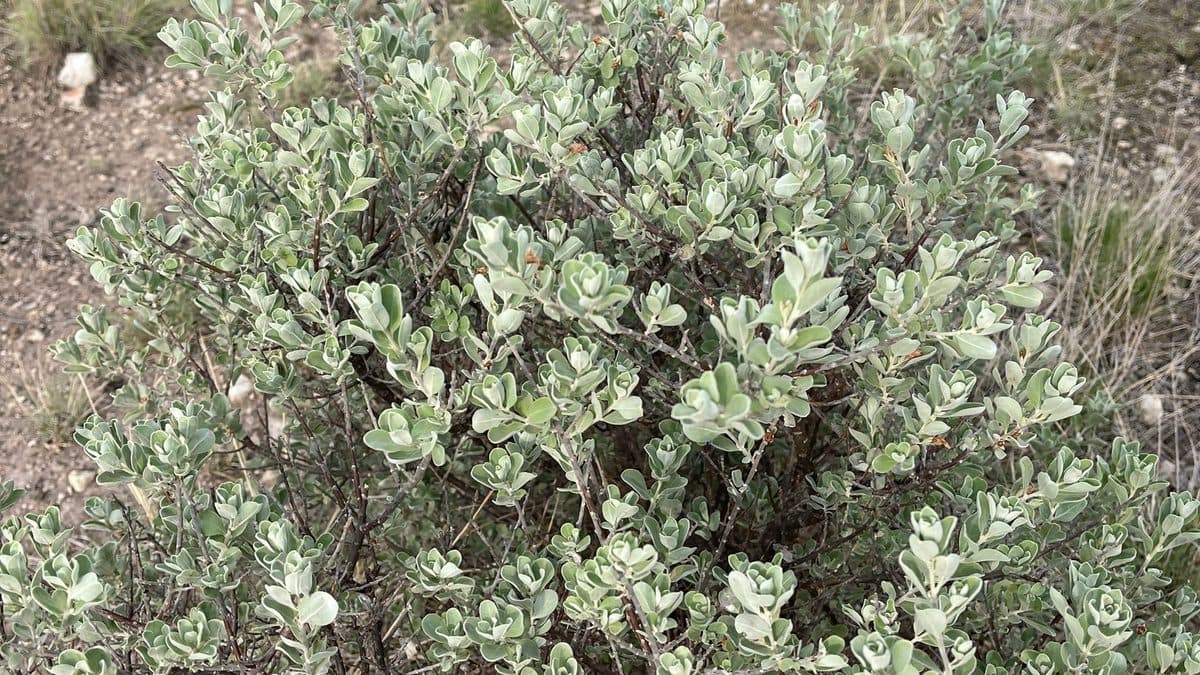
For the other shrubs and perennials in your yard, our guide on fall care for Texas native plants covers what to cut and what to leave before winter, and the native grass cutback post covers the other late winter job.
What flowers on, and what you leave behind
Because the flowers come from the current season's growth, every cut is also a decision about this year's bloom. A hard cut a few weeks before a flush could cost you all of it (Mr. Smarty Plants).
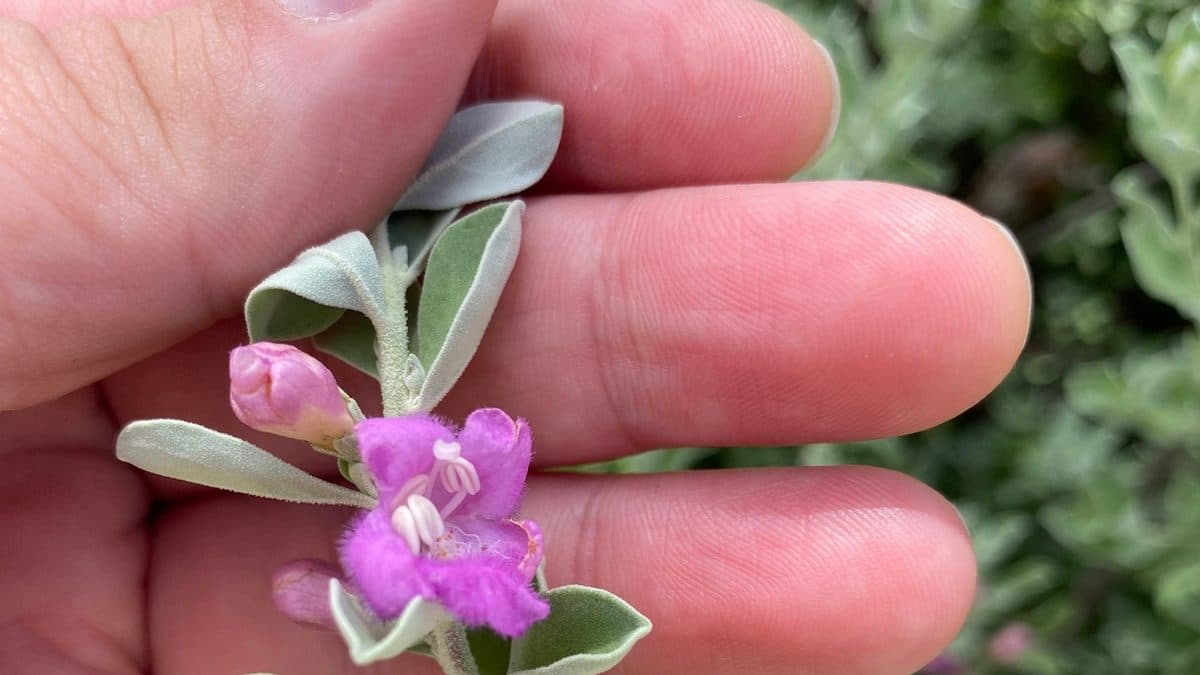
The Wildflower Center lists nectar for insects, nesting sites and cover as wildlife uses of Texas sage, and names Theona checkerspot and Calleta silkmoth as larval hosts (Lady Bird Johnson Wildflower Center). Light pruning keeps most of that in place. Our post on whether Texas sage is toxic to dogs covers its ASPCA listing.
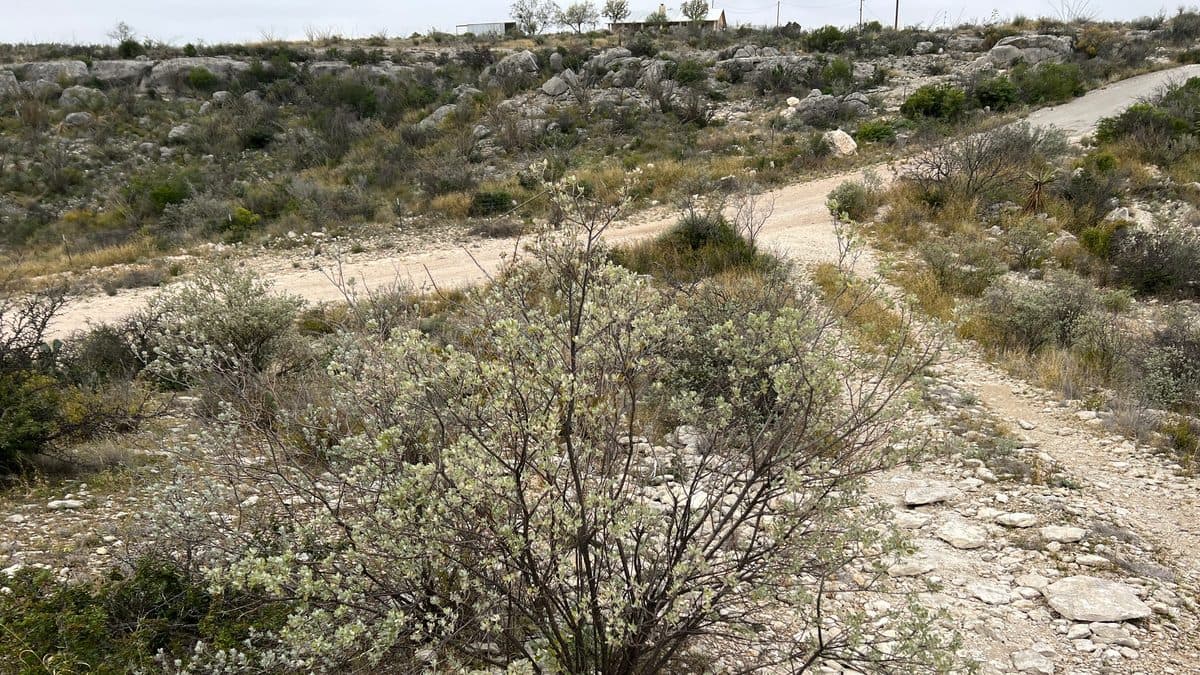
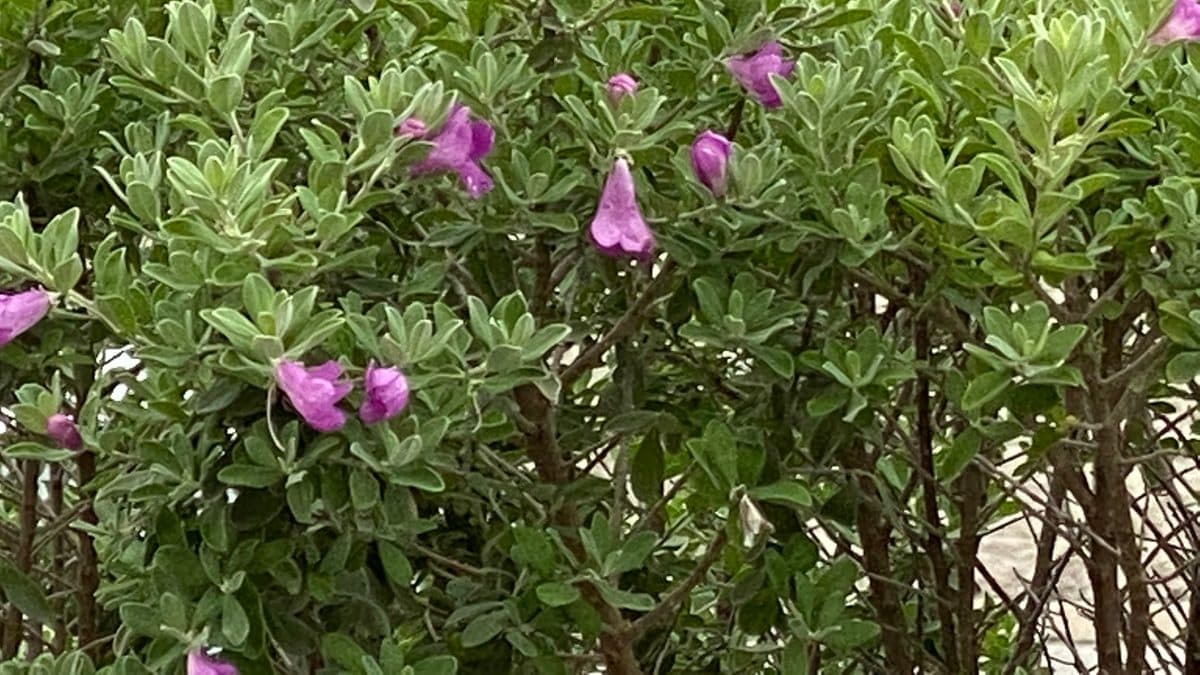
One more photo shows what a plant looks like after a few seasons of growth. The leafy growth sits on top and the lower stems are bare and woody. The Wildflower Center plant profile says cultivated Texas sage tends to get leggier than the wild plant, and that tip pruning increases density (Lady Bird Johnson Wildflower Center).
Watch it done
House painters pruned Texas sage to sticks, now what?, from Central Texas Gardener (3:52). Daphne Richards, the Travis County extension horticulturist, stands in front of cenizos that were cut to bare stems and shows the two ways back: a light prune that opens the plant to sun and keeps its natural shape, or, for a brave owner, a one-time hard cut that takes most stems to the ground. She says to prune these shrubs as rarely as you can and that recovery from a hard cut takes a long while, which is the same caution this post takes.
Where the app fits
The hard part of this job is that the right moment is a few weeks long and falls in the dull part of winter. Pollinator Patch is free for care on every plant you own, native or not, and it sends freeze alerts by ZIP. Add your Texas sage, and the regional care guide on its plant page gives you the care window for your ecoregion.
People also ask
When is the best time to prune Texas sage?
Late winter, before new growth begins, for anything beyond light shaping. The Lady Bird Johnson Wildflower Center calls late winter the best time to prune it, and Texas A&M AgriLife Extension gives late winter or early spring as the best time for most landscape plants.
Should I shear my Texas sage into a ball or hedge?
It can be done, but it costs you. The University of Arizona Campus Arboretum says shearing destroys the naturally dense structure and leaves holes in the interior, and a Wildflower Center expert says trimming too severely for shape will cost you a lot of the blooms. If you want a formal hedge, expect to give up some of the flowers.
How far can I cut back an overgrown Texas sage?
Texas A&M AgriLife Extension's general rule for overgrown shrubs is up to about one third of the oldest, tallest branches. For a badly placed plant, the University of Arizona Campus Arboretum says cutting to 12 to 18 inches from the ground in early spring produces a rapid flush of growth that blooms in late summer, and the Wildflower Center says even a severely cut plant will probably sprout again.
Why is my Texas sage leggy and not blooming much?
Cultivated Texas sage tends to get leggier with fewer blooms than in nature, and the Wildflower Center says tip pruning increases density. Shade makes it worse, and a leaning plant is usually growing toward the sun. Cenizo also should not be over-watered or fertilized.
Get the pruning reminder when it is time
Pollinator Patch is free for care on every plant you own, native or not. Save your Texas sage and your ZIP, and you get freeze alerts and the care window for your region, so the late winter cut does not slip past you.