Quick answer: Twenty native plants that are not on the ASPCA Animal Poison Control Center toxic plant list, grouped by ecoregion so the ones you pick are actually native where you live: American beautyberry, Turk's cap, blackfoot daisy, winecup, Gulf muhly, frogfruit, inland sea oats, swamp sunflower, flowering dogwood, eastern redbud, wax myrtle, moss phlox, New England aster, wild columbine, blazing star, ninebark, little bluestem, switchgrass, blue-eyed grass, and buttonbush. If your pet does eat something, call the ASPCA at (888) 426-4435.
Most "pet-safe plant" lists have two problems. They mix plants from opposite ends of the country, so half of them will not survive in your yard, and they say "safe" without telling you who decided that. This list fixes both. Every plant is grouped under the ecoregion it is actually native to, and every pet-safety claim points at the ASPCA.
Native status here follows the Lady Bird Johnson Wildflower Center. Pet-safety status is checked against the ASPCA Animal Poison Control Center plant database. For most of these plants the honest statement is that they are not on the ASPCA toxic plant list, which is not quite the same as a clearance: the ASPCA publishes entries for a finite set of plants, and absence can mean "no entry published" rather than "tested and cleared". Two plants below, moss phlox and swamp sunflower, carry an actual ASPCA non-toxic listing, and we say so where that is true.
Native does not mean pet-friendly
Central Oklahoma and Texas Plains, Dallas to Fort Worth area
Clay soils, hot dry summers, and the Cross Timbers oak belt running through it. These four handle heavy ground and full afternoon sun.
- American beautyberry (Callicarpa americana). Arching shrub to about six feet, with violet berry clusters in fall that cedar waxwings and mockingbirds strip through winter. Not on the ASPCA toxic plant list. Takes part shade, which makes it useful along a north-facing wall.
- Turk's cap (Malvaviscus arboreus). Red twisted flowers from summer into fall in shade or part sun, one of the few things that blooms well under a live oak. Not on the ASPCA toxic plant list. Hummingbirds work it hard in September.
- Blackfoot daisy (Melampodium leucanthum). Low white daisies on a tight mound, blooming most of the season on almost no water. Not on the ASPCA toxic plant list. Wants sharp drainage, so it belongs at the front edge of a bed rather than in a low spot.
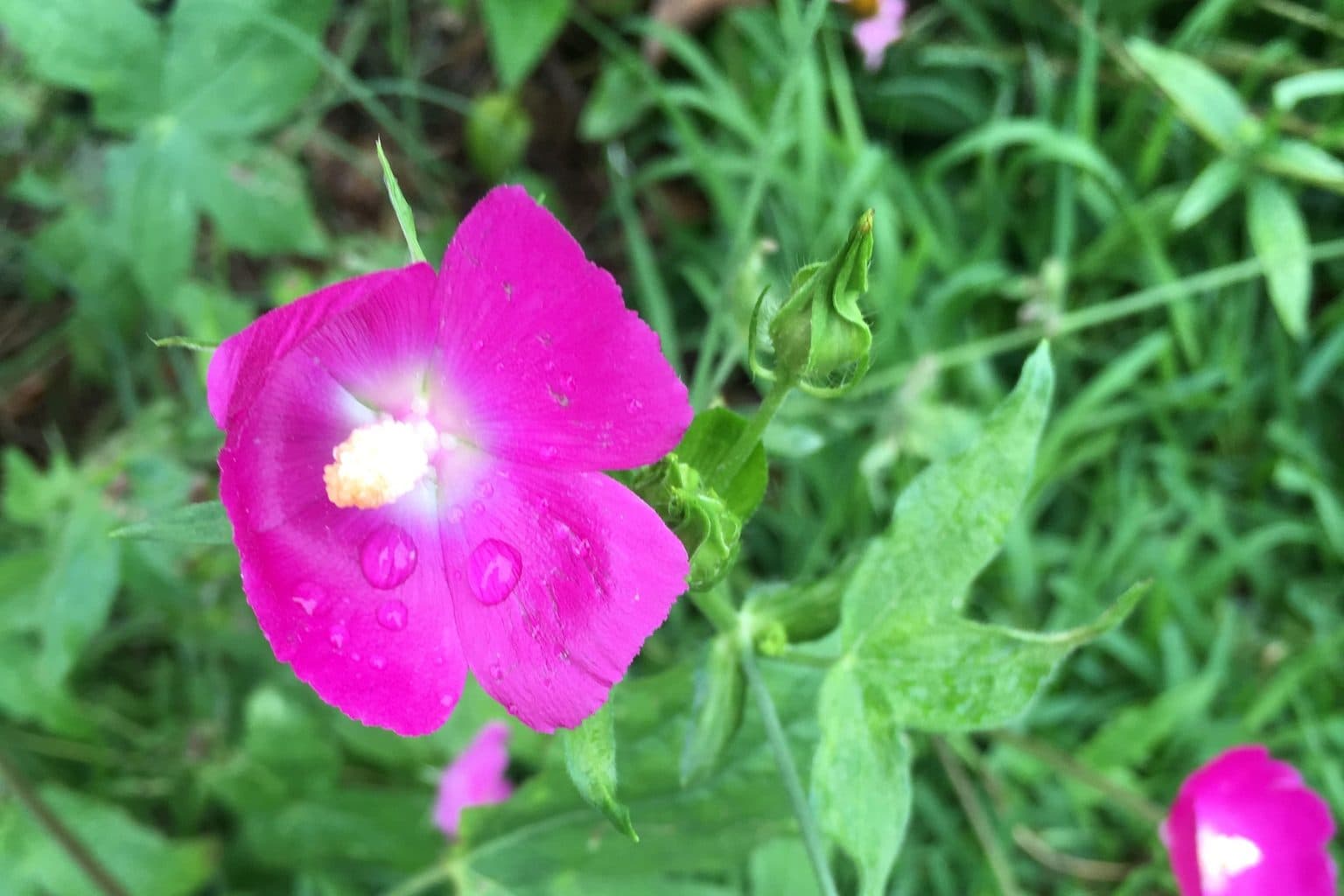
- Winecup (Callirhoe involucrata). Magenta chalice-shaped flowers on trailing stems in spring, spreading a couple of feet without becoming a problem. Not on the ASPCA toxic plant list. Goes dormant in the worst heat, so pair it with something that carries late summer.
Western Gulf Coastal Plain, Houston area
Humidity, heavy rainfall, and the periodic hard freeze. Plants here need to tolerate wet feet more than drought.
- Gulf muhly (Muhlenbergia capillaris). The pink haze grass, three feet of fine texture that turns into a cloud of rose-colored seed heads in October. Not on the ASPCA toxic plant list. Reads as ornamental rather than weedy, which matters in a front yard with an HOA.
- Frogfruit (Phyla nodiflora). A flat spreading ground cover with small white flowers that takes real foot traffic and dog traffic. Not on the ASPCA toxic plant list. One of the better lawn alternatives for a yard that gets used.
- Inland sea oats (Chasmanthium latifolium). Shade grass with flat drooping seed heads that rattle in wind and dry well for arrangements. Not on the ASPCA toxic plant list. It reseeds enthusiastically, so put it where spreading is welcome.
- Swamp sunflower (Helianthus angustifolius). Tall yellow daisies in October when most beds have quit. Listed as non-toxic by the ASPCA, not merely absent from the toxic list. Cut it back by half in June to keep it from flopping.
Piedmont, Atlanta area
Red clay, rolling ground, and an oak-hickory canopy that puts most front yards in part shade.
- Flowering dogwood (Cornus florida). The classic understory tree, white spring bracts and red fall color at twenty to thirty feet. Not on the ASPCA toxic plant list. Worth noting it is unrelated to dogbane and dog hobble, which are both toxic and confusingly named.
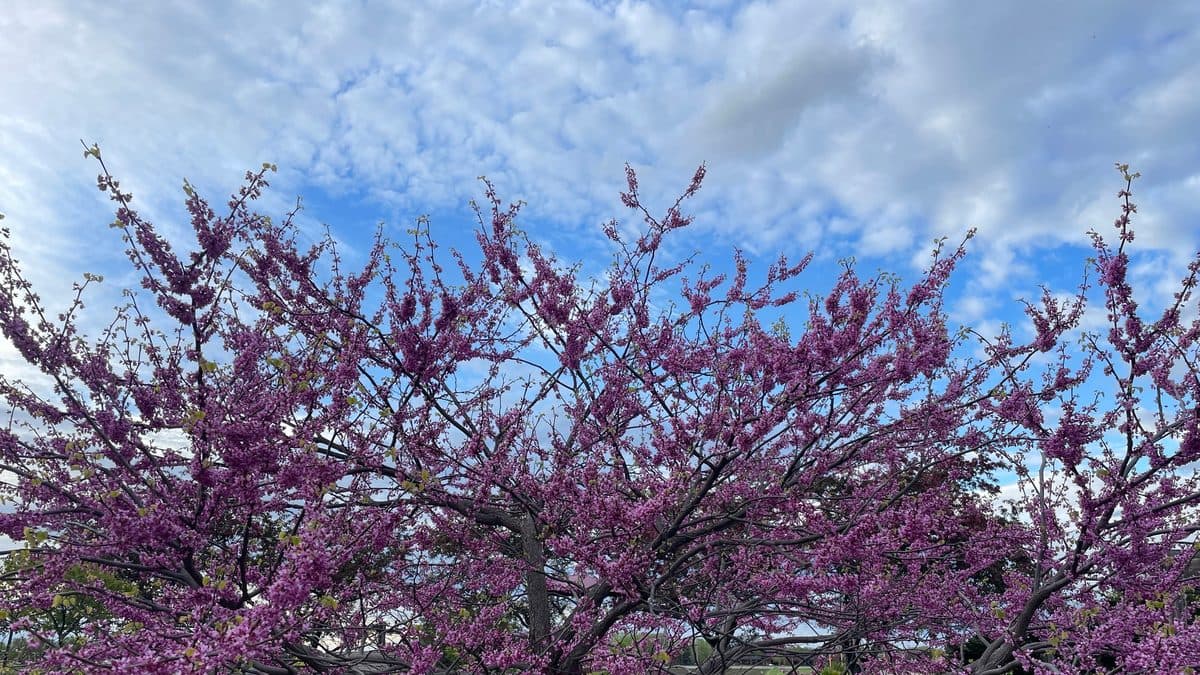
- Eastern redbud (Cercis canadensis). Magenta flowers straight off bare branches in early spring, before the dogwoods open. Not on the ASPCA toxic plant list. Heart-shaped leaves hold up through summer.
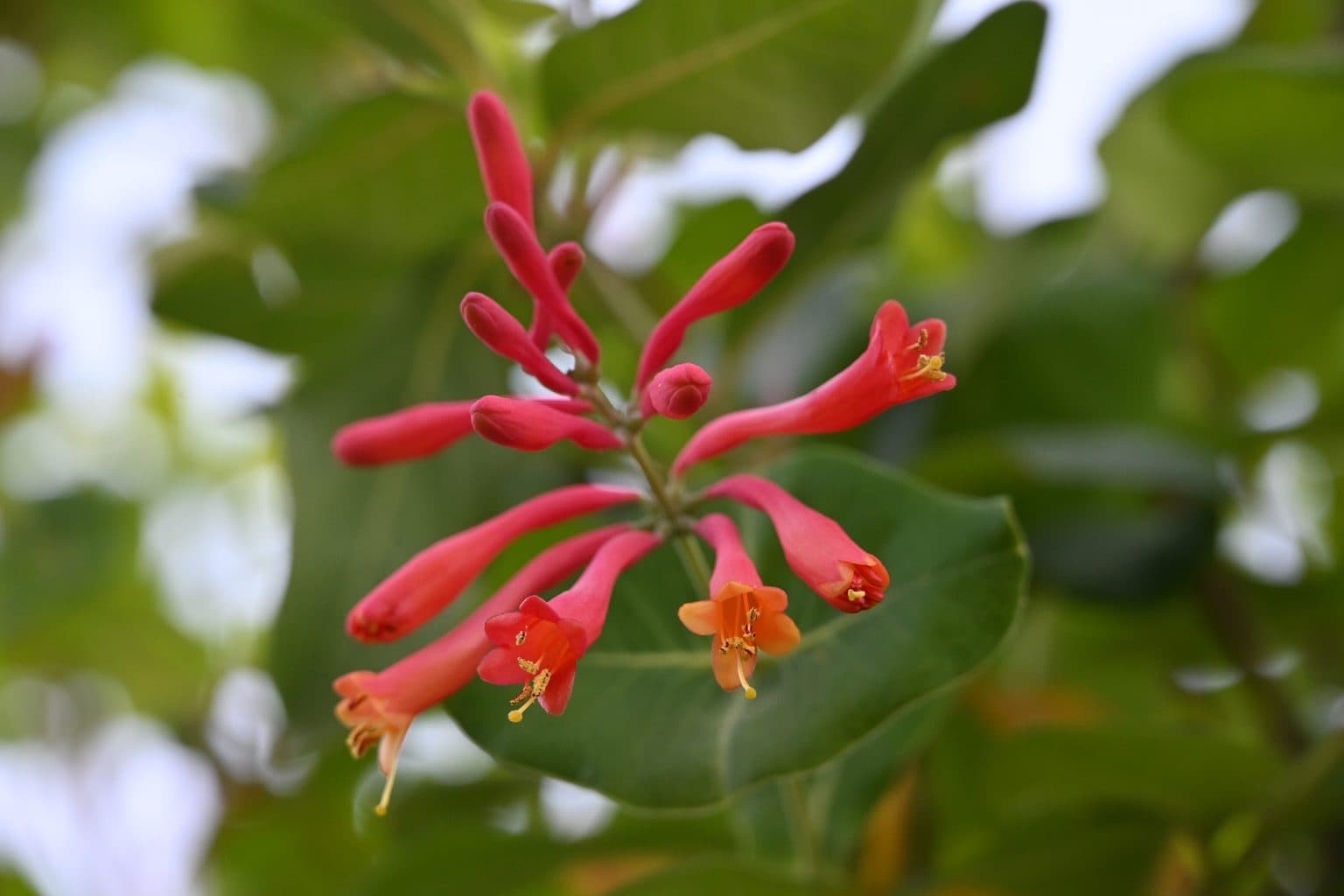
- Wax myrtle (Morella cerifera). Evergreen screening shrub that takes hard shearing, the closest native structural match to a privet or nandina hedge. Not on the ASPCA toxic plant list. Both of the plants it replaces are on that list.
- Moss phlox (Phlox subulata). A low spring carpet of pink or lavender over evergreen needle-like foliage, good on a slope or spilling over a wall. Listed as non-toxic by the ASPCA.
Eastern Corn Belt Plains, Indianapolis area
Deep prairie-derived soils, cold winters, and reliable summer rain. This is the easiest group to grow well.
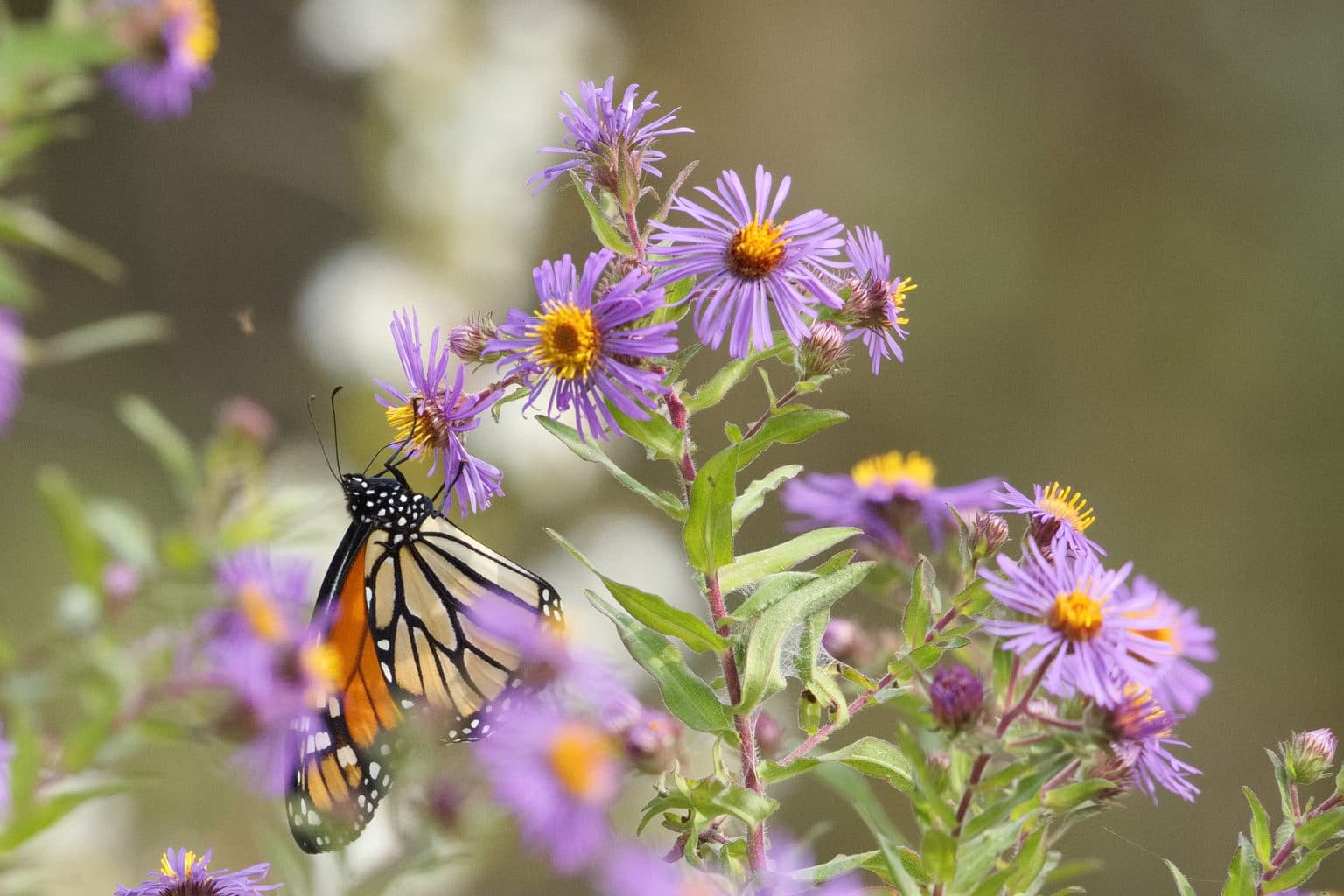
- New England aster (Symphyotrichum novae-angliae). Purple daisies in September and October, feeding migrating monarchs and late bumblebees when little else is open. Not on the ASPCA toxic plant list.
- Wild columbine (Aquilegia canadensis). Nodding red and yellow spring flowers in part shade, arriving with the first hummingbirds. Not on the ASPCA toxic plant list. Short-lived but self-sows politely.
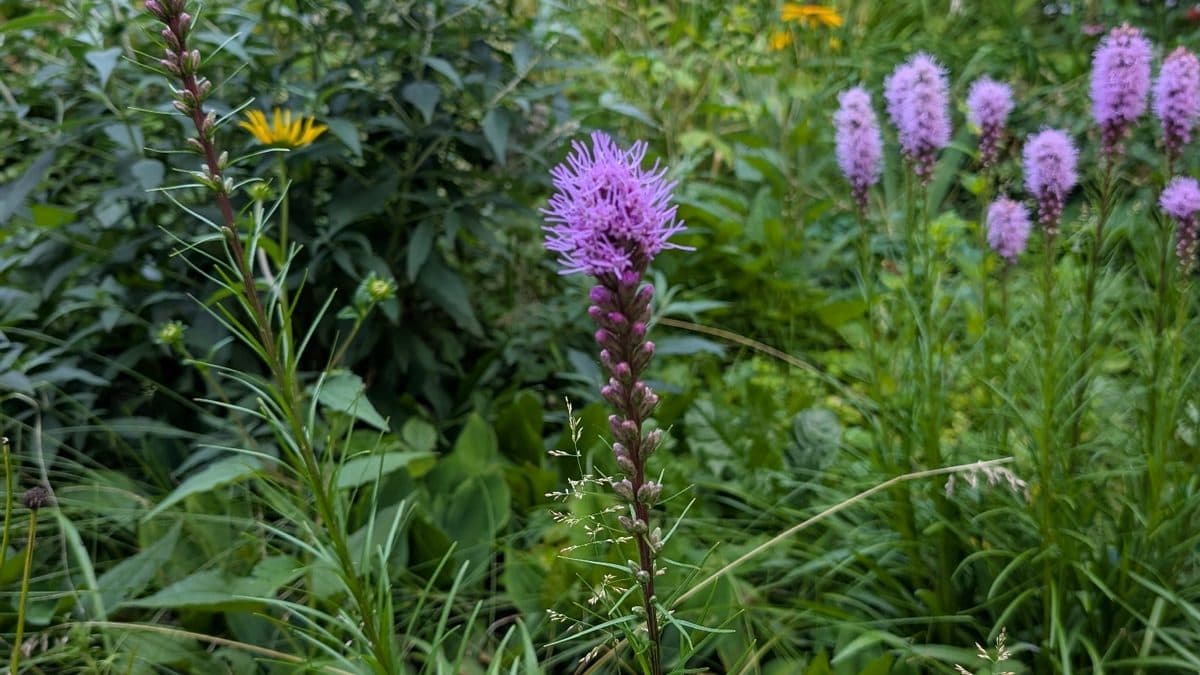
- Blazing star (Liatris spicata). Vertical purple spikes in midsummer that bloom top-down. Not on the ASPCA toxic plant list. The strong vertical line makes a native bed read as deliberate.
- Ninebark (Physocarpus opulifolius). Tough arching shrub with white spring flower clusters and peeling winter bark. Not on the ASPCA toxic plant list. Handles clay, wet, and neglect.
Western High Plains, Amarillo area
Wind, high sun, cold winters, and twenty inches of rain in a good year. Grasses carry this region.
- Little bluestem (Schizachyrium scoparium). Blue-green bunchgrass turning copper and mahogany in fall, holding structure all winter. Not on the ASPCA toxic plant list. Two feet tall and upright, so it behaves in a front bed.
- Switchgrass (Panicum virgatum). Upright warm-season grass to five feet with airy seed heads, excellent as a screen or backdrop. Not on the ASPCA toxic plant list. One caveat worth knowing: Texas A&M AgriLife lists switchgrass as a hazard to livestock, so it is a poor pick for a property with horses, sheep, or cattle even though it carries no dog or cat listing.
- Blue-eyed grass (Sisyrinchium angustifolium). Small blue star flowers on grassy clumps in spring, six to twelve inches. Not on the ASPCA toxic plant list. Despite the name it is an iris relative, not a grass, and unlike the true irises on the ASPCA list it carries no toxic listing.
- Buttonbush (Cephalanthus occidentalis). Spherical white summer flowers on a large shrub that thrives in the soggy corner where other shrubs rot. Not on the ASPCA toxic plant list. A serious pollinator plant.
What to avoid, and how to check the rest of your yard
Swapping in twenty safe plants matters less if the sago palm by the front door stays. Sago palm is the plant emergency veterinarians bring up first: every part is toxic to dogs, the seeds most of all, and ingestion can cause liver failure. Oleander, azalea, and nandina are the other three that show up constantly in front-yard foundation plantings.
Rather than checking plants one at a time, we put the whole ASPCA list in one place: every plant toxic to dogs and cats, with native alternatives. It covers all 398 listed plants, is searchable by common or scientific name, and groups them by what they were doing in the yard so the replacement suggestion is useful.
People also ask
What are the safest native plants for a yard with dogs?
There is no single national answer, because a plant that is well adapted in Houston will struggle in Denver. The practical approach is to pick from plants native to your own ecoregion that carry no ASPCA toxic listing, which is how the twenty above are organized. Little bluestem, frogfruit, and blazing star are among the most widely adaptable across regions.Is a plant safe if it is not on the ASPCA list?
Not necessarily. The ASPCA publishes entries for a finite set of plants, so absence can mean the plant is genuinely not a concern, or simply that no entry exists for it. That is why the wording throughout this article is "not on the ASPCA toxic plant list" rather than "safe". For a plant with no entry either way, treat it as unknown and keep it out of reach of a dog that chews.What should I do if my dog eats a plant I cannot identify?
Call the ASPCA Animal Poison Control Center at (888) 426-4435, or your own veterinarian, right away. Take a photo of the plant and bring a cutting if you can. Do not wait for symptoms, and do not induce vomiting unless a veterinarian instructs you to.If something goes wrong
Want this filtered to your actual yard?
Pollinator Patch matches native plants to your ZIP and ecoregion, and can filter every recommendation down to plants with no ASPCA toxic listing for dogs or cats, so you get a front-yard plan instead of a list to cross-reference.