Most HOA violation notices for native landscaping do not start with the front door neighbor or the board. They start with the neighbor whose yard touches yours. The property-line zone is the part of your yard they see every day, and it is where almost every complaint begins. Three design rules keep that border HOA-friendly.
Key takeaways
- The neighbor on the other side of the property line is the most common source of HOA complaints about native landscaping.
- Rule 1: keep border plants under 18 inches. Tall plants block sight lines and trigger "unkempt" complaints.
- Rule 2: pick mounding species over sprawling ones. Mounded shapes signal intent.
- Rule 3: leave six inches of clean material (mulch, gravel, or stone) between the planting and the lawn.
- These rules apply to any state. They are about visual cues, not specific plants.
Why the property line is the highest-risk zone
Front-yard HOA complaints almost always begin with one neighbor. That neighbor is rarely the board, rarely a stranger from across the street, and rarely the person whose front door faces yours. It is usually the neighbor whose yard touches yours along the property line. They see the border every morning when they leave for work, every evening when they come home, and every weekend when they do their own yard.
Anything in that border that reads as overgrown, accidental, or different from their lawn is a small daily friction. When the friction crosses a threshold, that neighbor calls the management company. The call may not be about your plants at all, but the border is where the eye goes first.
The interior of your bed has much more design latitude. Tall plants, dense plantings, and looser shapes work in the middle. The property line is the zone that needs the most restraint.
Rule 1. Keep border plants under 18 inches
Border plants taller than knee height block sight lines from the neighboring yard. That blockage is what triggers the "unkempt" or "overgrown" language in HOA notices, even when the plants are healthy and intentional. A neat 12-inch mounding perennial reads as designed. A 36-inch grass on the same property line reads as a weed.
Save the tall species for the interior of the bed, away from the property line. A two-foot setback is enough for a casual neighbor scan; three feet is enough that even a tall salvia or grass will not visually crowd the line.
For taller native grasses specifically, see native grasses and HOA height rules.
Rule 2. Pick mounding shapes, not sprawlers
Two plants the same height can read very differently. A plant that holds a tight, rounded mound signals intent: someone chose this and the shape is doing what the homeowner wanted. A sprawler with the same final mass blurs the bed edge and pulls the eye past the border. Even when sprawlers are native and ecologically valuable, they look accidental at the property line.
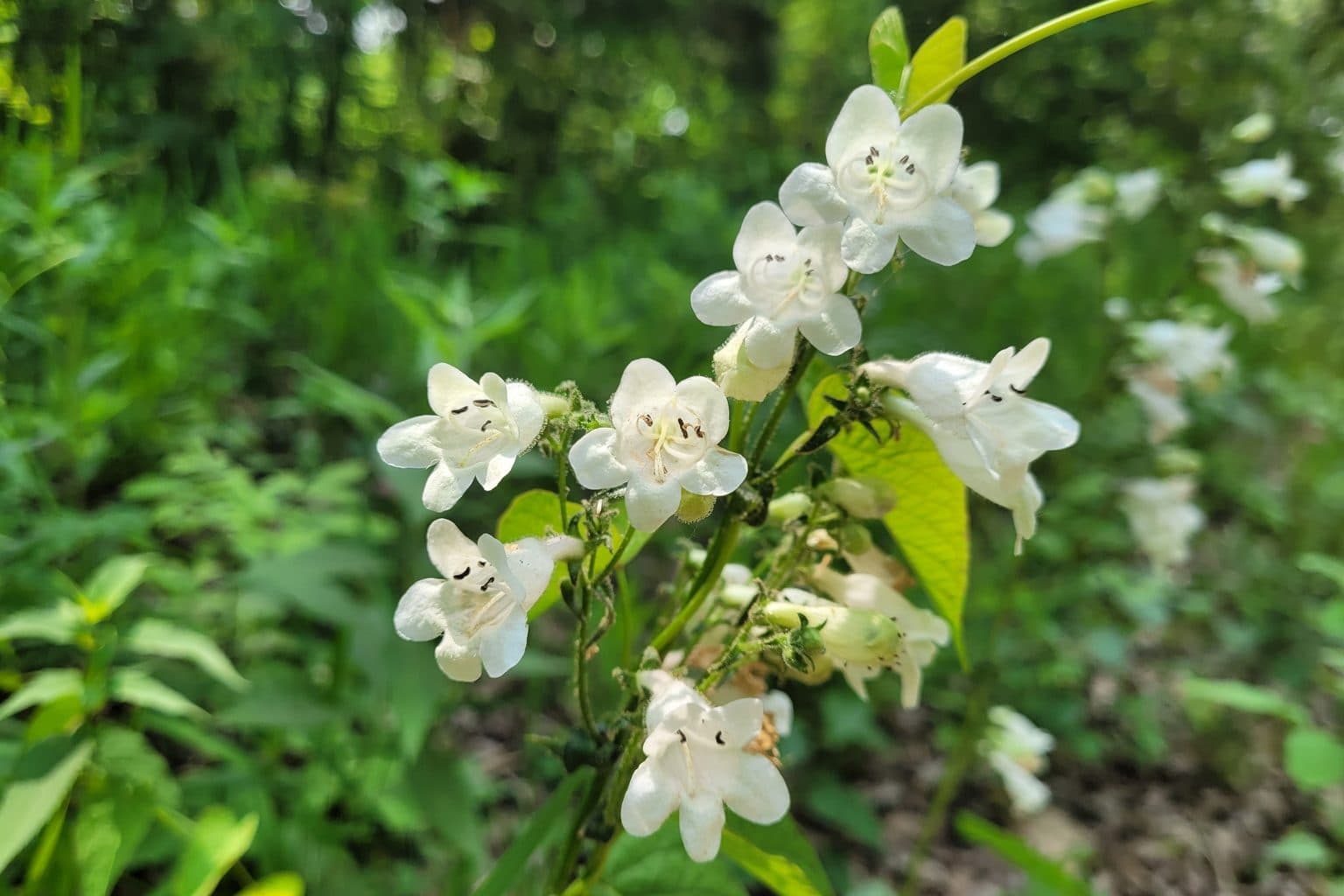
Mounding examples that work along borders in Texas and California include Gregg's mistflower (Conoclinium greggii), damianita (Chrysactinia mexicana), blackfoot daisy (Melampodium leucanthum), and pink skullcap (Scutellaria suffrutescens), all of which hold a compact form per the Lady Bird Johnson Wildflower Center. Frogfruit (Phyla nodiflora) works as a ground cover at the very edge because, although it spreads, it stays under four inches and reads as intentional.
Rule 3. Leave a clean edge
Six inches of clean material between the planting and the lawn. Hardwood mulch, decomposed granite, gravel, or a band of stone all work. The point is the visible breathing room. An HOA-conscious yard does not have to be sparse; it does have to have a clear boundary between "planted" and "not planted."
The edge is the single highest-leverage design choice along the property line. It does more for the calm, intentional look HOA boards respond to than any specific plant selection. For options on edge materials and how they read from the curb, see clean borders vs wild edges and mulch, edging, and visibility.
Putting the three rules together
A property-line border that reads as HOA-friendly looks like this: a six-inch band of mulch or gravel against the lawn, then a row of low mounding natives under 18 inches tall, then taller species set back two to three feet into the bed. The neighbor on the other side sees order, restraint, and design intent. They do not have a reason to call.
This is design, not legal protection. State laws like Texas Property Code §202.007 and California Civil Code §4735 limit what HOAs can ban outright, but the cheapest defense is a yard that never triggers a complaint in the first place.
Get a yard plan built around these rules
Pollinator Patch generates a front-yard plan for your zip code that respects HOA design cues. You get plant lists with mature size, shape habit, and bloom timing already filtered for the property-line zone.
Open the app