American Aspen
Populus tremuloides
Last reviewed: October 2026
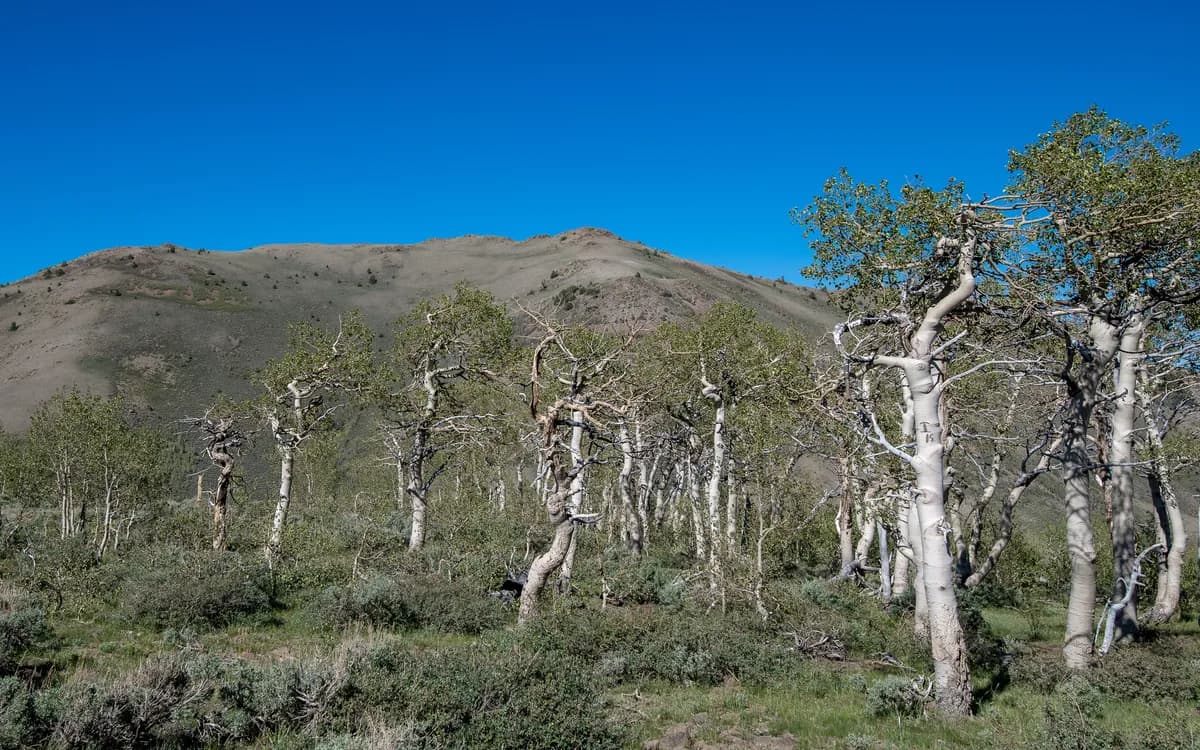
Populus tremuloides is a fast growing deciduous tree known for its smooth white bark and leaves that quake in light wind. It blooms in April and May and grows well in full sun with medium moisture.
Toxicity unknown
American Aspen (Populus tremuloides) is not listed by the ASPCA Animal Poison Control Center (opens in new tab) or the other sources we check, so we have no verdict for it either way. Absence from those lists is not a clearance. If your pet shows symptoms after eating any plant, call the ASPCA at (888) 426-4435.
The USDA PLANTS Database (opens in new tab) does not flag American Aspen as toxic to livestock.
Light
full sun
Water
medium
Size
240"–720" H × 240"–480" W
Bloom
Apr, May
Native to
AZ, CA, CO, CT and 32 more states
Pollinators
bees
Before you buy
Your city may pay you to plant this
Cities and water utilities offer rebates for replacing lawn with native and water-wise plants. We track 459 programs across 44 states, each with a link to the provider and the date we last checked it.
Find rebates in your areaPicture natives in your own yard
Upload a photo of your yard and Patch Vision shows a rendering of it planted with natives for your region, like American Aspen.


Browse plants for this ecoregion
American aspen is a fast-growing native tree known for its shimmering leaves that flutter in the slightest breeze, creating a distinctive rustling sound. This deciduous tree develops smooth, pale bark and brilliant yellow fall color, making it an attractive specimen for larger landscapes.
Growing American Aspen
Grow American Aspen in full sun and medium water. Mature plants reach 240 to 720 inches tall and spread 240 to 480 inches wide. Expect high maintenance to keep it looking intentional in a front yard.
How to care for American Aspen, by region
How to care for American Aspen where it is actually grown: year-round basics plus what to do each season, region by region, with the sources for each.
Care guidance last updated: August 2026
Arizona/New Mexico Plateau (includes Albuquerque, NM)
Year-round
American aspen is a fast growing shade tree with shimmering leaves and bright yellow fall color. It is native to New Mexico's cool mountain forests, not the low desert plateau where Albuquerque sits at around 5,300 feet, so it takes real extra effort to keep one healthy in town. Aspen and other Populus trees do not appear on the ASPCA's toxic or non-toxic plant list, and the genus is a documented caterpillar host for poplar sphinx moths found in New Mexico.
- Site it on the north or east side of the house or another structure, where afternoon shade and cooler soil help offset the summer heat stress that shortens aspen life in the valley.
- Plan on regular deep watering all season. Aspen is a high water use tree in its native range, and Albuquerque's roughly 9 inches of annual rain will not sustain it on its own.
- Watch new leaves for yellowing between the veins, a sign of iron chlorosis that shows up even on well watered aspens in Albuquerque's alkaline clay and caliche soils.
- Expect a shorter life and more upkeep than most yard trees. Aspen grown below its native elevation is prone to borers, cankers, and leaf scorch, and NM state forestry notes it budgets energy for height and root suckering over long term stem health.
Fall
Fall brings American aspen's best show, quick bright yellow color, usually through October before Albuquerque's first frost in late October or early November. Cleanup afterward is the main task.
- Ease off watering frequency as nights cool in September and October, but do not let the root zone go fully dry heading into winter.
- Rake and remove fallen leaves promptly once the color show finishes. Aspen leaf drop is fast and heavy, often within a week or two once cool nights set in.
- Skip pruning in fall. Late season cuts are more likely to attract borers, so save structural work for winter dormancy instead.
- Do one more pass for root suckers around the base before winter and clip any that got past you over summer.
Aspen drops its whole canopy in a short window. Raking up within a week or two of peak color keeps the yard reading as intentional rather than neglected during the season neighbors watch curb appeal most closely.
Winter
Winter is dormant season and the best time for structural work on American aspen. Albuquerque winters are cold at night but usually dry, so protecting bark from temperature swings matters as much as watering.
- Prune for structure and remove dead or crossing branches while the tree is bare, from December through February, before spring sap flow starts.
- Wrap young trunks, for the first two to three winters, with light colored tree wrap to prevent sunscald and frost cracking. Albuquerque's wide day to night temperature swings split thin aspen bark easily.
- Water deeply during dry winter stretches with no snow cover. Roots stay active even in a mild Albuquerque winter and can dry out over months without any moisture.
- Clear fallen branches or wind debris so the bare structure reads as tended rather than neglected through the dormant season.
A bare winter aspen with broken branches or leaning suckers at the base can read as neglected rather than intentional. Clearing debris and keeping the trunk wrapped keeps it looking cared for through dormancy and avoids a violation letter.
Spring
Spring is bud break and the tree's brief catkin bloom, typically as Albuquerque's last frost passes in mid-April. New leaves and root suckers both show up fast this season.
- Hold off on regular fertilizer. If leaves showed yellowing last year, an iron chelate soil drench in early spring treats chlorosis more directly than a general fertilizer.
- Check for root suckers popping up in the lawn or beds as the tree leafs out, and clip them at ground level right away. Aspen spreads by suckering, and one left through spring becomes a small tree by fall.
- Inspect the bark for new canker or borer damage once leaves are out. Trees stressed by Albuquerque's heat and low elevation are more prone to both.
- Water deeply as daytime temperatures climb into the 70s and 80s in April and May, before summer heat arrives, so roots are not playing catch up later.
Root suckers left uncut through spring can turn one front-yard aspen into an unplanned thicket, which reads as unintentional rather than a maintained tree. Clipping them at ground level as they appear keeps the planting looking cared for and avoids a curb-appeal complaint.
Summer
Summer is the hardest season for aspen in the Albuquerque valley. Heat builds through May and June before monsoon storms typically arrive in July, and this is when scorch and stress symptoms show up most.
- Deep water twice a week through the hot, dry stretch before monsoon rains usually start in July. Aspen roots dry out fast in this climate even with occasional watering.
- Expect browned, curled leaf edges during heat waves. This leaf scorch is a stress symptom rather than a disease, and easing it starts with keeping the root zone consistently moist.
- Mulch a few inches deep out to the dripline to hold soil moisture and keep root temperatures down during 90 degree plus afternoons.
- After a monsoon thunderstorm, check for broken or hanging branches. Aspen wood is soft, and summer wind and hail can crack limbs.
A storm broken or hanging branch left through summer reads as neglect rather than an intentional planting. Clearing broken limbs after monsoon storms keeps the tree looking maintained and avoids a violation letter.
Sources: Lady Bird Johnson Wildflower Center - Populus tremuloides species page, Lady Bird Johnson Wildflower Center - Ask Mr. Smarty Plants: quaking aspen in Albuquerque, ASPCA Toxic and Non-Toxic Plant List, Dogs, Butterflies and Moths of North America - Pachysphinx modesta (poplar/modest sphinx), NMSU Cooperative Extension, Southwest Yard and Garden: Planting and Zoning, Knowing What Not to Try
In an HOA neighborhood
American Aspen takes more care to keep looking intentional in a front yard. Maintenance level: high. Consider it for backyard or mid-zone beds rather than the street edge.
Works well in: backyard only.
- Spreads aggressively through root suckers
- Can become messy with frequent leaf and twig drop
- May grow too large for typical residential lots
Wildlife value
Host plant for large sphinx moth, poplar sphinx moth.
The early spring catkins provide nectar for bees and other pollinators. The tree also supports numerous butterfly and moth species as a host plant, while providing nesting sites for birds.
Common questions
- When does quaking aspen bloom?
- Quaking aspen produces catkins in April and May, typically before the leaves fully emerge.
- Do bees use quaking aspen?
- Bees visit the catkins of quaking aspen for pollen in early spring, although the tree is primarily wind pollinated.
- How much water does quaking aspen need?
- This tree does best with medium soil moisture and can struggle in prolonged drought or in soils that stay saturated for long periods.
- What light conditions suit quaking aspen best?
- Quaking aspen grows fastest and healthiest in full sun but can tolerate some part sun or part shade, especially in cooler climates.
- What does quaking aspen look like in fall?
- Its leaves typically turn a bright gold to yellow in autumn before dropping, a trait it is well known for in mountain and northern landscapes.
- Is American Aspen toxic to livestock?
- The USDA PLANTS Database does not flag American Aspen as toxic to livestock.
- Is American Aspen HOA-friendly?
- American Aspen takes more care to look intentional in a front yard. Consider it for backyard or mid-zone beds rather than the street edge.
These answers were drafted with an AI model from this plant's data. Verify care details with a local expert.
Native range data from vouchered herbarium specimen records and regional native plant society lists. Pollinator and host plant associations compiled from GBIF, iNaturalist, and published ecological literature.
If something looks wrong
Common plant problems, and what to check first
These come up on almost any plant. Each guide lists the likely causes in the order they are worth ruling out, with one thing to check before you act on any of them, and links to the source it came from.
- It is dying right after planting
- Leaves turning yellow
- Wilting even though I watered it
- Brown crispy leaf tips
- Bugs on the plant
Ready to grow American Aspen? Add it to your garden in Pollinator Patch to track it and get season-by-season care guidance.