Apricot globemallow
Sphaeralcea ambigua
Last reviewed: October 2026
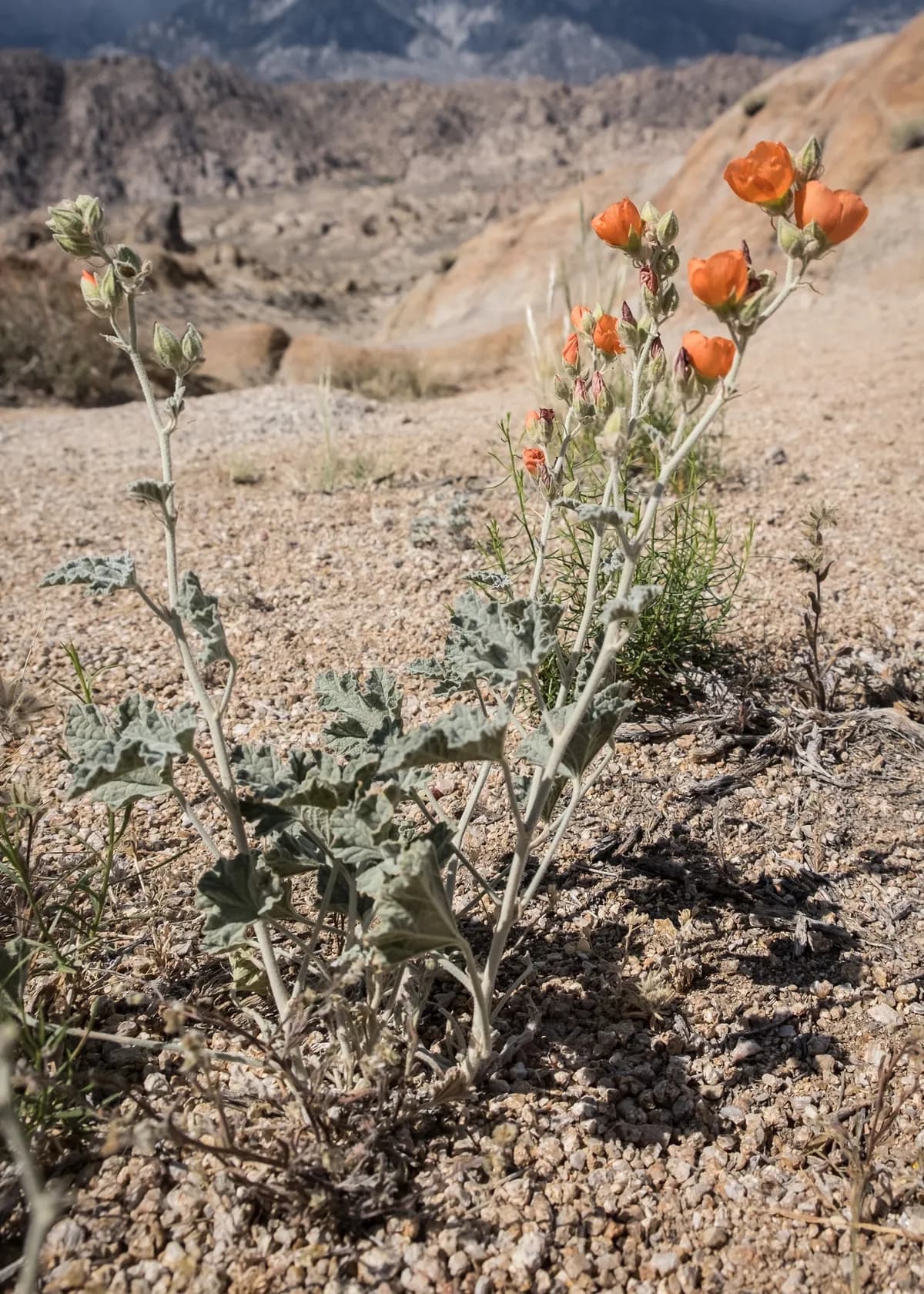
Apricot globemallow is a low water desert shrub that blooms from February through May with apricot orange flowers, thriving in full sun and rocky or sandy soils typical of the Southwest.
Toxicity unknown
Apricot globemallow (Sphaeralcea ambigua) is not listed by the ASPCA Animal Poison Control Center (opens in new tab) or the other sources we check, so we have no verdict for it either way. Absence from those lists is not a clearance. If your pet shows symptoms after eating any plant, call the ASPCA at (888) 426-4435.
Light
full sun
Water
low
Size
24"–36" H × 24"–36" W
Bloom
Feb, Mar, Apr, May
Native to
AZ, CA, NV, UT and 1 more states
Pollinators
bees, butterflies
Before you buy
Your city may pay you to plant this
Cities and water utilities offer rebates for replacing lawn with native and water-wise plants. We track 459 programs across 44 states, each with a link to the provider and the date we last checked it.
Find rebates in your areaPicture natives in your own yard
Upload a photo of your yard and Patch Vision shows a rendering of it planted with natives for your region, like Apricot globemallow.


Browse plants for this ecoregion
A rounded, woody-based perennial subshrub with gray-green, velvety, three-lobed leaves and abundant cup-shaped apricot-orange flowers held on tall spikes in spring. Semi-evergreen and drought deciduous, dropping leaves in extended dry heat. Thrives in poor, rocky, fast-draining soil.
Growing Apricot globemallow
Grow Apricot globemallow in full sun and low water. Mature plants reach 24 to 36 inches tall and spread 24 to 36 inches wide. Expect low maintenance to keep it looking intentional in a front yard.
How to care for Apricot globemallow, by region
How to care for Apricot globemallow where it is actually grown: year-round basics plus what to do each season, region by region, with the sources for each.
Care guidance last updated: September 2026
Cross Timbers (includes Fort Worth, TX)
Year-round
Apricot globemallow is a low, silvery-leaved shrub that covers itself in bowl-shaped orange to apricot flowers. It wants full sun, very little water once settled in, and soil that drains well.
- Give it full sun all day. It gets leggy and blooms less in shade.
- In heavy black clay, plant it high on a slight mound or amend the planting hole with coarse sand or expanded shale so water does not sit at the roots; in the sandier soils west of the metro it drains fine on its own but will need more frequent watering through the first summer while roots establish.
- Water deeply once a week for the first growing season, then taper off. Established plants only need supplemental water during extended dry stretches.
- Cut the whole plant back by about a third to half in late winter to keep it compact and rebloom well.
- Keep it out of foot traffic areas and away from irrigation heads that spray it daily, since wet feet are the main way this plant fails.
Fall
Fall is a quiet season for this plant in North Texas. Bloom slows as days shorten, and it is not the ideal planting window for this particular shrub even though it is prime tree and shrub season generally.
- If you must plant in fall, do it in September or early October so roots have time to establish before the first freeze in mid November.
- Cut back any leggy or sprawling stems by about a third to tidy the shape before winter.
- Reduce watering as temperatures drop and rainfall picks up in October and November.
- Let any remaining seed pods dry and drop if you want volunteer seedlings next spring.
A late-season trim keeps the plant from sprawling over a walkway or curb edge as growth slows for the year.
Winter
Winter is dormant, low-maintenance season. North Texas winters are mild with short hard freezes, and this plant handles them fine once established.
- Cut the whole plant back by about a third to half in late February, just before spring growth starts, to keep it compact and encourage heavy spring bloom.
- Skip supplemental watering unless the winter is unusually dry, since dormant roots need very little.
- During a hard freeze or Arctic outbreak, established plants do not need covering, but a first-winter planting can be protected with a frost cloth overnight.
- Leave the cut-back stems and any fallen leaves as light mulch over winter rather than clearing the bed bare.
A late-February cutback right before spring keeps the bed looking deliberately pruned rather than dead through the dormant months.
Spring
Spring is peak bloom and the best time to plant this one in North Texas, while the soil is still cool and rain is more reliable.
- Plant new nursery starts anytime from March through May, after the last frost in mid March.
- Water new plantings two to three times a week for the first month to help roots establish, then cut back once you see new growth.
- Deadhead spent flower stalks to encourage more blooms through the season.
- Watch for a flush of small caterpillars folding leaves together into little nests. That is normal skipper butterfly activity, not a pest problem, so leave them alone.
A blooming, tidy mound of orange flowers by the front walk reads as intentional cottage-garden color, not an untended patch.
Summer
Once established, this plant is built for North Texas summer heat and needs very little help even through the hardest weeks of July and August.
- Water only during extended dry spells with no rain for two or more weeks, and even then just a deep soak, not daily watering.
- If you planted this spring, keep giving it one deep watering a week through its first July and August, since a first-year plant can still die in a summer drought.
- Expect bloom to slow or pause in the hottest weeks. It will pick back up as temperatures ease.
- Leave spent flower stalks in place if you want seed pods to form for reseeding, or trim lightly to keep a neater shape.
Its silvery, fine-textured foliage stays neat-looking through drought stress even when nearby plants wilt, which helps the bed read as maintained.
Sources: Lady Bird Johnson Wildflower Center: Sphaeralcea ambigua, Calscape: Desert Globemallow, Butterflies and Moths of North America: Common Checkered-Skipper
Southern California/Northern Baja Coast (includes Los Angeles, CA)
Year-round
Desert globemallow, also called apricot mallow, is native to the Mojave and Sonoran desert regions of California, Nevada, Utah, and Arizona into northern Mexico, not to the coastal sage scrub and chaparral of the Los Angeles basin itself. In a Los Angeles yard it is not a local native, but it is a tough, extremely drought tolerant, long blooming plant that works well in a low water garden here as long as drainage is excellent.
- Give it full sun and good air circulation. It struggles in shade or crowded, humid corners of the yard.
- Plant in fast draining, sandy or gravelly soil. Because it comes from a much drier climate than coastal Los Angeles, poor drainage and overwatering are bigger risks here than underwatering.
- Water sparingly once established, no more than about once a month in summer. This plant is built for near desert rainfall and does not want a regular irrigation schedule.
- It is an outstanding pollinator plant, supporting a very large number of native bee species along with butterflies and moths, even though it is not native to this specific part of California.
Fall
Fall is a good time to plant desert globemallow in Los Angeles, giving it a chance to root in during the mild, wetter months before it faces its first full summer here.
- Plant in fall so roots can establish while temperatures are mild and any rain supplements your watering.
- Cut back leggy or woody growth in fall to keep the shrub compact heading into next year.
- Hold off on heavy supplemental watering even for new plants once fall rains start. This plant would rather be on the dry side than sitting in wet soil.
- If summer flowering slowed down, expect renewed bloom as temperatures cool, since this species can flower on and off through much of the year in a mild climate.
Winter
Winter is one of this plant's natural bloom windows, and Los Angeles's mild, wet winters generally suit it well as long as the soil drains.
- Expect possible winter flowering. Unlike many California natives, desert globemallow can bloom in winter as well as spring in a mild climate like Los Angeles.
- Let winter rain do most of the watering. Do not add supplemental irrigation on top of a normal rainy season here.
- Make sure the planting spot does not collect standing water after storms. This is the single biggest risk to this plant in a coastal Los Angeles winter compared to its native desert.
- No special frost protection is typically needed for an established plant in the Los Angeles basin's mild winter temperatures.
Spring
Spring is a strong bloom season for desert globemallow in Los Angeles, with its apricot orange flowers showing well as days warm.
- Expect a strong flush of orange to apricot flowers through spring, one of this plant's two main bloom windows along with winter.
- Keep watering minimal even during active spring growth. This species is adapted to a much drier climate than coastal Los Angeles gets even in a dry spring.
- A light prune after the spring bloom flush helps keep the shrub from getting woody and sparse in the middle.
- Watch for a wide range of native bees visiting the flowers. This plant is documented as an exceptional pollinator resource even outside its natural range.
Summer
Summer is the season to be most careful with desert globemallow in a Los Angeles yard, since our humid coastal summer is a very different environment from the dry desert heat it evolved for.
- Water no more than about once a month, and only if the plant is showing real drought stress. Overwatering in summer is the most common way this plant runs into trouble here.
- Make sure soil drains fast. If you are planting new ones in summer, choose the driest, sunniest, best draining spot in the yard.
- Expect bloom to slow in peak summer heat compared to its spring and winter flushes, then pick back up as temperatures ease in fall.
- Watch the base of the plant for signs of rot or fungal issues after any humid spell. That is a bigger risk here than in its native desert range.
Its rounded, shrubby form and long bloom season make it a tidy, colorful choice for a front bed as long as it is kept on the dry side.
Sources: Calscape, Sphaeralcea ambigua (Desert Globemallow) plant profile (native range, care, pollinator counts), Lady Bird Johnson Wildflower Center, Sphaeralcea ambigua plant profile (native range, habitat, pollinator value), Las Pilitas Nursery, Sphaeralcea ambigua (Desert Mallow) care notes
Texas Blackland Prairies (includes Dallas, TX)
Year-round
Apricot globemallow is a low, silvery-leaved shrub that covers itself in bowl-shaped orange to apricot flowers. It wants full sun, very little water once settled in, and soil that drains well.
- Give it full sun all day. It gets leggy and blooms less in shade.
- In heavy black clay, plant it high on a slight mound or amend the planting hole with coarse sand or expanded shale so water does not sit at the roots; in the sandier soils west of the metro it drains fine on its own but will need more frequent watering through the first summer while roots establish.
- Water deeply once a week for the first growing season, then taper off. Established plants only need supplemental water during extended dry stretches.
- Cut the whole plant back by about a third to half in late winter to keep it compact and rebloom well.
- Keep it out of foot traffic areas and away from irrigation heads that spray it daily, since wet feet are the main way this plant fails.
Fall
Fall is a quiet season for this plant in North Texas. Bloom slows as days shorten, and it is not the ideal planting window for this particular shrub even though it is prime tree and shrub season generally.
- If you must plant in fall, do it in September or early October so roots have time to establish before the first freeze in mid November.
- Cut back any leggy or sprawling stems by about a third to tidy the shape before winter.
- Reduce watering as temperatures drop and rainfall picks up in October and November.
- Let any remaining seed pods dry and drop if you want volunteer seedlings next spring.
A late-season trim keeps the plant from sprawling over a walkway or curb edge as growth slows for the year.
Winter
Winter is dormant, low-maintenance season. North Texas winters are mild with short hard freezes, and this plant handles them fine once established.
- Cut the whole plant back by about a third to half in late February, just before spring growth starts, to keep it compact and encourage heavy spring bloom.
- Skip supplemental watering unless the winter is unusually dry, since dormant roots need very little.
- During a hard freeze or Arctic outbreak, established plants do not need covering, but a first-winter planting can be protected with a frost cloth overnight.
- Leave the cut-back stems and any fallen leaves as light mulch over winter rather than clearing the bed bare.
A late-February cutback right before spring keeps the bed looking deliberately pruned rather than dead through the dormant months.
Spring
Spring is peak bloom and the best time to plant this one in North Texas, while the soil is still cool and rain is more reliable.
- Plant new nursery starts anytime from March through May, after the last frost in mid March.
- Water new plantings two to three times a week for the first month to help roots establish, then cut back once you see new growth.
- Deadhead spent flower stalks to encourage more blooms through the season.
- Watch for a flush of small caterpillars folding leaves together into little nests. That is normal skipper butterfly activity, not a pest problem, so leave them alone.
A blooming, tidy mound of orange flowers by the front walk reads as intentional cottage-garden color, not an untended patch.
Summer
Once established, this plant is built for North Texas summer heat and needs very little help even through the hardest weeks of July and August.
- Water only during extended dry spells with no rain for two or more weeks, and even then just a deep soak, not daily watering.
- If you planted this spring, keep giving it one deep watering a week through its first July and August, since a first-year plant can still die in a summer drought.
- Expect bloom to slow or pause in the hottest weeks. It will pick back up as temperatures ease.
- Leave spent flower stalks in place if you want seed pods to form for reseeding, or trim lightly to keep a neater shape.
Its silvery, fine-textured foliage stays neat-looking through drought stress even when nearby plants wilt, which helps the bed read as maintained.
Sources: Lady Bird Johnson Wildflower Center: Sphaeralcea ambigua, Calscape: Desert Globemallow, Butterflies and Moths of North America: Common Checkered-Skipper
In an HOA neighborhood
Apricot globemallow is an HOA-friendly choice. Maintenance level: low. Tidiness: 4 out of 5.
Works well in: front yard, foundation, street edge.
Wildlife value
Host plant for Common checkered skipper.
Spring flowers are a major nectar source for bees and butterflies, and the foliage serves as a larval host for several checkered-skipper butterflies.
Common questions
- When does Apricot globemallow bloom?
- Apricot globemallow typically flowers from February through May, with peak bloom often following winter and early spring rains.
- How much water does this shrub need?
- It is adapted to low water conditions and does best with infrequent, deep watering once established. Occasional supplemental water during extended dry spells can help but is not required.
- What kind of light does Apricot globemallow require?
- This shrub grows best in full sun and can tolerate part sun locations, though flowering is usually heaviest with more direct light.
- Do pollinators use Apricot globemallow?
- Bees and butterflies regularly visit the flowers for nectar and pollen, making it a useful addition to a pollinator friendly desert garden.
- What soil conditions suit this plant best?
- It prefers well drained, rocky or sandy soils and does not tolerate heavy, poorly drained soils that stay wet for long periods.
- Is Apricot globemallow HOA-friendly?
- Apricot globemallow is generally an HOA-friendly choice in the right placement, with low maintenance.
These answers were drafted with an AI model from this plant's data. Verify care details with a local expert.
Native range data from vouchered herbarium specimen records and regional native plant society lists. Pollinator and host plant associations compiled from GBIF, iNaturalist, and published ecological literature.
If something looks wrong
Common plant problems, and what to check first
These come up on almost any plant. Each guide lists the likely causes in the order they are worth ruling out, with one thing to check before you act on any of them, and links to the source it came from.
- It is dying right after planting
- Leaves turning yellow
- Wilting even though I watered it
- Brown crispy leaf tips
- Bugs on the plant
Ready to grow Apricot globemallow? Add it to your garden in Pollinator Patch to track it and get season-by-season care guidance.