Blue Waterleaf
Hydrolea ovata
Last reviewed: October 2026
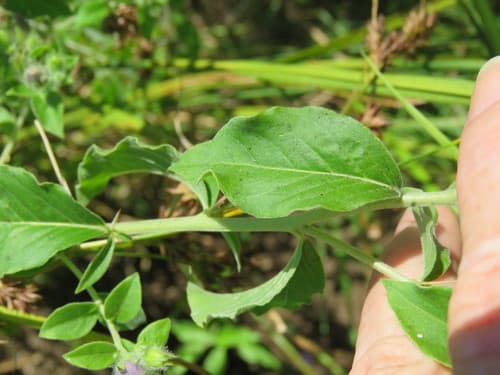
Hydrolea ovata, or blue waterleaf, is a wetland forb with blue flowers that blooms from June through November in swamps, ditches and pond edges across the Gulf Coast and lower Mississippi Valley.
Toxicity unknown
Blue Waterleaf (Hydrolea ovata) is not listed by the ASPCA Animal Poison Control Center (opens in new tab) or the other sources we check, so we have no verdict for it either way. Absence from those lists is not a clearance. If your pet shows symptoms after eating any plant, call the ASPCA at (888) 426-4435.
Light
full sun
Water
high
Size
24"–36" H × 6"–18" W
Bloom
Jun, Jul, Aug, Sep, Oct, Nov
Native to
AL, AR, FL, GA and 7 more states
Pollinators
butterflies, bees
Before you buy
Your city may pay you to plant this
Cities and water utilities offer rebates for replacing lawn with native and water-wise plants. We track 460 programs across 44 states, each with a link to the provider and the date we last checked it.
Find rebates in your areaPicture natives in your own yard
Upload a photo of your yard and Patch Vision shows a rendering of it planted with natives for your region, like Blue Waterleaf.


Browse plants for this ecoregion
Blue Waterleaf is a moisture-loving perennial that produces clusters of bright blue flowers from summer through late fall. This native forb grows 2-3 feet tall with a narrow spread, making it suitable for rain gardens and consistently moist areas. The plant goes dormant in winter, dying back to ground level before returning in spring.
Growing Blue Waterleaf
Grow Blue Waterleaf in full sun and high water. Mature plants reach 24 to 36 inches tall and spread 6 to 18 inches wide. Expect low maintenance to keep it looking intentional in a front yard.
How to care for Blue Waterleaf, by region
How to care for Blue Waterleaf where it is actually grown: year-round basics plus what to do each season, region by region, with the sources for each.
Care guidance last updated: September 2026
Texas Blackland Prairies (includes Dallas, TX)
Year-round
Blue Waterleaf is a wetland perennial that needs soil that stays wet or shallow standing water year-round, with full sun to part shade, which is the main thing to plan around before anything else.
- Keep the soil wet or even under shallow water all year. This plant is built for pond edges, ditches, and low wet spots, not a regular flower bed that dries out between waterings.
- Give it full sun to part shade. It handles both, but blooms best with more sun.
- It spreads by underground rhizomes and can form a thick colony over a few seasons, so give it its own wet corner rather than tucking it next to drier plants.
- Blue Waterleaf is native to Texas overall, according to USDA and the Lady Bird Johnson Wildflower Center, though the documented Texas range for this species clusters in East and Southeast Texas wetlands rather than the Blackland Prairie ground around Dallas. Treat it here as a plant you're hosting in a deliberately wet spot, not one that would show up on its own.
- The stems and leaves carry small spines, so wear gloves when you trim, divide, or clear it.
- It handles heat well but has very little drought tolerance, so a dry spell will stress it fast if the wet spot dries out.
Fall
Fall is the tail end of bloom, and Dallas's first frost, usually around mid-November, is the signal to cut the blackened top growth back and let the rhizomes carry the plant through winter.
- Flowering can continue into October in most years, so let it keep blooming as long as the weather allows.
- Dallas typically sees its first frost around mid-November. Once frost blackens the foliage, cut the dead top growth back to a few inches. The rhizomes underground carry the plant through winter.
- Skip fertilizer this time of year. The plant is winding down, not starting new growth.
- If the colony has spread wider than you want, fall cutback is also a good time to trim back the outer edge before it goes dormant.
- Keep the wet spot wet through fall. Don't let it dry out just because bloom is ending.
Cutting the blackened stems back after frost keeps the bed from looking dead and ragged over the fall, since a neglected look draws more attention from the street than the plant itself does.
Winter
Winter in Dallas brings real hard freezes, not just light frost, and Blue Waterleaf goes fully dormant above ground, relying on its underground rhizomes to come back once spring warms up.
- Expect the top growth to die back completely after a hard freeze. That's normal for this species and not a sign the plant is dead.
- Dallas winters include real freeze events on top of milder stretches, so don't expect any green top growth to persist through a cold snap.
- Keep the root zone from drying out completely even in winter. The rhizomes do best in damp soil, though they don't need the standing water summer growth wants.
- There isn't solid published data on exactly how cold this species' rhizomes can tolerate, so treat an ordinary Dallas winter as low risk and an unusually hard freeze or ice event as worth a layer of mulch over the root zone for insurance.
- No pruning or planting needed this season. Leave the dormant rhizomes undisturbed until spring growth starts.
Spring
Spring is when new shoots push up from the rhizomes and the plant builds toward its summer bloom, so this is the season to clear old growth and confirm the wet spot is holding water.
- New growth emerges from the rhizomes as the ground warms, typically by mid to late spring in the Dallas area.
- Keep the wet spot wet through spring. Top it off during any dry stretch, since spring is when the root system is building up for summer bloom.
- Clear out last year's dead stems so new shoots have room and light to come up through.
- This is a good time to divide an overgrown clump if it has spread past its bed, since the plant is actively rooting and recovers well from division now.
- Watch for the first spiny stems as they come up so you know where to avoid bare-handed weeding nearby.
Clearing old winter stems in spring keeps the wet bed looking tended rather than overgrown from the street.
Summer
Summer is bloom season for Blue Waterleaf, with blue flowers opening from July on, and Dallas's hot, often dry summers mean the wet spot needs regular checking so it does not dry out during the bloom push.
- Blue Waterleaf blooms from July through October, so most of its flower show happens during Dallas's hottest months.
- Dallas summers run hot with long dry stretches between rain, so check the wet spot often and top it off if it is not fed by a pond, ditch, or irrigation, so the soil or shallow water around the roots does not dry out.
- The flowers draw bees, butterflies, and hummingbirds, so this is the payoff season for a pollinator-friendly wet corner.
- Deadheading spent flower clusters can encourage more blooms through the rest of the season and keeps the bed looking tidy.
- High heat tolerance means the plant itself handles Dallas summers fine. The limiting factor is keeping enough water around its roots, not the heat.
Deadheading through summer keeps the bloom cluster looking full and tidy instead of leggy, which matters most on a wet spot visible from the street.
Sources: Hydrolea ovata (Blue waterleaf) - Native Plant Database, Hydrolea ovata - Native Plant Society of Texas, Hydrolea ovata plant profile - USDA PLANTS Database
In an HOA neighborhood
Blue Waterleaf is an HOA-friendly choice. Maintenance level: low. Tidiness: 2 out of 5.
Works well in: front yard, foundation, street edge, mid zone.
Wildlife value
The long blooming period provides nectar for butterflies and bees from June through November. The extended flower production makes it particularly valuable for late-season pollinators preparing for winter.
Common questions
- When does blue waterleaf bloom?
- Hydrolea ovata typically flowers from June through November, with blue blossoms appearing along stems in wet, sunny sites.
- What kind of habitat does blue waterleaf need?
- This plant grows in standing or saturated water such as swamps, ditches, marshes and pond margins, and it needs full sun and consistently high moisture to thrive.
- Do pollinators visit blue waterleaf flowers?
- Bees and butterflies commonly visit the blue flowers of Hydrolea ovata for nectar and pollen during its summer and fall bloom period.
- Can blue waterleaf tolerate drier soil?
- Blue waterleaf performs best in consistently wet to seasonally flooded soil and does not tolerate extended dry conditions well.
- Is Blue Waterleaf HOA-friendly?
- Blue Waterleaf is generally an HOA-friendly choice in the right placement, with low maintenance.
These answers were drafted with an AI model from this plant's data. Verify care details with a local expert.
Native range data from the World Checklist of Vascular Plants (Kew). Pollinator and host plant associations compiled from GBIF, iNaturalist, and published ecological literature.
If something looks wrong
Common plant problems, and what to check first
These come up on almost any plant. Each guide lists the likely causes in the order they are worth ruling out, with one thing to check before you act on any of them, and links to the source it came from.
- It is dying right after planting
- Leaves turning yellow
- Wilting even though I watered it
- Brown crispy leaf tips
- Bugs on the plant
Ready to grow Blue Waterleaf? Add it to your garden in Pollinator Patch to track it and get season-by-season care guidance.