Blueblossom
Ceanothus thyrsiflorus
Last reviewed: September 2026
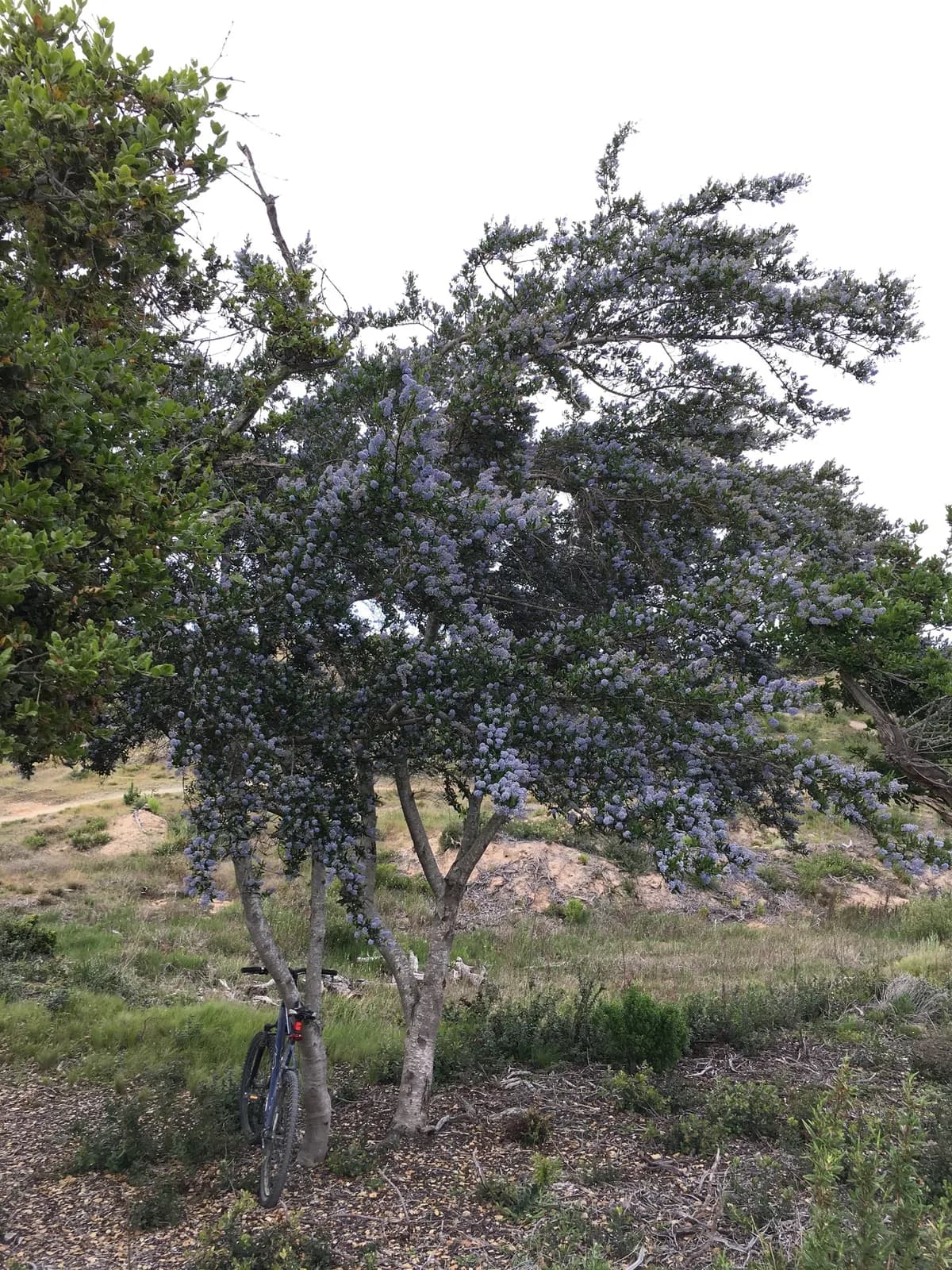
Blueblossom (Ceanothus thyrsiflorus) is an evergreen shrub that produces dense clusters of blue flowers from March through May. It grows well in coastal scrub and woodland edges with full sun and low water once established.
Blueblossom (Ceanothus thyrsiflorus) is not flagged as toxic to dogs or cats by Plants For A Future (PFAF) (opens in new tab) (last reviewed 2026-05-21). This verdict does not come from the ASPCA. If your pet shows symptoms after eating any plant, call the ASPCA at (888) 426-4435.
Light
full sun
Water
low
Size
72"–240" H × 72"–240" W
Bloom
Mar, Apr, May
Native to
CA, OR
Pollinators
bees, butterflies, hummingbirds
Before you buy
Your city may pay you to plant this
Cities and water utilities offer rebates for replacing lawn with native and water-wise plants. We track 459 programs across 44 states, each with a link to the provider and the date we last checked it.
Find rebates in your areaPicture natives in your own yard
Upload a photo of your yard and Patch Vision shows a rendering of it planted with natives for your region, like Blueblossom.


Browse plants for this ecoregion
Blueblossom is a large native shrub or small tree with glossy evergreen leaves and stunning blue flower clusters in spring. It grows quickly to 6-20 feet tall and wide, thriving in full sun with minimal water once established.
Growing Blueblossom
Grow Blueblossom in full sun and low water. Mature plants reach 72 to 240 inches tall and spread 72 to 240 inches wide. Expect moderate maintenance to keep it looking intentional in a front yard.
How to care for Blueblossom, by region
How to care for Blueblossom where it is actually grown: year-round basics plus what to do each season, region by region, with the sources for each.
Care guidance last updated: September 2026
Central California Foothills and Coastal Mountains (includes San Francisco, CA)
Year-round
Blueblossom is a tough, drought-loving shrub that wants excellent drainage and almost no water once it settles in.
- Give it fast-draining soil. This shrub struggles in heavy, wet clay, so a raised bed or a sloped spot helps in San Francisco's clay-heavy yards.
- Skip summer water once it is established, usually after its first one to two years in the ground. Regular summer watering is the most common way this shrub dies early.
- Give it full sun to light part shade. In fog-cooled San Francisco neighborhoods it can handle more sun than it would inland.
- Blueblossom's mapped native range runs along the coast from Del Norte County down through Monterey County, according to Calscape, a stretch that includes the San Francisco Bay Area.
- Its small blue flower clusters are an early nectar source for bees, hummingbirds, and butterflies.
- Blueblossom does not appear on the ASPCA's toxic plant list for dogs, though it is still worth keeping an eye on any pet that chews on a new plant.
Fall
Fall is a good time to plant a new blueblossom in San Francisco and to check drainage before winter rains start.
- If you are adding a new blueblossom, planting in fall lets its roots establish during the cool, rainy season ahead.
- Confirm the planting spot drains well before the rains arrive. Standing water after a fall storm is a warning sign for winter root trouble.
- Established plants need little or no water in fall since San Francisco's rains are just starting to return.
- This is a good season to clear leaf litter and debris from around the base to keep air moving through the branches.
Winter
Winter is San Francisco's rainy season, and blueblossom depends on it. It just needs soil that lets that water pass through.
- San Francisco's winter rains usually supply all the water this shrub needs. Do not add extra irrigation on top of a wet winter.
- In heavy clay or a low spot where water pools, plant on a slight mound or slope so roots are not sitting in saturated soil.
- Flower buds often start forming late in winter, so hold off on pruning now. Wait until after the blooms finish in spring.
- The shrub stays evergreen through winter, so it keeps its shape and green color even in the coolest months.
Spring
Spring is bloom time for blueblossom in San Francisco, and a light prune right after flowering keeps it tidy and healthy.
- Flowers that started in late winter carry into spring, covering the shrub in small blue clusters that draw bees, butterflies, and hummingbirds.
- As soon as the blooms fade, prune lightly to shape the plant. Only cut stems thinner than a pencil, since blueblossom does not recover well from cuts into old, thick wood.
- Avoid shearing it into a tight, formal hedge shape. Light, selective cuts keep it full without stressing the plant.
- This is a good time to check for winter storm damage and remove any dead or broken branches.
A light post-bloom prune keeps blueblossom looking neat and full from the street, which reads as intentional rather than overgrown.
Summer
Summer in San Francisco is naturally dry, and that is exactly what an established blueblossom wants: little to no extra water.
- Once the shrub has been in the ground about two years, stop regular summer watering. Continued summer irrigation is the single biggest reason this plant dies early.
- If rainfall has been unusually low over the past year or the plant looks stressed, a very occasional deep soak causes less strain than frequent light watering.
- Watch for yellowing leaves or dieback, which often signal wet roots rather than thirst.
- Keep any hose or sprinkler spray off the base of the plant. Dry soil at the crown through summer is part of what keeps this shrub healthy long term.
Sources: Calscape: Blueblossom Ceanothus plant profile and native range, NC State Extension Gardener Plant Toolbox: Ceanothus thyrsiflorus, ASPCA Toxic and Non-Toxic Plant List for Dogs, Las Pilitas Nursery: California Lilacs (Ceanothus spp.) care notes
In an HOA neighborhood
Blueblossom is an HOA-friendly choice in the right placement. Maintenance level: moderate. Tidiness: 3 out of 5.
Works well in: backyard only.
- Can grow quite large if not pruned regularly
- May appear too naturalistic/wild for formal landscapes
- Some cultivars drop blue flower petals that can stain hardscapes
Wildlife value
Host plant for pale swallowtail butterfly, California hairstreak butterfly.
Excellent pollinator plant that attracts native bees, butterflies, and hummingbirds. The dense foliage also provides nesting habitat and shelter for birds.
Common questions
- When does blueblossom bloom?
- Blueblossom generally flowers from March through May, covering the shrub in rounded clusters of small blue blooms.
- What pollinators does blueblossom attract?
- The flowers draw bees, butterflies, and hummingbirds, which visit for nectar and pollen during the spring bloom period.
- How much water does blueblossom need once established?
- It needs very little supplemental water after its first year or two and does best with dry summers and well-drained soil. Overwatering, especially in hot inland gardens, can shorten its lifespan.
- What light conditions does blueblossom prefer?
- Full sun works well along the cool coast, while part sun or light afternoon shade is better in hotter inland gardens to reduce stress on the plant.
- Is blueblossom deciduous or evergreen?
- Blueblossom keeps its glossy green leaves year round, making it a good evergreen structural shrub in mixed plantings.
- Is Blueblossom toxic to dogs?
- Blueblossom is not flagged as toxic to dogs by Plants For A Future (PFAF). This verdict does not come from the ASPCA.
- Is Blueblossom toxic to cats?
- Blueblossom is not flagged as toxic to cats by Plants For A Future (PFAF). This verdict does not come from the ASPCA.
- Is Blueblossom HOA-friendly?
- Blueblossom is generally an HOA-friendly choice in the right placement, with moderate maintenance.
These answers were drafted with an AI model from this plant's data. Verify care details with a local expert.
Native range data from vouchered herbarium specimen records and regional native plant society lists. Pollinator and host plant associations compiled from GBIF, iNaturalist, and published ecological literature.
If something looks wrong
Common plant problems, and what to check first
These come up on almost any plant. Each guide lists the likely causes in the order they are worth ruling out, with one thing to check before you act on any of them, and links to the source it came from.
- It is dying right after planting
- Leaves turning yellow
- Wilting even though I watered it
- Brown crispy leaf tips
- Bugs on the plant
Ready to grow Blueblossom? Add it to your garden in Pollinator Patch to track it and get season-by-season care guidance.